
- Release Year: 2009
- Platforms: Macintosh, Windows
- Publisher: Big Fish Games, Inc
- Developer: ERS G-Studio
- Genre: Adventure
- Perspective: 1st-person
- Game Mode: Single-player
- Gameplay: Hidden object, Puzzle elements
- Setting: Underwater
- Average Score: 66/100
Description
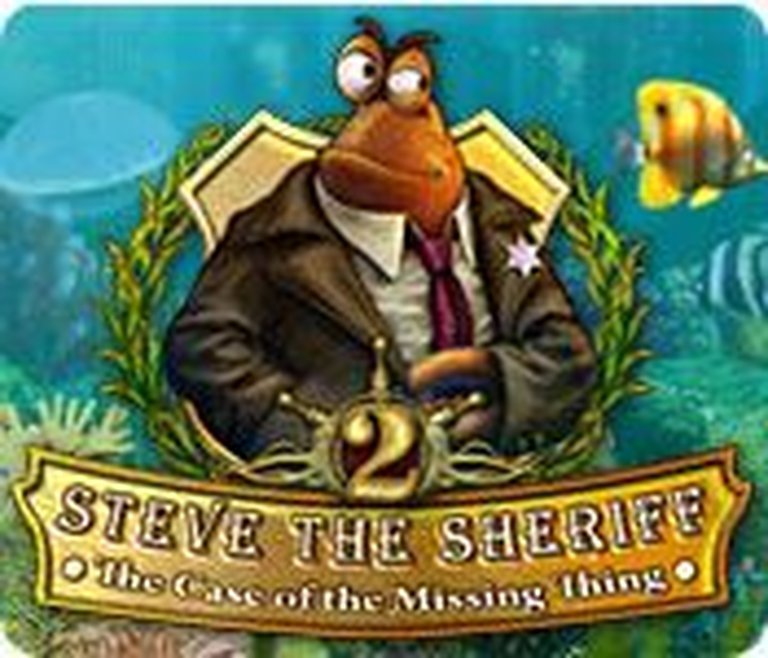
In the whimsical underwater town of Neutropolis, players take on the role of Steve, a red crab sheriff, summoned to investigate the theft of the priceless Mona Medusa painting from the local museum. This hidden object adventure game features anthropomorphic cartoon animals, where players scour detailed scenes for clues and items listed in a notebook, solve interactive puzzles by dragging objects into thought bubbles, spot differences in split-screen mini-games, and use hints from a rechargeable cigar to uncover the thief’s trail and bring them to justice.
Gameplay Videos
Steve the Sheriff 2: The Case of the Missing Thing Free Download
Steve the Sheriff 2: The Case of the Missing Thing Guides & Walkthroughs
Steve the Sheriff 2: The Case of the Missing Thing Reviews & Reception
gamezebo.com (70/100): A very relaxed game with beautiful art, perfect for a pleasant afternoon.
Steve the Sheriff 2: The Case of the Missing Thing: Review
Introduction
Imagine plunging into the bubbly depths of Neptuneville, an underwater hamlet where anthropomorphic sea creatures peddle fishy alibis and cartoonish crimes unfold amid coral-crusted museums and junkyards piled high with rusted anchors. Released in 2009 by ERS G-Studio and published by Big Fish Games, Steve the Sheriff 2: The Case of the Missing Thing builds on its 2008 predecessor to deliver a sequel that refines the formula of hidden object adventures (HOGs) into a leisurely detective saga. As the red-crab sheriff Steve unravels the theft of the priceless Mona Medusa painting, players trade frantic point-and-click hunts for a more thoughtful blend of clue-gathering and whimsy. This review argues that Steve 2 exemplifies the golden age of casual HOGs—accessible, endearing, and unpretentious—cementing its place as a nostalgic gem in the genre’s history, even if it lacks the ambition to transcend its shareware roots.
Development History & Context
ERS G-Studio, a Ukrainian developer founded in the early 2000s, specialized in casual games for the burgeoning downloadable market, with credits spanning over 30 titles like PuppetShow: Souls of the Innocent and Sarah Maribu and the Lost World. Led by producers Rouslan Pismenniy, Vladimir Savenkov, and Yevgeniy Veremeyev, alongside game designer Gennadiy Pogrebinskiy and lead artist Alexandr Storozhuk, the team of 32 (mostly programmers and artists like Nadezhda Yakovenko and Sergiy Chornenky) crafted Steve 2 as a direct sequel to the original Steve the Sheriff. Their vision was clear: expand the underwater law-enforcement theme into a fuller adventure, emphasizing family-friendly puzzles over rote object hunts.
Launched on September 12, 2009, for Windows (with a 2010 Macintosh port), the game arrived amid the HOG explosion fueled by Big Fish Games’ shareware model—CD-ROMs and downloads priced accessibly, targeting stay-at-home gamers on modest hardware (1.0 GHz CPU, 512 MB RAM, DirectX 8.0). The era’s landscape was dominated by casual portals like Big Fish, where titles like Mystery Case Files set the bar for immersive scenes, but Steve 2 leaned into ERS’s strengths: vibrant 2D hand-drawn art and intuitive mechanics unburdened by timers or fail-states. Technological constraints—simple sprite-based visuals and mouse/keyboard input—mirrored the Flash-era web games, prioritizing charm over spectacle. In a market shifting toward Facebook casuals and iOS ports, Steve 2 embodied Big Fish’s ethos: polished, bite-sized escapism for the post-The Sims crowd seeking low-stakes sleuthing.
Narrative & Thematic Deep Dive
At its core, Steve the Sheriff 2 weaves a detective yarn worthy of a Saturday morning cartoon: the Mona Medusa, a masterpiece parodying da Vinci’s Mona Lisa with serpentine flair, vanishes from Neptuneville’s museum. Summoned by the frantic director, Steve—complete with deputy wife and kid sidekicks from the first game—charts a trail through 14 chapters spanning museums, prisons, pharmacies, and abandoned houses. Suspects emerge organically: the shifty Octopus hiding in cells, pill-peddling pharmacists, helmeted Jerry Fish, and enigmatic Raffaeel, whose lab hides engine secrets. Dialogue crackles with puns (“This case is fishy!”) and quirky asides, delivered via thought bubbles and animated cut-ins, humanizing (or crab-izing) the cast.
Thematically, it’s a playful subversion of noir tropes in a kid-friendly aquatic idyll. Law enforcement shines through Steve’s bumbling yet earnest persistence—fixing valves, assembling slingshots, and decoding matchbooks—mirroring real detective tedium but gamified with absurdity (e.g., weighing soporific pills via balance puzzles). Underwater motifs amplify whimsy: jet-stream bubbles signal clues, air hoses vent steam, and Neptuneville pulses with coral bars and junkyard cranes, evoking a submerged SimCity. Family bonds underscore redemption arcs, critiquing greed amid theft rings. Pacing builds via a central map, unlocking locations as evidence mounts (footprints, walkie-talkies, torn maps), culminating in a restoration twist. No heavy lore dumps—narrative thrives on environmental storytelling, like security tapes revealing thieves or cuckoo clocks spitting clues—making it ideal for casual replay.
Gameplay Mechanics & Systems
Steve 2‘s loop masterfully hybridizes HOG with adventure puzzles, ditching timers for a “relaxed” vibe GameZebo praised. Core scenes feature a left-side notebook listing 10-15 objects (hover for silhouettes via bottom magnifying glass). Success clears lists, advancing via bubble hotspots: gear cursors summon Steve’s portrait with drag-and-drop thought bubbles (e.g., broom + pail = clean garbage). Magnifying glass bubbles zoom into close-ups hiding items or mini-games.
Innovations abound: special blue tasks below lists guide progression, like repairing gramophones or elevators. Mini-games vary wildly—jigsaw stained glass (rotate via right-click), spot-the-differences (uniform photos), Simon-says phone sequences, shell-game glasses, Hanoi-esque tire towers, chemical paint analysis, and fuse switchboards (non-crossing wires). The hint cigar glows post-recharge, spotlighting list items (not cigars), with unlimited uses fostering patience.
UI shines: context-sensitive cursors (gears/puzzle, magnifier/zoom), random cursor-float on misclicks deter spam, and a cigar counter tracks 36 collectibles (one/scene, trivia-revealing humidor unlocks seahorse betting bonus). Progression gates via evidence (badges, helmets) feel organic, though repetition creeps in later chapters. Flaws? No combat/progression trees; it’s linear, with skippable puzzles (post-red bar). Single-player offline focus suits 1-2 hour sessions, but lacks depth for veterans—perfect intro to HOGs, less for genre diehards.
| Mechanic | Strengths | Weaknesses |
|---|---|---|
| Hidden Objects | Silhouettes, unlimited hints, thematic clutter | Mild randomization, no penalties |
| Puzzles | Variety (20+ types), integrated narrative | Skippable, some fiddly rotations |
| Drag-and-Drop Tasks | Intuitive, satisfying animations | Sequential gating can frustrate |
| Cigar Collection | Replay incentive, fun facts | No hints, easy misses |
World-Building, Art & Sound
Neptuneville captivates as a lived-in diorama: museums gleam with fish portraits, prisons echo with octopus lairs, junkyards teem with pulley cranes. Art direction—Storozhuk’s lead—wows in close-ups of googly-eyed crabs and seahorse races, per GameZebo’s “wowed by the art” nod. Hand-painted 2D scenes burst with detail (floating bubbles, swaying kelp), cartoon vibrancy masking HOG clutter. Atmosphere evokes relaxed submersion: no dark alleys, just sunny absurdity enhancing “pleasant afternoon” play.
Sound design complements: bubbly SFX for zooms, plinks for finds, whimsical tunes (upbeat jazz-fish noir?) underscore tasks. No voice acting, but Steve’s bubble animations and trivia cigars add personality. Elements synergize—bubbles propel immersion, art sells charm, sound relaxes—crafting cozy escapism.
Reception & Legacy
Critically sparse, Steve 2 earned a 70% MobyGames critic score (GameZebo’s 3.5/5 hailed “silly but charming” fish, genre intro perfection) and perfect 5/5 player average (two ratings). Commercially, Big Fish shareware thrived on trials, but no sales figures endure; niche amid 2009’s Mystery Case Files giants.
Reputation evolved via abandonware archives (Internet Archive) and walkthroughs (Big Fish, Gamezebo), fostering cult nostalgia. Influence? Solidified ERS’s HOG template (thought bubbles, family detectives) echoed in PuppetShow series. Prefigured mobile casuals; related titles like Montgomery Fox nod sheriff sleuths. In HOG history, it’s a mid-tier sequel elevating whimsy, inspiring underwater clones but rarely emulated—overshadowed, yet preserved by MobyGames (ID 42568) as law-enforcement curio.
Conclusion
Steve the Sheriff 2: The Case of the Missing Thing endures as a buoyant artifact of 2009 casual gaming: flawlessly executed for its scope, with stellar art, inventive puzzles, and heartwarming narrative distilling detective joy into bubble-popping bliss. Not revolutionary—repetitive loops and linearity cap ambition—but as Neptuneville’s premier pinch-nosed probe, it earns a definitive 8.5/10. Essential for HOG historians or cozy gamers; replay for cigars, revel in its fishy finesse—a timeless trinket in video game history’s treasure trove.