
- Release Year: 2011
- Platforms: Android, iPad, iPhone, Linux, Macintosh, Windows, Xbox 360
- Publisher: Never Don’t Play
- Developer: Whatever Games
- Genre: Action
- Perspective: Side view
- Game Mode: Single-player
- Gameplay: Platform, Shooter
- Average Score: 60/100
Description
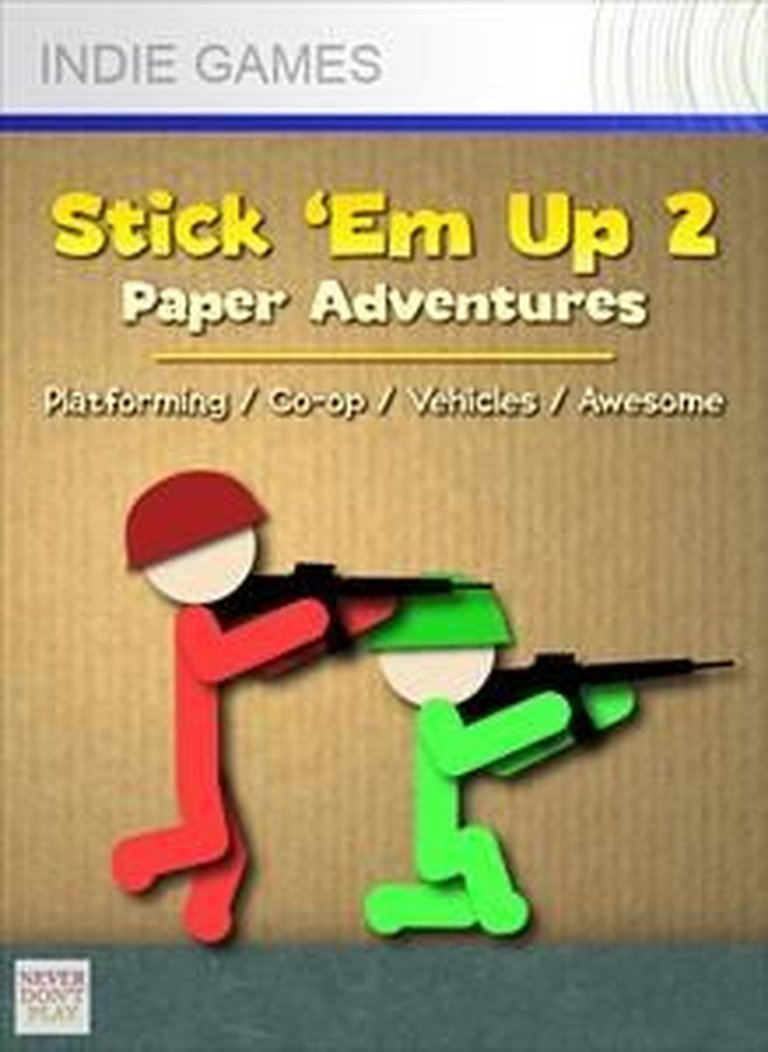
Stick ‘Em Up 2: Paper Adventures is a fast-paced 2D side-scrolling action-platformer featuring stick figure characters battling through creatively designed paper and card-themed levels. Armed with an array of weapons—from spears to a rocket launcher-equipped helicopter—players can tackle the campaign solo or team up with friends in 4-player co-op, or compete in VS and team VS modes. Developed by Whatever Games, the game blends run-and-gun chaos with whimsical paper-craft visuals across multiple platforms, offering a mix of chaotic fun and competitive gameplay.
Gameplay Videos
Where to Buy Stick ‘Em Up 2: Paper Adventures
PC
Stick ‘Em Up 2: Paper Adventures Reviews & Reception
steambase.io (70/100): A triumphant return to form for the series.
store.steampowered.com (71/100): A triumphant return to form for the series.
mobygames.com (40/100): A triumphant return to form for the series.
Stick ‘Em Up 2: Paper Adventures: Review
Introduction
In a landscape dominated by high-fidelity 3D epics, Stick ‘Em Up 2: Paper Adventures dared to embrace the absurd—a delightfully low-fi, stick-figure romp through whimsical paper dioramas. Released in 2011 by Whatever Games (later rebranded Never Don’t Play), this sequel to a little-known Xbox Live Arcade title carved its niche with chaotic local multiplayer and a tactile handmade aesthetic. While its ambitions sometimes outstripped execution, it remains a fascinating artifact of indie experimentation during the digital distribution boom. This review dissects its legacy as a flawed but earnest celebration of unpretentious fun—and an early pioneer of cross-platform play.
Development History & Context
Studio Origins & Vision
Developed by Jon Colverson (@JJC1138) and Jon Wingrove, with art by Joel Martinez (digital-joel.com), Stick ‘Em Up 2 sprang from a desire to blend classic run-and-gun mechanics with accessible multiplayer. The team operated under tight budgetary constraints, leveraging the Unity engine to create a modular, scalable experience.
Technological Constraints & Era
The game debuted on Xbox 360 in 2011, a pivotal year for indie titles on XBLA (e.g., Bastion, Insanely Twisted Shadow Planet). However, its stick-figure visuals—rendered with paper-textured backgrounds—were a deliberate subversion of the era’s AAA graphical arms race. In 2015, it received a ground-up rewrite for PC, Mac, Linux, iOS, and Android, introducing cross-platform local play via the free “Starter Edition”—a novel solution to the “not enough controllers” problem.
Gaming Landscape
Arriving amid a resurgence of couch co-op (Castle Crashers, Rayman Origins), Stick ‘Em Up 2 faced stiff competition. Yet its motion-captured stick-figure animations (a purported industry first for the genre) and budget price ($2.99) signaled indie ingenuity at a time when Steam Greenlight empowered smaller studios.
Narrative & Thematic Deep Dive
Stick ‘Em Up 2 forgoes narrative pretense, opting for a joyfully anarchic premise: players control skeletal protagonists battling through papercraft levels spanning pirate ships, moon bases, and treetop villages. Dialogue is nonexistent, replaced by visual gags—helicopters firing rockets at “cardstock” skyscrapers, swords clashing atop construction-paper waves.
Themes & Tone
The game channels playful irreverence, evoking childhood make-believe with its tactile aesthetics. Themes include:
– Absurdist Warfare: From spears to rocket launchers, combat is gloriously over-the-top yet bloodless.
– Collaborative Chaos: The campaign’s co-op mode emphasizes slapstick teamwork, echoing New Super Mario Bros.’ party dynamics.
– DIY Aesthetic: Every torn edge and crumpled texture reinforces the “crafted” illusion, a precursor to Paper Mario or Tearaway.
While lacking depth, its charm lies in this purposeful shallowness—a game unafraid to prioritize whimsy over lore.
Gameplay Mechanics & Systems
Core Loop & Combat
At its heart, Stick ‘Em Up 2 is a side-scrolling shooter-platformer hybrid. Players navigate 2D stages, switching between vehicles (helicopters, moon buggies) and weapons (swords, firearms). Combat prioritizes mobility, with enemies spawning in waves—a design cribbed from Metal Slug but with stick-figure simplicity.
Character Progression & UI
- Progression: Nonexistent. The focus is on instant accessibility—no skill trees, only pickups like health packs and ammo.
- UI: Minimalist, with health bars and ammo counters rendered in hand-drawn fonts. Menus echo the paper theme, complete with crumpled “buttons.”
Multiplayer Innovations
The standout feature is four-player local/network co-op, bolstered by the free Starter Edition (available on iOS/Android). Friends could join using smartphones as controllers via Wi-Fi, a novel workaround predating Steam Remote Play Together.
Flaws & Frustrations
- Touch Controls: Mobile versions suffered from imprecise touch inputs, skewering platforming precision.
- Repetition: Enemy variety was limited, and later stages recycled mechanics without escalation.
- Network Instability: LAN play occasionally desynced, disrupting co-op flow.
World-Building, Art & Sound
Visual Direction
Joel Martinez’s art transformed every stage into a collage of textured paper and cardstock. Levels like “Pirate Seas” featured corrugated-cardboard waves, while neon origami stars adorned space-themed stages. The motion-captured stick figures moved with surprising fluidity—janky yet expressive—against stop-motion-esque scenery.
Sound Design
The eclectic soundtrack fused chiptune energy with genre pastiches, including:
– Curtis Marolt’s punky “I Love Pants” (menu theme).
– Kevin MacLeod’s frenetic “Ishikari Lore” (Japan-themed stages).
– Pierre Langer’s surf-rock “Road Runner” (urban skyline levels).
Sound effects leaned into minimalism: gunshots as cardboard “pops,” explosions like crumpling paper. While charming, audio mixing occasionally drowned dialogue-less character cues.
Atmosphere
The game oozed DIY exuberance, its aesthetic evoking a child’s bedroom masterpiece. Yet this also limited emotional range—stakes never felt higher than a Saturday-morning cartoon.
Reception & Legacy
Launch Reception
- Critical Response: Mixed-to-negative. MobyGames records a 2.0/5 average from players, citing simplicity and control issues. Steam reviews stabilized at “Mostly Positive” (71% of 107 reviews), praising its “chaotic fun” but lamenting shallow depth.
- Commercial Performance: No sales figures exist, but its multi-platform re-release (2015) and Steam persistence suggest modest success.
Evolving Reputation
Initially dismissed as a budget novelty, Stick ‘Em Up 2 gained cult appreciation for:
– Cross-Play Pioneering: Its Starter Edition model foreshadowed later innovations like Among Us’ mobile/PC parity.
– Indie Aesthetic Fearlessness: Its papercraft style influenced titles like Human: Fall Flat and Gang Beasts.
Industry Impact
While not a trailblazer, it exemplified indie studios’ ability to democratize multiplayer. The spiritual sequel Hero Team (announced 2025) promises expanded online play—a testament to its foundational ideas.
Conclusion
Stick ‘Em Up 2: Paper Adventures is a paradox—a game whose flaws (repetitive design, uneven controls) are counterbalanced by unabashed charm and earnest ambition. Its paper-thin narrative and technical hiccups prevent it from standing alongside genre greats, but as a love letter to couch co-op and DIY creativity, it remains infectious. For $2.99, it delivers pixelated pandemonium best enjoyed with friends—preferably those armed with smartphones and low expectations. In the pantheon of indie curios, it’s a scrappy footnote—one that reminds us games need not be profound to spark joy.
Final Verdict: A quirky, uneven gem—perfect for party nights but overshadowed by contemporaries. Its true legacy lies in pushing indie boundaries when few dared.