
Description
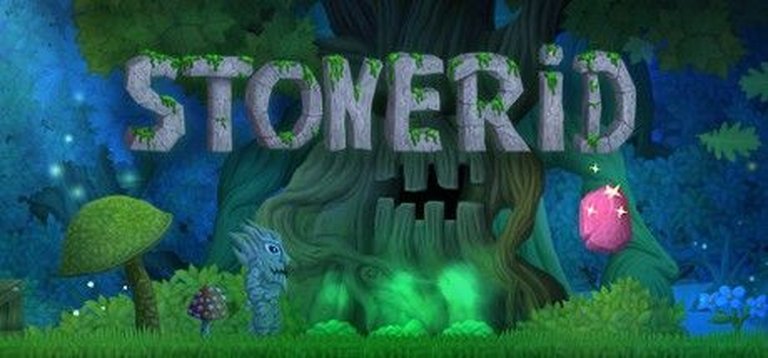
Stonerid is a fantasy-themed side-scrolling platformer developed by Enitvare, where players navigate a dynamic world filled with challenges like toxic environments and shifting parallel worlds. Set in locations such as Atronast Mountain and The Great Tree, the game features a protagonist with dual forms and utilizes a custom-built level editor for intricate design. Originally conceived as a simple platformer, it evolved over two years to incorporate complex mechanics, including parallel worlds, enhancing both gameplay depth and visual appeal.
Where to Buy Stonerid
PC
Stonerid Guides & Walkthroughs
Stonerid: An Exhaustive Autopsy of a Forgotten Parallel Realms Platformer
Introduction
In the vast fossil record of indie platformers, Stonerid stands as a curious specimen—a debut title bursting with ambition yet crushed beneath the weight of its own design contradictions. Developed by the Polish brotherhood Enitvare and released in 2014 after a grueling two-year gestation, this 2D side-scroller dared to innovate with its parallel worlds mechanic, only to be met with Steam’s indifferent shrug. This review dissects Stonerid’s anatomy: an earnest, caffeine-fueled paean to retro platforming rigor, hamstrung by developmental naiveté and the unforgiving laws of physics—both in-game and in the marketplace.
Development History & Context
A Brothers’ Quixotic Crusade
Enitvare—a micro-studio formed by brothers Paweł, Rafał, and Łukasz Gołdyn—emerged in 2011 as archetypal indie neophytes. With zero prior game credits, they chose the well-trodden path of the 2D platformer, naively underestimating the genre’s merciless competition. In a candid 2014 blog post titled “The Evolution of Stonerid,” designer Zendalor (likely a pseudonym for Łukasz) admitted their early prototypes were “simple platformers,” until a mid-development epiphany: parallel worlds.
The Greenlight Gauntlet
Aiming for Steam’s hallowed halls via Greenlight, Stonerid languished for seven months—a purgatory reflecting Valve’s skepticism toward unproven studios. The game’s eventual approval in December 2013 became a Pyrrhic victory; by launch in August 2014, its novelty had ossified against flashier contemporaries like Shovel Knight.
Toolbox Survivalism
Facing technological constraints, the Gołdyns engineered a bespoke level editor—a “very powerful tool” enabling rapid iteration. Early screenshots reveal embryonic test levels (crude platforms over void backgrounds) evolving into lush parallax-scrolling panoramas with three background layers. This editor became their lifeline—a necessity for designing 64 distinct level variations (32 standard + 32 parallel), each demanding grueling precision.
Narrative & Thematic Deep Dive
Eco-Apocalyptic Minimalism
Stonerid’s narrative scaffolding is gossamer-thin: a “weird stone creature” (never named) battles a toxicity plague across Atronast Mountain’s five biomes. Dialog is non-existent; lore is inferred through environmental decay—a putrid Great Tree, sickly skies, and corrupted fauna. Thematically, it’s a blunt allegory for ecological collapse, albeit one lacking Ori and the Blind Forest’s emotional resonance.
Character as Construct
The protagonist—a pebble-bodied humanoid—functions less as a character than a vehicle for mechanized suffering. Devoid of personality or backstory, its sole purpose is to cleanse its world through Sisyphean traversal. This narrative vacuum mirrors countless NES-era mascots but feels anachronistic in 2014’s post-Braid landscape.
Gameplay Mechanics & Systems
Parallel Worlds: Innovation or Illusion?
Stonerid’s flagship mechanic—switching between two mirrored dimensions mid-level—promised Mega Man-meets-Portal ingenuity. In practice, it manifests as a binary toggle:
– World A: Default state with basic hazards.
– World B: Toxic ooze, altered platforms, deadlier enemies.
While clever in theory (e.g., dodging a trap in World A by shifting to World B), poor signposting often renders transitions chaotic. Players must memorize both layouts—a cognitive load that exhausts patience.
Difficulty as Déjà Vu
With three difficulty modes (Casual, Normal, Hard), Stonerid revels in masochism. Precision jumps demand frame-perfect inputs, while enemies (fire-spitting plants, homing beetles) spawn unpredictably. The Steam community guide “Using a Gamepad other than XBOX 360 Controller” underscores its control woes; keyboard players faced analogue approximation hell.
Progression: Carrot Without Stick
Character growth is non-existent—no power-ups, no skills, just fragile persistence. Bonus levels (31 total) offer remixed challenges, but with no narrative payoff, they feel like punitive afterthoughts.
World-Building, Art & Sound
Pixel Poetry Amid Toxins
Despite technical limitations, Stonerid’s art evolves remarkably from early “test levels.” Rafał Gołdyn’s final sprites—crisp, earthy, and macabre—evoke Castlevania’s Gothic allure. The Great Tree’s diseased canopy, dripping neon sludge, is a visual standout. Parallax backgrounds (three layers deep) add illusory depth, though asset reuse dulls impact across five “diverse” biomes.
Sonic Ambivalence
Composer Marcin Przybyłowicz—later acclaimed for The Witcher 3—contributes a haunting, minimalist score. Pianos and strings echo through Atronast’s desolation, but tracks loop abruptly, shattering immersion. Sound design falters further: protagonist footsteps lack weight, and enemy noises grate with 8-bit shrillness.
Reception & Legacy
Commercial Obscurity
Priced at $4.99 at launch (later discounted to $0.40), Stonerid sank without bubbles. Steam reviews remain “Mixed” (67% positive, 210 votes), praising its “wonderful artwork” while damning “frustrating controls.” No Metacritic critic reviews exist—an epitaph for its market invisibility.
Indie Cautionary Tale
Historically, Stonerid epitomizes the paradox of passion projects: mechanically ambitious yet executionally naive. Its parallel worlds concept faintly echoes in later titles like Tandem: A Tale of Shadows, but no direct lineage exists. Enitvare’s subsequent silence (no games post-2014) underscores indie development’s Darwinian brutality.
Conclusion
Stonerid is a fossil worth dusting off—not as a masterpiece, but as an archaeological lesson. Its parallel worlds mechanic, though underexplored, hints at unrealized potential, while its audiovisual craftsmanship transcends budget limitations. Yet, suffocated by arbitrary difficulty and narrative void, it remains a 4/10 curiosity: a poignant testament to indie ambition’s collision with reality. For genre completists, it’s a worthy museum piece. For all others, let it rest beneath Atronast Mountain’s toxic soil.