
- Release Year: 2013
- Platforms: PlayStation 3, Windows, Xbox 360
- Publisher: indiePub Entertainment, Inc., Neko Entertainment SARL
- Developer: Eko Software SARL
- Genre: Puzzle
- Perspective: Side view
- Game Mode: Single-player
- Gameplay: Physics, Weather manipulation
- Setting: Seasons
- Average Score: 75/100
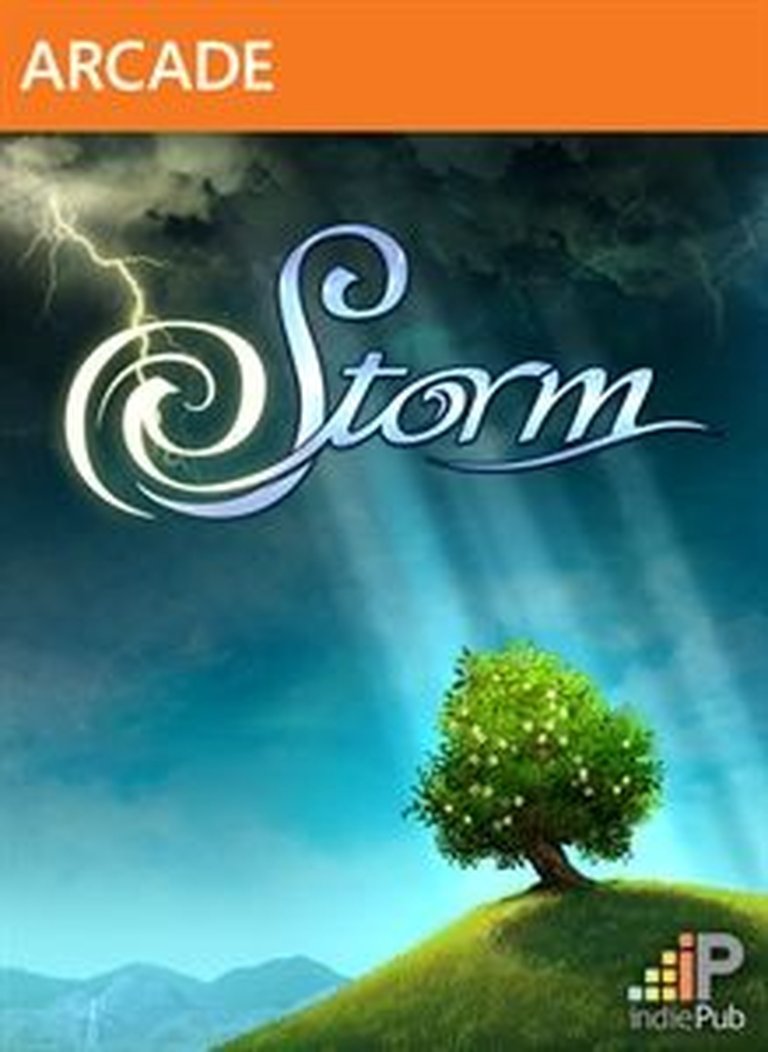
Description
Storm is a puzzle game where players guide a seed from a tree to fertile soil using weather elements: lightning for jumping, wind for direction, and rain for floating. Navigating through four distinct seasons—each with unique environmental hazards like bubbles in spring or snow and ice in winter—players solve physics-based puzzles across Adventure mode (campaign), Free mode (time challenges), and Spirit mode (collecting floating entities).
Where to Buy Storm
PC
Storm Reviews & Reception
ign.com : Not worth chasing.
bestgamesreviews.info (75/100): Storm is a unique and atmospheric experience that offers a refreshing change of pace from the usual action-packed games.
Storm: A Meditation on Nature’s Power and Fragility
Introduction
In the crowded landscape of indie puzzle games, Storm (2013) emerged as a uniquely atmospheric, if flawed, experiment in environmental manipulation. Developed by French studio Eko Software and published across Xbox 360, PlayStation 3, and PC, this title promised a tranquil journey through the seasons, where players wield the raw forces of nature—wind, rain, and lightning—to guide a vulnerable seed to fertile ground. Its premise, art direction, and minimalist philosophy evoked comparisons to Flower and Braid, yet Storm carved its own niche by emphasizing the delicate interplay between chaos and control. This review dissects Storm’s ambitious design, its successes and failures, and its place in the annals of puzzle-game history, arguing that while its execution is often frustrating, its core concept remains a poignant meditation on nature’s unpredictable beauty.
Development History & Context
Storm was born from the creative vision of Eko Software, a French developer with a history of modestly successful titles like The Great Garfield Show. The project, helmed by producer Laurence Nash and lead designer Brice Poncet, was initially conceived as a mobile game before expanding to consoles and PC—a pivot reflecting the burgeoning indie scene on platforms like XBLA and PSN. Development spanned three years (2010–2013), with a core team of 33 contributors, including art director Éric Chantreau and composer Terence Lee, who also originated the game’s concept.
The studio drew inspiration from nature documentaries and traditional Japanese ink paintings, aiming to capture the “ethereal” essence of seasonal change. This focus on organic aesthetics was ambitious for a mid-budget title, especially given the era’s dominance of photorealistic AAA games. Technologically, Storm leveraged custom physics engines to simulate environmental interactions, though these systems often proved unwieldy. Released in June 2013 against titles like BioShock Infinite and Grand Theft Auto V, Storm struggled to stand out. Its $10 price point positioned it as a “casual” puzzle experience, yet its punishing difficulty and technical hiccups alienated the very audience it sought to entice.
Narrative & Thematic Deep Dive
Storm’s narrative is a masterclass in minimalism. There are no characters, dialogue, or overt plot—only the silent, cyclical journey of a seed seeking soil to germinate. This absence of text transforms the game into a wordless fable about resilience and rebirth. The seed’s path mirrors the stages of life: vulnerability (spring), growth (summer), decay (autumn), and dormancy (winter), with each season introducing new environmental challenges that symbolize life’s unpredictability.
Themes permeate the gameplay itself. Wind represents capricious fate, rain embodies nourishment and renewal, and lightning embodies sudden, destructive power. Players learn that success requires patience—waiting for the right moment to act—rather than brute force. This ethos extends to Spirit mode, where players collect ethereal “spirits” floating through levels, suggesting that beauty lies in exploration, not just completion. Yet, the game’s brevity (49 levels) and lack of narrative depth prevent these themes from resonating profoundly. It’s a poignant but shallow allegory, leaving players to ponder its meaning without guidance.
Gameplay Mechanics & Systems
Core Mechanics
The heart of Storm lies in its three elemental abilities:
– Wind: Draw directional lines to blow the seed, though the physics often restrict movement to binary left/right paths, frustrating attempts at precision.
– Rain: Lowers the seed into water or raises water levels, enabling navigation but feeling sluggish.
– Lightning: Launches the seed into the air or destroys obstacles, but its timing is finicky, often leading to unintended falls.
Seasonal Innovations
Each season introduces unique mechanics:
– Spring: Bubbles allow vertical movement, adding buoyancy puzzles.
– Summer: Fire and embers require careful rain management to control blazes.
– Autumn: Falling leaves and wind gusts create moving platforms.
– Winter: Ice slides and snow banks demand momentum-based solutions.
Modes and Structure
- Adventure: The linear campaign, divided into seasons, with puzzles escalating in complexity.
- Free Mode: Time trials for speedrunners, highlighting the game’s precision flaws.
- Spirit Mode: Collect floating spirits, encouraging replay but feeling tacked-on.
Flaws
The physics engine is the game’s Achilles’ heel. Wind’s “binary” controls, unpredictable collision detection, and lack of a rewind function turn clever puzzles into exercises in trial-and-error. As IGN’s Matthew Sielaff noted, the game becomes an “irritating crapshoot,” where success relies on luck rather than insight. Level design exacerbates this, with objectives often obscured and solutions requiring pixel-perfect timing that belies the game’s “relaxing” ethos.
World-Building, Art & Sound
Visual Design
Storm’s art is its greatest triumph. Hand-painted backgrounds evoke watercolor landscapes, with each season boasting a distinct palette: spring’s pastel greens, summer’s sun-drenched yellows, autumn’s russet browns, and winter’s stark whites. Environmental details—like raindrops splattering on the screen or leaves rustling in the wind—create immersive, interactive tableaus. The seed itself is a humble, spherical character, its simplicity contrasting with the vibrant, chaotic worlds it navigates.
Sound Design
Terence Lee’s ambient soundtrack is a masterclass in atmospheric composition. Gentle piano melodies, birdsong, and soft percussion mirror the game’s pace, while elemental effects—howling wind, crackling thunder—add tactile weight. Yet, sound cues for puzzle solutions are often too subtle, leaving players guessing whether their actions had an impact.
Atmosphere
Storm excels at fostering tranquility, with non-linear exploration in Free Mode letting players “smell the roses.” This serenity, however, clashes with the gameplay’s frustration, creating a jarring dissonance between the game’s aesthetic and its mechanical demands.
Reception & Legacy
Critical Response
Storm’s reception was notably polarized. Aggregators reflected this:
– Metacritic: Xbox 360 (64/100), PC (63/100), PS3 (45/100).
– Praise: 4Players.de (73%) lauded its “experimentation with nature,” while Eurogermany called it a “contemplative puzzler” with “dreamy art.”
– Criticism: IGN (4/10) slammed its “broken physics” and “frustrating aspects,” with GameRevolution (4/10) deeming it an “irritating crapshoot.” Pure Xbox (50%) noted that “graphics and sound are strong but gameplay is flawed.”
Commercial Performance and Legacy
Despite middling scores, Storm found a niche among puzzle enthusiasts seeking relaxation. Its legacy is twofold:
1. Innovation: Its weather-manipulation concept influenced titles like A Short Hike and Spiritfarer.
2. Cautionary Tale: It exemplifies the risks of prioritizing aesthetics over mechanics. Eko Software never revisited the IP, though its art direction and spiritual themes endure in indie darlings like Journey.
Conclusion
Storm is a game of stark contrasts. Its breathtaking art and ambient soundtrack create an oasis of tranquility, while its clunky physics and punitive design turn it into a desert of frustration. As a meditation on nature’s duality—both nurturing and destructive—it succeeds, but as a puzzle game, it often feels like a missed opportunity. For players willing to tolerate its flaws, Storm offers a unique, meditative journey; for others, it’s a cautionary tale about ambition outpacing execution.
In the grand tapestry of video game history, Storm is a single, vibrant thread—beautiful, evocative, and ultimately overshadowed by its own potential. It reminds us that even in digital realms, nature’s power remains both a wonder and a challenge.
Final Verdict: 6.5/10 – A flawed gem for patient puzzle enthusiasts, best experienced in short bursts to savor its art without succumbing to its frustrations.