
- Release Year: 2011
- Platforms: iPad, Macintosh, Windows
- Publisher: Big Fish Games, Inc.
- Developer: Sulus Ltd.
- Genre: Adventure
- Perspective: 1st-person
- Game Mode: Single-player
- Gameplay: Puzzle elements
- Setting: Fantasy
- Average Score: 0/100
Description
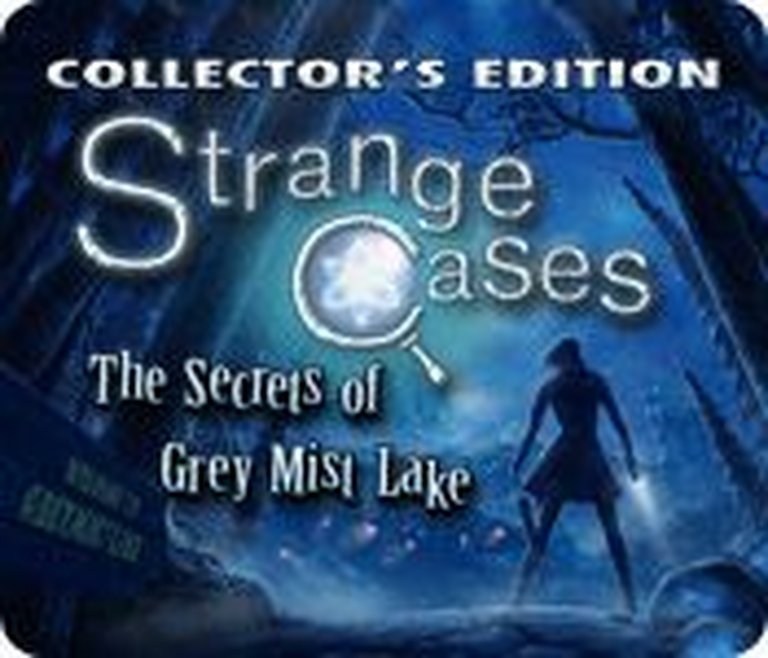
In ‘Strange Cases: The Secrets of Grey Mist Lake (Collector’s Edition)’, FBI Agent Claire Ellery investigates a mysterious case set in the eerie, fog-shrouded Grey Mist Lake. The game blends adventure and puzzle elements in a first-person perspective, challenging players to uncover hidden secrets, solve intricate puzzles, and navigate through a hauntingly atmospheric setting. The Collector’s Edition includes bonus content like a strategy guide, wallpapers, concept art, and an additional chapter, enhancing the immersive detective experience.
Gameplay Videos
Strange Cases: The Secrets of Grey Mist Lake (Collector’s Edition) Guides & Walkthroughs
Strange Cases: The Secrets of Grey Mist Lake (Collector’s Edition) Reviews & Reception
boardgamegeek.com (0/100): Average Rating: 0.00 / 10
gadgetspeak.com : The game can be played in either Regular or Expert mode.
Strange Cases: The Secrets of Grey Mist Lake (Collector’s Edition) Cheats & Codes
PC
Use the provided keys for activation.
| Code | Effect |
|---|---|
| 5A58-5F5D-40B6-479A-C1A0-A923-AB2F | Activation key for the game |
| 5A58-5F5D-40B6-146A-C526-7686-50B5 | Activation key for the game |
| C5F1-8743-77FA-E0A9-03A5-6230-A31C | Activation key for the game |
| C5F1-8743-77FA-1A43-7234-7952-F342 | Activation key for the game |
Strange Cases: The Secrets of Grey Mist Lake (Collector’s Edition): A Hauntingly Beautiful Hidden Object Masterpiece
Introduction
In the vast landscape of hidden object adventure games, few titles manage to blend narrative depth, atmospheric tension, and innovative gameplay as seamlessly as Strange Cases: The Secrets of Grey Mist Lake (Collector’s Edition). Released in 2011 by Sulus Ltd. and published by Big Fish Games, this title stands as a testament to the golden age of casual adventure gaming, offering players a richly layered experience that transcends the genre’s often formulaic boundaries. With its hauntingly beautiful visuals, intricate puzzles, and a story steeped in mystery and folklore, Grey Mist Lake invites players into a world where the past and present collide, and where every shadow holds a secret waiting to be uncovered.
This review aims to dissect Strange Cases: The Secrets of Grey Mist Lake (Collector’s Edition) with the precision of a surgeon and the passion of a historian, exploring its development, narrative, gameplay mechanics, and lasting impact on the hidden object adventure genre. By the end, we will determine whether this game is a fleeting mist in the annals of gaming history or a towering lighthouse guiding the genre forward.
Development History & Context
The Studio Behind the Mist: Sulus Ltd.
Sulus Ltd., the Russian development studio behind Strange Cases: The Secrets of Grey Mist Lake, was already a well-established name in the casual gaming scene by 2011. Founded in the early 2000s, Sulus had carved a niche for itself by producing high-quality hidden object and adventure games, often characterized by their atmospheric settings and engaging narratives. The Strange Cases series, which began in 2009 with Strange Cases: The Tarot Card Mystery, was one of their flagship franchises, and Grey Mist Lake represented the third installment in this burgeoning series.
The studio’s approach to game development was deeply rooted in storytelling and player immersion. Unlike many of their contemporaries, who often prioritized quantity over quality, Sulus invested heavily in creating games that felt like interactive novels, where every puzzle and hidden object scene served a purpose in advancing the plot. This commitment to narrative coherence and atmospheric design is evident in Grey Mist Lake, which stands as one of their most ambitious projects to date.
The Vision: A Ghostly Tale of Redemption
The creative vision for Strange Cases: The Secrets of Grey Mist Lake was spearheaded by a trio of designers: Afanasey Ushnisky, Igor Konnikov, and Prokopiy Semenov. Their goal was to craft a game that blended elements of classic detective fiction with supernatural horror, creating a story that was both engaging and unsettling. The game’s premise—a cursed town trapped in time by a vengeful witch—draws heavily from Gothic literature and American folklore, evoking comparisons to works like Sleepy Hollow and The Mist by Stephen King.
The developers were particularly inspired by the idea of a “lost town” myth, a common trope in urban legends where entire communities vanish without a trace, only to reappear under mysterious circumstances. Grey Mist Lake, with its eerie fog and ghostly inhabitants, was designed to be a character in its own right, a place where the past and present intertwine, and where every object tells a story.
Technological Constraints and Innovations
Released in 2011, Grey Mist Lake was developed during a transitional period in the casual gaming industry. The rise of digital distribution platforms like Big Fish Games had democratized game development, allowing smaller studios like Sulus to reach a global audience without the need for physical media. However, this also meant that games had to be optimized for a wide range of hardware, from low-end laptops to more powerful desktop PCs.
The game’s technical specifications reflect this balance between accessibility and quality. With a minimum requirement of a 1.2 GHz processor, 512 MB of RAM, and DirectX 9.0 support, Grey Mist Lake was designed to run smoothly on most machines of the era. The art style, which blends hand-drawn illustrations with 3D elements, was chosen not only for its aesthetic appeal but also for its efficiency in rendering. The result is a game that is visually striking without being overly taxing on system resources.
One of the most innovative aspects of Grey Mist Lake is its use of the “flashlight mechanic,” which allows players to illuminate hidden rune stones in darkened areas. This feature, while simple, adds a layer of interactivity and tension to the gameplay, forcing players to actively engage with the environment rather than passively clicking through scenes. It also serves as a narrative device, reinforcing the game’s themes of darkness and revelation.
The Gaming Landscape of 2011
The release of Strange Cases: The Secrets of Grey Mist Lake in late 2011 coincided with a boom in the hidden object adventure genre. Games like Mystery Case Files and Dark Parables were dominating the casual gaming charts, and players were hungry for new experiences that combined storytelling with puzzle-solving. Big Fish Games, the publisher behind Grey Mist Lake, was at the forefront of this movement, releasing dozens of hidden object games each year.
However, the market was also becoming increasingly saturated, with many games following a predictable formula: a linear narrative, a series of hidden object scenes, and a handful of mini-games thrown in for variety. Grey Mist Lake distinguished itself by offering a more cohesive and immersive experience. Its three-chapter structure, each focusing on a different aspect of the town’s curse, gave the game a sense of progression and depth that many of its contemporaries lacked.
Moreover, the Collector’s Edition of Grey Mist Lake was part of a growing trend in the casual gaming industry. By offering bonus content—such as concept art, wallpapers, and an additional chapter—developers could incentivize players to purchase the premium version of their games. This model not only increased revenue but also fostered a sense of community among fans, who could share their experiences and discoveries in online forums.
Narrative & Thematic Deep Dive
Plot Summary: A Journey into the Mist
Strange Cases: The Secrets of Grey Mist Lake begins with FBI Agent Claire Ellery and her husband, Sam, driving through a dense fog on their way to visit his parents. As Sam recounts the legend of Grey Mist Lake—a town that vanished a century ago under mysterious circumstances—their car suddenly swerves to avoid a ghostly figure, crashing into a tree. Claire awakens to find Sam missing and herself stranded in the very town he had just been describing: Grey Mist Lake.
The town, it turns out, is trapped in a temporal loop, cursed by a witch who was wronged by its inhabitants a century ago. The ghosts of the townsfolk, unable to move on, are bound to the town, reliving their final moments in an endless cycle. Claire’s mission is to uncover the secrets of Grey Mist Lake, free the souls of its inhabitants, and rescue Sam before they both become permanent residents of this spectral purgatory.
The game is divided into three chapters, each focusing on a different aspect of the town’s curse:
-
Chapter 1: The Sheriff’s Letter – Claire explores the town’s main street, uncovering clues about the sheriff’s role in the witch’s curse. She encounters the ghost of the sheriff, who tasks her with retrieving a letter that could reveal the truth about the town’s fate.
-
Chapter 2: The Butcher’s Daughter – Claire ventures into the butcher’s shop and the local school, where she learns about the butcher’s daughter, a young girl who was wronged by the townsfolk. The chapter culminates in a heartbreaking revelation about the daughter’s fate and her connection to the witch’s curse.
-
Chapter 3: The Undertaker – The final chapter takes Claire to the town’s cemetery and hospital, where she uncovers the undertaker’s dark secrets and the true nature of the witch’s vengeance. The chapter ends with a climactic confrontation with the witch, where Claire must use all the knowledge and items she has gathered to break the curse and free the town.
Characters: Ghosts of the Past
The characters in Grey Mist Lake are as much a part of the town’s curse as the environment itself. Each ghost Claire encounters has a story to tell, a wrong to right, and a role to play in the overarching narrative. Unlike many hidden object games, where characters serve as little more than quest givers, the ghosts of Grey Mist Lake are fully realized entities with their own motivations and backstories.
-
Claire Ellery – The protagonist of the game, Claire is an FBI agent with a keen intellect and a compassionate heart. Her journey through Grey Mist Lake is as much about personal growth as it is about solving the mystery. As she uncovers the town’s secrets, she also confronts her own fears and insecurities, making her a relatable and compelling heroine.
-
Sam Ellery – Claire’s husband, Sam, is the catalyst for the game’s events. His disappearance drives Claire’s quest, and his eventual fate is tied to the resolution of the town’s curse. While Sam is not a playable character, his presence is felt throughout the game, serving as a reminder of what Claire stands to lose if she fails.
-
The Sheriff – The ghost of the town’s sheriff is one of the first spirits Claire encounters. He is a complex figure, neither wholly good nor entirely evil. His actions in life contributed to the witch’s curse, but his regret and desire for redemption make him a sympathetic character.
-
The Butcher and His Daughter – The butcher and his daughter represent the tragic consequences of the town’s prejudice and fear. The daughter, in particular, is a poignant figure, her innocence and suffering serving as a stark contrast to the cruelty of the townsfolk.
-
The Undertaker – The undertaker is the most enigmatic of the town’s ghosts. His role in the witch’s curse is shrouded in mystery, and his true motivations are only revealed in the game’s final act. His character embodies the themes of death and rebirth that run through the narrative.
-
The Witch – The antagonist of the game, the witch is a figure of vengeance and sorrow. Her curse on the town is born out of a desire for justice, but her methods are cruel and unforgiving. The game’s climax forces Claire to confront the witch and break the cycle of vengeance that has trapped the town for a century.
Themes: Justice, Redemption, and the Weight of the Past
At its core, Strange Cases: The Secrets of Grey Mist Lake is a story about the consequences of past actions and the possibility of redemption. The town of Grey Mist Lake is a metaphor for the sins of its inhabitants, a place where the past is literally frozen in time. The ghosts Claire encounters are not merely spectral remnants but embodiments of guilt, regret, and unresolved conflict.
The game explores several key themes:
-
The Cycle of Vengeance – The witch’s curse is a cycle of vengeance, where the sins of the past are visited upon the present. The townsfolk, who wronged the witch in life, are forced to relive their final moments in an endless loop. Claire’s journey is about breaking this cycle, not through force, but through understanding and compassion.
-
The Power of Memory – Memory is a central motif in Grey Mist Lake. The town itself is a memory, a snapshot of a moment in time preserved by the witch’s curse. The objects Claire collects—letters, photographs, and personal effects—are all fragments of the townsfolk’s memories, each one a clue to the larger mystery.
-
Redemption and Forgiveness – The game’s narrative is ultimately about redemption. The ghosts Claire encounters are not irredeemable; they are trapped by their past actions but capable of change. Claire’s role is not just to solve the mystery but to help these spirits find peace, whether through forgiveness, justice, or simply the truth.
-
The Supernatural as a Mirror – The supernatural elements of Grey Mist Lake serve as a mirror to the human condition. The witch’s curse is a manifestation of the townsfolk’s collective guilt, and the ghosts are reflections of their unresolved emotions. The game uses the supernatural not as a gimmick but as a narrative device to explore deeper psychological and moral themes.
Dialogue and Voice Acting
The dialogue in Grey Mist Lake is a mix of written text and voice acting, with key conversations fully voiced by professional actors. The voice acting is generally well-done, with each character having a distinct voice and personality. Claire’s voice, in particular, conveys a sense of determination and empathy, making her a compelling protagonist.
However, the dialogue is not without its flaws. Some of the lines, particularly those delivered by the ghosts, can feel overly melodramatic or clichéd. This is a common issue in hidden object games, where the emphasis is often on gameplay rather than narrative depth. That said, Grey Mist Lake fares better than many of its contemporaries, with a script that is, for the most part, engaging and well-paced.
One notable aspect of the dialogue is its use of humor. Despite the game’s dark themes, there are moments of levity, particularly in Claire’s interactions with the more eccentric ghosts. These moments serve as a welcome respite from the game’s otherwise somber tone, adding depth to the characters and making the world of Grey Mist Lake feel more lived-in.
Gameplay Mechanics & Systems
Core Gameplay Loop: Exploration, Puzzles, and Hidden Objects
Strange Cases: The Secrets of Grey Mist Lake follows the traditional hidden object adventure gameplay loop, but with a level of polish and innovation that sets it apart from its peers. The game is divided into three chapters, each with its own set of locations, puzzles, and hidden object scenes. The core gameplay revolves around exploring the town of Grey Mist Lake, interacting with its ghostly inhabitants, and solving a series of puzzles and hidden object challenges to progress the story.
The game’s structure is linear, with players moving from one location to the next as they uncover clues and collect items. However, the game does allow for some backtracking, particularly in the later chapters, where players may need to revisit earlier locations to retrieve items or solve puzzles they previously overlooked.
Hidden Object Scenes: A New Twist on an Old Formula
Hidden object scenes are a staple of the genre, and Grey Mist Lake offers a fresh take on this classic mechanic. Unlike many games, where hidden object scenes are standalone challenges, Grey Mist Lake integrates them seamlessly into the narrative. Each scene is tied to a specific location or character, and the items players are tasked with finding often have direct relevance to the story.
One of the most innovative aspects of the hidden object scenes in Grey Mist Lake is the use of “cards.” Before players can begin searching for items, they must first locate a green card hidden within the scene. This card contains the list of items to be found, adding an extra layer of challenge to the gameplay. In some cases, players may need to use an item from their inventory to retrieve the card, further integrating the hidden object scenes into the larger puzzle-solving mechanics.
The hidden object scenes themselves are well-designed, with a good balance of difficulty and variety. Some scenes are straightforward, requiring players to find a list of items in a cluttered environment. Others are more complex, involving interactive elements such as locked boxes or hidden compartments that must be opened before the items can be retrieved.
Puzzles: A Test of Wit and Logic
Grey Mist Lake features a wide variety of puzzles, ranging from simple sliding tile challenges to more complex logic-based conundrums. The puzzles are generally well-integrated into the narrative, with each one serving a specific purpose in advancing the story. For example, players may need to solve a puzzle to unlock a door, repair a broken mechanism, or decipher a cryptic message.
One of the standout puzzles in the game is the “snake tongue” puzzle in Chapter 1, where players must manipulate a snake’s tongue in a specific sequence to unlock a door. This puzzle is notable for its unique mechanics and the way it ties into the game’s supernatural themes. Another memorable puzzle is the “stained glass” puzzle, where players must arrange colored glass pieces to form a complete image, a task that requires both spatial reasoning and an eye for detail.
The game also features a number of inventory-based puzzles, where players must combine items from their inventory to create new tools or solve environmental challenges. For example, players may need to use a flashlight to illuminate a dark area, revealing a hidden rune stone, or combine a jar and a fly to create a trap for a spider.
The Flashlight Mechanic: Illuminating the Darkness
One of the most innovative gameplay mechanics in Grey Mist Lake is the use of the flashlight. Throughout the game, players will encounter areas shrouded in darkness, where hidden rune stones are concealed. By clicking on the flashlight in their inventory and shining it on these dark areas, players can reveal the rune stones, which are often required to solve puzzles or progress the story.
The flashlight mechanic serves multiple purposes. First, it adds a layer of interactivity to the gameplay, requiring players to actively engage with the environment rather than passively clicking through scenes. Second, it reinforces the game’s themes of darkness and revelation, with the flashlight symbolizing the power of knowledge and truth. Finally, it creates a sense of tension and mystery, as players never know what they might find when they shine the light into the shadows.
Inventory and Item Management
The inventory system in Grey Mist Lake is straightforward but effective. Players can access their inventory by clicking on the briefcase icon in the lower-left corner of the screen. Items are stored in the briefcase and can be dragged and dropped onto the environment or combined with other items to solve puzzles.
One notable feature of the inventory system is the ability to “right-click” on an item to return it to the briefcase. This is a small but welcome quality-of-life improvement, as it allows players to quickly cycle through their inventory without having to manually drag items back and forth.
The game also features a “hint” system, which can be accessed by clicking on the eye icon in the upper-left corner of the screen. The hint system is context-sensitive, providing clues for hidden object scenes, puzzles, or general gameplay tips depending on the situation. While the hints are unlimited, players must wait for the eye to recharge before using it again, adding a slight challenge to the gameplay.
Difficulty Modes: Regular vs. Expert
Grey Mist Lake offers two difficulty modes: Regular and Expert. In Regular mode, active zones are indicated by sparkles, and the hint and skip features recharge at a faster rate. This mode is ideal for players who are new to the genre or who prefer a more relaxed gaming experience.
Expert mode, on the other hand, removes the sparkles and increases the recharge time for hints and skips. This mode is designed for veteran players who enjoy a greater challenge and prefer to solve puzzles and find hidden objects without assistance.
The inclusion of both modes is a welcome feature, as it allows the game to appeal to a broader audience. Whether players are looking for a casual experience or a more demanding challenge, Grey Mist Lake has something to offer.
The Collector’s Edition: Bonus Content and Replayability
The Collector’s Edition of Grey Mist Lake includes a number of bonus features that enhance the overall experience. These include:
-
A Built-in Strategy Guide – A comprehensive guide that provides step-by-step instructions for solving puzzles and completing hidden object scenes. The guide is accessible from the main menu and is a valuable resource for players who find themselves stuck.
-
Wallpapers and Concept Art – A collection of high-resolution wallpapers and concept art that offer a behind-the-scenes look at the game’s development. These extras are a nice touch for fans of the game’s art style and provide insight into the creative process behind Grey Mist Lake.
-
A Bonus Chapter – An additional chapter that expands on the game’s narrative, offering new locations, puzzles, and hidden object scenes. The bonus chapter is unlocked after completing the main game and provides additional replay value for players who want to delve deeper into the world of Grey Mist Lake.
The inclusion of these bonus features makes the Collector’s Edition a compelling purchase for fans of the game. While the standard edition offers a complete and satisfying experience, the Collector’s Edition provides additional content that enhances the game’s depth and replayability.
World-Building, Art & Sound
The Town of Grey Mist Lake: A Character in Its Own Right
The setting of Strange Cases: The Secrets of Grey Mist Lake is as much a character as the ghosts who inhabit it. Grey Mist Lake is a town frozen in time, a snapshot of a moment in history preserved by the witch’s curse. The town’s streets are lined with abandoned buildings, each one a relic of a bygone era. From the sheriff’s office to the butcher’s shop, the schoolhouse to the cemetery, every location in Grey Mist Lake tells a story, offering clues to the town’s tragic past.
The game’s world-building is meticulous, with each location designed to reflect the personalities and histories of its former inhabitants. The sheriff’s office, for example, is a symbol of authority and order, but also of corruption and betrayal. The butcher’s shop, with its bloodstained tables and rusted tools, is a grim reminder of the town’s darker side. The schoolhouse, with its chalkboards and children’s drawings, evokes a sense of innocence and loss.
The town itself is shrouded in a perpetual fog, a visual representation of the curse that binds it. The fog serves as both a narrative device and a gameplay mechanic, obscuring certain areas and creating a sense of mystery and tension. As players explore Grey Mist Lake, they gradually uncover its secrets, peeling back the layers of fog to reveal the truth beneath.
Visual Design: A Blend of Gothic and Americana
The visual design of Grey Mist Lake is a striking blend of Gothic horror and Americana. The game’s art style is heavily influenced by classic horror literature and film, with a color palette dominated by muted blues, grays, and browns. The result is a world that feels both familiar and unsettling, a place where the ordinary and the supernatural coexist.
The character designs are equally impressive, with each ghost having a distinct appearance that reflects their personality and backstory. The sheriff, for example, is a stern figure in a faded uniform, while the butcher’s daughter is a spectral figure in a tattered dress. The witch, with her flowing robes and eerie glow, is a particularly memorable design, embodying both beauty and terror.
The game’s use of lighting and shadow is also noteworthy. The flashlight mechanic, in particular, is a masterstroke of visual design, creating dynamic contrasts between light and darkness. The way the flashlight illuminates hidden rune stones, revealing them in a burst of light, is a small but effective detail that enhances the game’s atmosphere.
Sound Design: A Symphony of Silence and Sorrow
The sound design of Grey Mist Lake is a crucial component of its atmospheric storytelling. The game’s soundtrack, composed by Michael Chertichev, is a haunting blend of orchestral and ambient music, evoking a sense of melancholy and mystery. The music is used sparingly, often fading into the background to allow the game’s ambient sounds to take center stage.
The ambient soundscape of Grey Mist Lake is equally impressive. The howling wind, the creaking of old wood, the distant echoes of ghostly whispers—all of these sounds combine to create a sense of unease and tension. The game’s use of silence is particularly effective, with moments of quiet serving to heighten the impact of sudden noises, such as the clanging of a bell or the slamming of a door.
The voice acting, as mentioned earlier, is generally well-done, with each character having a distinct voice that reflects their personality. The ghosts, in particular, are brought to life through their vocal performances, with each one conveying a sense of regret, sorrow, or anger.
Atmosphere: A Masterclass in Tension and Immersion
The true strength of Grey Mist Lake lies in its atmosphere. The game is a masterclass in creating tension and immersion, drawing players into its world with a combination of visual, auditory, and narrative techniques. The fog-shrouded streets, the eerie soundtrack, the ghostly whispers—all of these elements work together to create a sense of dread and wonder.
The game’s pacing is also expertly handled. The narrative unfolds gradually, with each chapter revealing new layers of the town’s curse. The puzzles and hidden object scenes are spaced out evenly, ensuring that players are constantly engaged without feeling overwhelmed. The result is a game that is both relaxing and intense, a rare balance in the hidden object adventure genre.
Reception & Legacy
Critical Reception: A Hidden Gem
Upon its release in late 2011, Strange Cases: The Secrets of Grey Mist Lake received generally positive reviews from critics and players alike. The game was praised for its atmospheric storytelling, innovative gameplay mechanics, and haunting visual design. Many reviewers highlighted the game’s narrative depth, noting that it stood out in a genre often criticized for its lack of storytelling ambition.
One of the most common praises for Grey Mist Lake was its use of the flashlight mechanic, which was seen as a fresh and engaging addition to the hidden object formula. The game’s puzzles were also well-received, with critics noting their variety and integration into the narrative. The voice acting and sound design were similarly commended, with many reviewers singling out the game’s soundtrack as a standout feature.
However, the game was not without its detractors. Some critics found the hidden object scenes to be too easy, particularly for veteran players of the genre. Others noted that the game’s linear structure and lack of replayability outside of the bonus chapter made it a somewhat limited experience. Additionally, a few reviewers criticized the game’s dialogue, describing it as occasionally clichéd or melodramatic.
Despite these minor criticisms, Grey Mist Lake was widely regarded as one of the best hidden object adventure games of 2011. It was nominated for several awards in the casual gaming space and remains a fan favorite among enthusiasts of the genre.
Commercial Success: A Niche Hit
Commercially, Strange Cases: The Secrets of Grey Mist Lake performed well, particularly within the niche market of hidden object adventure games. The game’s release on multiple platforms—Windows, Macintosh, and later iPad—helped it reach a broad audience, and its inclusion in Big Fish Games’ extensive catalog ensured that it remained visible to casual gamers.
The Collector’s Edition, with its bonus content and exclusive extras, was particularly successful, appealing to fans who wanted a more comprehensive experience. The game’s strong word-of-mouth reputation, fueled by positive reviews and player recommendations, also contributed to its commercial success.
While Grey Mist Lake may not have achieved the same level of mainstream recognition as some of its contemporaries, such as Mystery Case Files or Dark Parables, it carved out a loyal fanbase that continues to celebrate the game to this day.
Legacy: Influencing the Genre
Strange Cases: The Secrets of Grey Mist Lake has had a lasting impact on the hidden object adventure genre, influencing subsequent games in several key ways:
-
Narrative Integration – Grey Mist Lake demonstrated that hidden object games could be more than just a series of disconnected puzzles and scenes. Its seamless integration of narrative and gameplay set a new standard for the genre, inspiring other developers to prioritize storytelling in their own games.
-
Innovative Mechanics – The flashlight mechanic, in particular, has become a staple of the genre, appearing in numerous games that followed Grey Mist Lake. The idea of using a tool to interact with the environment in a meaningful way has been adopted by many developers, who have built upon the concept with their own unique twists.
-
Atmospheric Design – The game’s emphasis on atmosphere and immersion has also had a lasting impact. Many modern hidden object games now prioritize mood and setting, using visual and auditory techniques to create a sense of place and tension.
-
Collector’s Editions – The success of Grey Mist Lake’s Collector’s Edition helped solidify the trend of offering premium versions of casual games with bonus content. This model has since become standard in the industry, with many games now offering deluxe or collector’s editions as a way to incentivize purchases.
While Grey Mist Lake may not be as widely remembered as some of the genre’s heavyweights, its influence can be seen in the many games that have followed in its footsteps. It remains a touchstone for developers and players who value storytelling, innovation, and atmosphere in their hidden object adventures.
Conclusion: A Timeless Journey into the Mist
Strange Cases: The Secrets of Grey Mist Lake (Collector’s Edition) is a masterful blend of narrative depth, innovative gameplay, and atmospheric design. It is a game that transcends the limitations of its genre, offering players an experience that is as emotionally resonant as it is intellectually engaging. From its hauntingly beautiful visuals to its intricate puzzles, from its compelling characters to its thought-provoking themes, Grey Mist Lake is a testament to the power of storytelling in video games.
While it may not have achieved the same level of mainstream success as some of its contemporaries, Grey Mist Lake has earned its place in the annals of gaming history as a hidden gem—a game that rewards patience, curiosity, and a willingness to delve into the unknown. Its legacy can be seen in the many games that have followed in its footsteps, and its influence continues to shape the hidden object adventure genre to this day.
For fans of the genre, Strange Cases: The Secrets of Grey Mist Lake (Collector’s Edition) is an essential experience. It is a game that lingers in the memory long after the final puzzle has been solved, a journey into the mist that is as unforgettable as it is haunting. Whether you are a seasoned veteran of hidden object adventures or a newcomer looking for a compelling story, Grey Mist Lake is a game that deserves your attention.
Final Verdict: 9/10 – A Haunting Masterpiece
Strange Cases: The Secrets of Grey Mist Lake (Collector’s Edition) is a triumph of storytelling and design, a game that elevates the hidden object adventure genre to new heights. With its rich narrative, innovative mechanics, and atmospheric world, it is a title that stands the test of time. While it may not be perfect—its linear structure and occasional dialogue missteps hold it back from true greatness—it is a game that is well worth experiencing. For those who dare to venture into the mist, Grey Mist Lake offers a journey they will not soon forget.