
- Release Year: 2012
- Platforms: Windows
- Publisher: Matrix Games, Ltd., rokapublish GmbH, Wastelands Interactive
- Developer: Wastelands Interactive
- Genre: Strategy, Tactics
- Perspective: Top-down
- Game Mode: Single-player
- Gameplay: Hexagonal map, Turn-based
- Setting: Historical events, World War II
- Average Score: 60/100
Description
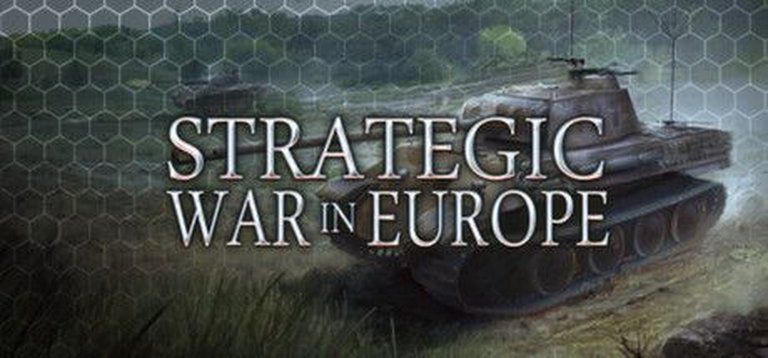
Strategic War in Europe is a turn-based grand strategy game set during World War II, allowing players to command one of 25 countries divided among the Allies, Axis, and Communist USSR on a vast hexagonal map spanning Europe and North Africa. Featuring six scenarios from 1939 to 1945—including a postwar Allies vs. Communists conflict—players manage economies to produce units like infantry, tanks, aircraft, and fleets, while contending with dynamic weather, technology trees, and five difficulty levels for a relaxing yet tactical experience.
Gameplay Videos
Where to Buy Strategic War in Europe
PC
Strategic War in Europe Cracks & Fixes
Strategic War in Europe Patches & Updates
Strategic War in Europe Reviews & Reception
metacritic.com (72/100): Has its flaws, but with more polish and improved naval and air AI, this could be one of the great light wargames.
pcgamer.com (72/100): Has its flaws, but with more polish and improved naval and air AI, this could be one of the great light wargames.
steambase.io (48/100): Mixed
Strategic War in Europe: Review
Introduction
Imagine commanding the fate of nations from the smoke-choked ruins of Warsaw to the sun-baked dunes of North Africa, where every turn represents a month of brutal calculus—balancing steel production against the inexorable Soviet tide or the RAF’s unyielding resolve. Strategic War in Europe (SWiE), released in 2012 by Polish indie studio Wastelands Interactive, captures the grand sweep of World War II’s European theater in a compact, turn-based package that prioritizes accessibility without sacrificing strategic depth. Born from the modding scene of giants like Hearts of Iron II, it offers players control over up to 25 nations across seven scenarios, blending historical fidelity with “what-if” flexibility. Yet, for all its promise as a “light wargame,” SWiE stumbles on uneven AI, technical hiccups, and balance quirks, rendering it a flawed gem in the pantheon of WWII strategy titles. This review argues that while SWiE excels as an entry point for newcomers to hex-grid grand strategy, its legacy hinges on community patches and mods to elevate it beyond niche curiosity.
Development History & Context
Wastelands Interactive, a small Polish outfit founded around 2008-2010, emerged from the fervent modding community of Paradox’s Hearts of Iron II. Lead designer and producer Leszek Lisowski (aka “doomtrader”) drew inspiration from a Fallout-themed HoI2 mod, birthing the studio’s name and penchant for post-apocalyptic undertones amid historical simulations. SWiE marks their ambitious pivot to a full-fledged grand strategy title, following smaller efforts like Air Aces: Pacific and preceding Time of Fury. The core team was lean—16 credits total—including programmers Bartłomiej Sieczka and Andrzej Uszakow (“Uhacz”), artists Radosław Grzegorczyk and Dawid Cichy (“Silent“), researcher Roman Siewier (“Severian”), and even community contributions like additional skins from “AgentS.” Music came from prolific royalty-free composer Kevin MacLeod, while PR handled Steven Mills and translation Gary Gardner.
Launched on August 23, 2012, via digital platforms like Matrix Games (primary publisher), GamersGate, and later Steam (2014), SWiE targeted the post-Panzer General wargame crowd amid a landscape dominated by real-time behemoths like Paradox’s Hearts of Iron III (2009) and operational sims like Gary Grigsby’s War in the East (2010). Technological constraints were minimal—built for Windows XP/Vista/7 with modest specs (1.2GHz CPU, 1GB RAM)—reflecting indie bootstrapping without flashy engines. Publisher Matrix/Slitherine provided forum support, patches (up to v1.09 in 2014 adding resolutions, skins like “Natural” and “Sprites”), and PBEM multiplayer. The 2012 era’s indie boom (FTL, XCOM: Enemy Unknown) favored accessible strategy, but SWiE’s hex-based, turn-based design echoed classics like Panzer General II (1997), positioning it as a counterpoint to bloated simulations. Vision: “Easy to learn, hard to master,” per dev notes, emphasizing relaxing play over micromanagement, fully moddable for fan longevity.
Narrative & Thematic Deep Dive
SWiE eschews cinematic storytelling for emergent historical drama, framing WWII as a chessboard of alliances, betrayals, and scripted pivots. No protagonists or dialogue trees exist; instead, players embody faceless high commands across three blocs—Allies, Axis, and Comintern (USSR)—in six historical scenarios (1939-1944) plus a 1945 “what-if” Allies vs. Communists clash. Narrative unfolds via dozens of events: Germany’s Fall Weiss invasion, Barbarossa’s grind, or Torch landings, triggered by turns or conditions, altering diplomacy, production, or unit spawns (e.g., DAK reinforcements in Africa).
Thematically, it probes total war’s calculus—resource starvation vs. blitzkrieg audacity, diplomatic coercion vs. ideological fervor. Players declare war, host elections, stage coups (e.g., pressuring neutrals like Iraq or Switzerland), or invest in espionage-lite diplomacy points (DPs). Underlying motifs echo Clausewitz: friction via weather, supply lines, and fog of war. USSR play evokes grim attrition; Axis, hubristic overreach (e.g., Sealion’s naval gambles). No deep characters—units bear leaders implicitly via upgrades—but events humanize: Stalin’s purges boost manpower at loyalty cost, Churchill’s resolve stiffens UK AI. Critically, scripted paths constrain ahistorical drifts (e.g., no early US nukes on Berlin), yet flexibility shines in minors like Poland/Norway co-op survival. It’s thematic poetry in hexes: victory demands moral compromises, mirroring WWII’s ethical quagmire without preachiness.
Gameplay Mechanics & Systems
At its core, SWiE’s loop is elegantly brutal: plan, produce, project power. Each monthly turn (no action order restrictions) spans movement, attacks, purchases, research, and diplomacy on a 68×47 hex map (Europe/North Africa, ~20-mile hexes). Command corps/army-scale units (infantry waves, panzer divisions, 125-plane air wings, task forces from subs to carriers). Combat resolves automatically, factoring terrain, weather (dynamic mud/snow), supply (rail/sea convoys), entrenchment—outcomes detailed by losses (e.g., “500 tanks shredded”).
Progression thrives on economy: Production Points (PPs) buy/upgrade units (e.g., Infantry Corps: 10k men, trucks, artillery); five tech trees (land, air, sea, industry, special) via research investment. Strategic Movement Points (SMPs) for rails, Sea Transport (STPs) for convoys/raiders, Amphibious Invasion Points (AIPs) for D-Day. UI shines: intuitive panels for hex/unit info, bottom action bar (upgrade? Reinforce? Naval hop?), right-side off-map (end turn, buy, reports). Five per-country difficulties scale AI aggression/resources.
Innovations: Hex-free naval (region-hopping fleets), auto-transports simplify logistics; nukes for 1945. Flaws abound—naval/air AI weak (e.g., RAF ignores barges), balance tilts Axis early (PC Gamer notes easy Sealion), crashes (pre-patch), PBEM bugs. Multiplayer (hotseat/PBEM 2-4p) fosters alliances (e.g., Poland+Norway). Mods/scenarios extend via editor. Core loop: addictive for 70-turn campaigns, but AI quirks demand human opponents.
| Mechanic | Strengths | Weaknesses |
|---|---|---|
| Combat | Weather/supply depth; detailed losses | Predictable AI traps |
| Economy | Intuitive PP/STP juggling | Minor imbalance (USSR grind) |
| Diplomacy | Coups/events dynamic | Scripted rails limit chaos |
| UI | Clean, info-rich | Tutorial crashes (early builds) |
World-Building, Art & Sound
SWiE’s world is a legible tapestry of history: hexes evoke Panzer General‘s crisp abstraction—Europe’s industrial heartlands, Mediterranean chokepoints, Urals buffer. Fog of war cloaks intel, weather icons shift tactics (blizzards stall Barbarossa). Atmosphere builds via scale: minor ports birth invasions, rails snake supplies.
Visuals: Simple 2D top-down, functional over flashy—unit counters with upgrading WWII photos (e.g., Tiger tank emerges post-upgrade). Skins (Natural, Sprites, Myra via patches) add flair; NATO icons toggle for purists. Legible at 1024×768, but dated by 2012 standards—no 3D spectacle like Strategic Command.
Sound: Kevin MacLeod’s stock orchestral swells (tense strings for battles) suit tension without immersion. SFX: perfunctory pops/clangs. No voiceover/dialogue—focus auditory minimalism enhances strategic zen. Collectively, elements forge contemplative mood: not visceral like Company of Heroes, but historian’s diorama, prioritizing map gaze over spectacle.
Reception & Legacy
Launch reception was muted: MobyGames (2/5 from 1 player), Steam “Mixed” (51% positive/211 reviews; 48% per Steambase), GamePressure 4.8/10. PC Gamer’s 72/100 lauded accessibility (“Hitler sim for £10”) but dinged AI (“lapdog Britain”), crashes, naval woes. Metacritic user 5.7/10 echoed: solid land combat, complex for newbies. Forums buzzed—Matrix’s 91 topics (tech, AARs, mods) showed devotion; patches fixed XP stability, added Steam keys.
Commercially modest ($5.99 Steam), it influenced lightly: shares DNA with Time of Fury (same team), echoes in Panzer Corps hex-wargames. Legacy: Niche endurance via PBEM/mod communities (e.g., Qattara impassable terrain), bridging Crusade in Europe (1985) to modern indies. No industry shaker like Unity of Command, but preserves turn-based WWII for purists amid RTS glut.
Conclusion
Strategic War in Europe distills WWII’s grand tragedy into digestible hexes—a strategist’s sandbox where Poland’s defiance or Sealion’s folly feels palpably real, marred only by AI frailty and launch polish deficits. Patches and mods (full editor support) redeem it for veterans, offering replayable depth at bargain price. In video game history, it occupies indie wargame underbelly: not revolutionary, but a testament to Polish passion amid giants. Verdict: 7/10—Recommended for turn-based fans seeking Panzer General heirs; skip if flawless AI demanded. Its true war rages in PBEM lobbies, eternal.