
- Release Year: 2014
- Platforms: Blacknut, PlayStation 4, Windows, Xbox One
- Publisher: Focus Home Interactive SAS
- Developer: Cyanide S.A.
- Genre: Action
- Perspective: Behind view
- Game Mode: Single-player
- Gameplay: Stealth
- Setting: Fantasy
- Average Score: 79/100
Description
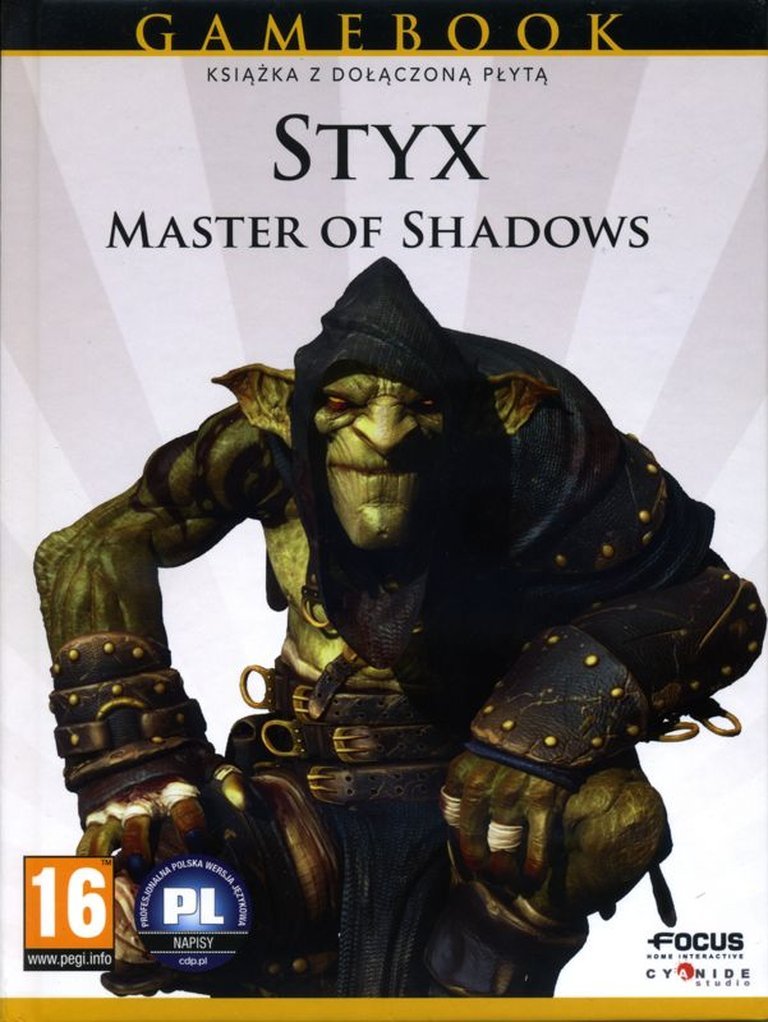
Styx: Master of Shadows is a stealth action game set in the fantasy realm of Akenash, where players control Styx, a cunning 200-year-old goblin assassin and thief, infiltrating the massive Tower of Akenash guarded by humans and elves to steal the heart of the World Tree, the source of the powerful magical substance known as Amber. Utilizing stealth mechanics, agility, and Amber-enhanced abilities like cloning himself for scouting or distractions, invisibility, and enhanced senses, Styx must navigate vertical levels, avoid detection, and employ lethal tactics without engaging in direct combat.
Gameplay Videos
Where to Buy Styx: Master of Shadows
Styx: Master of Shadows Cracks & Fixes
Styx: Master of Shadows Guides & Walkthroughs
Styx: Master of Shadows Reviews & Reception
metacritic.com (71/100): Despite a few rough edges, Styx: Master of Shadows deserves a place alongside Metal Gear Solid 3, Hitman: Blood Money, and Mark of the Ninja as one of the best titles the genre has to offer.
ign.com : It’s a rare stealth game that takes its label seriously, and it’s worth seeking out if you’re weary of today’s assassins with a fondness for open street brawls.
opencritic.com (68/100): Admirably open levels that reward exploration means there’s high replay value if you’re prepared to overlook the back-tracking.
imdb.com (100/100): As a stealth fan I got nothing but love for this game!
pcgamer.com : Admirably open levels that reward exploration means theres high replay value if youre prepared to overlook the back-tracking.
Styx: Master of Shadows: Review
Introduction
In the shadowed underbelly of a colossal floating tower, where humans and elves hoard the lifeblood of magic itself, a lone goblin named Styx emerges as an unlikely master thief and assassin. Styx: Master of Shadows (2014), developed by the French studio Cyanide, isn’t just a stealth game—it’s a gritty homage to the genre’s unforgiving roots, evoking classics like Thief: The Dark Project while infusing them with fantastical RPG flair. As a prequel and spin-off to Cyanide’s earlier Of Orcs and Men (2012), it carves out Styx’s origins in a world of amber-fueled intrigue, cloning mayhem, and moral ambiguity. This mid-budget title punches above its weight with tense, vertical level design and innovative powers, but stumbles on technical rough edges. Thesis: Styx: Master of Shadows stands as a cult classic of pure stealth gameplay, rewarding patient predators with emergent thrills and a mind-bending narrative, cementing its place as an essential underdog in an era dominated by action-hybrid assassins.
Development History & Context
Cyanide Studio, a Paris-based developer known for niche titles like Blood Bowl II and Game of Thrones (the RPG), tackled Styx amid the 2014 next-gen transition. Founded in 2000, Cyanide had honed RPG expertise with Of Orcs and Men, where Styx debuted as a snarky sidekick. Master of Shadows shifted gears to stealth, directed by a team including game director Julien Desourteaux and lead programmer Jonathan Leemans, with 213 credits spanning producers like Patrick Pligersdorffer and Focus Home Interactive’s backing.
Built on Unreal Engine 3—already aging by PS4/Xbox One launch—the game faced technological constraints typical of mid-tier European studios. No real-time global illumination or advanced shadowing strained its visuals, likely due to a modest budget (evident in dated textures and lip-sync issues). Released October 7, 2014, on PC, PS4, and Xbox One, it navigated a crowded landscape: Middle-earth: Shadow of Mordor and Alien: Isolation overshadowed it, while Thief (2014 reboot) flopped, highlighting demand for authentic stealth amid action-heavy trends like Assassin’s Creed.
Cyanide’s vision emphasized “strict stealth,” punishing detection to honor Styx’s goblin fragility. Middleware like PhysX, FaceFX, and Scaleform supported cloning and animations, but AI glitches and platforming inconsistencies betrayed rushed polish. As a “mid-range” effort—not AAA gloss, not indie minimalism—it promised sequels with bigger budgets, delivering Styx: Shards of Darkness (2017) on Unreal Engine 4.
Narrative & Thematic Deep Dive
Plot Summary and Structure
Styx, a 200-year-old goblin amnesiac, infiltrates the Tower of Akenash—a vertiginous citadel built around the World-Tree, source of addictive, magical Amber. Driven by fragmented memories and an inner voice urging him to steal the Tree’s Heart, Styx navigates prisons, libraries, and elite quarters. Early exposition feels rushed: amber’s lore (corrosive sap granting powers, fueling telepathic elf hives) unfolds via environmental storytelling and snarky narration.
Mid-game Wham Episode in “Deliverance” shatters expectations: the player controls an intelligent clone of the real Styx, an orc scholar transformed by Amber into the first goblin. Captured and puppeteered, Original Styx seeks the Heart to reverse his curse and silence elf telepathy tormenting him. Clone-Styx rebels, allying with elf ambassador Helledryn and informant Ozkan, culminating in Heart destruction, Akenash’s crash, and goblinkind’s birth from amber-spawned hordes tearing apart Original Styx. The ambiguous ending—surviving Styx (clone/original/new?) awakens amnesiac on a dried lakebed—loops back to the prologue, priming Of Orcs and Men.
Characters and Dialogue
Styx’s Deadpan Snarker persona shines: “Look at this luxury… They’ve got diamond-studded butt cheeks!” Voiced with British grit (David Gasman?), he’s misanthropic yet vulnerable, vomiting clones and cursing falls (“FUUUUCK YOOOU!”). Supporting cast—scheming Governor Barimen, racist heir Aaron, tormented clones—flesh out a Crapsack World of racism, addiction, and betrayal. Themes probe Clone Angst (disposable thralls vs. self-aware rebellion), identity (amnesia as metaphor for goblin “degeneration”), and addiction (amber as Fantastic Drug).
Themes: Power, Origin, and Rebellion
Amber symbolizes corrupting power: transformative for Styx (orc-to-goblin), narcotic for humans, hive-mind curse for elves. Narrative critiques Fantastic Racism (goblins as “pests”) and imperialism (humans warring for Tree control). Bookends frame cyclical rebirth, with Call-Forward to orc alliances. Pacing falters post-twist (rushed worldbuilding), but the twist elevates it from heist to existential tragedy.
Gameplay Mechanics & Systems
Core Loops: Stealth-First Philosophy
Styx enforces Strict Stealth: no non-lethal takedowns—sneak or kill. Vertical levels demand observation: study patrols, exploit shadows (Styx blends in, glowing faintly if lit). Detection triggers chaos; combat is Curb-Stomp Battle fodder—simplistic QTE parries/dodges fail against groups or archers. Checkpoints encourage perfection; manual saves mitigate frustration.
Abilities and Powers
Amber fuels arcana:
– Amber Vision: Highlights foes/objects (upgrades pierce walls).
– Invisibility: Brief cloaking.
– Cloning: Vomit fragile, timed duplicates for scouting, distractions, traps (grab/hold enemies, explode as smoke bombs), or puzzles.
Items amplify: throwing knives (headshots), acid (body disposal), sand (extinguish torches), poison (food/water).
Progression and RPG Elements
Six skill trees (Stealth, Agility, Cloning, Amber, Equipment, Assassination) use experience for upgrades like silent steps or aerial kills. Flawed in Practice: Few builds emerge; essentials (Stealth/Cloning maxed early) dominate. “Predator” endgame perks feel gated. UI is clean—minimalist HUD prioritizes FOV.
Flaws and Innovation
AI shines (investigates noises/bodies dynamically) but glitches (stuck patrols). Platforming inconsistent (ledge grabs fail, no corner-holding). Combat punishing but clunky; “Goblin Mode” amps one-hit kills. Recycled levels (reverse post-twist) pad runtime, frustrating despite consistency.
| Mechanic | Strengths | Weaknesses |
|---|---|---|
| Stealth | Emergent (vents, verticality, distractions) | Noise-sensitive bugs (roabies) force turtle-speed |
| Cloning | Versatile (scout/trap) | Fragile, amber-limited |
| Combat | Discourages fights | QTE traps, no recovery |
| Progression | Thematic trees | Useless upgrades, no lockpick speed |
World-Building, Art & Sound
The Tower of Akenash is a Citadel City marvel: upper palaces gleam pristine, lower depths fester with smugglers and mutants. Verticality defines it—Star Scraper sprawl with sewers, libraries, airships. Art direction contrasts gritty lows (amber-mutated bugs, Doomed flying skulls) and opulent highs, on UE3’s limits (dated textures, clipping).
Atmosphere thrives on No OSHA Compliance (railless ledges for “accidents”) and interactivity (poison wells, falling chandeliers). Sound design excels: creaks, footsteps pinpoint tension (vertical audio tricky); Styx’s quips add personality. Score is ambient/orchestral—hideout theme memorable, but credits loop grating. Voice acting: snarky Styx shines; accents evoke medieval fantasy, though corny at times.
Elements coalesce for immersion: shadows as sanctuary, amber vials as temptation, fostering paranoia.
Reception & Legacy
Critical and Commercial Response
MobyGames: 7.2/10 (73% critics). Metacritic: PC 71, PS4 70, Xbox One 69. Praise (Hardcore Gamer 90/100): “Pure stealth tension”; PC Gamer 74/100: replayable levels. Critiques (GameSpot 50/100): clunky combat/AI; IGN 7.2/10: spotty edges. Player scores: 3.6/5 Moby, mixed Steam/Metacritic (frustration vs. challenge).
Commercial: Modest sales ($20-30 price “steal”), 181 Moby collectors. Sleeper hit for stealth fans.
Evolution and Influence
Reputation grew as “old-school revival” (Rock Paper Shotgun: “Pretty good, eventually”). Referenced in Paul Verhoeven’s Elle (2016). Sequel Shards of Darkness addressed flaws (UE4, bigger budget). Inspired niche stealth (Mark of the Ninja vibes); third game Blades of Greed (2025) looms. Legacy: Proved mid-tier viability, influencing pure-stealth amid Arkham-style hybrids.
Conclusion
Styx: Master of Shadows masterfully distills stealth to its essence—plan, adapt, vanish—wrapped in a twisty goblin origin saga and towering playgrounds. Verticality, cloning ingenuity, and goblin vulnerability deliver highs rivaling genre greats, tempered by AI woes, recycled content, and UE3 antiquity. As a 2014 artifact, it endures as a definitive verdict on hardcore stealth: punishing yet exhilarating. Final Verdict: 8/10 – Essential for purists; a shadowy gem in gaming history, priming bolder sequels and proving goblins conquer from below. Play it, lurk low, and steal its secrets.