
- Release Year: 2015
- Platforms: Windows
- Publisher: Day Dreamer Games
- Developer: Day Dreamer Games
- Genre: Action
- Perspective: Side view
- Game Mode: Single-player
- Gameplay: Platform
- Setting: Fantasy
- Average Score: 77/100
Description
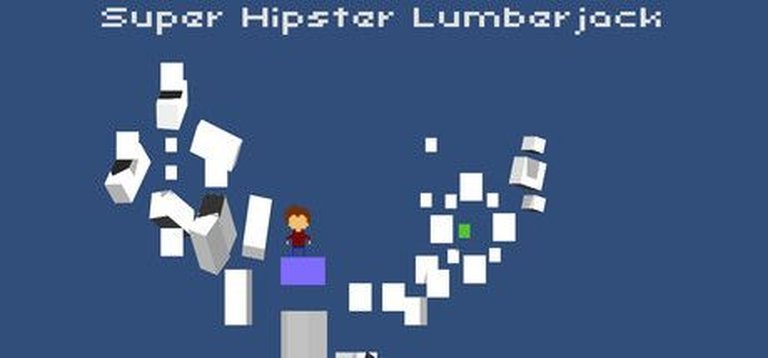
Super Hipster Lumberjack is a challenging 2D platformer where players take on the role of Noah, a game developer trapped inside his own unfinished creation. The game features side-scrolling action with stiff mechanics and minimalist geometric visuals, drawing inspiration from difficult indie platformers like I Wanna Be The Guy. While the premise hints at a meta-narrative about game development, the experience focuses more on punishing platforming with uninspired level design and a slow, unrewarding pace.
Gameplay Videos
Where to Buy Super Hipster Lumberjack
PC
Super Hipster Lumberjack Patches & Updates
Super Hipster Lumberjack Guides & Walkthroughs
Super Hipster Lumberjack Reviews & Reception
indiegamereviewer.com : Super Hipster Lumberjack seems to be inspired by other challenging, indie platformers out there. It attempts to make tricky twitchy action its bread and butter, but it fails to create something rewarding.
store.steampowered.com (77/100): Mostly Positive (77% of 327 user reviews for this game are positive).
raijin.gg (77/100): Super Hipster Lumberjack holds a 77.43% positive rating on Steam, based on 443 player reviews. This places the game in the mostly positive category, indicating generally favorable reception.
Super Hipster Lumberjack: A Meta-Narrative Wrapped in a Flawed Platformer
Introduction: The Game That Knows It’s a Game
Super Hipster Lumberjack (2015) is a paradox—a game that simultaneously celebrates and critiques the very medium it inhabits. Developed by Noah Lewin under the Day Dreamer Games banner, this indie platformer presents itself as an “unbeatable” love letter to the punishing flash games of the early 2010s, particularly the I Wanna Be The Guy! school of design. Yet, beneath its pixelated veneer lies a meta-narrative about game development itself: the protagonist, Noah, is a stand-in for the developer, trapped in his own unfinished creation.
This duality is both the game’s greatest strength and its most glaring weakness. On one hand, Super Hipster Lumberjack is a fascinating artifact of indie game culture, a self-aware experiment that blurs the line between intentional design and genuine flaws. On the other, it’s a frustrating, mechanically stiff platformer that fails to deliver the tight, rewarding challenge it aspires to. This review will dissect the game’s development history, narrative ambitions, gameplay mechanics, and legacy, ultimately arguing that Super Hipster Lumberjack is less a masterpiece and more a curious time capsule—a game that’s fascinating to analyze but often tedious to play.
Development History & Context: The Birth of a Meta-Indie
The Studio and the Solo Developer
Day Dreamer Games is, for all intents and purposes, a one-person operation. Noah Lewin, the sole developer behind Super Hipster Lumberjack, created the game as a passion project, drawing inspiration from his childhood love of difficult flash platformers. The game’s Steam description explicitly frames it as a “high school project,” though its 2015 release suggests it was refined beyond those humble origins. Lewin’s later work—including titles like Apastron and Otter Space Rescue—indicates a developer with a penchant for retro aesthetics and experimental mechanics, but Super Hipster Lumberjack remains his most meta and divisive creation.
The Gaming Landscape of 2015
The mid-2010s were a golden age for indie platformers. Games like Super Meat Boy (2010), The Binding of Isaac (2011), and Celeste (2018) had already redefined what precision platforming could achieve, blending punishing difficulty with tight controls and rewarding progression. Meanwhile, the rise of Early Access and the normalization of “unfinished” games had shifted player expectations. Titles like The Magic Circle (2015) and Undertale (2015) were exploring meta-narratives and fourth-wall-breaking mechanics, making Super Hipster Lumberjack’s premise feel both timely and derivative.
Technological Constraints and Design Philosophy
Built in Unity, Super Hipster Lumberjack is a technically modest game, requiring just 500 MB of RAM and 135 MB of storage. Its minimalist aesthetic—geometric shapes, solid colors, and a lack of textures—was likely a deliberate choice, evoking the simplicity of early flash games. However, this simplicity also contributes to the game’s visual blandness, a criticism that would later haunt its reception.
The game’s most intriguing aspect is its self-referential narrative. Noah, the protagonist, is a developer trapped in his own game, a premise that could have been a brilliant commentary on the creative process. Unfortunately, this narrative is barely explored in-game, relegated to a Steam description rather than integrated into the experience. This disconnect between ambition and execution would become a defining trait of Super Hipster Lumberjack.
Narrative & Thematic Deep Dive: The Unfinished Story of Noah
The Premise: A Developer’s Nightmare
The game’s central conceit is that Noah, the developer, has become trapped inside his own creation. This is a rich setup, ripe for exploration. The idea of a creator grappling with the consequences of their work—of being literally imprisoned by their own design—could have been a poignant metaphor for the pressures of game development, the fear of failure, or the struggle for creative control.
Yet, Super Hipster Lumberjack squanders this potential. There is no opening cutscene, no in-game dialogue, and no environmental storytelling to convey Noah’s plight. The player is simply dropped into a series of abstract platforming challenges with no context. The only hint of the narrative comes from the Steam description, which reads like an afterthought:
“Noah attempts to make a game for the first time. He then gets trapped in his own creation. He learns that making games is a lot harder than he thought.”
This lack of integration is a missed opportunity. Games like The Magic Circle (2015) and Pony Island (2016) successfully weave meta-narratives into their gameplay, using glitches, bugs, and unfinished assets as deliberate storytelling tools. Super Hipster Lumberjack, by contrast, feels like an unfinished game pretending to be about unfinished games—a distinction that becomes increasingly blurred as the player progresses.
Themes: The Illusion of Control
The game’s most compelling theme is the illusion of control. Noah, the developer, is trapped in his own game, just as the player is trapped in Lewin’s design. The game’s tagline—“You can’t beat this game!!!”—is both a challenge and a confession. It’s a dare to the player, but it also acknowledges the game’s own flaws. The frequent crashes, stiff controls, and bland level design make it feel like the player is fighting not just the game’s challenges, but the game itself.
This theme is reinforced by the game’s visual and auditory design. The royalty-free classical music that plays in the background feels like a placeholder, as if the game is still waiting for a proper soundtrack. The geometric, textureless environments evoke an unfinished prototype. Even the protagonist’s slow, deliberate movements suggest a game that hasn’t quite figured itself out.
The Lack of Payoff
The tragedy of Super Hipster Lumberjack is that its narrative and thematic ambitions are never fully realized. The game could have been a biting satire of indie game culture, a meditation on the creative process, or even a surrealist platformer in the vein of Knytt Stories. Instead, it’s a collection of disjointed ideas, none of which are explored with enough depth to leave a lasting impression.
Gameplay Mechanics & Systems: The Frustration of Precision Without Reward
Core Gameplay Loop: A Study in Stiffness
Super Hipster Lumberjack is, at its core, a precision platformer. The player controls Noah, a lumberjack armed with an axe, as he navigates a series of increasingly difficult obstacles. The controls are simple: move, jump, and (in the 2025 remaster) swing the axe. However, the execution is where the game stumbles.
The jumping mechanics feel unnaturally stiff, lacking the fluidity and responsiveness of games like Super Meat Boy or Celeste. This stiffness is exacerbated by the game’s level design, which often requires pixel-perfect jumps with little margin for error. Unlike Super Meat Boy, which uses momentum and speed to create a sense of flow, Super Hipster Lumberjack feels sluggish, as if the player is constantly fighting against the game’s physics.
Level Design: Bland and Uninspired
The levels in Super Hipster Lumberjack are a mixed bag. Some attempt to subvert player expectations with moving platforms or hidden traps, but these moments are few and far between. Most of the challenges rely on repetitive jump sequences, with little variation in mechanics or pacing.
The game’s visual design doesn’t help. The levels are composed of solid-colored geometric shapes, devoid of texture or detail. There’s no sense of place or atmosphere, no environmental storytelling to draw the player in. Compare this to Limbo (2010), which uses its monochromatic aesthetic to create a haunting, immersive world, or Celeste (2018), which ties its level design to its narrative themes. Super Hipster Lumberjack’s levels feel like placeholders, as if the game is still waiting for its final art pass.
The 2025 Remaster: A Step in the Right Direction
In 2025, Lewin released a remastered version of Super Hipster Lumberjack, addressing many of the original game’s flaws. The remaster introduces new mechanics—such as wall sliding, axe swinging, and a life system—that add depth to the gameplay. The level layouts have been rearranged for better readability, and the physics have been tweaked to feel more responsive.
These changes are welcome, but they also highlight the original game’s shortcomings. The remaster feels like the game Super Hipster Lumberjack was always meant to be—a tighter, more polished experience that better realizes its potential. However, the remaster’s existence also raises questions about the original release. If Lewin had these ideas in 2015, why weren’t they implemented from the start? Was the original game intentionally flawed to reinforce its meta-narrative, or was it simply unfinished?
Bugs and Glitches: Intentional or Unintentional?
One of the most fascinating aspects of Super Hipster Lumberjack is its relationship with bugs. The game is notorious for its crashes and glitches, from falling through the world to freezing upon loading a save file. These issues are so prevalent that they blur the line between intentional design and genuine flaws.
In a 2021 Steam forum post, a player wrote:
“When I press load my game just freezes and I need to close it? Anyone else?”
This sentiment is echoed in the Indie Game Reviewer’s critique, where the reviewer initially mistook a glitch for a deliberate design choice:
“At one point during the game I fell through the ground. It was an odd moment because I thought it was part of the game… After watching the protagonist slowly get smaller and smaller as he fell into white nothingness, I realized that it was just an actual glitch.”
This ambiguity is Super Hipster Lumberjack’s most intriguing quality. The game’s bugs and crashes could be interpreted as a meta-commentary on the unfinished nature of game development. After all, if Noah is trapped in his own unfinished game, then glitches and crashes are part of the experience. However, this interpretation only holds up if the bugs are deliberate—and there’s little evidence to suggest they are.
World-Building, Art & Sound: The Aesthetics of the Unfinished
Visual Design: Minimalism or Laziness?
Super Hipster Lumberjack’s visual style is stark and minimalist. The game’s environments are composed of solid-colored geometric shapes, with no textures or shading to speak of. The protagonist, Noah, is a simple sprite, and the enemies (in the remaster) are equally basic.
This aesthetic could be interpreted as a deliberate choice, evoking the simplicity of early flash games. However, it could also be seen as a lack of polish. Games like Thomas Was Alone (2012) prove that minimalist visuals can be emotionally resonant, using color and shape to convey personality and depth. Super Hipster Lumberjack, by contrast, feels visually inert. There’s no sense of progression or variety in the environments, no visual cues to guide the player.
Sound Design: Royalty-Free and Forgettable
The game’s soundtrack consists of royalty-free classical music, which plays in the background as the player navigates the levels. This choice is fitting for a game about an unfinished creation—it feels like placeholder music, as if the game is still waiting for its final score.
However, the music’s generic nature also contributes to the game’s lack of atmosphere. There’s no dynamic soundtrack to match the player’s actions, no tension-building cues to heighten the challenge. The music simply plays, indifferent to the player’s struggles.
Atmosphere: The Void of the Unfinished
The combination of bland visuals and forgettable music creates an atmosphere of emptiness. The game feels like a prototype, a skeleton waiting to be fleshed out. This could be intentional—after all, if Noah is trapped in an unfinished game, then the game should feel unfinished. But it’s also possible that Super Hipster Lumberjack simply lacks the resources or vision to create a more immersive world.
Reception & Legacy: The Game That Players Love to Hate
Critical Reception: Mostly Positive, Mostly Confused
Super Hipster Lumberjack holds a “Mostly Positive” rating on Steam, with 77% of its 327 reviews recommending the game. However, this rating is somewhat misleading. Many of the positive reviews seem to appreciate the game’s meta-narrative and low price point ($0.50) rather than its gameplay.
A common sentiment among players is that the game is “so bad it’s good.” One Steam reviewer wrote:
“This game is a glorious mess. It’s like the developer knew exactly how frustrating it would be and leaned into it. I respect the audacity.”
Others, however, are less forgiving. The Indie Game Reviewer’s critique sums up the game’s flaws succinctly:
“Super Hipster Lumberjack seems to be inspired by other challenging, indie platformers out there. It attempts to make tricky twitchy action its bread and butter, but it fails to create something rewarding.”
Commercial Performance: A Niche Success
Despite its flaws, Super Hipster Lumberjack has sold over 33,000 copies on Steam, a respectable number for an indie game priced at $0.50. Its low cost and meta-narrative have made it a cult favorite among players who enjoy “so bad it’s good” experiences.
Legacy: A Time Capsule of Indie Game Culture
Super Hipster Lumberjack’s legacy is that of a curiosity—a game that’s more interesting to discuss than to play. It’s a product of its time, reflecting the mid-2010s indie scene’s obsession with meta-narratives, difficult platformers, and unfinished games.
The 2025 remaster suggests that Lewin is still grappling with the game’s potential, attempting to refine its mechanics and realize its ambitions. However, the remaster also highlights the original game’s flaws, making it clear that Super Hipster Lumberjack was always more of an experiment than a polished experience.
Conclusion: A Flawed Experiment Worth Studying
Super Hipster Lumberjack is a game that defies easy categorization. It’s simultaneously a love letter to difficult platformers, a meta-narrative about game development, and an unfinished mess. Its greatest strength—its self-aware premise—is also its greatest weakness, as the game fails to fully explore its own ideas.
As a gameplay experience, Super Hipster Lumberjack is frustrating and bland. Its stiff controls, uninspired level design, and frequent bugs make it a chore to play. However, as a cultural artifact, it’s fascinating—a snapshot of indie game development in the mid-2010s, when meta-narratives and unfinished games were becoming increasingly common.
Ultimately, Super Hipster Lumberjack is a game that’s more interesting to analyze than to play. It’s a flawed experiment, but one that’s worth studying for its ambition and its willingness to embrace its own imperfections. If you’re a fan of difficult platformers or meta-narratives, it’s worth the $0.50 asking price. Just don’t expect a masterpiece.
Final Verdict: 5/10 – A fascinating mess, but a mess nonetheless.