
- Release Year: 2012
- Platforms: Windows
- Publisher: Uber Entertainment, Inc.
- Developer: Uber Entertainment, Inc.
- Genre: Action
- Perspective: Behind view
- Game Mode: Online PVP
- Gameplay: MOBA, Robots, Special moves, Spellcasting, Third-person shooter, Turrets
- Setting: Futuristic, Sci-fi
- Average Score: 86/100
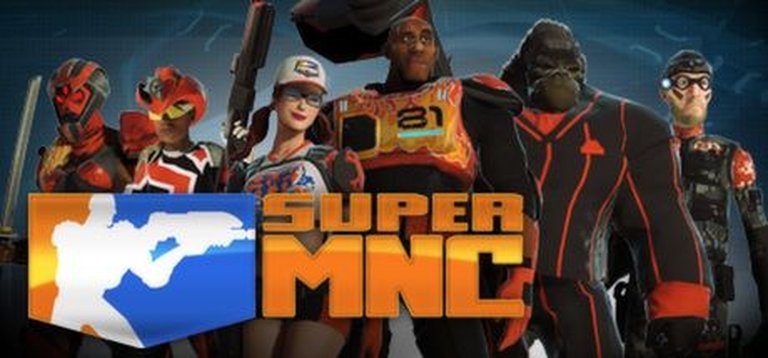
Description
Super Monday Night Combat is a free-to-play, team-based third-person shooter that merges fast-paced gunplay with MOBA-inspired character abilities in a sci-fi futuristic setting. Set in a satirical, sports-themed arena where combat is entertainment, players choose unique ‘Pros’ to engage in objective-driven matches featuring bots, turrets, and strategic tactics, with continuous updates enhancing the competitive experience.
Gameplay Videos
Super Monday Night Combat Guides & Walkthroughs
Super Monday Night Combat Reviews & Reception
metacritic.com (86/100): The best-yet marriage of third-person gunning and MOBA spellcasting.
ign.com : Super Monday Night Combat represents a marriage of DotA-like games and first-person shooters that largely works.
Super Monday Night Combat: A Retrospective Review of Gaming’s Most Chaotic, Short-Lived MOBA-Shooter Hybrid
Introduction: The Sport of the Future, Briefly
In the early 2010s, the gaming landscape was a simmering cauldron of genre experimentation. The monumental success of Defense of the Ancients (DotA) had birthed the modern Multiplayer Online Battle Arena (MOBA), while the tightly coordinated, class-based chaos of Team Fortress 2 redefined team shooters. Into this fertile, clashing ground stepped Uber Entertainment, a studio of veteran developers with a bold, almost unthinkable proposition: What if you married the strategic, lane-pushing, hero-centric depth of DotA with the visceral, gun-focused, third-person action of a console shooter? The result was Super Monday Night Combat (SMNC), a game that burst onto Steam in April 2012 not with a planned launch, but with the digital equivalent of a stadiumPA announcer screaming, “IT’S ACCIDENTAL!” This is the story of a game that was, by all critical accounts, a brilliant and innovative fusion—a “best-yet marriage of third-person gunning and MOBA spellcasting,” as PC Gamer declared—yet one that ultimately became a cult footnote, its servers silenced by regulatory paperwork and a player base that couldn’t sustain its complex, demanding vision. As a historical artifact, SMNC represents a fascinating “what if”: a genuinely pioneering design that foreshadowed the hero shooter boom, hamstrung by a brutal learning curve, infamous matchmaking, and the cruel timing of a saturated market.
Development History & Context: An Accidental Launch and a Studio’s Hail Mary
The Studio and the Vision: Uber Entertainment was founded in 2008 by veterans from companies like Microsoft Game Studios and Gas Powered Games, including the celebrated designer Chris Taylor (Total Annihilation, Dungeon Siege). Their first title, Monday Night Combat (2010), was a successful Xbox Live Arcade title that blended third-person shooting with light tower defense and a sharp, satirical sports-commentary aesthetic. For its sequel, Uber aimed not for an incremental upgrade but a radical genre pivot. Inspired directly by the emergent popularity of DotA, the team set out to transform their shooter into a “real” MOBA, retaining the over-the-top sports parody shell but rebuilding the core loop around classic DotA mechanics: lanes, creeps (bots), towers (turrets), and a focus on team strategy over lone-wolf killstreaks.
Technological Constraints and “The Rules Have Changed”: Built on the robust but aging Unreal Engine 3, SMNC was technically competent but not a visual showcase. Its charm lay in a saturated, comic-book color palette and exaggerated character designs. More importantly, Uber made a foundational and contentious decision: they would make the game free-to-play from day one, funded exclusively by cosmetic microtransactions. This was a bold, player-friendly stance in an era rife with “pay-to-win” F2P models. Coupled with this was a development philosophy encapsulated in their weekly/bi-weekly “Rule Change” updates. From closed beta (starting October 2011) through launch and for over a year after, Uber relentlessly tweaked balance, added new “Pros” (heroes), maps, and modes, and addressed bugs with a transparency and frequency reminiscent of Valve’s Team Fortress 2 updates. This created a vibrant, if volatile, meta-game where the “rules” were genuinely in constant flux.
The Premature Launch and Its Consequences: The launch itself is legendary. Intended for a slow, controlled rollout, the game was accidentally given an unlimited-use Steam key on April 17, 2012. The floodgates opened. Faced with a torrent of unexpected players, Uber made the snap decision to officially launch two days later on April 19 rather than attempt to revoke the keys. This “open beta” feel persisted for months. While it generated immense initial buzz and player numbers (peaking at ~5,800 concurrent users in May 2012), it also flooded the fragile ecosystem with inexperienced players, exacerbating the matchmaking problems that would become the game’s most cited flaw. The community, expecting a polished product, instead got a live experiment.
Narrative & Thematic Deep Dive: Lethal Sport as Satirical Dystopia
SMNC’s narrative is not a traditional story but a pervasive, diegetic theme and setting. The game presents itself as the “most popular lethal sport of the future,” broadcast by the manic, sports-radio-style commentary duo Chip Valvano and GG Stack (replacing the original Mickey Cantor). This framing is not window dressing; it is the game’s soul.
- The World: The arenas—Gun Mountain, The Dome, etc.—are sprawling, futuristic stadiums populated by screaming virtual fans, cheering “pits” with scantily clad “pit girls,” and a omnipresent media presence. It’s a dystopian spectacle where warfare is entertainment, and death is a statistic on a scoreboard. The very objective, destroying the enemy Moneyball (a glowing golden orb), is framed as a financial victory, a mercenary twist on the classic MOBA “Ancient.”
- The Characters (Pros): Each playable Pro is a hyper-stylized athlete with a gimmick. They are less “warriors” and more superstar performers with signature moves, trash-talk voice lines, and purchasable taunts. From the hulking Tank who charges with a battle cry to the villainous Assassin who whispers threats before killing, to the inexplicably British Wascot who spanks opponents with his noodle arms, every character reinforces the game’s core identity: this is sports theater, not grim warfare. Their backgrounds are implied through design and voice, not exposition—they are celebrities in a bloodsport, and the player is the audience’s proxy.
- The Announcers: Chip and GG are the game’s constant, providing contextual commentary on kills, bot pushes, and Moneyball damage. Their lines range from genuinely funny (“He’s going for the Moneyball! And he’s got it! …Nope, he doesn’t.”) to gratingly repetitive. They embody the game’s satirical target: the empty, hyperbolic spectacle of sports broadcasting applied to lethal combat. Their presence turns every match into a performance, softening the edges of the MOBA’s strategic tension with comedic relief.
- Underlying Themes: At its heart, SMNC explores commodification and spectacle. Everything is a product: characters are “Pros” to be bought (with in-game currency or real money), victories are financial, and even death is a highlight reel. It’s a sharp, if broad, parody of the growing convergence of esports, free-to-play monetization, and reality-TV-style entertainment. The game doesn’t critique this world so much as revel in it, asking the player to lean into the absurdity.
Gameplay Mechanics & Systems: A Brilliantly Flawed Fusion
This is where SMNC’s genius and its greatest stumbles collide. The core loop is a masterclass in hybrid design, but its execution was perpetually uneven.
Core Objective & The Bot_Lane System: Two teams of five (Hot Shots vs. Icemen) compete on symmetrical maps with three primary lanes. The goal is to destroy the enemy Moneyball. Protecting it are turrets with energy shields. Crucially, turret shields can only be disabled by the team’s AI-controlled “bots” (creeps) reaching them. Players must escort their bot waves, clear enemy bots and players, and then dismantle the now-vulnerable turrets to create a path to the Moneyball. This brilliantly forces a dual commitment: players must manage direct PvP combat and the macro-strategic push of the bot lanes. Killing players grants cash, but letting your bots die en route to a turret is a strategic failure.
The “Pro” Class System: SMNC inherited and expanded upon MNC’s class system, organizing its 13+ Pros into five archetypes:
1. Commandos (Assassins): Fragile, mobile, high burst damage (e.g., Assassin with invisibility, Captain Spark with dashes). Focus on picking off isolated targets.
2. Strikers (DPS): Versatile damage dealers, strong in mid-range lane control (e.g., Assault with jetpack/bombs, Gunslinger with dual pistols).
3. Enforcers (Tanks/Bruisers): Durable frontline fighters with crowd control (e.g., Gunner with deployable turrets/rockets, Tank with shield/charge).
4. Defenders (Supports): Healers, buffer, utility dealers (e.g., Combat Girl with AoE heals/kitten turrets, Leo with gadgets/force fields).
5. Sharpshooters (Ranged/Snipers): Long-range precision and area denial (e.g., Sniper with charged headshots, Artemis with debuffing arrows).
Each Pro has a standardized ability kit: Primary Fire, Alternate Fire, Skill 1, Skill 2, and an Ultimate. Abilities are upgraded in-match using cash earned from kills, assists, and bot destruction. This in-match progression is critical: a fully upgraded ultimate or a maxed-out skill can turn the tide of a team fight.
The Economy & Progression: Cash is the central resource. It’s used for:
* Ability Upgrades: Permanent for the match.
* Spawn Bots: To reinforce or initiate a push.
* Buy Products: One-use items from vending machines (e.g., health pack, speed boost, “Grapple” for mobility).
* Buyback After Death: Instead of a fixed timer, you pay cash to respawn immediately, creating a punishing resource drain if you die frequently.
* Endorsements: Pre-match, permanent-per-match perks (e.g., +Max Health, +Critical Chance) purchased with a separate currency, allowing build customization.
The meta-progression is separate. Playing matches earns Combat Credits (CC) and XP to unlock Pros (initially only a rotating free weekly selection is available), cosmetic outfits, voice packs, and permanent “boosts” (e.g., +% cash from kills). Crucially, nothing in the cash shop granted a direct combat advantage. You could buy a Pro with real money or CC, but all gameplay-affecting upgrades (endorsements, in-match abilities) were earned through play. This was a shining example of a fair F2P model.
Game Modes:
* Super Crossfire (Standard 5v5): The pure, intended competitive experience. Slow, strategic pushes, turret destruction, Moneyball assaults.
* Turbocross: A direct response to fans of the faster original MNC. Increases damage, player speed, allows turret rebuilding, removes passive skill upgrades. Results in frantic, high-dissonance, “hardcore” matches where every fight is a brawl and strategy is secondary to aggression and reflex.
* Super Blitz: A PvE survival mode. Five players defend their Moneyball against endless bot waves, repairing turrets between rounds. A good training ground and casual alternative.
Innovations & Fatal Flaws:
* Innovation: The bot-lane dependency for turret destruction was a brilliant strategic choke point. The class-based ability system in a shooter was years ahead of its time, prefiguring Overwatch. The cash-based buyback and in-match economy created tense resource management.
* Flaws: The matchmaking was catastrophic. It regularly mismatched veterans with complete newcomers, and its most infamous flaw was no replacement for leavers. If a player quit, the slot remained empty for the entire game. In a 5v5 mode where one missing body could doom a team to an “Annihilator” wipe (a super-weapon that spawns when a team is overwhelmingly dominant), this was debilitating. The learning curve was brutal, with poorly explained systems (endorsements, products, advanced ability use) and a confusing menu overlay. Finally, the bot AI was notoriously slow and predictable in Crossfire, leading to plodding lulls that frustrated shooter fans expecting constant action.
World-Building, Art & Sound: A Cartoon Dystopia That Screamed Personality
SMNC’s aesthetic was its most immediately accessible feature. It presented a bright, glossy, hyper-stylized future that looked like a cross between The Running Man, TRON, and a particularly garish sports broadcast.
* Visual Design: Character models were exaggerated and caricatured, with bold outlines and vibrant colors. The maps were intricate playgrounds of neon, steel, and screaming virtual crowds. Environmental hazards like jump pads and collapsing structures added dynamic movement. The UI was dense and busy, mimicking a sports broadcast with score ticks, player stats, and announcer alerts—authentic to the theme but often cluttered.
* Sound Design: The voice acting was the star. Chip Valvano and GG Stack delivered hundreds of lines with perfect, unhinged sports-commentator energy. Their repetitive but often hilarious quips (“He’s got a bead on the Moneyball! …And he misses!”) cemented the game’s identity. Weapon sounds were punchy and satisfying, and the background music was a mix of pumping rock and electronica that matched the frantic pace. The soundscape didn’t just accompany the action; it narrated and judged it, constantly reminding you that you were in a game show.
* Atmosphere: The overwhelming feeling was one of satirical excess. It was loud, proud, and deliberately silly. Even the most violent kill was punctuated by a commentator’s joke or a character’s flamboyant taunt. This tone was a double-edged sword: it made the game more accessible and less intimidating than a grim MOBA like Dota 2, but it also undercut any sense of strategic gravitas, leading some hardcore players to dismiss it as a “casual” or “clown” game.
Reception & Legacy: Critical Darling, Commercial Slow-Crash
Critical Reception: Reviews were generally favorable (Metacritic 76/100), with praise heaped on its innovative core concept and fair F2P model.
* PC Gamer (86%) called it “the best-yet marriage of third-person gunning and MOBA spellcasting.”
* GameCritics.com (85%) celebrated Uber’s responsiveness: “the shortcomings from the first game have been dealt with… with a Valve-like intensity.”
* IGN (75%) was more mixed, acknowledging it “would have been a perfectly legitimate retail release” but citing the “frustrating matchmaker” and the learning curve.
Common critical threads: Brilliant fusion idea, fantastic humor/art, great monetization, but hampered by awful matchmaking, confusing UI, and bot pacing issues.
Player Reception & Commercial Trajectory: User scores were far more polarized and ultimately negative (Steam ~3.7/10 at closure). The same flaws critics noted—matchmaking, leavers, complexity—became existential for the community. The steep skill floor meant many new players quit after a few punishing losses. The competitive mode felt unforgiving when a teammate disconnected. While the Turbocross mode attracted a more casual, action-oriented audience, it fractured the already small player base.
The game’s peak was its launch window. Without the marketing push of a traditional AAA release and competing directly with the behemoths League of Legends and the burgeoning Dota 2, SMNC struggled to retain players beyond its curious, core fanbase. The weekly updates kept the dedicated happy but couldn’t solve the fundamental matchmaking and population issues. By 2014, concurrent numbers were in the hundreds. The final blow was not gameplay-related but regulatory: in April 2018, Uber announced the servers would shut down on May 23, 2018, citing low player count and the prohibitive cost of updating the game to comply with the European Union’s General Data Protection Regulation (GDPR). There was no offline mode; the game simply ceased to exist.
Legacy and Influence: SMNC’s historical importance is that of a pioneering, if commercially unsuccessful, prototype.
1. The Hero Shooter Blueprint: Years before Overwatch (2016) or Paladins (2016) solidified the genre, SMNC proved that distinct, ability-based classes with ultimates could function in a third-person shooter framework. Its class archetypes (tank, healer, sniper, assassin) are directly recognizable in today’s hero shooters.
2. Fair F2P as a Viable Model: Its commitment to cosmetics-only monetization, while not a financial smash hit, demonstrated that a high-quality, balanced F2P game could exist without predatory mechanics—a lesson many later studios took to heart.
3. The “Accidental Launch” and Live Service Experiment: Uber’s weekly “Rule Change” patches were an early, aggressive form of live-service, data-driven design iteration. The game was a constantly evolving experiment, for better (balance fixes) and worse (metagame whiplash).
4. A Cautionary Tale: Its failure is a masterclass in how bad matchmaking and a hostile new-player experience can kill a brilliant game. No amount of innovation matters if players can’t get into a fair, full match. It also shows the perils of launching a complex, niche game into a market dominated by giants with established ecosystems.
Ultimately, Super Monday Night Combat is remembered not for the scores it garnered or the players it sustained, but for the vision it daringly pursued. It was a game that truly tried to merge two of PC gaming’s biggest trends in a novel way, wrapped in a uniquely insane包裝. It was too complex for the casual shooter fan, too silly for the hardcore MOBA purist, and too compromised by technical and social systems to thrive. Yet, for those who stuck through the bad matchmaking and learned its intricate dances, it offered a depth and chaotic joy unmatched by its contemporaries. It was, for a brief, shining, accidentally-launched moment, a super idea that the world wasn’t quite ready for, or that the world simply couldn’t find.
Conclusion: A Cult Classic of Unfulfilled Potential
Super Monday Night Combat stands in video game history as a glorious, fascinating failure. It was a game that understood the future—the fusion of hero abilities with shooter mechanics—years before it became the industry standard. Its commitment to a ethical, fun-focused free-to-play model remains exemplary. Its world, a cacophonous satire of sports and violence, was bursting with personality. Yet, it was brought low by the very systems it relied upon: a matchmaking system that was arguably one of the worst in modern multiplayer history, a new-player experience that offered scant guidance in a complex genre hybrid, and the consequent inability to build and maintain a critical mass of players. Accidental launch hype faded into the grind of persistent imbalance and empty lobbies.
Its legacy is not in the franchises it spawned—Uber Entertainment would later pivot to other projects before shuttering—but in the design DNA it contributed. The hero shooter boom owes a subtle debt to SMNC’s early experiment in marrying class-based abilities with third-person gunplay. It serves as a potent reminder that innovation without accessibility is a prison, and that a brilliant core loop can be strangled by poor social systems. For historians and designers, SMNC is an essential case study. For players, it is a beloved ghost—a game remembered with a fond, frustrated sigh, a what-if that burned brightly for a moment before the regulatory curtain fell, leaving behind only the echo of a commentator’s voice and the memory of a Moneyball exploding in a shower of digital coins. It was super in ambition, super in personality, and ultimately, super in its tragic inability to find the audience it deserved.