
- Release Year: 2013
- Platforms: iPad, Macintosh, Windows
- Publisher: Coffee Stain Studios AB
- Developer: Coffee Stain Studios AB
- Genre: Strategy, Tactics
- Perspective: Diagonal-down
- Game Mode: Single-player
- Gameplay: Tower defense
- Setting: Futuristic, Sci-fi
- Average Score: 88/100
Description
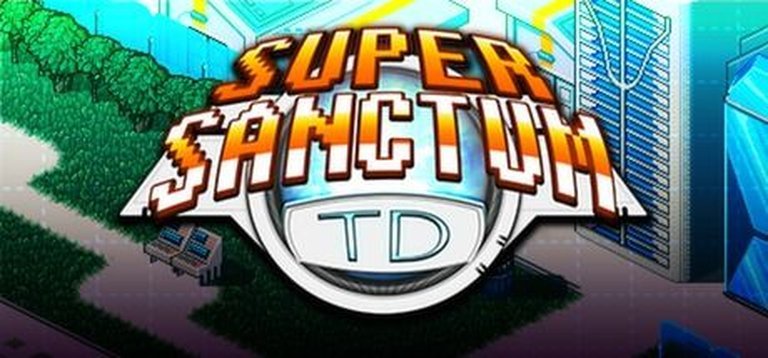
Super Sanctum TD is a sci-fi tower defense game set in a futuristic world where players defend their core from waves of aliens navigating predetermined paths. Using 2D isometric graphics, players strategically place building blocks to shape enemy routes, construct and upgrade towers to eliminate threats, and deploy cooldown-based skills like bombs, freezes, and boosts during intense battles, progressing through a campaign with unlocks, perks, and survival modes for global leaderboards.
Gameplay Videos
Where to Buy Super Sanctum TD
PC
Super Sanctum TD Guides & Walkthroughs
Super Sanctum TD Reviews & Reception
metacritic.com : Super Sanctum TD is a harsh but fair tower defense game.
gamepressure.com (87/100): Very Positive
ztgd.com : I can’t believe I missed this gem of a game.
steambase.io (87/100): Very Positive
Super Sanctum TD: Review
Introduction
In an era dominated by flashy AAA blockbusters and endless live-service grindfests, Super Sanctum TD emerges as a pixelated beacon of pure, unadulterated strategy—a retro tower defense gem that harkens back to the golden age of arcade precision while demanding modern tactical mastery. Released in 2013 as a spin-off to Coffee Stain Studios’ innovative Sanctum series, this isometric defender strips away the first-person shooter hybrid elements of its siblings to deliver a “traditional” take on the genre, framed cleverly as an in-universe arcade cabinet within Sanctum 2‘s headquarters. Its legacy lies in distilling tower defense to its strategic core: meticulous path-building, loadout customization, and clutch ability usage against relentless alien hordes. My thesis is unequivocal: Super Sanctum TD is an underrated masterpiece of the indie TD scene, blending replayable depth, punishing difficulty, and nostalgic charm into a $5 package that punches far above its weight, cementing Coffee Stain’s early reputation for clever genre twists.
Development History & Context
Coffee Stain Studios AB, a plucky Swedish indie outfit founded in 2010, burst onto the scene with Sanctum (2011), a bold fusion of FPS and TD that captured the imagination of strategy fans craving hybrid innovation. By 2013, amid the indie explosion fueled by Steam Greenlight and the post-Minecraft creator economy, the studio—still a small team of around 15 for this project—tackled Super Sanctum TD as a side project, reportedly the result of nine months of focused development. Producer and programmer Anton Westbergh led the charge, supported by a tight-knit crew including programmers like Line Jakobsen, Robin Fagerström, and artists/UI designers Paul Yance and Joakim Sjöö. Music came from Gustav Tivander and Leonard Hummer, with sound handled by Extreme Audio Recording. Leveraging lightweight middleware like Cocos2D and Marmalade enabled cross-platform portability (Windows launch on May 9, 2013; Mac later that year; iPad in 2014), fitting the era’s mobile-to-PC trend.
The gaming landscape of 2013 was ripe for TD dominance: Plants vs. Zombies had popularized the genre, while titles like Defense Grid emphasized pathing puzzles. Yet Sanctum‘s unique FPS-TD blend left fans hungry for a pure TD experience within its universe. Coffee Stain delivered, positioning Super Sanctum TD as a budget companion to Sanctum 2 (also 2013), even bundling it as a pre-order incentive. Technological constraints were minimal—low-spec requirements (1 GHz CPU, 1 GB RAM)—allowing broad accessibility, but post-launch updates addressed balance issues, revamping the UI, perk system, and economy for consistency. Player forums reveal early jank, like skill bars reminiscent of Gears of War reloading, iterated into simpler cooldowns. This evolution mirrored Coffee Stain’s growth; team members later spearheaded hits like Goat Simulator and Satisfactory, showcasing how Super Sanctum TD honed their iterative design ethos in a post-World of Goo indie renaissance.
Narrative & Thematic Deep Dive
Super Sanctum TD wears its narrative lightly, a deliberate choice aligning with its arcade roots and the Sanctum series’ minimalist sci-fi lore. There’s no bombastic cutscenes or voiced protagonists; instead, you’re an omniscient tactician overseeing a slot-machine-styled interface in Sanctum 2‘s HQ, defending energy cores from waves of ravenous “Lumes”—grotesque aliens bent on planetary annihilation. The plot unfolds across a campaign of sequential levels, pitting your defenses against escalating threats: nimble Walkers, speedy Runners, tanky Brood Mothers, and colossal bosses that bulldoze paths.
This sparsity amplifies thematic depth. At its heart, the game explores defense as existential strategy—a metaphor for humanity’s precarious foothold against cosmic invasion, echoing Sanctum‘s themes but abstracted into pure systems. No characters drive the story; dialogue is absent, replaced by terse level briefings and upgrade unlocks that narrate progression through achievement (“Hero of Elysion?”). Lumes embody primal chaos: mindless swarms contrasting your calculated order, forcing themes of preparation versus panic. Survival mode eternalizes this, turning finite defense into infinite endurance tests, leaderboard spots becoming badges of tactical immortality.
Deeper still, perks and loadouts personify player agency—no “Rex” hero from the main series, but your evolving buildout acts as a silent protagonist. Unlocks reward persistence, theming growth as adaptation in adversity. Critiques note the looseness (Fandom wiki calls it “generally the same” as Sanctum), but this restraint elevates replayability: narrative emerges from emergent chaos, like a boss shattering your maze, evoking vulnerability in a futuristic war. In 2013’s lore-heavy RPG glut, this purity is refreshing, prioritizing mechanical storytelling over exposition.
Gameplay Mechanics & Systems
Super Sanctum TD‘s brilliance lies in its deconstructed core loop: build, defend, adapt. Pre-wave, lay building blocks to forge enemy paths—crucial for maze optimization, as Lumes spawn from fixed points toward your core. Towers (e.g., Gatlings for rapid fire, Flamers for DoT crowds, Violators/Lightnings for energy bursts, Amp/Slow Fields for control) snap atop blocks, upgradable to Level 3 (no overcharge, unlike Sanctum). Loadouts limit initial slots (expanding via player level), demanding curation: pair physical (crit-focused perks) with energy trees for synergy.
Waves unleash hell—10 in campaign (Normal/Hard), endless in Survival. Kills yield cash/XP; crates (unlockable) boost economy. Mid-wave, sell/upgrade dynamically, fast-forward for aggression. Skills shine in crisis: cooldown-tied actives like Smart Bombs, Mines, Pulse Fields, Black Holes, Freeze (halts foes), Boost (tower buffs), and Gravity Shift/Air Strike flip tides. Perks (one per level-up across five trees: Physical/Energy Towers, Economy, Skills, Effects) specialize—e.g., slows dealing DPS, crit chains—yielding exponential depth. UI, post-overhaul, is intuitive (mouse/point-select), though early versions frustrated with convoluted bars.
Flaws? Hard mode ramps Lume HP/damage brutally; some updates nerfed cash, alienating veterans (Steam forums lament lost “reaction time” skills). Innovation peaks in interdependence: poor paths doom towers, skills bail mazes, perks enable meta-shifts. Campaign unlocks feed meta-progression; Survival leaderboards reward optimization. Exhaustive yet accessible, it nails 5-10 hour campaigns ballooning to dozens via Hard/Survival, challenging pros without alienating casuals.
World-Building, Art & Sound
The sci-fi/futuristic setting is a neon-drenched alien frontier: cores pulse as lifeblood on blocky planets, Lumes slither in grotesque 16-bit sprites—pixelated horrors evoking Command & Conquer‘s urgency but arcade-ified. Isometric views craft claustrophobic arenas, atmospheres tense via escalating swarms overwhelming mazes. Visual direction nails retro homage: chunky pixels, vibrant palettes (neons against voids), mimic 90s Flash/16-bit era, slot-machine frame adding meta-layer. No bloat—levels vary topographies, bosses warp paths.
Art (Anders Larsson, Joakim Sjöö) prioritizes clarity: tower ranges glow, paths intuitive. Sound design amplifies immersion—Extreme Audio’s crisp pew-pews, alien gurgles, explosive booms sync perfectly, building dread via wave alerts. Gustav Tivander/Leonard Hummer’s MIDI-esque synths pulse arcade urgency, looping without fatigue, evoking Geometry Wars. Together, they forge nostalgic tension: pixels belie depth, sound sells swarm panic, elevating basic TD to atmospheric triumph.
Reception & Legacy
Launch reception was glowing but niche: Steam’s “Very Positive” (85-87% from 1,500+ reviews), GameZone 9/10 (“best-kept secret”), ZTGD 9.5/10 (“gem”), Kotaku praise. MobyGames: 90% critics (one review), 4/5 players. iOS ports scored 70-80 (Pocket Gamer: “deceptively involving”). Commercially, $4.99 Steam staple (often bundled), modest but enduring sales via Sanctum halo.
Reputation evolved positively: 2014 overhaul fixed balance/UI, boosting retention despite gripes (forums: “harder now”). Legacy? Influenced TD indies via perk/loadout depth, prefiguring Kingdom Rush metas. Cemented Coffee Stain’s versatility—team parlayed to Goat Simulator absurdity, Satisfactory ambition. No direct sequels, but Sanctum echoes in modern hybrids (Orcs Must Die!, Dome Keeper). In TD history, it’s a pure strain amid hybrids, proving retro minimalism endures.
Conclusion
Super Sanctum TD masterfully marries arcade nostalgia with strategic profundity, its maze-crafting, perk-twisted loadouts, and clutch skills forging timeless replayability. Flaws like post-patch learning curves pale against strengths: punishing yet fair, deep yet digestible. In video game history, it occupies a vital indie niche—a 2013 bridge from Sanctum‘s innovation to Coffee Stain’s empire, outshining flashier peers as essential TD canon. Verdict: 9.2/10. Buy it now—defend that core, claim your leaderboard throne, and rediscover why strategy endures.