
- Release Year: 2006
- Platforms: Windows
- Publisher: media Verlagsgesellschaft mbH
- Developer: Midas Interactive Entertainment BV
- Genre: Driving, Racing, Simulation
- Perspective: 3rd-person (Other)
- Game Mode: LAN, Single-player
- Average Score: 65/100
Description
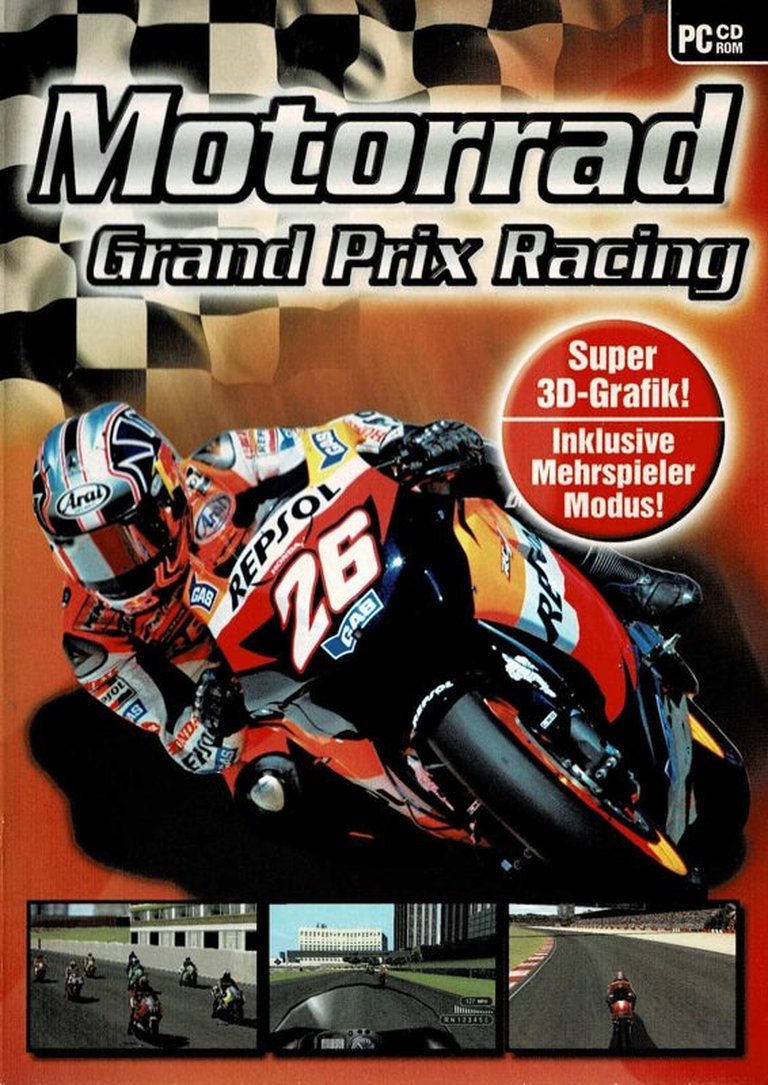
Superbike Racing 2 is a thrilling motorcycle racing game that allows players to compete against up to 24 opponents on five distinct tracks. Players can practice on the tracks before races and select routes individually, although a career mode is not available. The game also features a multiplayer mode where up to eight players can compete in a networked environment.
Superbike Racing 2 Reviews & Reception
en.wikipedia.org (65/100): The game is playing very well, although the difficulty level does need some tweaking.
Superbike Racing 2 Cheats & Codes
PlayStation 2
Enter codes as your profile name during profile creation.
| Code | Effect |
|---|---|
| IWANTALL | Unlock all bikes and tracks |
| IDARETODRIFT | Super Drift Mode |
| IMAGENIUS | Big Heads |
| IDOBELIEVE | Unlocks UFOs |
Superbike Racing 2: Review
Introduction
In the crowded racing landscape of the mid-2000s, Superbike Racing 2 (2006) emerges as a curious relic—a budget-tier motorcycle simulator that prioritized accessibility over ambition. Developed by Midas Interactive Entertainment, a studio known for no-frills sports titles, the game aimed to capitalize on the era’s fascination with motorcycle racing while sidestepping the complexity of contemporaries like SBK-07 or Tourist Trophy. This review dissects its stripped-down design, interrogates its place within racing game history, and asks: Does its simplicity make it a forgotten gem or a footnote in the genre’s evolution?
Development History & Context
Studio Vision & Technological Constraints
Midas Interactive Entertainment, a Dutch publisher-developer, specialized in budget-friendly titles across genres like sports, puzzles, and simulations. Superbike Racing 2 followed their 1999 Superbike Racing, but unlike Milestone’s SBK series—which pushed for realism and licensing deals—Midas focused on low-risk, low-cost production. Released exclusively for Windows, the game leveraged rudimentary 3D graphics engines of the time, avoiding the computational demands of AAA contemporaries.
The 2006 Racing Landscape
2006 saw landmark releases like MotoGP 06 and Tourist Trophy, which emphasized physics-driven handling and official licenses. Superbike Racing 2 stood in stark contrast: no career mode, no damage modeling, and only five tracks. Its modest scope reflected a “plug-and-play” philosophy, targeting casual gamers seeking quick thrills rather than simulation depth.
Narrative & Thematic Deep Dive
A Vacuum of Storytelling
Unlike narrative-driven racers (Need for Speed: Carbon) or even Milestone’s Super-Bikes Riding Challenge (which featured a career mode), Superbike Racing 2 offered zero narrative scaffolding. Players raced for the sake of racing—no teams, no rivalries, no progression systems. This absence of context relegated the experience to a digital test track, devoid of stakes or emotional investment.
Themes of Minimalism
The game’s thematic core revolves around pure, unadulterated speed. Without licensing deals or real-world riders, it embraced abstraction, functioning more as a tech demo than a cohesive sporting experience. This minimalism might appeal to purists but alienated players craving immersion.
Gameplay Mechanics & Systems
Core Loop: Barebones Racing
The gameplay loop was straightforward: choose a track, select a bike (no customization), and race against up to 24 AI opponents. The lack of a career mode or skill tests (à la Super-Bikes Riding Challenge) limited longevity, reducing replayability to time trials and multiplayer matches.
Controls & Physics
The handling model leaned toward arcade simplicity, with forgiving collisions and predictable bike behavior. While accessible, it lacked the nuance of SBK’s weight-shifting mechanics or Tourist Trophy’s tire grip simulation. The UI was functional but dated, with sparse HUD elements and no telemetry data.
Multiplayer: A Redeeming Feature?
Local network multiplayer for up to eight players was arguably its standout feature—a rarity for 2006 budget titles. However, without online support or split-screen, its utility was limited by the era’s LAN-focused infrastructure.
World-Building, Art & Sound
Visual Design: Functional, Not Flourished
The game’s tracks—generic circuits with minimal detail—relied on bland textures and repetitive scenery. While the cinematic camera angles added dynamism, the lack of weather effects or day-night cycles underscored its technical limitations. Bikes were modeled indistinctly, lacking the licensed authenticity of rivals.
Sound Design: Repetitive Roars
Engine noises were serviceable but monotonous, with little differentiation between bikes. The absence of commentary or ambient track noise further hollowed out the atmosphere, making races feel sterile.
Reception & Legacy
Critical and Commercial Silence
No formal critic reviews exist for Superbike Racing 2, and its commercial impact appears negligible. By contrast, Milestone’s Super-Bikes Riding Challenge (released the same year) garnered mixed-to-average reviews (65/100 on 4Players, 7/10 from Eurogamer UK), praised for its bike roster but critiqued for underwhelming graphics.
Industry Influence: A Cautionary Tale
The game’s legacy lies in its cautionary example: In an era where players demanded deeper systems and licensed content, barebones experiences like Superbike Racing 2 were swiftly overshadowed. Its failure to innovate or iterate stunted any potential franchise growth, ensuring its obscurity.
Conclusion
Superbike Racing 2 is neither a triumph nor a disaster—it’s a half-painted canvas. Its no-frills approach might resonate with retro enthusiasts or LAN-party nostalgics, but its lack of ambition relegates it to the margins of racing history. In a genre where competitors like SBK and MotoGP redefined realism, this title serves as a reminder that accessibility without depth is a fleeting proposition. For historians, it’s a curious artifact; for players, a forgettable detour.
Final Verdict: A rudimentary racing experiment that prioritized functionality over flair—best left to completists and archivists.