
- Release Year: 2015
- Platforms: iPad, Linux, Macintosh, Windows
- Publisher: Phoenix Online Publishing, LLC
- Developer: No Bull Intentions Ltd
- Genre: Adventure
- Perspective: 3rd-person (Other)
- Gameplay: Graphic adventure, Puzzle elements
- Average Score: 80/100
Description
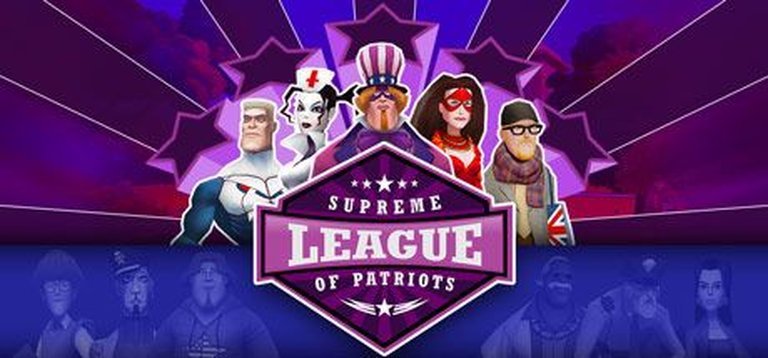
Supreme League of Patriots: Issue 1 – A Patriot is Born is a comedic graphic adventure game with puzzle elements and a point-and-select interface. It serves as the origin story for a new superhero, inviting players to join the Supreme League of Patriots in an irreverent and humorous take on superhero tropes and patriotism, presented through episodic gameplay.
Gameplay Videos
Supreme League of Patriots: Issue 1 – A Patriot is Born Guides & Walkthroughs
Supreme League of Patriots: Issue 1 – A Patriot is Born Reviews & Reception
store.steampowered.com (80/100): The results are hours of laughs with dashes of clever satire
gamegrin.com : I really wasn’t enjoying it.
Supreme League of Patriots: Issue 1 – A Patriot is Born: Review
Introduction: A Satirical闪亮诞生 (A Satirical Flashbirth)
In the crowded landscape of 2015’s independent adventure games, Supreme League of Patriots: Issue 1 – A Patriot is Born arrived not with a quiet whisper but with the garish, self-aware thud of a reality TV star falling into a vat of neon paint. Developed by the aptly named No Bull Intentions Ltd. and published by Phoenix Online Publishing, this first episode of an intended trilogy sought to do for superheroes what The Stanley Parable had done for narrative corridors: deconstruct the genre with a satirical, politically incorrect, and aggressively comedic lens. Its thesis is clear: the world of spandex-clad vigilantes is absurd, and the modern obsession with fame via reality television is a perfect petri dish for that absurdity to fester. The result is a game that is frequently hilarious in concept, occasionally brilliant in execution, but often hampered by the very genre conventions it seeks to rib. This review will dissect whether A Patriot is Born succeeds as a sharp satire or collapses under the weight of its own tonal inconsistency and mechanical awkwardness.
Development History & Context: From Small Studio to Episodic Ambition
Supreme League of Patriots emerged from the UK-based indie collective No Bull Intentions, a group whose name signals a direct, unfiltered approach to game design. The year 2015 was a fertile time for point-and-click adventures, with the success of The Walking Dead (Telltale, 2012) having revitalized the genre, and titles like Deponia and The Book of Unwritten Tales finding solid audiences. However, the market was also becoming saturated with narrative-driven experiences, many leveraging Unity’s increasing accessibility for cross-platform development.
No Bull Intentions chose Unity as their engine, a pragmatic decision that allowed for the game’s release on Windows, Macintosh, Linux, and iPad simultaneously—a notable multi-platform push for a small team. The episodic model ($5.99 per episode or $14.99 for a Season Pass) was a direct response to the changing economics of indie gaming, allowing for cash flow during development and audience feedback to shape later episodes. The composer, Jake “Virt” Kaufman, was a significant coup; his legendary chiptune and orchestral work for titles like Shovel Knight and Donkey Kong Country Returns lent immediate credibility and a fantastic, dynamically cheeky soundtrack that perfectly complements the on-screen chaos.
The vision, as per the official blurb, was to create a “hilarious and irreverent superhero comedy adventure” that poked fun at “pop culture, politics, reality TV and more.” This placed it in a lineage of satirical games like Sanitarium or Day of the Tentacle, but with a specific, contemporary focus on post-ironic internet culture and the superhero movie boom. It was a game born from a specific cultural moment, aiming its барометр (barometer) squarely at the mid-2010s zeitgeist.
Narrative & Thematic Deep Dive: The Unstable Origin Story
The plot of A Patriot is Born is a standard superhero origin tale filtered through a lens of crass incompetence. Kyle Keever is an out-of-work, desperately ambitious actor whose primary talent is delusion. His quest to audition for the fictitious reality show America’s Got Superpowers is a direct parody of the Simon Cowell-era talent show circuit, complete with hazardous “challenges.” The inciting incident—a freak accident involving a microwave, a radioactive bird, and a batch of poorly stored cheese—transfers the personality of his performative alter-ego, the Purple Patriot, into his primary consciousness. This grants him genuine, unstable superpowers (flight, energy blasts) at the cost of his sanity and “good taste,” leading to a descent into a brightly colored, morally ambiguous version of New York City.
Characters as Archetypal Punchlines: The cast is a roster of superhero parody archetypes. Kyle/Purple Patriot is the narcissistic, meme-spewing protagonist, a man-child whose victory is not earned through heroism but through crass opportunism and breaking the fourth wall. Mel, his sarcastic, long-suffering sidekick, is the game’s closest thing to a grounding force—a voice of dry reason constantly exasperated by Kyle’s antics. Their dynamic is the narrative engine, a classic comedy duo where one is all id and the other is a weary super-ego. The supporting cast—from the corporate parody “The CEO” to the edgy vigilante “The Night Watchman”—are less developed characters and more functional setups for gags, representing different facets of superhero tropes (the rich industrialist, the grim street-level hero, the government agent).
Themes and Their Execution: The game’s core themes are the tyranny of narrative, the mutability of identity in the internet age, and a critique of fandom-as-consumerism. Kyle’s journey is less about becoming a hero and more about learning to manipulate the story of being a hero to achieve fame. The “superpowers” are a metaphor for viral notoriety—unpredictable, spectacular, and socially destructive. The satire of reality TV is sharp; the America’s Got Superpowers auditions are a series of increasingly farcical physical and mental challenges that mock the exploitation and manufactured drama of the genre.
However, the thematic depth is often sacrificed for the next joke. The potential commentary on mental illness (Kyle’s “sanity” meter) or the ethics of vigilantism is never truly explored, remaining superficial window dressing for the comedy. The narrative’s greatest flaw is a lack of character growth. Kyle ends the episode essentially the same arrogant, selfish person he began, just with powers. This may be the point—that some people are irredeemable—but it makes for a protagonist who is difficult to root for beyond his function as a vessel for jokes.
Dialogue and Humor: The writing is the game’s most praised and criticized element. It is densely packed with references (from comic books to Breaking Bad), rapid-fire pop culture riffs, and an aggressively ” politically incorrect” sensibility that aims to shock through absurdity. The humor is high-concept and referential, relying on the player’s recognition of the tropes being twisted. When it lands—such as a running gag about a villain’s sad backstory being monetized as a TED Talk—it is brilliantly funny. But the comedy is static; the joke structures repeat (character enters, Kyle insults them, a reference is made, scene ends), leading to fatigue. As the Adventure Gamers review noted, “comedy gets stale after a bit of repetition.” The game’s pacing is directly tied to this, with dialogue trees forcing players to exhaust all options before progression, killing comedic momentum.
Gameplay Mechanics & Systems: Classic Form, Flawed Function
Mechanically, Supreme League of Patriots is a traditional point-and-click adventure in the LucasArts/Sierra tradition, with a few modern concessions.
- Core Loop: Explore environments, gather inventory items, combine them, use them on characters and objects, and solve puzzles to advance the story. The interface is a standard verb coin or right-click menu (depending on the version), with hotspots highlighted.
- Puzzle Design: Puzzles range from simple (find X to give to Y) to convoluted timed sequences (the treadmill “cheating” puzzle mentioned in numerous Steam forum posts is a notorious bottleneck). The design philosophy seems to prioritize “creative” solutions over logical ones, often requiring players to think like a chaotic, fourth-wall-breaking protagonist. This can be satisfying but frequently devolves into obscure, non-intuitive actions (e.g., using a “microwave” on a “birdcage” in a specific order after a specific dialogue trigger). The lack of a robust internal logic is both a strength (embracing absurdity) and a weakness (feeling arbitrary).
- Character Progression & “Sanity”: A unique system tracks Kyle’s “Sanity” and “Notoriety.” Certain actions (using powers excessively, saying offensive things) lower Sanity, which can lead to hallucinations that alter the environment—a clever meta-commentary on an unstable protagonist. However, this meter has minimal impact on gameplay outcomes in this first episode, feeling more like a thematic garnish than a meaningful system.
- Tiered Hint System: Acknowledging potential player frustration, the game includes a multi-tiered hint system (from subtle nudge to outright solution). This is a player-friendly feature that mitigates the most obtuse puzzles but also underscores their occasional poor signposting.
- UI and Inventory: The UI is clean and functional, if unremarkable. Inventory management is standard. The inclusion of Steam achievements (35 in total) encourages completionist behavior and replaying for different joke outcomes.
- Innovation vs. Flaw: The primary “innovation” is the integration of the reality TV premise into puzzle contexts (audition challenges). The flaw is a fundamental lack of player agency in dialogue. The game often锁死 (locks) progression behind exhausting all conversational options, making the player feel like they are on rails, passively consuming the script rather than interacting with it. This directly contradicts the “classic point and click” promise and highlights the game’s identity crisis: is it a traditional adventure or an interactive comedy sketch?
World-Building, Art & Sound: A Cohesive, Cartoony Hellscape
Visuals & Art Direction: The game employs a clean, crisp, cartoonish 2.5D style using Unity. Environments—from Kyle’s grimy apartment to the garish America’s Got Superpowers set to the exaggerated New York streets—are brightly colored, with bold outlines and saturated palettes. This directly mirrors the comic book aesthetic but with a modern, vector-graphic sheen. The character designs are expressive and caricatured, perfectly suiting the satirical tone. The art successfully creates a world that feels both familiar (a recognizable NYC) and absurdly heightened (every billboard is a product placement gag).
Sound Design & Music: Jake “Virt” Kaufman’s soundtrack is a standout achievement. It dynamically shifts between jazzy, noir-tinged investigation themes, frenetic chase music for power-use, and comedic underscoring that punctuates jokes. The music doesn’t just accompany the action; it actively sells the comedy and enhances the cartoonish atmosphere. Sound effects are similarly cartoony and exaggerated, reinforcing the game’s over-the-top sensibility.
Voice Acting: The voice cast is small but effective. The lead performances (Kyle and Mel) are particularly well-matched, with Kyle’s delivery oscillating between smarmy confidence and unhinged mania, and Mel’s dry monotone providing perfect counterpoint. The voice work sells the script’s rapid-fire jokes and anchors the more outlandish visuals in a recognizable human dynamic.
Atmosphere: The overall atmosphere is one of controlled chaos. The world is a satire of superhero optimism and corporate cynicism, painted in primary colors. It doesn’t build a “living” world so much as a thematic playground where every environmental detail is a potential setup for a gag. This serves the comedy but can make the world feel sterile and transactional, lacking the immersive detail of a classic LucasArts title where the background had its own jokes.
Reception & Legacy: A Niche Darling with Limited Impact
Critical Reception at Launch:
Critics were cautiously positive but notably reserved. The aggregate Metacritic score is currently “tbd” with only two critic reviews listed, reflecting its niche status.
* Examiner awarded 4/5, calling it “hours of laughs with dashes of clever satire.”
* JustAdventure gave it a B-, stating, “I enjoyed the ride and would come back for more. Go pick this up now so we can get a Season 2.”
* Softpedia scored it 75/100, praising the “colorful cast” and “comic-style art direction.”
* Adventure Gamers, a more genre-specialized outlet, was middling, rating it “Decent” (3/5). Their critique is revealing: the story “fails to cash in on superpower possibilities,” there’s “no character growth to speak of,” and the “comedy gets stale after a bit of repetition.” This aligns closely with broader player sentiment.
Commercial & User Reception:
As of the latest data, Steam shows “Mostly Positive” (71% of 21 reviews) from Steam purchasers, but a wider look at all user reviews (112 total) shows a more mixed 62.7% positive. The player base is small (~35,000 estimated owners via GG.deals), but engaged enough to generate guides, artwork, and persistent forum discussions about stuck puzzles. Common praise focuses on the humor, voice acting, and Kaufman’s soundtrack. Common criticisms, echoed in the GameGrin “So I Tried…” feature, target pacing issues, repetitive comedy, linear puzzle design, and a protagonist who is more insufferable than charismatic.
Legacy and Influence:
The legacy of Supreme League of Patriots is likely to be that of a cult footnote rather than an influential milestone. Its episodic model was already well-established by Telltale. Its satirical approach, while niche, didn’t spawn a wave of imitators in the same way The Stanley Parable did. It sits firmly in the tradition of “comedy-first” adventure games like Monkey Island or Day of the Tentacle, but its tone of relentless, referential, internet-age sarcasm feels specific to its time. Its influence is probably most felt in the work of its small team and as a cautionary tale about balancing writing-heavy humor with thoughtful game design.
Its place in history is as a competent but flawed example of a hyper-specific subgenre: the referential, superhero satire adventure. It demonstrates that a great premise and soundtrack can carry a game only so far; fundamental design choices around pacing and player agency can undermine even the sharpest writing. For a small studio, completing and releasing all three episodes is an achievement in itself, providing a complete narrative arc (however stagnant the protagonist’s journey).
Conclusion: A Flawed but Fascinating Artifact
Supreme League of Patriots: Issue 1 – A Patriot is Born is a game of striking contradictions. It is aggressively modern in its humor and cultural references, yet mechanically conservative in its adherence to point-and-click dogma. It critiques superhero narcissism with a protagonist whose own narcissism is so profound it alienates as often as it amuses. It boasts a stellar soundtrack and committed voice performances that are repeatedly undercut by pacing that strangles jokes and puzzles that prioritize obtuseness over satisfaction.
Ultimately, it is a qualified success. The creative spark is undeniable. The world is visually cohesive and funny in snapshot. The concept of a reality TV show as a superhero proving ground is inspired. But the execution is uneven, with the gameplay systems often feeling like an afterthought to the script. It is a game best enjoyed by those with a high tolerance for repetitive comedy and a deep appreciation for its specific brand of mid-2010s snark. For the genre historian, it is a fascinating case study in the challenges of translating a strong comedic voice into engaging interactive form. For the casual player, it is a catchy, colorful, but ultimately frustrating experience that promises a satirical superhero epic but delivers a series of well-illustrated, poorly-paced comedy vignettes. Its greatest legacy may be as a testament to the difficulty of making a game where the writing is the star, without letting the gameplay become a passive, frustrating barrier to that writing.
Final Verdict: 6.5/10 – A brilliantly conceived but unevenly executed satirical adventure. Worth a try for comedy aficionados and genre completists, but its flaws are as pronounced as its wit.