
- Release Year: 2003
- Platforms: Arcade, Neo Geo, Nintendo Switch, PlayStation 2, PlayStation 4, Windows, Xbox
- Publisher: Ignition Entertainment Ltd., MEGA Enterprise Co., Ltd., SNK Playmore Corporation
- Developer: SNK Playmore Corporation
- Genre: Action
- Perspective: Side view
- Game Mode: Co-op, Single-player
- Gameplay: 2D fighting, Arcade, Fighting
- Setting: Martial arts
Description
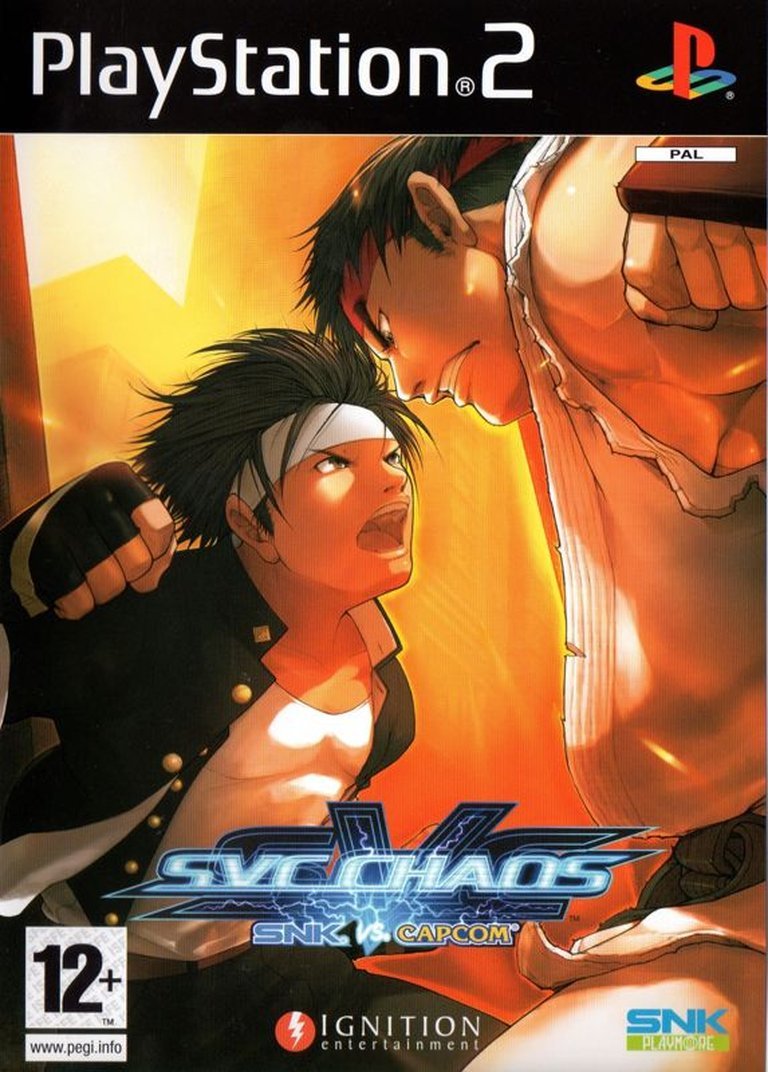
Developed by SNK Playmore, SVC Chaos: SNK vs. Capcom is a 2D fighting game and the latest installment in the Capcom/SNK crossover series, featuring a roster of iconic characters from both companies’ classic beat’em up franchises. Set in a martial arts tournament, players engage in side-scrolling combat across multiple platforms, including arcade, Neo Geo, PlayStation 2, and later re-releases on Windows, PlayStation 4, and Nintendo Switch.
Gameplay Videos
Where to Buy SVC Chaos: SNK vs. Capcom
SVC Chaos: SNK vs. Capcom Guides & Walkthroughs
SVC Chaos: SNK vs. Capcom Reviews & Reception
nookgaming.com : SNK vs Capcom: SVC Chaos is a title that was made as a way to try and bring developer SNK’s name back into the forefront of the industry after suffering several setbacks in 2001.
popzara.com : SVC CHAOS takes a more traditional approach in terms of gameplay. This is a 1-vs-1 affair that’s more reminiscent of Super Street Fighter II Turbo; with some sprinklings of classic Fatal Fury, Street Fighter Alpha, and even light dustings of Samurai Shodown for good measure.
SVC Chaos: SNK vs. Capcom Cheats & Codes
NeoGeo
| Code | Effect |
|---|---|
| Down, Left, Left, Left, Left, Left, Left, Left | Unlock Dan |
| Right, Right, Right, Left, Up, Right, Down, Up | Unlock Demitri |
| Left, Left, Left, Down, Left, Up, Right, Up | Unlock Geese Howard |
| Down, Down, Down, Right, Down, Left, Left, Left | Unlock Goenitz |
| Up, Down, Left, Left, Left, Up, Down, Right, Right, Down | Unlock Mars People |
| Up, Right, Right, Left, Left, Down, Up, Up, Up, Right | Unlock Megaman Zero (Rockman Zero) |
| Up, Right, Up, Down, Left, Left, Down, Left, Up, Left, Right, Right | Unlock Mr. Karate |
| Up, Up, Up, Down, Left, Right, Down, Left | Unlock Orochi Iori |
| Left, Up, Up, Right, Down, Down, Right, Left, Left, Up, Down | Unlock Shin Akuma (Shin Gouki) |
| Up, Up, Down, Left, Left, Right, Left, Up | Unlock Violent Ken |
Arcade
Head to the character selection screen and insert the corresponding button combinations. Keep in mind that the Start button must be held while all cheats are being inserted.
| Code | Effect |
|---|---|
| Down, Left, Left, Left, Left, Left, Left, Left | Unlock Dan |
| Right, Right, Right, Left, Up, Right, Down, Up | Unlock Demitri |
| Left, Left, Left, Down, Left, Up, Right, Up | Unlock Geese Howard |
| Down, Down, Down, Right, Down, Left, Left, Left | Unlock Goenitz |
| Up, Down, Left, Left, Left, Up, Down, Right, Right, Down | Unlock Mars People |
| Up, Right, Right, Left, Left, Down, Up, Up, Up, Right | Unlock Megaman Zero (Rockman Zero) |
| Up, Right, Up, Down, Left, Left, Down, Left, Up, Left, Right, Right | Unlock Mr. Karate |
| Up, Up, Up, Down, Left, Right, Down, Left | Unlock Orochi Iori |
| Left, Up, Up, Right, Down, Down, Right, Left, Left, Up, Down | Unlock Shin Akuma (Shin Gouki) |
| Up, Up, Down, Left, Left, Right, Left, Up | Unlock Violent Ken |
PlayStation 2
Enter codes at the title screen.
| Code | Effect |
|---|---|
| Hold Start and press Down, Left(7), then any button | Unlock Dan |
| Hold Start and press Right(3), Left, Up, Right, Down, Up, then any button | Unlock Demitri |
| Hold Start and press Up(3), Down, Left, Right, Down, Left | Unlock Evil Iori |
| Hold Start and press Left(3), Down, Left, Up, Right, Up | Unlock Geese |
| Hold Start and press Down(3), Right, Down, Left(3) | Unlock Goenitz |
| Hold Start and press Up, Down, Right(3), Up, Down, Left(2), Down, then any button | Unlock Mars Alien |
| Hold Start and press Up(2), Down, Left(2), Right, Left, Up, then any button | Unlock Violent Ken |
| Hold Start and press Up, Right(2), Left(2), Down, Up(3), then any button | Unlock Zero |
SVC Chaos: SNK vs. Capcom: Review
Introduction
In the pantheon of fighting game rivalries, few matchups are as storied or as culturally resonant as the clash between Japan’s two titans of 2D combat: SNK and Capcom. While Capcom’s Capcom vs. SNK 2: Mark of the Millennium (2001) stands as a genre masterpiece, its spiritual successor—developed by SNK Playmore themselves—carries the weight of legacy, bankruptcy, and an ailing hardware platform. SNK vs. Capcom: SVC Chaos (2003) is a game defined by contradictions: a dream match birthed from financial desperation, a technical marvel shackled by obsolete hardware, and a divisive entry in a beloved series. This review dissects SVC Chaos not merely as a fighting game, but as a cultural artifact—a time capsule of SNK’s turbulent rebirth and the twilight of the Neo Geo era. Its thesis is clear: despite its flaws and the shadow cast by its predecessor, SVC Chaos remains a uniquely compelling, if deeply flawed, testament to the power of crossovers and the enduring appeal of sprite-based combat.
Development History & Context
SVC Chaos emerged from the ashes of SNK’s 2001 bankruptcy, rebranded as SNK Playmore. Under pressure to revive its flagging fortunes, the studio fulfilled a contractual obligation to produce a crossover with Capcom, but this time on their own terms. The shift in title from “Capcom vs. SNK” to “SNK vs. Capcom” was a deliberate power play, signaling SNK’s creative control. The game was developed for the Neo Geo MVS/AES hardware, a platform dating back to 1990, which imposed severe constraints. Its low 320×240 resolution and limited color palette made SVC Chaos visually primitive compared to contemporary games like Guilty Gear X2 (2002). This technological mismatch was compounded by SNK’s financial straits, resulting in a rushed development cycle that prioritized core gameplay over polish. The 2003 fighting game landscape was also in flux, with 3D titles like Dead or Alive gaining traction, leaving 2D fighters like SVC feeling increasingly niche. This context is crucial: SVC Chaos was never meant to compete with Capcom’s opus; it was SNK’s defiant swan song on its aging hardware, a product of survival and pride.
Narrative & Thematic Deep Dive
SVC Chaos famously lacks an in-game plot, its arcade mode offering only pre-fight dialogues and disjointed endings. Yet, a rich narrative exists in supplementary material. The game’s official Chinese manhua, published by DrMaster, presents a grim, post-apocalyptic scenario: M. Bison’s satellite laser has annihilated Earth, and the roster’s fighters are resurrected in purgatory to compete in a tournament hosted by Athena (Order) and Red Arremer (Chaos). The winner receives one wish to restore the world. This framework adds thematic weight to the roster’s diversity—Street Warriors, KoF legends, and genre outliers like Mars People (Metal Slug) or Zero (Mega Man Zero) thrust into a cosmic conflict. The dialogues, however, betray no awareness of this lore, reducing interactions to banal taunts (e.g., Terry Bogard mistaking Sagat for Joe Higashi). Notably, SVC Chaos breaks series tradition by including non-fighting game characters as bosses or playable fighters, elevating them to mythic status. Red Arremer, the Ghosts ‘n Goblins demon, embodies Chaos, while Athena represents Order—their clash symbolizing the game’s core duality. This thematic depth, buried beneath gameplay, hints at untapped potential.
Gameplay Mechanics & Systems
At its core, SVC Chaos adopts a streamlined one-on-one format inspired by The King of Fighters 2002, with SNK’s signature four-button layout (Light/Heavy Punch/Kick). The gameplay is deceptively simple: no team battles, no groove systems—just pure, stripped-down combat. The Groove Power Gauge System adds depth: filling it with attacks or guarding allows for Lv.1/Lv.2 Super Special Moves, Guard Cancels, and dashes. At MAX (Lv.3), players gain universal move-cancelling freedom, creating explosive combo strings. The “Exceed” move, usable once below 50% health, serves as a potent comeback mechanic. New techniques like the Front Grand Step (a forward dash that cancels attacks at the cost of gauge) add tactical options. Yet, these systems feel hampered by execution. The Neo Geo’s hardware limits lead to janky hit detection, clunky animations, and inconsistent mechanics. Capcom characters like Ryu suffer from identity crises, their moves repurposed for SNK’s pace. The AI infamously employs “SNK Boss Syndrome,” with bosses like Serious Mr. Karate or Shin Akuma dealing disproportionate damage and reading inputs with unnerving precision. This creates a steep learning curve, rewarding dedication but alienating newcomers. Ultimately, SVC Chaos prioritizes speed and aggression over the strategic depth of its peers, a double-edged sword that charms purists but frustrates modern players.
World-Building, Art & Sound
SVC Chaos’s visual identity is a study in contrasts. Character sprites are a triumph: SNK artists meticulously reimagined Capcom’s roster, with Dhalsim’s emaciated frame, Demitri’s menacing aura, and Hugo’s colossal presence breathing new life into familiar icons. The SNK side, featuring KoF stalwarts like Kyo Kusanagi and Terry Bogard, showcases the studio’s sprite-work mastery. Yet, the environments betray the project’s rushed nature. Backgrounds are static, drab, and lifeless—crumbling ruins, desolate forests, and stormy cities rendered in muted palettes. This “post-apocalyptic” aesthetic, while thematically consistent with the manhua, lacks the dynamism of SNK’s own The Last Blade 2 or Capcom’s Capcom vs. SNK 2. The low Neo Geo resolution exacerbates pixelation, making distant details indistinct. Sound design is similarly uneven. The soundtrack, composed by Masahiko Hataya and Yasuo Yamate, blends orchestral and electronic themes that evoke melancholy but are marred by the Neo Geo’s weak soundfonts. Voice acting is solid, featuring series veterans like Toshiyuki Morikawa (Ryu) and Norio Wakamoto (M. Bison), but English localization is riddled with awkward phrasing (e.g., stage names like “Nude Place” and nonsensical dialogues like Balrog’s “Toosh” retort). Despite these flaws, the art direction remains compelling—a testament to SNK’s ability to craft charismatic characters even when resources are scarce.
Reception & Legacy
Upon release, SVC Chaos received a lukewarm reception, criticized for its dated visuals, punishing difficulty, and lack of innovation. Famitsu awarded the PS2 version a tepid 25/40, while Western outlets like GameSpot (6.3/10) and IGN (6/10) lamented its presentation and unbalanced mechanics. The Xbox port’s inclusion of online multiplayer (via the now-defunct Xbox Live) was a novelty, but netcode issues and barebones features failed to salvage it. Over time, however, its reputation evolved. Hardcore fighting game fans appreciated its high-speed, aggressive gameplay and eclectic roster, particularly the inclusion of niche characters like Mars People and Red Arremer. The 2024 re-release by Code Mystics—adding rollback netcode, a gallery mode, and unlocked characters—introduced SVC Chaos to new audiences. While the core gameplay remains divisive, ports on Switch, PS4, and PC have earned it “solid” to “good” scores (e.g., NookGaming: 7/10, Digital Chumps: 7.5/10). Its legacy is twofold: it stands as a cautionary tale of hardware limitations and rushed development, yet also as a cult favorite for its unapologetic SNK identity. Notably, original characters like Violent Ken (from Street Fighter II: The Animated Movie) and Serious Mr. Karate later crossed into canon games, cementing SVC’s influence on the broader fighting game landscape.
Conclusion
SVC Chaos: SNK vs. Capcom is a game of paradoxes—a technical marvel constrained by obsolete hardware, a narrative void filled by supplementary lore, and a divisive entry that nonetheless captures the spirit of crossover combat. It cannot be measured against the polished heights of Capcom vs. SNK 2, nor does it try to. Instead, it thrives on its own terms: as a raw, unfiltered expression of SNK’s identity during its darkest hour. Its roster, from KoF legends to genre outliers, remains one of the most eclectic in fighting game history, while its high-speed, aggressive gameplay offers a distinct alternative to Capcom’s strategic systems. The 2024 re-release rescues SVC Chaos from obscurity, providing modern players with tools to appreciate its merits—rollback netcode for competitive play, a gallery for its stunning art, and accessibility that bypasses its legacy barriers. Verdict: SVC Chaos is not a perfect game, but it is an essential one. For historians, it is a vital artifact of SNK’s survival; for enthusiasts, it is a flawed, passionate love letter to 2D fighting. It may not be the “Match of the Millennium,” but in its chaos lies a unique, unforgettable clash of titans.