
- Release Year: 2000
- Platforms: Windows
- Publisher: FromSoftware, Inc.
- Developer: FromSoftware, Inc.
- Genre: Action, Role-playing (RPG)
- Perspective: 1st-person
- Game Mode: Single-player
- Gameplay: Character customization, Customizable maps, Dungeon Crawling, Enemy placement, Level editing
- Setting: Fantasy
- Average Score: 100/100
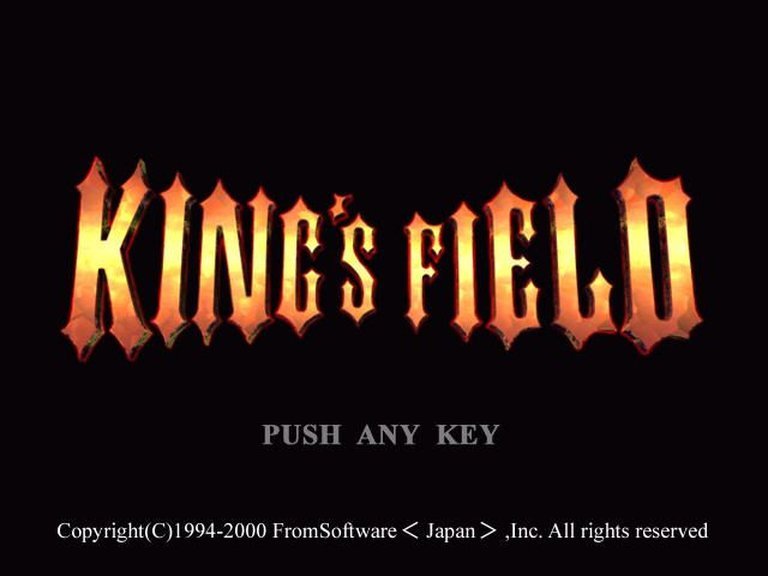
Description
Sword of Moonlight: King’s Field Making Tool is a game creation tool developed by FromSoftware that allows players to design and customize their own 3D first-person dungeon-crawling RPGs in the style of the King’s Field series. Players can build maps using 1024 prefabricated tiles, place objects and enemies, and adjust various parameters such as character attributes, weapon efficiency, and music. The game also includes a remake of the original King’s Field with enhanced graphics and minor gameplay adjustments, staying true to the slow-paced, atmospheric exploration of the classic title.
Gameplay Videos
Sword of Moonlight: King’s Field Making Tool Patches & Updates
Sword of Moonlight: King’s Field Making Tool Guides & Walkthroughs
Sword of Moonlight: King’s Field Making Tool Reviews & Reception
myabandonware.com (100/100): Or, to give it its proper name, Early 3D Souls. Still well worth a play.
gog.com : This would be amazing. You can get a copy from Fromsoftware, however this is not possible outside Japan.
Sword of Moonlight: King’s Field Making Tool – A Forgotten Gem of Game Creation
Introduction: The Unsung Pioneer of FromSoftware’s Legacy
Sword of Moonlight: King’s Field Making Tool (2000) is a fascinating artifact in the history of game development—a tool that allowed players to craft their own King’s Field-style dungeon crawlers while also serving as a swan song for FromSoftware’s early RPG experiments. Released at the turn of the millennium, it arrived at a time when game creation tools were still in their infancy, yet it offered an unprecedented level of depth and customization for first-person dungeon-crawling RPGs.
This review will explore Sword of Moonlight as both a game and a development tool, examining its historical significance, its strengths and flaws, and its enduring influence on FromSoftware’s later works—including the Souls series. While it remains obscure, its legacy is undeniable, serving as a bridge between the studio’s early experiments and its later masterpieces.
Development History & Context: FromSoftware’s Bold Experiment
The Studio Behind the Tool
FromSoftware, founded in 1986, had already established itself as a developer of niche but ambitious RPGs with the King’s Field series (1994–2001). These games were known for their punishing difficulty, labyrinthine dungeons, and clunky yet atmospheric first-person combat—a formula that would later evolve into the Souls games.
Sword of Moonlight was released in 2000, sandwiched between King’s Field III (1996) and King’s Field: The Ancient City (2001). Unlike its predecessors, it was not a traditional game but a game-making tool, allowing players to design their own King’s Field-style adventures. This was a bold move—FromSoftware was essentially handing over the keys to its engine, letting fans tinker with the very mechanics that defined its early RPGs.
Technological Constraints & Design Philosophy
The tool was built for Windows 95/98, with system requirements that were modest even for the time (Pentium II 300MHz, 64MB RAM, 8MB VRAM). It relied on DirectX 7.0, limiting its graphical capabilities to 256×256 textures and a 640×480 resolution—a far cry from modern standards but impressive for its era.
The core philosophy behind Sword of Moonlight was accessibility with depth:
– Prefab-based level design (1024 tiles, rotatable in 90-degree increments).
– Customizable enemies, items, and NPCs with adjustable stats.
– Event scripting for basic interactions.
– AVI movie support for cutscenes.
However, the tool was not without limitations:
– No mouselook (a staple of modern FPS games, but absent here).
– Clunky combat AI (enemies were slow and predictable).
– No modern lighting or shaders (textures appeared washed out).
Despite these constraints, Sword of Moonlight was a pioneering effort—one of the first tools to let players create fully 3D dungeon crawlers without extensive programming knowledge.
The Gaming Landscape of 2000
At the time of its release, the gaming world was transitioning from 2D to 3D, with titles like Deus Ex (2000) and The Elder Scrolls III: Morrowind (2002) pushing open-world design. Meanwhile, King’s Field was already fading into obscurity, overshadowed by more polished RPGs.
Sword of Moonlight arrived in this shifting landscape as a niche product—a tool for hardcore fans rather than a mainstream hit. Its Japanese release (with no official Western localization) further limited its reach, making it a cult classic rather than a commercial success.
Narrative & Thematic Deep Dive: The Silent Story of Creation
The Absence of a Traditional Plot
Unlike the King’s Field games, Sword of Moonlight does not have a predefined narrative. Instead, it empowers players to craft their own stories through its level editor. The included remake of King’s Field I serves as a template, but the real magic lies in what players can build.
Themes of Exploration & Mastery
The tool itself embodies themes of creativity, perseverance, and mastery—mirroring the King’s Field experience:
– Discovery: Players must learn the tool’s intricacies to build meaningful dungeons.
– Challenge: The clunky UI and limited documentation make creation a trial-and-error process.
– Legacy: The tool preserves King’s Field’s DNA, ensuring its mechanics live on in fan projects.
The Silent Protagonist: The Player as Creator
In King’s Field, the player is a lone warrior navigating treacherous dungeons. In Sword of Moonlight, the player becomes the architect of those dungeons, shaping the very world they (or others) will explore. This shift from consumer to creator is the tool’s most profound narrative statement.
Gameplay Mechanics & Systems: A Double-Edged Sword
Core Gameplay Loop: Building & Playing
Sword of Moonlight functions as both an editor and a game engine:
1. Map Creation: Players place prefab tiles, rotate them, and adjust heights.
2. Object Placement: Enemies, items, and NPCs are positioned manually.
3. Parameter Tweaking: Stats for weapons, magic, and enemies are adjustable.
4. Testing & Playthrough: The created dungeon can be played immediately.
Combat & Movement: A Relic of the Past
The combat system is faithful to King’s Field—meaning it’s slow, deliberate, and clunky:
– No running (movement is deliberately sluggish).
– No hit feedback (attacks lack visual or auditory confirmation).
– Basic AI (enemies follow simple attack patterns).
While this may frustrate modern players, it’s an authentic recreation of early FromSoftware combat—a precursor to Souls’ methodical duels.
UI & Usability: A Product of Its Time
The editor’s interface is functional but archaic:
– No hotkeys for quick prefab switching.
– No undo/redo (mistakes require manual fixes).
– Limited documentation (fans had to rely on forums and guides).
Despite these flaws, the tool remains surprisingly usable—a testament to FromSoftware’s design philosophy of depth over polish.
World-Building, Art & Sound: A Dungeon Crawler’s Toolkit
Visual Design: Low-Poly Charm
The engine supports low-poly 3D models and 256×256 textures, giving creations a PS1-era aesthetic. While dated, this style has a retro charm, evoking nostalgia for early 3D dungeon crawlers.
Sound & Music: MIDI & WAV Limitations
The tool allows for MIDI and WAV audio, but no MP3 support. This means:
– Music is tinny and repetitive (typical of early PC games).
– Sound effects are basic (no dynamic audio mixing).
Despite these limitations, the atmospheric potential is still present—especially in fan projects that push the engine’s boundaries.
Reception & Legacy: The Forgotten Foundation of FromSoftware’s Success
Critical & Commercial Reception
Sword of Moonlight was never widely reviewed—its Japanese release and niche appeal meant it flew under the radar. However, fan reception was positive, with creators praising its depth and flexibility.
Influence on Later FromSoftware Games
While Sword of Moonlight itself was not a commercial success, its DNA lives on in:
– Demon’s Souls (2009): The spiritual successor to King’s Field, refining its combat and level design.
– Dark Souls (2011): The evolution of King’s Field’s dungeon-crawling philosophy.
– Elden Ring (2022): The culmination of FromSoftware’s open-world ambitions.
Fan Projects & Modern Revival
Despite its obscurity, Sword of Moonlight has inspired fan-made games, including:
– Trismegistus (by Tom Eversole)
– Diadem of Mounstraut (by Tom Eversole)
– King’s Field: Dark Destiny (by DMP Design)
These projects prove that the tool’s legacy endures, even if the original software is now a relic.
Conclusion: A Flawed but Essential Piece of Gaming History
Sword of Moonlight: King’s Field Making Tool is not a perfect game—its clunky UI, dated graphics, and limited documentation make it a challenge to use. Yet, it remains a fascinating artifact, offering a glimpse into FromSoftware’s early experiments and the birth of its signature gameplay style.
For retro enthusiasts, FromSoftware fans, and aspiring game designers, Sword of Moonlight is a hidden gem—a tool that, despite its flaws, empowers creativity in ways few games of its era did.
Final Verdict: 7.5/10 – A Niche Masterpiece
While it may not be for everyone, Sword of Moonlight deserves recognition as a pioneering game-making tool and a crucial link in FromSoftware’s evolution. Its legacy lives on in every Souls game, and its spirit of player-driven creation remains as relevant today as it was in 2000.
For those willing to embrace its quirks, Sword of Moonlight is more than just a tool—it’s a time capsule of gaming history.
Would you like to see a modern remake or spiritual successor? Share your thoughts in the comments!