
- Release Year: 2022
- Platforms: PlayStation 5, Windows, Xbox Series
- Publisher: Microids SA
- Developer: Koalabs Studio, Microids Studio Paris
- Genre: Adventure
- Perspective: Third-person
- Game Mode: Single-player
- Gameplay: Graphic adventure, Point and select, Puzzle
- Setting: Steampunk
- Average Score: 83/100
Description
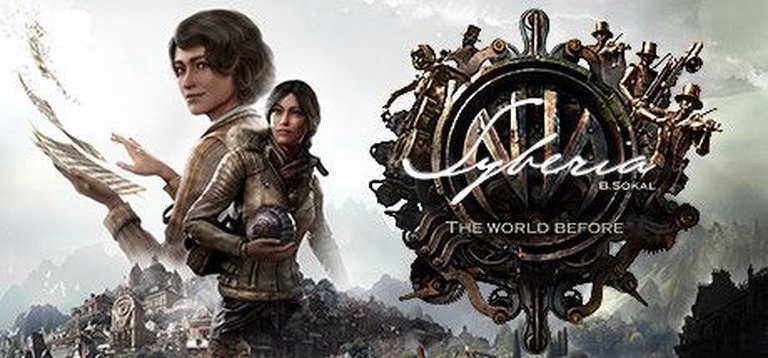
Syberia: The World Before, the fourth entry in the Syberia series, is a third‑person, point‑and‑select graphic adventure set in a richly detailed steampunk world. Players follow the series’ heroine on a journey through mysterious locations, solving puzzles and uncovering the hidden history of the Syberia universe as they explore atmospheric environments and interact with a cast of eccentric characters.
Gameplay Videos
Where to Buy Syberia: The World Before
Syberia: The World Before Free Download
Syberia: The World Before Patches & Updates
Syberia: The World Before Mods
Syberia: The World Before Guides & Walkthroughs
Syberia: The World Before Reviews & Reception
metacritic.com (81/100): A wonderful return to form, beautiful, engaging and moving.
opencritic.com (80/100): Syberia: The World Before is a solid return to form for the series, with strong and inventive puzzles and an engaging story.
monstercritic.com (81/100): A wonderfully directed, well‑flowing story that keeps you guessing and invested.
nextgenplayer.com : This latest title returns the franchise to greatness and rivals the original Syberia in quality.
steambase.io (90/100): A Very Positive reception with a 90/100 player score.
Syberia: The World Before – Review
Introduction
A world of clocks, music, and lost memories beckons.
The Syberia saga has long been synonymous with beautifully crafted point‑and‑click adventures, lyrical storytelling, and the unmistakable hand of Belgian comic‑artist Benoît Sokal. After a turbulent third installment, Syberia: The World Before (2022) arrives as both a tribute to Sokal’s legacy and a daring narrative experiment that intertwines two eras, two protagonists, and a hauntingly familiar steampunk‑laden Europe. My thesis is simple: the game succeeds as a masterclass in narrative design and artistic direction, while its modest technical hiccups keep it from achieving perfection.
Development History & Context
Studio & Leadership
- Developers: Microids Studio Paris in partnership with Koalabs Studio.
- Publishers: Microids SA.
- Directors: Benoît Sokal (pre‑production) and Lucas Lagravette (final production).
- Lead Writer & Game Director: Lucas Lagravette – a former screenwriter who steered the project after Sokal’s untimely death in 2021.
- Technical Lead: Alexandre Migeon; Technical Director: Loïc Bigot.
Engine & Production Timeline
- Engine: Unity (custom‑tuned for narrative flow and modular level design).
- Announcement: 19 August 2019, already a year into development.
- Release Dates: Windows (18 Mar 2022), PS5/Xbox Series (15 Nov 2022), PS4/Xbox One (19 Oct 2023); Switch version postponed to 2024.
Vision & Constraints
- The team set two loft goals: outdo Syberia 3’s shaky reception and recapture the charm of the original 2002 title.
- Working “from scratch” on Unity meant re‑architecting classic point‑and‑click mechanics for modern consoles while preserving the series’ signature “point‑and‑select” interface.
- The death of Sokal added a poignant pressure to honor his original concepts, especially the clockwork aesthetic and philosophical underpinnings.
Industry Landscape (2022)
- By 2022, the adventure‑gaming niche had largely migrated to narrative‑driven “interactive cinema” experiences (e.g., Life is Strange, The Walking Dead).
- Microids positioned Syberia 4 as a bridge between classic hand‑drawn adventure design and contemporary expectations for cinematic storytelling, leveraging motion‑capture, facial animation, and a full 3‑D environment.
Narrative & Thematic Deep Dive
Dual‑Timeline Structure
- Dana Roze (1937): A prodigious pianist in the fictional Central‑European state of Osterthal, battling the fascist “Brown Shadow” faction.
- Kate Walker (2004): Former New York lawyer, now a slave‑laborer in a salt mine in Taiga, haunted by her mother’s death and the loss of her friend Olivia.
Both threads converge in the city of Vaghen, a cultural hub whose wartime ruin mirrors Kate’s personal desolation.
Plot Highlights (chronologically)
| Era | Key Events | Narrative Function |
|---|---|---|
| 1937 – Dana | Graduates from conservatory, witnesses Brown Shadow persecution, joins a secret expedition for the mythical Gorun (proto‑human species). | Establishes themes of art, identity, and resistance; foreshadows trauma that will echo decades later. |
| 2004 – Kate | Imprisoned in a salt mine, discovers a train full of stolen art, meets dying Katyusha who implores her to find the woman in a portrait (Dana). | Triggers Kate’s personal pilgrimage and ties her fate to Dana’s forgotten past. |
| Post‑Escape | Kate tracks the portrait to Vaghen, revives Oscar (the automaton) via a mechanical armadillo, meets Leni Renner, learns Dana’s wartime story. | Merges technology (clockwork) with human memory, emphasizing the series’ signature blend of mechanical wonder and emotional depth. |
| War & Gorun | Expedition to Baltayar, Leon Kobatis befriends a Gorun, the group collapses under Brown Shadow oppression, Dana’s parents are killed, she is taken to a sanatorium. | Highlights the brutality of fascism, the cost of scientific curiosity, and the intergenerational impact of trauma. |
| Aftermath | Dana becomes a SOE operative, aids resistance; Kate discovers that Dana’s daughter Sarah is actually Kate’s mother. | Converges the two timelines into a meta‑revelation about lineage, memory, and the cyclical nature of history. |
| Epilogue | Kate prepares to return to New York with Oscar, yet a train bound for Baltayar sparks an epiphany that Dana may have lived among the Gorun. | Leaves the narrative on an open‑ended, hopeful note, inviting speculation about future stories. |
Themes
- Memory & Identity: The title itself hints at a “world before” – a mental landscape where personal and collective histories intersect.
- War & Fascism: The Brown Shadow functions as a thinly veiled allegory for National Socialism, exploring how authoritarian regimes crush artistic and cultural expression.
- Automata & Humanity: Oscar and the mechanical armadillo symbolize the blurring line between machine and sentient being, a recurring Sokal motif.
- Female Agency: Both protagonists are women navigating patriarchal societies—Dana as a pianist in a pre‑WWII Europe, Kate as a lawyer turned explorer. Their agency is portrayed with nuance, though some critics note a “bury‑your‑gays” moment in the death of Katyusha.
Writing Craft
- According to Lucas Lagravette, puzzles are diegetically justified; dialogues often occur during puzzle phases, weaving story and gameplay together.
- The script was built in Articy:draft and imported as C# classes, enabling tight narrative‑design integration.
- Critics (Adventure Gamers, MKAU Gaming) universally praised the emotional resonance and coherent storytelling, calling it a “masterclass in game writing”.
Gameplay Mechanics & Systems
Core Loop
- Explore → Interact → Solve → Progress in a classic point‑and‑click fashion, now rendered in 3‑D with optional controller support.
- Character Switching: Players can flip between Kate and Dana at scripted moments, sometimes using one’s actions to unlock puzzles in the other timeline.
Puzzle Design
- Integrated Puzzles: Each puzzle serves a narrative purpose (e.g., repairing Oscar’s heart, opening a music box).
- Hint System: A diegetic “hint meter” charges over time, encouraging independent thought before offering progressive assistance.
- Difficulty Balance: Scores range from “accessible” (Adventure Gamers) to “somewhat trivial” (Computer Bild Spiele), reflecting the design goal of story‑first gameplay.
UI & Controls
- Point‑and‑Select Interface: Mouse or gamepad; a “hotspot” system that can be finicky (small interactive zones cause missed clicks).
- Camera: Fixed angles dramatize scenes but occasionally obscure crucial items, a criticism common among reviewers (Jeuxvideo.com, Hey Poor Player).
- Performance: Reports of frame‑rate drops on PC and occasional bugs (e.g., unresponsive hotspots, missing objects) exist, especially on lower‑end hardware.
Innovations
- Full‑3D Environment: Transition from the 2‑D pre‑rendered backgrounds of early Syberia games to a fully navigable space.
- Live‑Capture Animation: Facial expressions convey subtle emotions, enhancing immersion.
- Dual‑Timeline Mechanics: The only Syberia entry to allow simultaneous narrative threads beyond a simple flashback.
World‑Building, Art & Sound
Visual Direction
- Steampunk / Clockpunk Aesthetic: Hand‑drawn textures combined with Unity’s lighting create an illustrated realism reminiscent of Sokal’s comic panels.
- Atmospheric Locales: Vaghen’s cobblestone squares, the icy Taiga mines, and the surreal Gorun sanctuary each feel lived‑in, with meticulous set‑dressing (e.g., period‑accurate instruments, wartime propaganda posters).
- Character Models: High‑poly faces, motion‑capture driven animation, and expressive eyes. Critics noted occasional “out‑of‑date facial rendering” (WCCFtech) but praised overall fidelity.
Audio Design
- Composer: Inon Zur delivers a sweeping, orchestral score that underscores the game’s emotional beats.
- Piano Performances: Emily Bear’s recordings for Dana’s pieces add authenticity.
- Sound Engine: Wwise ensures spatial audio cues (e.g., distant train whistles, cavernous mine echoes) enrich exploration.
- Voice Acting: Multilingual casts deliver nuanced performances; the dialogue feels natural thanks to the diegetic hint system that integrates speech with gameplay.
Integration of Art & Narrative
- Cinematic Cut‑Scenes: Fully animated, facial‑capture driven sequences act as moving paintings, reinforcing the series’ reputation for visual storytelling.
- Environmental Storytelling: Objects (a broken music case, a rusted automaton part) serve as narrative props, inviting players to piece together history.
Reception & Legacy
Critical Consensus
| Platform | Metacritic | Avg. Score | Notable Scores |
|---|---|---|---|
| PC | 81/100 (31 reviews) | 80% (12 critic ratings) | Adventure Gamers 100%, MKAU 95% |
| PS5 | 78/100 (12 reviews) | 81% (5 ratings) | Jeuxvideo.com 80% |
| Xbox Series | 88% (2 reviews) | — | — |
| Overall (MobyGames) | 7.8/10 (3,745 games) | 80% (12) | — |
- Praise: Narrative depth, emotional weight, visual fidelity, and soundtrack.
- Criticism: Technical glitches (camera, framerate), occasional “gratuitous” puzzles, limited interactivity (some reviewers called it “interactive movie”).
Player Feedback
- Steam’s “Very Positive” rating (≈90/100) reflects a strong fanbase appreciation.
- Users highlighted the “beautiful art” and “moving story”, while noting “slow movement” and “minor bugs”.
Legacy & Influence
- Serves as a cathartic finale to Kate Walker’s saga, preserving Sokal’s mythos for future generations.
- Demonstrates that classic adventure design can still thrive when paired with modern technology and cinematic presentation.
- Inspired renewed interest in the series, leading to a 2025 remaster and a 20‑Year Edition that includes additional developer commentary.
Industry Impact
- Reinforced the viability of narrative‑first adventure games in a market dominated by action titles.
- Showcased the effectiveness of modular narrative pipelines (Articy + Unity) for complex, timeline‑spanning stories.
Conclusion
Syberia: The World Before stands as a poignant homage to Benoît Sokal’s visionary world while simultaneously pushing the franchise into contemporary territory. Its dual‑timeline narrative, rich thematic layering, and exquisite audiovisual presentation outweigh the occasional technical rough edges. For long‑time fans, it feels like a long‑awaited homecoming; for newcomers, it offers a compelling entry point—provided they are prepared for a slower, story‑driven pace.
Verdict: ★★★★☆ (4 out of 5) – A masterclass in adventure storytelling that secures its place among the genre’s modern classics, and a fitting, if imperfect, farewell to the Syberia saga.