
- Release Year: 2012
- Platforms: Android, iPad, iPhone, Linux, Macintosh, Ouya, Windows
- Publisher: Meridian4, Inc.
- Developer: Studio Evil
- Genre: Action, Shooter
- Perspective: Side view
- Game Mode: Single-player
- Gameplay: Horizontal level exploration, Score multiplier, Side-scrolling shooter, Space flight
- Setting: Futuristic, Sci-fi, Space
- Average Score: 90/100
Description
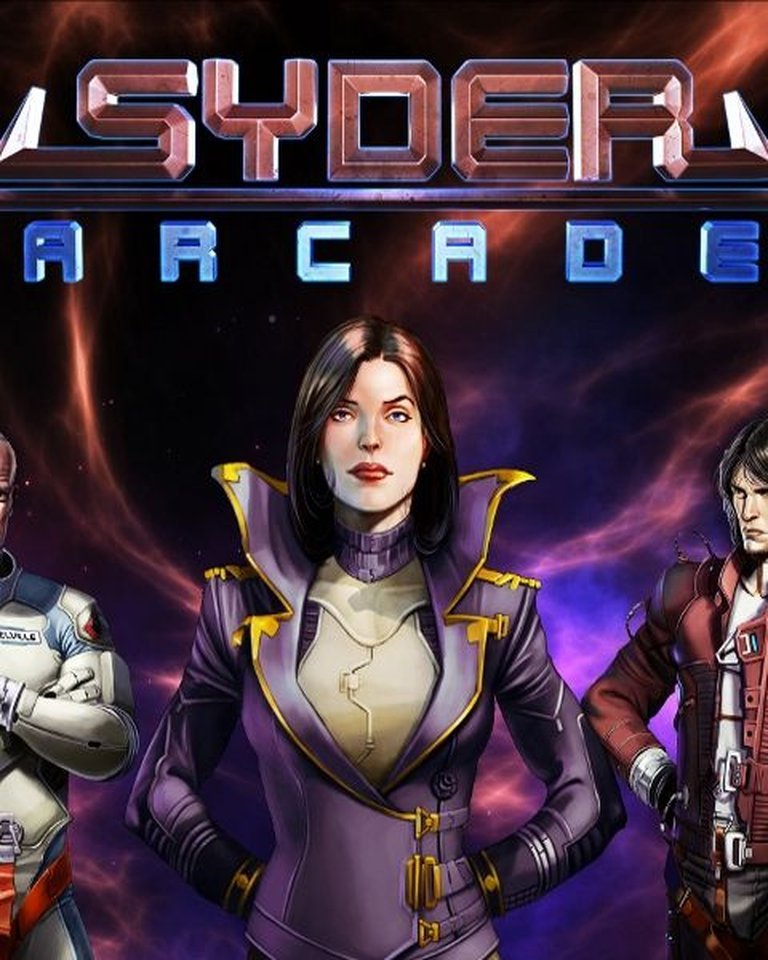
Syder Arcade is a futuristic side-scrolling space shooter set in 2788, where players defend the Human Colony of Miza from invading forces. As a fighter pilot, you embark on missions to disrupt enemy warp routes across six main campaign levels, each unlocked progressively, and an endless survival mode. Choose between three unique ships—Alisade S-185 Mule, MSec-Alisade S-104 Dart, or MSec S-116 Wasp—each offering distinct speed, armor, and weapon capabilities. Navigate expansive horizontal environments, engage in classic shooter combat with primary and limited secondary weapons, and collect upgrades from defeated foes. The game blends modern visuals with nostalgic retro graphic modes inspired by platforms like C64, Apple II, and more.
Gameplay Videos
Where to Buy Syder Arcade
PC
Syder Arcade Free Download
PC
Syder Arcade Cracks & Fixes
Syder Arcade Patches & Updates
Syder Arcade Mods
Syder Arcade Guides & Walkthroughs
Syder Arcade Reviews & Reception
metacritic.com (90/100): The developers have woven in a great sense of humour and an almost excessive amount of love. Fans of the genre should be making it their mission to play this game, which is a steal at 69p on the App Store.
vortainment.com : schmup fans will have much to enjoy here with Syder Game.
indiegamereviewer.com : Syder Arcade is fun, that’s a certainty.
Syder Arcade: Review
An Exhaustive Examination of a Bullet-Hell Homage
Introduction
In an era dominated by open-world epics and cinematic narratives, Syder Arcade (2012) emerged as a defiant love letter to the golden age of arcade shoot ’em ups. Developed by Italy’s Studio Evil, this horizontal shooter synthesizes ’90s Amiga aesthetics with modern flourishes, challenging players through minimalist storytelling and brutal, score-driven gameplay. This review posits that while Syder Arcade excels as a nostalgic artifact and technical showcase, its adherence to retro conventions limits its broader appeal and longevity.
Development History & Context
Vision Amid Constraints
Studio Evil, a Bologna-based indie team, conceived Syder Arcade as a prequel to their unreleased Syder Universe. Leveraging Unity’s cross-platform capabilities, they navigated engine limitations—notably optimizing 3D backgrounds for 2D gameplay—while targeting PC, Mac, and later iOS/Android. Released April 9, 2012, the game entered a market where indie nostalgia was ascendant (Super Meat Boy, Fez), but shmups remained niche.
Technological Ambition
The team prioritized “chromatic spectacle,” rendering asteroid fields and gas giants in real-time 3D while accommodating legacy hardware. Post-launch patches expanded content (e.g., survival modes, ship variants), reflecting iterative design. Developer aXon noted Unity’s “dark side” in forums, citing debugging hurdles that delayed Linux and Ouya ports until 2013.
Narrative & Thematic Deep Dive
Minimalist Worldbuilding
Set in 2788, Syder Arcade follows pilots defending the Mizan colony from unidentified invaders. The plot, conveyed via mission briefings and unlockable logs (History of Miza), serves as scaffolding for action. Characters like Lt. Melville and Cpt. Reyes lack depth, prioritizing functional archetypes over development—a deliberate choice aligning with arcade traditions.
Themes of Perseverance
The narrative’s sparse dialogue (“Disrupt enemy warp routes!”) underscores themes of human tenacity against overwhelming odds. Yet, Steam community debates reveal divided opinions: some players dismissed the story as intrusive (“I’ll play an RPG for a story”), while others valued its ambient worldbuilding. Thematically, it echoes Defender’s lone-ship heroism but lacks Sine Mora’s temporal depth.
Gameplay Mechanics & Systems
Core Loop & Ship Dynamics
Players select from three vessels: the tank-like Mule, balanced Dart, or agile Wasp. Each offers unique primary/secondary weapons (e.g., homing missiles, hyper beams) fueled by score multipliers. The horizontal “free-scrolling” allows left/right movement without wrapping, demanding spatial awareness via radar.
Innovations & Flaws
– Progression: Survival mode and six campaign levels emphasize score chasing, with online leaderboards and unlockable badges.
– Difficulty: Four settings escalate bullet density, praised for “brutal” challenge (Softpedia) but critiqued for uneven spikes.
– Retro Filters: Over 20 visual modes emulate C64, MSX, and Amiga palettes—a novelty that 4Players.de deemed underutilized for longevity.
– UI: The radar is cluttered during frenetic fights, occasional input lag noted in Android ports.
World-Building, Art & Sound
Visual Design
Syder Arcade juxtaposes 3D backdrops (e.g., vortex-ridden planets) with sprite-based ships. The art direction blends Thunder Force-inspired capital ships with VIC-20-style filters, creating a “lost ’90s classic” vibe (PixelProspector). However, enemy variety falters, with repetitive drones and bosses lacking distinct personalities.
Audio Identity
Composer Christian Meneghini’s synth-heavy OST channels Amiga’s YM2149 sound chip, bolstering adrenaline with pulsating basslines. Standout tracks like Mission 2: Asteroid Field fuse chiptune with modern orchestration, praised as “Amiga-style perfection” (IndieGameReviewer). Weapon SFX, though serviceable, lack punch against larger explosions.
Reception & Legacy
Launch & Critique
Syder Arcade earned a 75% Metacritic average (PC) and 82% (iOS). Critics lauded its “exquisite” challenge (Softpedia) and “chrome-plated supercharged” action (RGCD), while panning its “idea poverty” (4Players.de). The 2013 mobile port (“HD”) streamlined controls but suffered from cramped touch interfaces.
Enduring Influence
Though outsold by contemporaries like Jamestown, its DNA influenced Syder Reloaded (2020), which expanded narrative depth. The game remains a cult touchstone for retro-shmup enthusiasts, notably via annual Steam sales and Humble Bundles. Yet, its refusal to modernize mechanics (Sine Mora’s time manipulation, Crimzon Clover’s break systems) limits its historical stature.
Conclusion
Syder Arcade is a paradox: a meticulously crafted homage that excels within its self-imposed constraints but struggles to transcend them. Its scintillating art, punishing difficulty, and retro filters offer a potent dose of nostalgia, yet the shallow campaign and derivative systems prevent it from joining the pantheon of genre greats. For shmup devotees, it’s a worthy—if fleeting—tribute to flickering arcade screens. For others, its $9.99 price may feel steep for six levels of déjà vu. In video game history, Syder Arcade endures not as a revolution, but as a heartfelt mixtape from shoot ’em up’s heyday.