
- Release Year: 2012
- Platforms: PlayStation 3, Windows, Xbox 360
- Publisher: Electronic Arts, Inc.
- Developer: Starbreeze Studios AB
- Genre: Action
- Perspective: 1st-person
- Game Mode: Online Co-op, Single-player
- Gameplay: Shooter
- Setting: Futuristic, Sci-fi
- Average Score: 77/100
Description
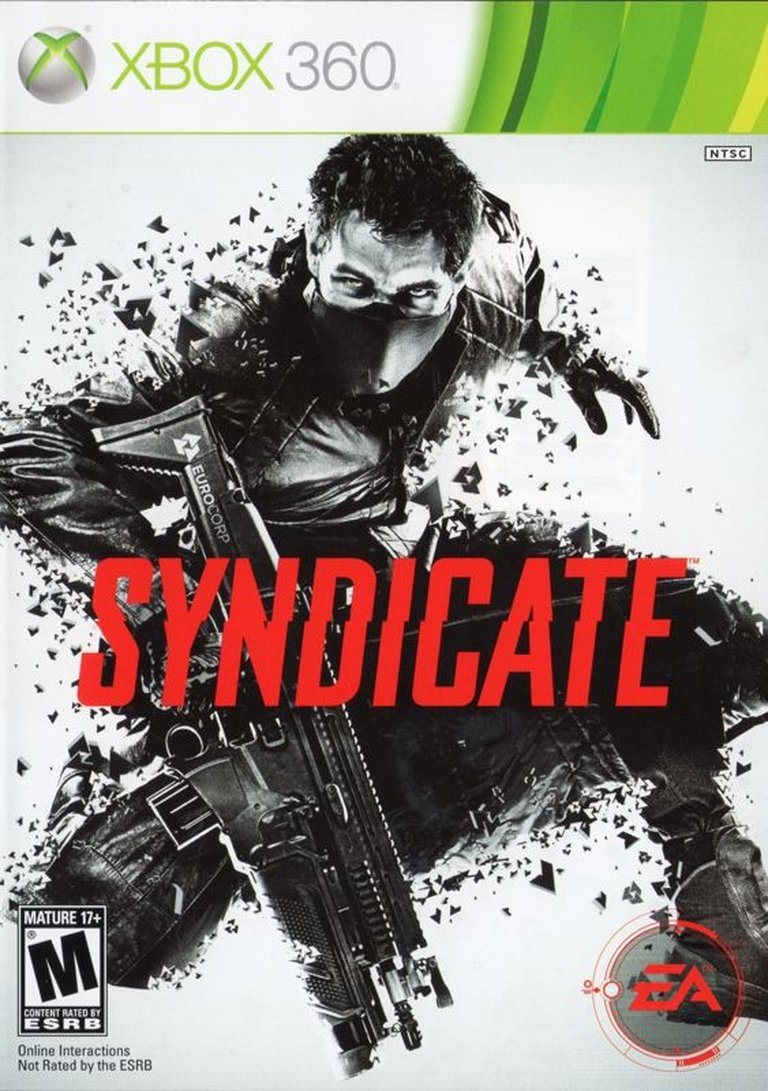
Syndicate is a 2012 first-person shooter reboot of the classic Bullfrog strategy series, set in 2069 where powerful syndicates rule a world transformed by neural chip implants granting direct access to the dataverse, dividing society between chipped elites and rebellious unchipped ‘terrorists.’ Players control Miles Kilo, a bio-engineered Eurocorp agent with a prototype DART 6 chip, engaging in espionage, betrayal, and brutal combat using weapons, grenades, time-slowing, x-ray vision, and breach hacks that make enemies backfire, commit suicide, or switch sides temporarily.
Gameplay Videos
Syndicate Cracks & Fixes
Syndicate Mods
Syndicate Guides & Walkthroughs
Syndicate Reviews & Reception
metacritic.com (74/100): Mixed or Average.
ign.com : Fun co-op saves a standard sci-fi shooter.
reddit.com : Syndicate (2012) is a really fascinating, and arguably misunderstood game.
imdb.com (80/100): A very atmospheric game.
Syndicate Cheats & Codes
PC (Syndicate 2012)
Press [Ctrl] + [Alt] + ~ during game play to display the command console. Then, enter one of the following codes.
| Code | Effect |
|---|---|
| cmd(godmode) | God mode |
| cmd(giveall) | Level weapons, ammo, dart upgrade point (Dart upgrade points are maxed if you have some accumulated and unused.) |
| cmd(noclip) | No Clipping mode |
| map [level name] | Level select (The names of the levels can be found within the “\syndicate\content\worlds” folder.) |
Syndicate: Review
Introduction
In the neon-drenched shadows of 2069, where mega-corporations wage shadow wars through bio-engineered agents and neural implants, Syndicate (2012) emerges as a audacious reboot of Bullfrog Productions’ cult-classic 1993 real-time tactics game. Developed by Starbreeze Studios and published by Electronic Arts, this first-person shooter discards the isometric squad command of its predecessor for visceral, chip-augmented gunplay, thrusting players into the role of Miles Kilo, EuroCorp’s prototype enforcer. Amid a sea of linear shooters like Call of Duty and Battlefield, Syndicate dares to infuse cyberpunk hacking into combat, creating moments of tactical brilliance amid corporate espionage and betrayal. Yet, as a historian of gaming’s evolution, I see it as a fascinating artifact: a game that honors its dystopian roots while struggling against the era’s FPS fatigue. My thesis? Syndicate is a competent, stylish torchbearer for cyberpunk shooters—elevated by innovative breaching mechanics and co-op synergy—but ultimately undermined by a shallow campaign, repetitive design, and unmet ambitions, cementing its status as an underrated near-miss in video game history.
Development History & Context
Starbreeze Studios, fresh off the moody intensity of The Chronicles of Riddick: Assault on Dark Athena (2009) and The Darkness (2007), was EA’s choice to revive Syndicate due to their knack for atmospheric FPS experiences. Pre-production kicked off in 2007 with a small team post-Riddick, but the project hit turbulence: after a year, it was scrapped and rebooted to recapture the franchise’s essence, shifting from story-heavy roots to emphasize cyberpunk action. Game director Neil McEwan, alongside designers like Andrew Griffin and co-op specialist Roger Mattsson, pivoted to first-person immersion, arguing that top-down tactics wouldn’t suit modern platforms or audiences.
The 2012 gaming landscape was FPS-saturated—Modern Warfare 3 and Battlefield 3 dominated with multiplayer spectacles—making Syndicate‘s single-player focus risky. Technological constraints loomed: Starbreeze’s proprietary engine (their last in-house use before licensing Unreal Engine 3) targeted 720p/30fps parity across PC, PS3, and Xbox 360, leveraging Beast for global illumination and physics solvers for destructible environments. Sci-fi author Richard K. Morgan (Altered Carbon) penned the script, blending Blade Runner-esque dystopia with Deus Ex-like augmentation ethics. Voice talent like Brian Cox (Jack Denham), Rosario Dawson (Lily Drawl), and Michael Wincott (Jules Merit) added gravitas.
EA’s marketing was subdued—a Skrillex-scored trailer at Tokyo Game Show 2011, a co-op demo in January 2012—but internal strife marred development: EA interference, budget limits (lower than AAA peers), and post-launch layoffs at Starbreeze (25 jobs cut). Released February 21, 2012 (NA), it arrived unceremoniously amid Mass Effect 3, dooming its commercial fate.
Key Development Milestones
- 2007-2008: Pre-production as “Project RedLime”; EA trademarks Syndicate.
- 2009-2011: Full production; co-op prototyped late, competitive MP scrapped for originality.
- 2011: Script leak; engine finalized with post-process effects (bloom, motion blur).
- 2012: Launch; no online pass, emphasizing accessibility.
Narrative & Thematic Deep Dive
Syndicate‘s story unfolds in a chipped-vs-unchipped world post-2025 DART revolution, where syndicates like EuroCorp, Aspari, and Cayman-Global supplant governments via neural dataverse access. Players embody Miles Kilo, activated with prototype DART6 for a “test run” assassinating Aspari’s Chang in LA. Accompanied by mentor Merit, Kilo uncovers Lily Drawl’s betrayal, sparking a globe-trotting odyssey: rescuing her from Cayman-Global’s floating Atlantic fortress, navigating New York’s Downzone (unchipped slums), and confronting subverter Kris Delaney.
Themes echo cyberpunk forebears—corporate overreach (Blade Runner, Neuromancer), transhumanism’s cost (Deus Ex), and chipped control mirroring The Matrix. Kilo’s arc reveals his abducted infancy and memory wipes, critiquing agent commodification: Denham’s “kill switch” embodies loyalty as code. Betrayals abound—Lily’s idealism vs. Kris’s unchipped jihad—culminating in EuroCorp HQ’s siege, where Kilo defies programming, killing Merit and Denham for “freedom.”
Yet, execution falters: dialogue is exposition-heavy (Cox’s gravelly menace shines, but Dawson’s Lily feels underdeveloped), cutscenes disrupt flow, and the 6-8 hour campaign rushes revelations. No emotional hooks form; Kilo’s voiceless puppetry underscores detachment, intentional yet alienating. Morgan preserves Syndicate‘s amorality—civilian slaughter as collateral—but tones gore for PEGI 18, diluting brutality. Endings (kill/release Lily) nod choice, but linearity negates agency, making themes feel like “generic cyberpunk rant” (player review).
Core Characters
- Miles Kilo: Silent cyborg avatar; repressed memories humanize him late-game.
- Lily Drawl: Idealistic scientist; betrayal pivot exposes syndicate hypocrisy.
- Jack Denham: Ruthless CEO; justifies atrocities as evolution.
- Jules Merit: Brutal mentor; embodies chipped loyalty’s horror.
Gameplay Mechanics & Systems
At its core, Syndicate is cover-based FPS with DART6 innovation: carry two weapons/grenades, regen health, slide/jump for mobility. Gunplay impresses—weighty recoil, 19 customizable arms (e.g., tracking Gauss Gun, paralyzing Riotlance)—feels “satanically good” (Polygon). Melee executions finish staggered foes viscerally.
DART6 defines loops: Overlay slows time/x-ray visions enemies (recharges passively); Breaching hacks chipped foes/objects (energy from kills):
– Backfire: Jams weapons, exposes cover.
– Suicide: Grenade self-destruct (groups splash).
– Persuade: Temporary ally, auto-suicide post-enemies.
Upgrades (chip extraction) boost range/cooldowns; rampage mode accelerates recharge. Puzzles (e.g., turret hacks) tease depth, but combat devolves to waves in corridors. UI is sleek—HUD tags via overlay, codex logs lore—but locked FOV (PC) and bloom obscure visibility.
Co-op shines: 4-player class system (Medic, Spec Ops, Assault), tech trees for breaches/weapons. Nine missions (e.g., Mozambique) scale AI, rewarding revives/objectives. No PvP avoids dilution, but server shutdown (July 2023) kills it.
Flaws: Repetitive linearity, AI pathing quirks, boss fights (e.g., Twins) demand patterns sans breaches. Short length limits progression.
Innovative Systems Breakdown
| Mechanic | Strengths | Weaknesses |
|---|---|---|
| Breaching | Tactical variety; mind-control chaos. | Cooldowns frustrate waves; Downzone immunity. |
| Weapons | 87 attachments; alt-fires (e.g., Swarm homing). | Dual-wield limit; ammo scarcity. |
| Co-op | Deep progression; squad hacks. | Matchmaking/server reliance. |
World-Building, Art & Sound
Syndicate‘s split-world captivates: pristine syndicate spires (neon whites, Minority Report vibes) contrast Downzone grit (Mirror’s Edge slums). LA/New York levels evoke Blade Runner—rain-slicked megacities, holographic ads. Art direction (Nicholas Sirén/John Miles) nails cyberpunk: bloom/HDR sells futurism, though excessive post-processing blinds (criticized universally).
Sound excels: Gustaf Grefberg’s electronic score pulses tension; Nero/Skrillex trailers amplify hype. VO (Cox’s menace, Dawson’s fire) grounds narrative; meaty gunshots/breach screams horrify. Foley—chip extractions, suicides—immerses, earning D.I.C.E. nomination.
Atmosphere elevates: Overlay’s data haze reinforces chipped alienation, but linearity stifles exploration.
Reception & Legacy
Launch reviews averaged 70% (Metacritic: PC 69, PS3 75, Xbox 74): Giant Bomb/Polygon lauded “slick, tactically engaging” gunplay/co-op (100%/85%); IGN/GameSpot (7.5) noted “incomplete great ideas.” Critics panned story (“predictable,” VideoGamer), linearity (“corridors,” PC Gamer 60%), bloom. Players (3.3/5 Moby) echoed: competent shooting, weak narrative.
Commercially: 150k units flop; EA admitted “didn’t pay off.” Banned Australia (decapitation/suicide); Germany indexed. Servers offline 2023; delisted Origin 2020 (DRM woes).
Influence: Sparked Satellite Reign (original producer’s successor). Cult status grows—retrospectives hail underrated hacking/FPS blend. No sequels; Starbreeze pivoted (Payday).
Review Snapshot
- Highs: Gunplay (Giant Bomb), co-op (Games TM 80%), style (Polygon).
- Lows: Story (IGN), repetition (GameSpot), length (Quarter to Three 20%).
Conclusion
Syndicate (2012) boldly reboots a tactics icon into a cyberpunk FPS gem—DART6 breaching revolutionizes combat, co-op evokes squad command spiritually, and aesthetics ooze dystopian menace. Yet, its linear campaign, underdeveloped narrative, and technical quirks (bloom, brevity) relegate it to “good but forgettable.” As a historian, it marks 2012’s reboot risks amid FPS glut, influencing hacking mechanics (Watch Dogs) indirectly. Verdict: 7.5/10—rent for co-op highs, but history remembers it as Starbreeze’s stylish swansong engine showcase, a flawed love letter to cyberpunk deserving rediscovery sans servers. Play it: for the breach that bends minds, not breaks banks.