
- Release Year: 2015
- Platforms: Android, Browser, Linux, Macintosh, Nintendo Switch, PlayStation 4, PS Vita, Windows, Xbox One
- Publisher: Eastasiasoft Limited, Ratalaika Games S.L.
- Developer: NomnomNami
- Genre: Adventure
- Perspective: First-person
- Game Mode: Single-player
- Gameplay: Visual novel
- Setting: Fantasy
- Average Score: 66/100
Description
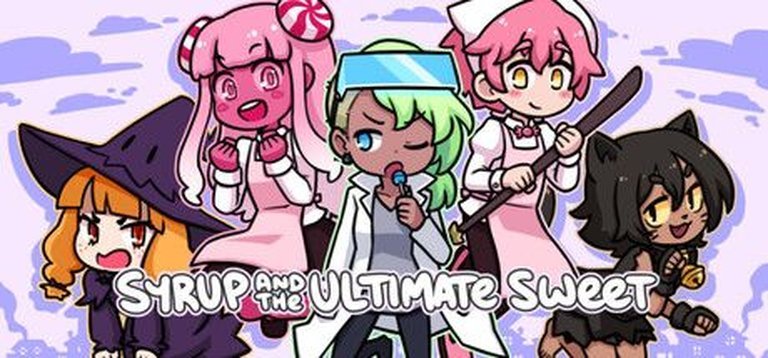
In a fantastical world of candy alchemists, Syrup, the owner of Atelier Sweets, discovers a mysterious candy golem named Gumdrop in her basement workshop alongside her assistant Pastille. As Syrup investigates the golem’s origins and grapples with her rival Butterscotch over creating the ‘Ultimate Sweet’—a magical dessert that challenges her no-magic principles—player choices lead to one of ten diverse endings in this yuri-themed visual novel with anime-style art and romance elements.
Gameplay Videos
Where to Buy Syrup and the Ultimate Sweet
PC
Syrup and the Ultimate Sweet Free Download
Syrup and the Ultimate Sweet Guides & Walkthroughs
Syrup and the Ultimate Sweet Reviews & Reception
opencritic.com (70/100): Syrup and the Ultimate Sweet is a short, sweet game that has enough heart and replayability to it that it is definitely worth the cheap price.
metacritic.com (64/100): Syrup and the Ultimate Sweet is a lighthearted, decently-written, short and sweet visual novel with strong core values.
stackup.org : a remarkably warm and cheerful visual novel I encourage all players to experience
wraithkal.com : an absolute treat
monstercritic.com (65/100): A super-sweet little visual novel with some rather dark humour elements, Syrup and the Ultimate Sweet is a good way to while away an hour or two with a cup of coffee.
Syrup and the Ultimate Sweet: Review
Introduction
Imagine stumbling upon a living confection in your workshop—a candy golem begging to be devoured in a world where magic and sweets collide. This whimsical premise hooks you immediately in Syrup and the Ultimate Sweet, a 2015 visual novel that distills the joy of indie storytelling into a bite-sized ~16,000-word experience with ten branching endings. Created by NomnomNami for YuriJam 2015, it follows the prickly candy alchemist Syrup as she navigates friendship, rivalry, and her disdain for magic in a fantastical town. As a game historian, I see it as a cornerstone of short-form yuri visual novels: a testament to how constraints breed creativity, delivering profound lessons on social isolation amid sugary charm. My thesis? Despite its brevity, Syrup is a masterful micro-masterpiece that reshaped indie VN design, blending heartfelt character growth with replayable choice-driven tragedy, cementing NomnomNami’s legacy in LGBTQ+ gaming.
Development History & Context
Syrup and the Ultimate Sweet emerged from the fertile ground of YuriJam 2015, a two-month itch.io game jam challenging creators to craft yuri (girls’-love) narratives. NomnomNami, a solo developer known for hand-drawn anime-style art and witty prose, wore multiple hats: writer, artist, and programmer, leveraging the accessible Ren’Py engine to prototype rapidly. Music came from Joshua Mock (aka MockOff), whose OST—available on Bandcamp—infuses candy-coated whimsy with subtle tension. Released Halloween 2015 (October 30/31) for Windows, Mac, and Linux via itch.io, it was a free-to-pay-what-you-want title, aligning with jam ethos.
The 2010s indie VN boom, fueled by Ren’Py’s democratization (think Doki Doki Literature Club in 2017), provided perfect context. YuriJam tapped unmet demand for queer-focused stories amid rising visibility post-Gone Home (2013). Technological limits? Minimal—Ren’Py handled branching narratives on modest hardware (2GHz CPU, OpenGL 3.0)—but NomnomNami’s vision defied them: a shared universe with Lonely Wolf Treat (featuring cameos like wolf-girl Treat), emphasizing edible theme-naming and anti-magic science vs. sorcery.
Ports expanded reach: 2016 browser, 2019 Android, 2020 consoles (PS Vita, PS4, Xbox One, Switch via Ratalaika Games/Eastasiasoft for $4.99), and 2025 Steam (with gallery, achievements, 19 languages). Updates added in-game galleries (from Patreon art books), ending guides, and localizations (Korean, Spanish, French, etc.). Constraints like jam deadlines yielded innovative brevity—1-2 hours for all endings—pioneering “sandbox adventure” grouping on MobyGames, influencing micro-VNs like Bad End Theater.
In a landscape dominated by sprawling epics (Steins;Gate), Syrup proved short VNs could thrive commercially, paving for NomnomNami’s RPG sequel Syrup 2: Candy Alchemy RPG (2025 Early Access).
Narrative & Thematic Deep Dive
At its core, Syrup is a character study of antisocial hubris clashing with confectionery chaos. Protagonist Syrup, a lollipop-sucking “candy alchemist” proud of her non-magical sweets at Atelier Sweets, embodies rigid scientism: “Alchemy is science, superior to magic.” Her shop thrives in a magic-saturated town, but she’s a Jerkass—gruff, distrustful, reliant on hyper-competent assistant Pastille (who masks witchery to appease her).
The inciting incident: a featureless “candy golem” (dubbed Gumdrop) awakens in Syrup’s basement, literally begging, “Eat me—I’m candy!” Choices spiral into ten endings (five good, five bad), earned via persistent rudeness (Earn Your Bad Ending). Plot branches probe Syrup’s growth:
- Gumdrop End: Reveals Pastille created Gumdrop as Syrup’s friend (via logic bomb: “act like a person” + “be yourself”). Syrup softens, traveling together.
- Pastille End: Reconciliation post-magic reveal; they collaborate on candies.
- Butterscotch End: Rival witch Butterscotch (vain sorceress with non-binary cat familiar Toffee) allies despite cave-trapping peril; Syrup invents butterscotch candy.
- Toffee End: Bonding over Mount Sorbet wolf fears; Toffee becomes “pet.”
- Syrup End: Capitalist pivot—Ultimate Sweet wows Chocolate brothers (library witches), securing riches sans bonds.
Bad endings weaponize cruelty: Candibal End (eat Gumdrop; Pastille quits, shop folds); Frozen End (hate Butterscotch, freeze); Worst End (heart freezes from ingratitude). Themes? Does Not Like Magic critiques dogma; No Antagonist flips rivalries into growth arcs. Edible naming (Syrup, Pastille, Gumdrop) underscores Let’s Meet the Meat (implicit cannibalism, gory discretion shots). Yuri/LGBTQ+ shines subtly: Gumdrop nudity (non-sexualized), Toffee’s non-binary reveal, romance-infused bonds.
Dialogue sparkles—punny (Toffee’s “purrticular”), colored by speaker, evolving (e.g., “Candy Girl” to “Miss Candy Spy”). Plot twists (Pastille’s creator role) replay-recontextualize, teaching What the Hell, Hero? via fallout. Amid peril (screen shakes, flashes), it imparts friendship, forgiveness, anti-isolation—profound for a jam game.
Gameplay Mechanics & Systems
As a Ren’Py visual novel, “gameplay” centers on choices matter: binary decisions (rude/nice, help/ignore) accumulate flags for endings, no combat/progression. Core loop: read ~16k words (1 hour/playthrough), branch via dialogue trees. UI excels—speaker-colored text aids identification (e.g., “Candy Girl” pre-naming); evolving title screen reflects endings (Syrup’s sunglasses, Butterscotch’s wink).
Innovations: Video Game Cruelty Potential yields Downer Endings only via insistence (e.g., double-down hating Butterscotch). Replayability shines—gallery unlocks art, guides aid completionists (consoles/Steam). Flaws? Binary choices limit nuance (no third options), metaknowledge “cheating” feel on replays. No saves mid-run burdens short length, but achievements (Steam: 10) incentivize. Accessibility: warning for nudity/cannibalism/death. Overall, tight systems maximize jam constraints, blending Choose Your Own Adventure with emotional stakes.
World-Building, Art & Sound
The setting—a Fantasy town blending magic (witches, wolves) and mundane (Atelier Sweets)—feels lived-in via cameos (Ascended Extra Treat) and locations (library, Mount Sorbet). Atmosphere: Cute pastels evoke candy wonderland, subverting with ice caves, wolf packs (Furry Confusion).
Art: NomnomNami’s hand-drawn anime/manga shines—vibrant pinks/blues/yellows, expressive sprites (Syrup’s scowl softens). Evolving Title Screen, expository hairstyles (Gumdrop’s post-eating trim), stylish endings elevate. “Candy nudity” is tasteful (featureless golem).
Sound: MockOff’s OST—whimsical chiptunes, tense swells—perfectly scores banter. No voice acting, but Fun with Subtitles (name evolutions) and subtle effects (shakes/flashes) immerse. Elements synergize: visuals/score amplify themes, making peril poignant in a saccharine world.
Reception & Legacy
Launch (2015 itch.io) was niche acclaim for yuri fans; MobyScore n/a, but jam buzz built cult following. 2020 ports drew mixed critics: Metacritic 64 (Switch), OpenCritic 30th percentile (70s from Pure Nintendo, GamingTrend; 50-60s from Switch Player, Starbit). Praises: “heart/replayability” (Pure Nintendo, 7/10), “witty, charming” (Cubed3, 7/10), “life lessons” (Stack Up). Critiques: brevity (“flimsy narrative,” Switch Player 5/10), Syrup’s “carrancuda” gruffness (Starbit 60%).
Commercially: Steady $4.99 sales; Steam 100% positive (32 reviews). Users adore “attached characters,” “sweet/lighthearted” (8.3 Metacritic). Evolved rep: 2025 Steam/sequel cements as NomnomNami gateway (her tears were my light, Contract Demon). Influence: Pioneered short, choice-heavy yuri VNs with bad ends; LGBTQ+ rep (non-binary Toffee, yuri bonds) amid 2010s wave (If Found…). Shared universe expands canon; inspires micro-narratives in indies.
Conclusion
Syrup and the Ultimate Sweet transcends its jam origins, crafting a sugary scalpel dissecting isolation through ten endings that reward empathy. NomnomNami’s art, prose, and design—bolstered by ports’ polish—deliver exhaustive depth in 1-2 hours, flaws like binary choices paling against charm. As historian, I verdict it essential: a 9/10 indie landmark, influencing yuri VNs and NomnomNami’s empire. In gaming history, it’s the Ultimate Sweet—enlightening, tear-jerking, eternally replayable. Indulge; your heart (and lollipop stash) will thank you.