
- Release Year: 2011
- Platforms: Android, iPad, iPhone, Linux, Macintosh, Windows, Xbox 360
- Publisher: Bulkypix, Phoenix Game Studios
- Developer: Phoenix Game Studios
- Genre: Action, Driving, Racing
- Perspective: Behind view
- Game Mode: Single-player
- Gameplay: Platform
- Setting: Futuristic, Sci-fi
- Average Score: 79/100
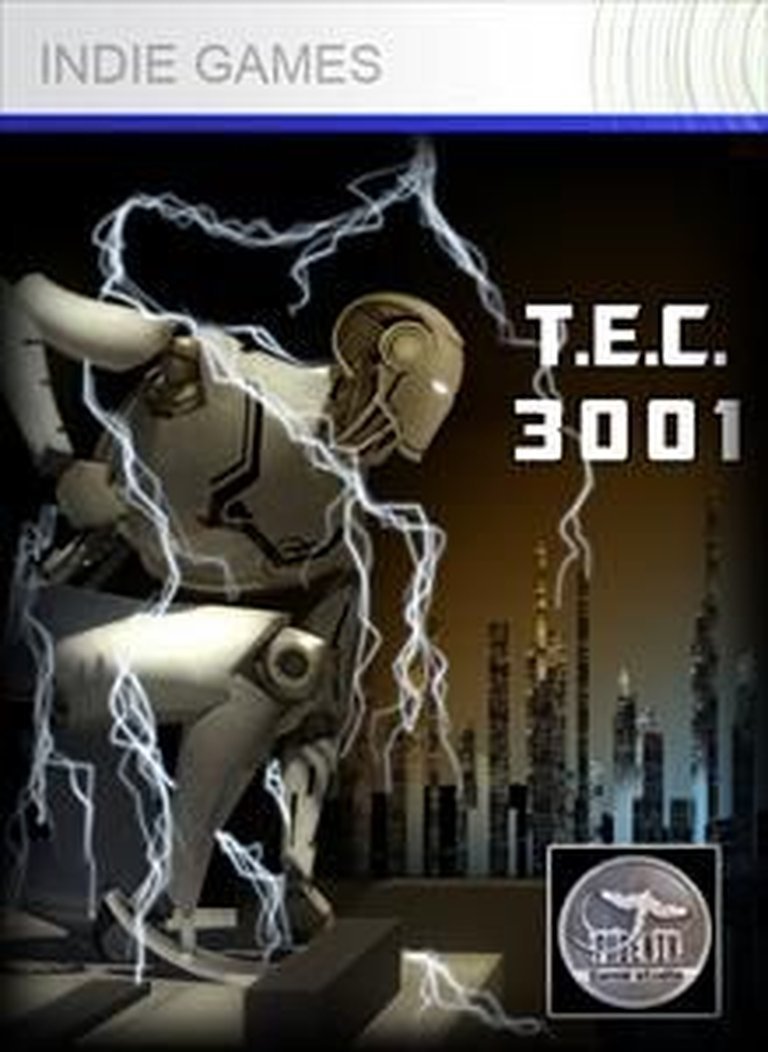
Description
T.E.C. 3001 is a futuristic action-platformer where players control a Tesla Energy Collector (T.E.C.), an electronic avatar tasked with gathering energy remnants across 20 fast-paced 3D levels. The game features auto-running gameplay, requiring players to jump, slide, and dodge hazards while collecting batteries to progress. With multiple routes per level and a sci-fi setting, it blends high-speed platforming with strategic energy collection.
Gameplay Videos
T.E.C. 3001 Guides & Walkthroughs
T.E.C. 3001 Reviews & Reception
metacritic.com (70/100): T.E.C 3001 is a good looking runner with plenty of content to enjoy, but it’s saddled with a control scheme that gets in the way of actual enjoyment.
steambase.io (90/100): T.E.C. 3001 has earned a Player Score of 90 / 100.
mobygames.com (68/100): Average score: 68% (based on 2 ratings)
mashthosebuttons.com : TEC is a solid action platforming racing game and worth every single point of the 240 Microsoft points it costs on the XBOX Indie Games Arcade.
raijin.gg (89.62/100): T.E.C. 3001 holds a 89.62% positive rating on Steam, based on 395 player reviews.
T.E.C. 3001: A Futuristic Energy Collection Odyssey
Introduction
In the vast landscape of indie games, few titles manage to carve out a niche as distinct and memorable as T.E.C. 3001. Released in 2011 by Phoenix Game Studios, this futuristic energy collection game blends high-speed platforming with a unique aesthetic and challenging gameplay. Despite its modest origins, T.E.C. 3001 has left an indelible mark on the indie gaming scene, offering a thrilling experience that continues to captivate players. This review delves deep into the game’s development history, narrative, gameplay mechanics, world-building, reception, and legacy, providing a comprehensive analysis of its place in video game history.
Development History & Context
The Birth of a Vision
T.E.C. 3001 was born out of a desire to create a fast-paced, challenging game that could stand out in the crowded indie market. The development team at Phoenix Game Studios, led by creators Branislav Andjelković, Bojan Trajković, and Nenad Rajković, sought to create a game that combined the thrill of high-speed platforming with a futuristic aesthetic. The game’s concept was inspired by the idea of a Tesla Energy Collector (T.E.C.), an electronic avatar tasked with collecting energy remnants from a virtual space for human use.
Technological Constraints and Innovations
The original Xbox 360 version of T.E.C. 3001 was developed using Microsoft’s XNA framework, a toolset designed to facilitate game development for Windows and Xbox platforms. This choice allowed the team to quickly prototype and iterate on their ideas, but it also presented challenges, particularly in terms of performance and compatibility. The game’s transition to other platforms, including iOS, Android, and PC, required a complete rebuild using the Unity engine, which offered greater flexibility and cross-platform support.
The Indie Games Summer Uprising
T.E.C. 3001 gained significant attention through its participation in the Indie Games Summer Uprising (IGSU) 2011, a community-driven event that showcased some of the best indie games on Xbox Live Indie Games (XBLIG). The game’s inclusion in this event helped it reach a wider audience and garner critical acclaim, ultimately leading to its success on the platform.
Narrative & Thematic Deep Dive
Plot and Setting
T.E.C. 3001 is set in a futuristic world where energy is scarce, and humanity relies on advanced technology to collect and utilize energy remnants from virtual spaces. Players take on the role of a T.E.C., a robotic avatar designed to navigate these virtual environments and collect batteries that power human civilization. The game’s narrative is minimalistic, focusing more on the gameplay experience than a complex story. However, the futuristic setting and the concept of energy collection provide a compelling backdrop for the game’s action.
Characters and Dialogue
The game features a single protagonist, the T.E.C., who is a silent, faceless entity. This lack of character development is intentional, as the focus is on the gameplay and the player’s skill in navigating the virtual environments. The absence of dialogue and character interactions allows the game to maintain a fast-paced, immersive experience, where the player’s actions and reactions are the primary drivers of the narrative.
Themes
T.E.C. 3001 explores themes of technology, energy, and human ingenuity. The game’s futuristic setting and the concept of energy collection reflect contemporary concerns about resource scarcity and the role of technology in addressing these challenges. The game’s minimalistic narrative and focus on gameplay also highlight the importance of player skill and perseverance, as success in the game is directly tied to the player’s ability to navigate the virtual environments and collect the required batteries.
Gameplay Mechanics & Systems
Core Gameplay Loop
At its core, T.E.C. 3001 is a high-speed platformer where players must navigate a series of 3D environments, collecting batteries while avoiding obstacles. The game features an auto-running mechanic, where the T.E.C. moves forward automatically, and players must use jump, slide, and charge abilities to navigate the environment. The game’s levels are designed with multiple routes, allowing players to choose their path and strategy for collecting batteries.
Combat and Character Progression
While T.E.C. 3001 does not feature traditional combat mechanics, the game’s challenges come from the player’s ability to navigate the environment and avoid obstacles. The game’s progression system is tied to the player’s performance in each level, with higher scores and faster completion times unlocking new levels and challenges. The game also features a leveling system, although it does not provide tangible rewards, serving more as a measure of the player’s skill and progress.
UI and Innovative Systems
The game’s user interface is minimalistic and intuitive, with a focus on providing clear feedback to the player. The HUD displays essential information such as the number of batteries collected, the player’s speed, and the remaining time. The game’s innovative systems include the ability to adjust the player’s speed using green and red arrows, which can be used to navigate the environment more effectively. The game also features a unique color-shifting mechanic, where the environment’s color palette changes as the player progresses through the level, adding a visual dynamic to the gameplay.
World-Building, Art & Sound
Setting and Atmosphere
T.E.C. 3001 is set in a futuristic virtual space, where players navigate a series of 3D environments that range from vibrant cityscapes to cosmic nebulas. The game’s setting is designed to be immersive and visually striking, with a focus on creating a sense of speed and movement. The game’s atmosphere is enhanced by its minimalistic narrative and the absence of dialogue, allowing players to focus on the gameplay and the visual spectacle.
Visual Direction
The game’s visual direction is a blend of classical and modern aesthetics, with a focus on creating a futuristic and cutting-edge feel. The game’s environments are designed with simple yet effective graphics, using interesting colors and shapes to create a unique and memorable visual experience. The game’s art style is reminiscent of classic arcade games, with a modern twist that reflects the game’s futuristic setting.
Sound Design
The game’s soundtrack is a solid mixture of industrial and electronic techno, creating a fantastical virtual world straight out of the Matrix or Tron. The soundtrack is designed to be immersive and dynamic, with a focus on enhancing the gameplay experience. The game’s sound effects are equally impressive, with a focus on providing clear feedback to the player and enhancing the sense of speed and movement.
Reception & Legacy
Critical and Commercial Reception
T.E.C. 3001 received mixed reviews upon its release, with critics praising its innovative gameplay and visual style but criticizing its lack of depth and replayability. The game’s reception was particularly positive on the Xbox 360, where it was praised for its unique blend of platforming and racing mechanics. However, the game’s transition to other platforms, particularly iOS, was met with more mixed reviews, with critics noting the game’s steep learning curve and the lack of a compelling narrative.
Evolution of Reputation
Despite its mixed reception, T.E.C. 3001 has developed a cult following among indie game enthusiasts. The game’s unique blend of high-speed platforming and futuristic aesthetics has resonated with players, and its inclusion in the Indie Games Summer Uprising has helped it gain a wider audience. The game’s legacy is also reflected in its influence on subsequent games, with many developers citing T.E.C. 3001 as an inspiration for their own projects.
Influence on Subsequent Games
T.E.C. 3001 has had a significant influence on the indie gaming scene, particularly in the realm of high-speed platformers and racing games. The game’s innovative gameplay mechanics and visual style have inspired many developers to create their own unique takes on the genre. The game’s success on the Xbox 360 and its transition to other platforms have also demonstrated the potential for indie games to reach a wider audience and achieve commercial success.
Conclusion
T.E.C. 3001 is a unique and innovative indie game that blends high-speed platforming with a futuristic aesthetic and challenging gameplay. Despite its mixed reception and modest origins, the game has left an indelible mark on the indie gaming scene, offering a thrilling experience that continues to captivate players. Its influence on subsequent games and its cult following among indie game enthusiasts are a testament to its enduring appeal and significance in video game history. While it may not be a perfect game, T.E.C. 3001 is a standout title that deserves recognition for its creativity, innovation, and contribution to the indie gaming landscape.