
- Release Year: 2009
- Platforms: Windows
- Publisher: Miciosegone Games
- Developer: Miciosegone Games
- Genre: Adventure
- Perspective: 3rd-person
- Game Mode: Single-player
- Gameplay: Point-and-click, Puzzle elements
Description
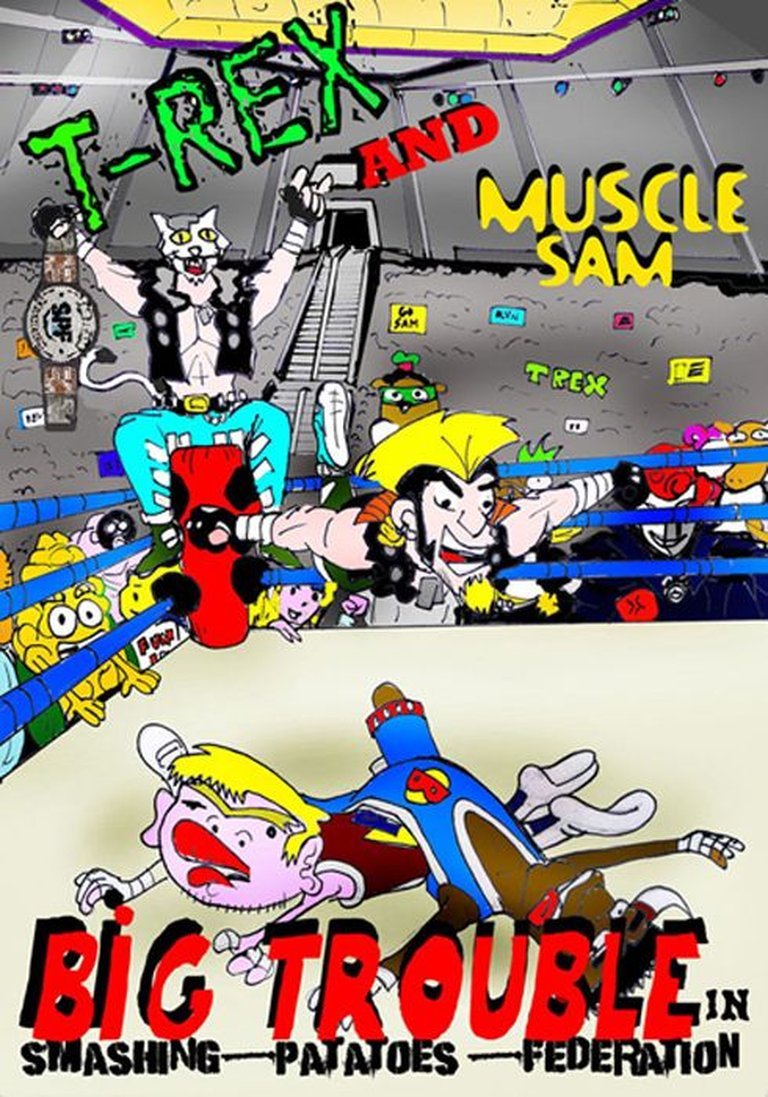
T-Rex and Muscle Sam: Big Trouble in Smashing Potatoes Federation is a classic point-and-click adventure game featuring a verbcoin interaction system. Players follow the story of two wrestler protagonists, T-Rex and Muscle Sam, who must recover their stolen championship belts after a bizarre theft during an interview. Set in the absurd and comedic world of the Smashing Potatoes Federation (SPF) wrestling league, the game blends puzzle-solving with humorous encounters and quirky characters, serving as a pilot for a wrestling-themed comic series. The game supports English and Italian languages and was developed using the Adventure Game Studio (AGS) engine.
T-Rex and Muscle Sam: Big Trouble in Smashing Potatoes Federation – A Deep Dive into a Forgotten Wrestling Adventure
Introduction: The Absurdist Wrestling Odyssey You Never Knew Existed
In the vast, often overlooked annals of indie adventure games, T-Rex and Muscle Sam: Big Trouble in Smashing Potatoes Federation (2009) stands as a bizarre, charming, and deeply flawed relic of early 2000s point-and-click design. Developed by the Italian indie studio Miciosegone Games, this freeware title is a love letter to professional wrestling, absurdist humor, and the golden age of LucasArts-style adventures—yet it stumbles as much as it soars. A pilot for a never-realized comic series, the game follows two larger-than-life wrestlers on a quest to reclaim their stolen championship belts, diving headfirst into a world of eccentric characters, convoluted puzzles, and a verb-coin interface that feels both nostalgic and clunky.
This review will dissect T-Rex and Muscle Sam in exhaustive detail, examining its development, narrative quirks, gameplay mechanics, and legacy. Is it a hidden gem, a frustrating mess, or something in between? Let’s step into the ring and find out.
Development History & Context: The Birth of a Wrestling Adventure
The Studio Behind the Madness: Miciosegone Games
Miciosegone Games was a small Italian indie team led by Pietro Turri, who handled storytelling, graphics, and programming. The studio’s output was modest but passionate, with T-Rex and Muscle Sam serving as their second major release after A Cat’s Night (2008). Their games were built using Adventure Game Studio (AGS), a popular engine for indie adventure developers, which allowed for a classic point-and-click experience without the need for extensive coding knowledge.
The Vision: A Wrestling Comic in Game Form
The game was conceived as a pilot for a wrestling-themed comic series, blending the over-the-top theatrics of professional wrestling with the absurdity of adventure game logic. The developers drew inspiration from:
– Classic LucasArts adventures (Monkey Island, Day of the Tentacle) in terms of humor and interface.
– Italian comedy traditions, particularly the slapstick and wordplay that permeate the dialogue.
– Wrestling culture, with references to tag teams, championships, and backstage drama.
Technological Constraints & the 2009 Indie Landscape
Released in October 2009, T-Rex and Muscle Sam arrived during a transitional period for adventure games:
– The death (and rebirth) of the genre: The late 2000s saw a decline in commercial adventure games, but indie developers kept the flame alive with tools like AGS.
– Freeware as a lifeline: Many indie adventures were distributed for free, relying on passion rather than profit.
– AGS limitations: The engine was powerful for its time but had quirks—no smooth animations, pixel-hunting issues, and clunky inventory systems—all of which plague this game.
The Wrestling Angle: Why SPF?
The Smashing Potatoes Federation (SPF) is a fictional wrestling league that serves as the game’s backdrop. The name itself is a playful jab at wrestling’s often ridiculous acronyms (WWE, WCW, ECW), while “Smashing Potatoes” hints at the game’s self-aware absurdity. The developers clearly had a fondness for wrestling’s campy charm, and the game leans into that with exaggerated characters and over-the-top scenarios.
Narrative & Thematic Deep Dive: A Tale of Stolen Belts and Absurdity
Plot Summary: The Quest for the Championship Belts
The story is simple but effective:
– T-Rex and Muscle Sam are the reigning tag team champions of the SPF, following in the footsteps of their legendary fathers.
– During a post-match interview, their championship belts are stolen in a blackout.
– The duo must investigate the backstage area, interrogate eccentric wrestlers, and solve puzzles to recover their belts.
What follows is a surreal, comedic odyssey filled with:
– Bizarre characters (a paranoid janitor, a washed-up wrestler turned chef, a mysterious figure lurking in the shadows).
– Non-sequiturs and wrestling in-jokes (e.g., references to “kayfabe,” the wrestling term for maintaining the illusion of reality).
– Multiple endings, depending on player choices.
Characters: The Wrestlers and the Weirdos
The game’s cast is its strongest asset, blending wrestling archetypes with adventure game eccentricity:
| Character | Role | Notable Traits |
|---|---|---|
| T-Rex | Protagonist, powerhouse wrestler | Brash, confident, prone to puns |
| Muscle Sam | Protagonist, technical wrestler | More level-headed, but still absurd |
| The Janitor | Suspicious backstage worker | Paranoid, hides secrets |
| The Chef | Former wrestler turned cook | Serves “mystery meat” |
| The Announcer | Over-the-top commentator | Spouts wrestling clichés |
| The Shadowy Figure | Antagonist? | May or may not be the thief |
The dynamic between T-Rex and Muscle Sam is the heart of the game. Their constant banter, filled with puns, wrestling references, and meta-humor, keeps the experience engaging even when the puzzles frustrate.
Themes: Absurdity, Legacy, and the Illusion of Wrestling
Beneath the humor, the game explores:
1. Legacy and Fatherhood – Both protagonists are sons of former champions, struggling to live up to their fathers’ reputations.
2. The Theater of Wrestling – The game breaks the fourth wall frequently, acknowledging the scripted nature of wrestling (e.g., characters “selling” moves, backstage politics).
3. Absurdity as a Narrative Tool – The puzzles and scenarios defy logic, embracing the same suspension of disbelief that wrestling demands.
Dialogue & Writing: Hit or Miss Comedy
The writing is uneven but ambitious:
– Strengths:
– Wrestling in-jokes that fans will appreciate.
– Self-aware humor (e.g., characters complaining about adventure game logic).
– Italian-to-English translation quirks that add unintentional charm.
– Weaknesses:
– Some jokes fall flat due to awkward phrasing.
– Repetitive banter between the protagonists.
– Occasional pixel-hunting leading to frustrating dialogue triggers.
Gameplay Mechanics & Systems: Classic Adventure, Flawed Execution
Core Gameplay Loop: Point, Click, and Puzzle-Solve
The game follows the traditional point-and-click formula:
1. Explore the SPF backstage area (20 rooms).
2. Interact with objects and characters using the verb-coin system (Talk, Use, Look).
3. Solve puzzles to progress, often involving inventory combinations or fetch quests.
The Verb-Coin Interface: A Nod to the Past
The verb-coin system is a direct homage to classic adventures like Monkey Island:
– Clicking on an object or character flips a coin with three actions:
– Talk – Engage in dialogue.
– Use – Apply an inventory item.
– Look – Examine for clues.
Pros:
– Nostalgic and intuitive for fans of the genre.
– Reduces screen clutter compared to verb bars.
Cons:
– No feedback when inventory combinations fail.
– Pixel-hunting is rampant—some interactive objects are nearly invisible.
Puzzle Design: From Brilliant to Baffling
The puzzles range from clever to infuriating:
– Highlights:
– A wrestling-themed lockpick minigame (using a belt buckle as a tool).
– A food-based puzzle involving the Chef’s questionable cuisine.
– Easter eggs referencing other adventure games.
– Lowlights:
– Illogical solutions (e.g., using a random item in an unintuitive way).
– No hints or feedback—players must brute-force combinations.
– NPC pathfinding issues (characters get stuck, blocking progress).
Inventory & Item Combination: Trial and Error
The inventory system is functional but frustrating:
– No indication of which items can be combined.
– Some puzzles require **using items on unrelated objects in ways that defy logic.
– No “use with” feedback—players must click every item on every object until something works.
Technical Issues: The AGS Curse
The game suffers from several technical flaws:
– Crashes and freezes (especially on modern systems).
– Savegame path issues on non-Latin character systems.
– No smooth animations—characters teleport rather than walk.
– NPC following mechanics are broken, leading to softlocks.
Replayability: Two Endings & Easter Eggs
The game offers:
– Two different endings (one “good,” one “bad”).
– Hidden easter eggs (references to other games, inside jokes).
– A walkthrough-friendly design (due to its obscurity, many players rely on guides).
World-Building, Art & Sound: A Backstage Wrestling Wonderland
Setting: The SPF Backstage Area
The entire game takes place in the backstage area of a wrestling arena, a clever constraint that:
– Keeps the scope manageable (only 20 rooms).
– Enhances the wrestling atmosphere (locker rooms, catering, interview sets).
– Allows for absurd encounters (e.g., a wrestler meditating in a broom closet).
Visual Style: Cartoonish and Charming
The art direction is hand-drawn and colorful, with:
– Exaggerated character designs (T-Rex is a hulking brute, Muscle Sam is more agile).
– Detailed backgrounds (though some areas feel empty or repetitive).
– No animations—characters slide or disappear, a common AGS limitation.
Sound & Music: A Mixed Bag
- Original soundtrack by Federico Bartoli—catchy but repetitive.
- No voice acting (except in the Italian “talkie” version).
- Sound effects are minimal (footsteps, door creaks).
Atmosphere: Campy and Fun
The game embraces its ridiculous premise, creating a lighthearted, comedic tone that fits the wrestling theme. However, the lack of polish in animations and sound undermines immersion at times.
Reception & Legacy: The Game That Time (Mostly) Forgot
Critical Reception: A Niche Curiosity
- No major reviews exist—most coverage comes from indie game databases (MobyGames, AGS forums).
- Player feedback is mixed:
- Praise for its humor, wrestling theme, and charm.
- Criticism for its technical issues, obscure puzzles, and lack of polish.
- AGS community reactions were divided—some called it “a labor of love,” others “a frustrating mess.”
Commercial Performance: Freeware Obscurity
- No sales data (it was free).
- Download counts suggest modest interest (e.g., ~3,400 downloads on AGS).
- Cult following among wrestling fans and adventure game enthusiasts.
Legacy & Influence: A Footnote in Indie History
- Inspired a sequel that never materialized (T-Rex and Muscle Sam: A New Kickstart! was announced but canceled).
- Proved that wrestling and adventure games could mix (though few have tried since).
- Showcased the limitations of AGS—many indie devs moved to Unity or Godot after similar experiences.
Where to Play It Today
The game is still available for free on:
– Miciosegone Games’ Itch.io
– Adventure Game Studio
– Internet Archive
Note: Modern players may need to run it in compatibility mode (Windows 98/ME) to avoid crashes.
Conclusion: A Flawed but Fascinating Relic
T-Rex and Muscle Sam: Big Trouble in Smashing Potatoes Federation is not a masterpiece, but it is a fascinating artifact of indie game development in the late 2000s. Its strengths—charming characters, wrestling-themed humor, and a love for classic adventures—are often undermined by technical flaws, obscure puzzles, and a lack of polish.
Final Verdict: 6.5/10 – “A Cult Classic for the Patient”
✅ Play it if:
– You love obscure indie adventures.
– You’re a wrestling fan who enjoys absurd humor.
– You have nostalgia for LucasArts-style games and can tolerate jank.
❌ Avoid it if:
– You hate pixel-hunting or illogical puzzles.
– You expect modern QOL features (hints, smooth animations).
– You can’t handle technical issues (crashes, save problems).
Its Place in Gaming History
While T-Rex and Muscle Sam will never be remembered alongside Monkey Island or King’s Quest, it deserves recognition as:
– A bold experiment in blending wrestling and adventure games.
– A testament to indie passion in an era when adventure games were “dead.”
– A cautionary tale about the limitations of AGS and freeware development.
In the end, it’s a game that punches above its weight—just like its protagonists in the ring. If you can overlook its flaws, you’ll find a quirky, lovable oddity that’s well worth a playthrough.
Now, if you’ll excuse me, I have some championship belts to reclaim. 🏆🦖💪