
- Release Year: 2005
- Platforms: Windows
- Publisher: Freeware / Free-to-play / Public Domain
- Developer: David Bird, Mark Incitti
- Genre: Action
- Perspective: 3rd-person
- Game Mode: Single-player
- Gameplay: Arcade, Shooter
- Average Score: 47/100
Description
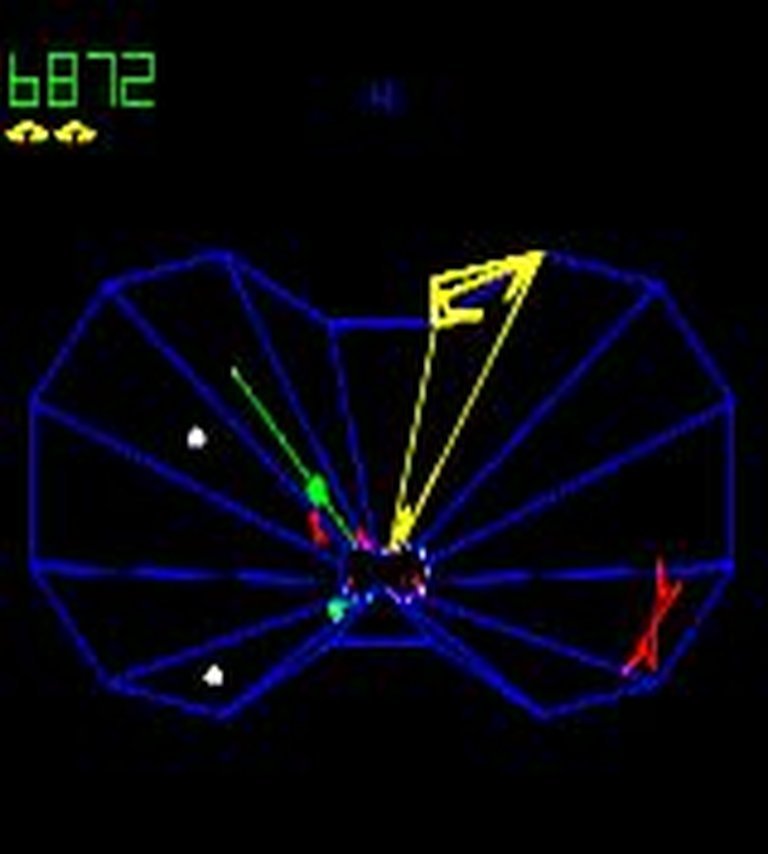
T3mp3st is an open-source, freeware remake of the classic vector-based arcade game Tempest, featuring new levels with unique shapes and an integrated level editor. The game retains the original objective of navigating a wire-frame structure to shoot down waves of enemies, while offering a straightforward implementation of the original foes, levels, and power-ups, contrasting with the more elaborate sequels by Jeff Minter.
T3mp3st Guides & Walkthroughs
T3mp3st Reviews & Reception
metacritic.com (47/100): Sloppy emulation and a sloppier enhanced mode make this version of Tempest a package to avoid.
T3mp3st Cheats & Codes
PC
Enter codes at the main menu.
| Code | Effect |
|---|---|
| burgerking | Unlocks the Burger King Challenge |
| castrol | Unlocks a Castrol SYNTEC themed Ford GT |
| givemethegto | Unlocks the Pontiac GTO (Demo) |
| iammostwanted | Unlocks all cars |
| getmerich | Grants free money |
| vanquish | Unconfirmed / Unknown Effect |
PlayStation 2
Enter codes at the Press Start screen.
| Code | Effect |
|---|---|
| Up, Down, Up, Down, Left, Right, Left, Right | Unlocks the Burger King Challenge |
| Left, Right, Left, Right, Up, Down, Up, Down | Unlocks a Castrol SYNTEC themed Ford GT |
| Up, Up, Down, Down, Left, Right, Up, Down | Extra Marker for Shop |
| L1, R1, R1, R1, Right, Left, Right, Down | Unlocks the Porsche Cayman S (Demo) |
Xbox & Xbox 360
Enter codes at the Press Start screen.
| Code | Effect |
|---|---|
| LT, RT, RT, RT, Right, Left, Right, Down | Unlocks the Porsche Cayman S (Demo) |
| Up, Down, Up, Down, Left, Right, Left, Right | Unlocks the Burger King Challenge |
| Left, Right, Left, Right, Up, Down, Up, Down | Unlocks a Castrol SYNTEC themed Ford GT |
| Up, Up, Down, Down, Left, Right, Up, Down | Free upgrades |
GameCube
Enter codes at the Press Start screen.
| Code | Effect |
|---|---|
| Up, Down, Up, Down, Left, Right, Left, Right | Unlocks the Burger King Challenge |
| Left, Right, Left, Right, Up, Down, Up, Down | Unlocks a Castrol SYNTEC themed Ford GT |
| Up, Up, Down, Down, Left, Right, Up, Down | Free upgrades |
T3mp3st: A Modern Homage to a Vector Classic
Introduction
In the vast, ever-evolving landscape of video game history, few titles have left as indelible a mark as Tempest, Atari’s 1981 vector-graphics masterpiece. A game that redefined the shooter genre with its hypnotic, wireframe tunnels and relentless, escalating gameplay, Tempest became a cornerstone of arcade culture. Fast forward to 2005, and we find T3mp3st, a humble yet ambitious freeware remake that seeks to honor its predecessor while carving out a niche of its own. Developed by David Bird and Mark Incitti, T3mp3st is more than just a fan project—it’s a testament to the enduring appeal of Tempest and a fascinating case study in how independent developers engage with gaming’s past.
This review will dissect T3mp3st in exhaustive detail, exploring its development context, gameplay mechanics, artistic direction, and its place within the broader legacy of Tempest. We’ll examine how it succeeds in preserving the spirit of the original while introducing modern twists, and assess its significance as both a historical artifact and a playable experience.
Development History & Context
The Legacy of Tempest
Before diving into T3mp3st, it’s essential to understand the game it remakes. Tempest, designed by Dave Theurer and released by Atari in 1981, was a revolutionary title that pushed the boundaries of arcade technology. It was one of the first games to utilize Atari’s Color-QuadraScan vector display, which allowed for smooth, multicolored wireframe graphics—a stark contrast to the pixelated sprites of the era. The game’s premise was deceptively simple: players controlled a “blaster” at the edge of a geometric tunnel, shooting enemies that emerged from the depths. Yet, its execution was anything but simple. Tempest introduced progressive level design, where each stage featured unique shapes and layouts, and it was one of the first games to allow players to select their starting difficulty via the “SkillStep” system.
Theurer’s creation was born from a nightmare—a vision of monsters crawling out of a hole in the ground—and it quickly became a cultural phenomenon. Its cabinet, with its angular, futuristic design, was as iconic as the game itself. Tempest was a commercial success, selling over 25,000 arcade units, and it left an indelible mark on the industry, influencing countless developers, including Jeff Minter, who would later create official sequels like Tempest 2000 and Tempest 4000.
The Rise of Fan Remakes
By the early 2000s, the gaming landscape had shifted dramatically. Arcades were in decline, and home computing had become the dominant platform. Yet, the nostalgia for classic arcade experiences remained strong. This era saw the rise of fan-made remakes and emulations, as enthusiasts sought to preserve and reinterpret the games of their youth. These projects were often labors of love, created by small teams or even solo developers working in their spare time.
T3mp3st emerged from this culture. Developed by David Bird (under the alias “Birdie”) and completed by Mark Incitti (“Mark1nc”), the game was released in June 2005 as freeware. It was part of a broader movement of “enhanced remakes” that sought to modernize classic games while staying true to their original designs. Unlike Jeff Minter’s sequels, which expanded on Tempest with extravagant visuals and new mechanics, T3mp3st aimed for a more straightforward approach, focusing on faithful recreation with a few modern twists.
Technological Constraints and Design Philosophy
T3mp3st was developed for Windows, utilizing modern programming tools that were a far cry from the assembly language and custom hardware of the original Tempest. The developers had the luxury of working with high-level languages and robust development environments, but they also faced the challenge of translating a game designed for vector monitors to a raster display. Vector graphics, with their smooth lines and crisp edges, don’t translate perfectly to pixel-based screens, and the developers had to make careful decisions about how to represent the game’s aesthetic.
The design philosophy behind T3mp3st was one of reverence and restraint. The developers sought to preserve the core gameplay loop of Tempest—the tension of defending the edge of the tunnel, the strategic use of the Superzapper, and the escalating difficulty—while adding new levels and a level editor to extend the game’s longevity. The result is a game that feels familiar to veterans of Tempest but offers enough novelty to justify its existence.
Narrative & Thematic Deep Dive
The Abstract Storytelling of Tempest
Tempest was never a game with a deep narrative. Its story, if it can be called that, was conveyed through its abstract visuals and the sheer intensity of its gameplay. The game’s premise—a player defending the rim of a tunnel from an onslaught of geometric enemies—was more about evoking a feeling than telling a story. Theurer’s nightmare-inspired design created a sense of claustrophobia and urgency, as players were trapped at the edge of the tunnel, forced to react quickly to survive.
The enemies in Tempest were similarly abstract. Flippers, Pulsars, Fuseballs, and Spikers weren’t characters with backstories; they were mechanical obstacles, each with distinct behaviors that players had to learn and counter. The game’s progression, with its increasingly complex tunnel shapes and faster enemy waves, told a story of escalating challenge, a test of the player’s reflexes and strategic thinking.
T3mp3st’s Approach to Narrative
T3mp3st doesn’t attempt to add a narrative where none existed. Instead, it embraces the abstract, mechanical storytelling of the original. The game’s new levels, with their “curious shapes,” don’t introduce new enemies or lore; they simply expand on the existing framework, offering fresh challenges within the same thematic space.
The inclusion of a level editor is particularly noteworthy. While it doesn’t contribute to the game’s narrative, it does reflect a broader theme of player agency and creativity. The level editor allows players to craft their own tunnels, effectively becoming designers themselves. This meta-narrative—of players engaging with the game’s systems to create new experiences—is a subtle but powerful extension of Tempest’s legacy.
Themes of Challenge and Mastery
At its core, Tempest was a game about mastery. Its difficulty curve was steep but fair, rewarding players who could adapt to its rhythms and patterns. T3mp3st preserves this theme, offering a similar challenge to players. The new levels, while not as numerous or as visually distinct as those in Minter’s sequels, still provide a fresh test for veterans of the original game.
The game’s freeware status also speaks to a theme of accessibility. Unlike the arcade original, which required quarters and a physical cabinet, T3mp3st is available to anyone with a computer. This democratization of access aligns with the broader trend of preserving and sharing classic games, ensuring that new generations of players can experience the challenge and thrill of Tempest.
Gameplay Mechanics & Systems
Core Gameplay Loop
T3mp3st’s gameplay is a faithful recreation of Tempest’s core mechanics. Players control a blaster that moves along the edge of a tunnel, firing shots down the lanes to destroy enemies. The controls are simple—move left or right with the keyboard, fire with a button—but the execution is anything but. The game’s challenge comes from the precision required to aim and fire quickly, as well as the need to manage the Superzapper, a powerful but limited weapon that clears the screen of enemies.
The enemies in T3mp3st are identical to those in the original Tempest. Flippers attempt to drag the player’s blaster to the far end of the tunnel, Pulsars electrify lanes, Fuseballs bounce unpredictably, and Spikers leave behind hazardous spikes. Each enemy type requires a different strategy to counter, and the game’s difficulty comes from the increasing speed and complexity of their attacks.
New Levels and the Level Editor
Where T3mp3st diverges from the original is in its level design. The game includes several new sets of levels, each with unique tunnel shapes that offer fresh challenges. These levels are designed to test players in new ways, with tighter curves, more complex branching paths, and different enemy spawn patterns. While they don’t introduce new enemy types or mechanics, they do provide a welcome change of pace for players who have mastered the original levels.
The level editor is the game’s most significant addition. It allows players to design their own tunnels, placing segments and defining enemy waves. The editor is straightforward but powerful, giving players the tools to create levels that range from simple variations on the originals to entirely new challenges. This feature extends the game’s replayability significantly, as players can share their creations and download levels made by others.
Combat and Character Progression
T3mp3st doesn’t feature character progression in the traditional sense. There are no upgrades, no new weapons, and no unlockable abilities. The progression comes from the player’s skill, as they learn to anticipate enemy patterns and react more quickly. This is in keeping with the original Tempest, which was a pure test of reflexes and strategy.
The Superzapper remains the game’s only “power-up,” and its use is carefully balanced. Players can use it once per level to clear the screen, but subsequent uses in the same level only destroy a single enemy. This forces players to use the Superzapper strategically, saving it for moments of desperation rather than relying on it as a crutch.
UI and Controls
The game’s UI is minimalist, with a focus on clarity and functionality. The score, level number, and remaining lives are displayed prominently, and the tunnel itself is rendered in a clean, wireframe style that evokes the original’s vector graphics. The controls are responsive, with the blaster moving smoothly along the edge of the tunnel. The keyboard controls are intuitive, though some players might miss the tactile feedback of the original arcade’s rotary knob.
One area where T3mp3st could improve is in its feedback systems. The original Tempest had a distinct audio-visual language, with the vector monitor’s glow and the game’s electronic sound effects creating a sensory experience that was hard to replicate. T3mp3st’s raster graphics and digital sound effects, while competent, lack the same immersive quality.
World-Building, Art & Sound
Visual Design: A Modern Take on Vector Graphics
T3mp3st’s visual design is a careful balance between faithfulness and modernization. The game’s tunnels are rendered in a wireframe style that mimics the original’s vector graphics, but with the added clarity of modern raster displays. The colors are bright and distinct, with each enemy type and tunnel segment clearly visible. The game avoids the pixelation and aliasing that can plague rasterized vector graphics, resulting in a clean, readable aesthetic.
The new levels introduce a variety of tunnel shapes, from simple geometric forms to more complex, asymmetrical designs. These shapes are rendered with the same wireframe style, ensuring consistency with the original game’s visual language. The level editor allows players to experiment with their own designs, further expanding the game’s visual diversity.
Sound Design: Nostalgia Meets Modernity
The sound design in T3mp3st is functional but unremarkable. The game’s sound effects—laser blasts, enemy explosions, and the hum of the tunnel—are serviceable, but they lack the distinct character of the original Tempest’s audio. The original game’s sound was a product of its hardware, with the vector monitor’s electronics contributing to its unique aural signature. T3mp3st’s digital sound effects, while clear, don’t capture the same retro charm.
The game’s music is similarly understated. There’s no dynamic soundtrack or adaptive audio; instead, the game relies on simple, repetitive loops that fade into the background. This is in keeping with the original Tempest, which had minimal music, but it’s a missed opportunity to enhance the game’s atmosphere.
Atmosphere and Immersion
T3mp3st’s atmosphere is one of focused intensity. The game’s abstract visuals and minimalist sound design create a sense of isolation, as if the player is trapped in a digital void, battling against an endless wave of geometric foes. The lack of narrative or contextual storytelling reinforces this feeling, making the gameplay itself the sole focus.
The game’s difficulty contributes to its immersive quality. As the levels progress and the enemy waves become more relentless, players are drawn into a state of flow, where their reactions become instinctive and the outside world fades away. This is the same hypnotic quality that made Tempest so compelling, and T3mp3st captures it effectively.
Reception & Legacy
Critical and Commercial Reception
T3mp3st was released as freeware in 2005, a time when the internet was becoming the primary distribution platform for independent games. As such, it didn’t receive the same level of critical attention as commercial releases. There are no recorded reviews from major gaming publications, and the game’s MobyGames page lists no critic scores. However, the game was well-received within the niche community of Tempest enthusiasts, who appreciated its faithful recreation and the addition of new levels.
The game’s freeware status meant that it didn’t generate commercial revenue, but it did contribute to the broader culture of game preservation. By making Tempest accessible to a new generation of players, T3mp3st helped keep the original game’s legacy alive.
Influence and Legacy
T3mp3st’s influence is subtle but significant. It’s part of a larger movement of fan-made remakes and preservations that have ensured classic games remain playable in the modern era. While it didn’t spawn direct sequels or imitators, it did contribute to the ongoing conversation about how to honor and reinterpret gaming’s past.
The game’s level editor is particularly noteworthy in this regard. By giving players the tools to create their own content, T3mp3st empowered its community to extend the game’s lifespan. This approach to player-driven content has become increasingly common in modern games, and T3mp3st was an early example of how it could be implemented in a classic arcade-style game.
Comparison to Other Tempest Remakes
T3mp3st stands in contrast to Jeff Minter’s official sequels, which took Tempest’s core mechanics and expanded them with new visuals, enemies, and gameplay twists. Minter’s games, like Tempest 2000 and Tempest 4000, are more extravagant and experimental, while T3mp3st is a more conservative, faithful remake.
This difference in approach highlights the two main paths for reinterpretating classic games. Minter’s sequels are about evolution, pushing the original concept in new directions. T3mp3st, on the other hand, is about preservation, ensuring that the original experience remains accessible while adding just enough new content to justify its existence.
Conclusion: A Faithful Tribute with Modern Twists
T3mp3st is a remarkable achievement in the world of fan-made remakes. It successfully captures the essence of Tempest, preserving its core gameplay and aesthetic while adding new levels and a level editor to extend its replayability. The game’s development is a testament to the passion and skill of its creators, who managed to translate a classic arcade experience to the modern era without losing what made it special.
While T3mp3st doesn’t reach the same heights of innovation as Jeff Minter’s sequels, it doesn’t aim to. Instead, it’s a loving tribute to Tempest, a game that deserves to be remembered and played. Its freeware status ensures that it’s accessible to anyone, and its level editor invites players to become creators themselves.
In the grand tapestry of video game history, T3mp3st is a small but significant thread. It’s a reminder of the power of fan creativity, the importance of game preservation, and the enduring appeal of a well-designed arcade classic. For fans of Tempest, it’s a must-play. For newcomers, it’s a gateway to one of gaming’s most influential titles. And for historians, it’s a fascinating case study in how the past and present can intersect in the world of video games.
Final Verdict: 8/10 – A faithful and well-crafted remake that honors its predecessor while adding enough new content to stand on its own.