
- Release Year: 2001
- Platforms: PlayStation 2, PS Vita, PSP, Windows
- Publisher: KOEI Co., Ltd., Taiwan Koei Entertainment Software, Inc., Tecmo Koei Games Co., Ltd.
- Developer: KOEI Co., Ltd.
- Genre: Role-playing (RPG)
- Perspective: Diagonal-down
- Game Mode: Single-player
- Gameplay: Life, Social simulation
- Setting: Classical, Historical events, Japan (Ancient, Medieval)
Description
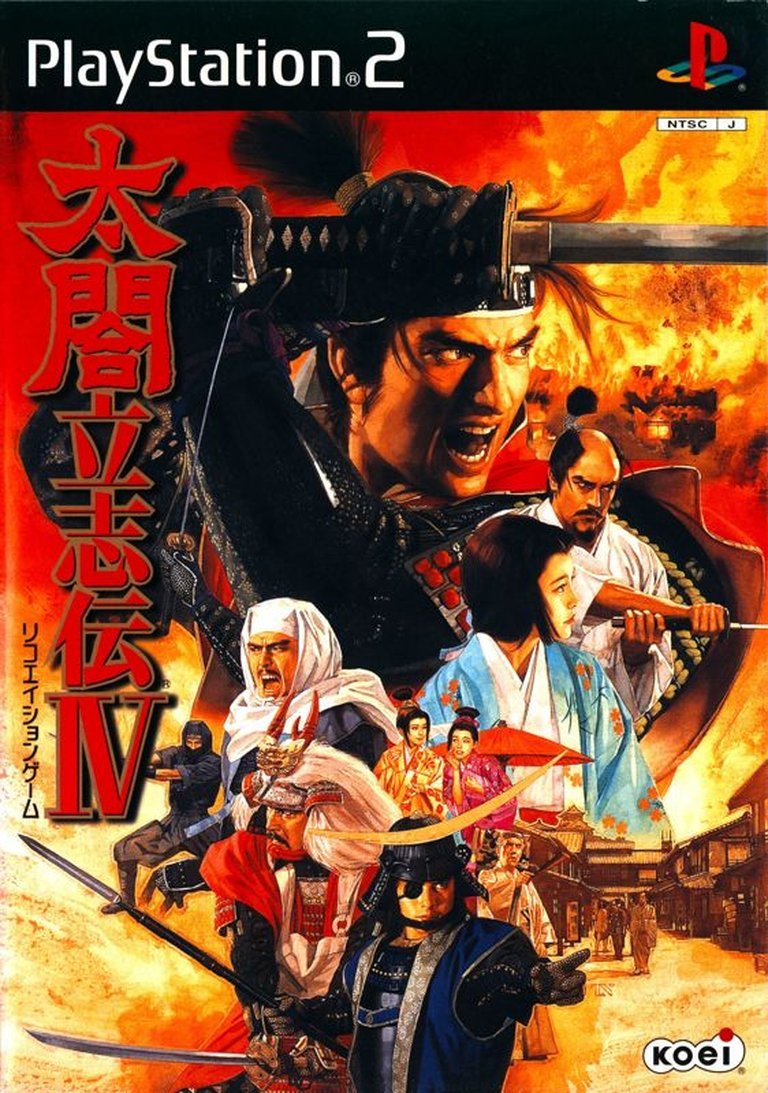
Taikō Risshiden IV is the fourth installment in the historical simulation RPG series, set in feudal Japan. It distinguishes itself as the first entry to allow players to choose from approximately 600 characters, offering diverse paths such as samurai, ninja, or merchant. The game introduces a card collection system and features turn-based gameplay with a life and social simulation focus, immersing players in the events of ancient and medieval Japan.
Gameplay Videos
Taikō Risshiden IV Guides & Walkthroughs
Taikō Risshiden IV: A Definitive Review of a Historical Sandbox Masterpiece
Introduction
In the pantheon of historical simulation games, few franchises command the reverence of KOEI’s Taikō Risshiden series. Spanning decades of Japanese history, the series has carved a unique niche by blending turn-based strategy with immersive role-playing elements. Nowhere is this synthesis more evident than in Taikō Risshiden IV, a 2001 landmark that redefined the genre’s boundaries. Released during an era dominated by arcade-style action games, this title dared players to step into the shoes of feudal-era figures, offering an unprecedented sandbox experience set against the vibrant backdrop of Japan’s Momoyama period. This review argues that Taikō Risshiden IV stands as a pioneering work of historical simulation, its brilliance lying in its profound freedom, emergent storytelling, and systems that anticipated modern open-world design by over a decade.
Development History & Context
Taikō Risshiden IV emerged from the fertile grounds of KOEI’s historical strategy division, under the stewardship of director Kazuhiro Echigoya and producer Naoki Sano. Released June 1, 2001, for Windows and subsequently ported to PlayStation 2, PSP (2006), and PS Vita (2011), it represented both a technological evolution and a philosophical expansion of the series. The game was developed during a transitional period in the Japanese gaming industry, where the novelty of 3D graphics was clashing with the enduring appeal of deep, text-driven simulations. KOEI, known for its grand-scale titles like Nobunaga’s Ambition, leveraged its expertise to create something more intimate yet equally vast.
The team’s vision was audacious: to move beyond the series’ traditional focus on military commanders and grant players true agency. This meant creating a world where a lowly merchant could rise to power as readily as a daimyō’s heir. Technologically, the game pushed the boundaries of its time, supporting over 600 playable characters—a staggering number for 2001—while introducing innovative systems like the card collection mechanic. The development was meticulous, with 44 contributors listed for the PlayStation 2 version alone, including sound director Shinichiro Nakamura and CG director Ritsuko Hamano, who crafted the distinct visual identity that would define the era’s historical sims.
Narrative & Thematic Deep Dive
Unlike its predecessors, Taikō Risshiden IV abandons rigid linear narratives in favor of emergent storytelling, where the player’s choices sculpt a unique tale of ambition and survival. Set in the late 16th century, during Japan’s tumultuous transition from Sengoku to Momoyama periods, the game’s narrative is not a preordained epic but a tapestry woven from countless personal stories. Players select from around 600 characters—historical figures like Oda Nobunaga and Tokugawa Ieyasu alongside fictional and minor historical personas—each with their own starting conditions, relationships, and potential trajectories.
The core thematic exploration revolves around the fluidity of social mobility in feudal Japan. The game brilliantly subverts the warrior-centric trope by offering three distinct paths: the Samurai route, where martial prowess and political maneuvering reign supreme; the Ninja path, emphasizing espionage, assassination, and covert influence; and the Merchant path, a radical departure focusing on economic dominance, trade networks, and wealth accumulation. This triad creates a rich spectrum of experiences, from the bushido code to the cunning of commerce.
Dialogue and events are contextual and reactive, with relationships dynamically shifting based on actions—marrying a rival’s daughter to broker peace, betraying a lord for personal gain, or failing to honor a debt. The underlying themes of loyalty, betrayal, and the cost of ambition permeate the experience. For instance, a merchant might face moral dilemmas over smuggling or price-gouging, while a ninja grapples with the erosion of personal identity through espionage. The card collection system further enriches this, as rare cards unlock hidden histories, secret techniques, or pivotal encounters, deepening the lore and rewarding exploration. This narrative structure, where history serves as a canvas rather than a script, remains one of the game’s most enduring achievements.
Gameplay Mechanics & Systems
At its heart, Taikō Risshiden IV is a turn-based life simulation RPG, but its systems are so multifaceted they defy easy categorization. The gameplay loop revolves around balancing personal growth, social relationships, and strategic goals within a year-by-year calendar. Key systems include:
-
Character Progression & Professions: Players customize their character’s appearance from scratch—a first for the series—choosing facial features, props, and clothing. Progression is profession-specific: samurai gain combat stats and leadership abilities; ninjas unlock stealth techniques and poisons; merchants develop trade skills and financial acumen. A deep stat system governs attributes like swordsmanship, charisma, and literacy, with mini-games for training (e.g., calligraphy practice for scholars) that can be skipped but risk missing skill gains.
-
Card Collection System: Introduced in this installment, cards act as both collectibles and game modifiers. They represent historical artifacts, techniques (e.g., “Hōjō Sōun’s Tactics”), or character abilities. Collecting all cards unlocks the “Character Editor,” allowing players to modify warlord stats—a precursor to KOEI’s “Power Up Kit” systems and a nod to modding culture.
-
Social & Political Simulation: Relationships are paramount. Players can form alliances, marriages, or rivalries. A unique “maneuver” system lets players influence events via actions like bribery, persuasion, or coercion. For merchants, this translates to market manipulation; for ninjas, infiltration. The game supports up to 40 allied characters, managed simultaneously, creating complex faction dynamics.
-
Mini-Games & Skipping: Internal affairs and training use mini-games (e.g., archery practice, tea ceremonies). Crucially, players can opt to skip these, though this forfeits technical skill points and may trigger forced participation in events, adding risk-reward tension.
-
Overseas Bases: A groundbreaking feature, merchants and pirates can establish bases in Naha (Ryukyu), Busan (Korea), Ningbo (Ming China), and Luzon (Philippines). These hubs facilitate trade routes, piracy, and cultural exchanges, expanding the game’s geopolitical scope.
The interface, while dated, is remarkably efficient for its time. Direct control and a diagonal-down perspective provide clear oversight of feudal domains and personal activities. Turn-based pacing allows deliberate strategy, though the density of systems can overwhelm newcomers. This complexity, however, is the game’s strength—every decision, from studying a martial art to speculating in rice futures, weaves into a larger tapestry of consequence.
World-Building, Art & Sound
Taikō Risshiden IV’s world-building is a masterclass in historical immersion. The Momoyama period is recreated with meticulous attention to detail, from the architecture of castles to the seasonal shifts of rural Japan. The game’s four overseas bases are not mere reskins; they reflect distinct cultures—Confucian bureaucracy in China, Joseon court rituals in Korea—with localized events and goods. Non-playable characters like missionaries, monks, and warlord wives add authenticity, their dialogue and behaviors reflecting the era’s social hierarchies.
Artistically, the game diverged from the manga style of its predecessors, adopting a mature gekiga (graphic novel) aesthetic akin to KOEI’s Nobunaga’s Ambition. This shift lends the game a gravitas befitting its themes, with detailed character portraits and battle scenes rendered in a stark, expressive line art. Environments, while not 3D, convey depth through layered sprites and atmospheric effects like cherry blossoms in spring or snowfall in winter.
Sound design complements the visuals perfectly. Shinichiro Nakamura’s score blends traditional Japanese instruments (shamisen, koto) with ambient cues—the clang of a blacksmith’s hammer, the murmur of a marketplace. Sound effects, from the whisper of a ninja’s blade to the tolling of a temple bell, ground the experience in sensory reality. This synergy of art and sound creates an atmosphere where feudal Japan feels lived-in and breathing, a world where history is not just studied but inhabited.
Reception & Legacy
Upon release, Taikō Risshiden IV was a commercial success, particularly in Japan, where its nuanced portrayal of historical ambition resonated deeply. While contemporary English-language reviews were scarce due to the game’s Japan-only release, its legacy in the Japanese gaming community is undeniable. It was re-released multiple times—including a “Koei the Best” budget edition and a DVD-ROM version—testifying to its enduring appeal. Critics lauded its freedom and depth, with some hailing it as the pinnacle of historical simulation, though its complexity was noted as a barrier for casual players.
The game’s influence extends far beyond its niche genre. Its card collection system anticipated gacha mechanics in modern RPGs, while its character creation and relationship dynamics foreshadowed games like Fire Emblem and Crusader Kings. The series continued with Taikō Risshiden V (2004), which expanded the profession roster to eight roles (adding pirates, doctors, and tea masters), but none recaptured IV’s revolutionary spirit. Ports to PSP and PS Vita introduced it to new generations, preserving its legacy as a touchstone for historical RPGs. Today, it remains a cult classic, revered for its ambition and the sheer breadth of its simulation—a testament to KOEI’s vision when it dared to let players write their own Taikō Risshiden.
Conclusion
Taikō Risshiden IV stands as a towering achievement in historical simulation, a game that transcends its era through sheer depth and audacity. Its revolutionary freedom—allowing players to be samurai, ninjas, or merchants; its emergent narratives birthed from thousands of choices; and its systems like the card collection and overseas bases collectively created a world that felt both vast and intimate. While its complexity and language barrier limit accessibility today, its influence permeates modern open-world and RPG design. As a historical sandbox, it remains unparalleled, offering a glimpse into the soul of feudal Japan where ambition could forge empires from obscurity. For those willing to embrace its intricacies, Taikō Risshiden IV is not merely a game but a time machine—an unforgettable journey through the heart of Japan’s most dynamic age.