
- Release Year: 2013
- Platforms: Windows, Xbox 360
- Publisher: 505 Games S.R.L.
- Developer: Serellan LLC
- Genre: Action
- Perspective: First-person
- Game Mode: Online Co-op, Online PVP, Single-player
- Gameplay: Shooter, Stealth, Tactical
- Setting: Laboratory, Oil Rig
Description
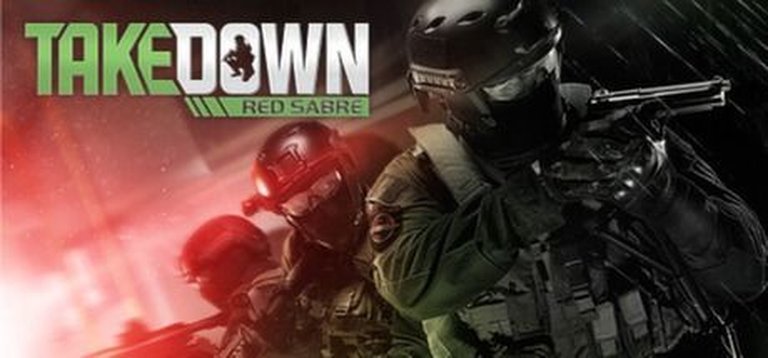
Takedown: Red Sabre is a tactical first‑person shooter that puts players in command of an elite anti‑terrorist squad. Set across diverse locations such as laboratories and oil rigs seized by hostile forces, the game emphasizes realistic weapon handling, damage modeling, and stealthy tactics. Players can customize loadouts with real‑life firearms, armor, and gadgets before tackling missions that include a main campaign, terrorist hunts, and bomb defusal, all playable solo or in co‑op. Additional deathmatch‑style modes like attack/defend, team deathmatch, and last‑man‑standing round out the multiplayer experience.
Gameplay Videos
Where to Buy Takedown: Red Sabre
PC
Takedown: Red Sabre Cracks & Fixes
Takedown: Red Sabre Guides & Walkthroughs
Takedown: Red Sabre Cheats & Codes
PC
Press the ~ button and type the code.
| Code | Effect |
|---|---|
| God | GodMode |
| Ghost | Crossing the obstacles |
Console
Open the console via TAB or TILDE and enter commands.
| Code | Effect |
|---|---|
| Exit | Closes the game |
| Open |
Opens the specified map |
| DisplayAll |
Display property values for instances of classname |
| DisplayAllState |
Display state names for all instances of classname |
| DisplayClear | Clears previous DisplayAll entries |
| FlushPersistentDebugLines | None |
| GetAll | None |
| GetAllState | None |
| Obj List | None |
| Obj ListContentRefs | None |
| Obj Classes | None |
| EditActor | None |
| EditDefault | None |
| EditObject | None |
| ReloadCfg | None |
| ReloadLoc | None |
| Set | None |
| Show BOUNDS | None |
| Show BSP | None |
| Show COLLISION | None |
| Show COVER | None |
| Show DECALS | None |
| Show FOG | None |
| Show LEVELCOLORATION | None |
| Show PATHS | None |
| Show POSTPROCESS | None |
| Show SKELMESHES | None |
| Show TERRAIN | None |
| Show VOLUMES | None |
| Show SPLINES | None |
| Stat FPS | None |
| Stat UNIT | None |
| Stat LEVELS | None |
| Stat GAME | None |
| ListTextures | None |
| ListUncachedStaticLightingInteractions | None |
| RestartLevel | None |
| ListSounds | None |
| ListWaves | None |
| ListSoundClasses | None |
| ListSoundModes | None |
| ListAudioComponents | None |
| ShowDebug NET | None |
| ShowDebug PHYSICS | None |
| ShowDebug COLLISION | None |
| ShowDebug AI | None |
| ShowDebug CAMERA | None |
| ShowDebug WEAPON | None |
| ShowDebug ANIMATION | None |
| ShowDebug INPUT | None |
| Stat SOUNDWAVES | None |
| Stat SOUNDCUES | None |
| Stat SOUNDS | None |
| DoMemLeakChecking | None |
| StopMemLeakChecking | None |
Takedown: Red Sabre – Review
Introduction
When the indie‑driven tactical shooter Takedown: Red Sabre appeared on Steam in September 2013, it arrived with the promise of a “hard‑core love letter” to the genre’s golden era—think Rainbow Six and Ghost Recon of the late‑90s. Backed by a successful Kickstarter campaign and a modest team of fifty developers at Serellan LLC, the game set out to deliver realistic weapon handling, lethal‑impact damage, and a suite of cooperative modes that could stand shoulder‑to‑shoulder with the big‑budget titles of its day.
My thesis is simple: Takedown is an earnest, ambitious experiment that collapses under its own weight. Its design goals are clear, its technical foundation (Unreal Engine 3) is solid, yet the final product feels like an unfinished prototype released far too early. The review that follows dissects why the game’s vision never materialised into a lasting legacy.
Development History & Context
The Studio and Its Vision
- Developer: Serellan LLC – a small, veteran‑heavy outfit that previously contributed to SOCOM 4 and Halo 4.
- Creative Director: Christian Allen, known for his work on tactical shooters.
- Funding: Kickstarter‑backed (crowd‑funded) – the campaign generated enough capital to start production, but the modest budget forced a tight schedule.
Serellan positioned Red Sabre as a “real‑life weapon control” experience, emphasizing authentic ballistics, armor penetration, and a steep learning curve. The team’s background in military‑style titles gave them the credibility to promise a “hard‑core” experience, and their choice of Unreal Engine 3 offered a proven, flexible pipeline for first‑person shooters at the time.
Technological Constraints & Market Landscape
- Engine: Unreal Engine 3 (released 2006) – by 2013 it was mature but beginning to show its age against the newer UE4 and CryEngine 3.
- Platforms: Windows (Sept 20 2013) → Xbox 360 (2014). The PC launch coincided with a surge of indie tactical shooters (e.g., Arma 3 early access) and the dominance of fast‑paced “run‑and‑gun” shooters like Call of Duty.
- Competing Titles: SWAT 4 (2005), Rainbow Six Vegas (2007), and the emerging Insurgency (2014) set high bars for AI, level design, and sound realism.
Within this context, Red Sabre was attempting to revive a design philosophy that had already been eclipsed by more polished, production‑scale releases. The Kickstarter model added pressure to ship quickly and deliver on backer expectations, yet the limited resources left little room for extensive QA or post‑launch polishing.
Narrative & Thematic Deep Dive
Plot Overview
The game places the player in an imaginary anti‑terrorist deployment squad tasked with retaking a variety of locations—laboratories, oil rigs, and other high‑value sites—overrun by a terrorist organization. The narrative is deliberately minimal, serving primarily as a scaffolding for mission‑based objectives (terrorist hunt, bomb defusal, etc.).
Characters & Dialogue
- Protagonist: A silent, customizable operator whose personality is left to player projection.
- Squad Members: AI teammates with limited communication cues; they rarely convey distinct personalities or back‑stories.
- Terrorists: Generic antagonists with no individual motivations beyond the mission’s generic “terrorist” label.
The dialogue is sparse and functional, focusing on mission briefings and radio chatter. There is little attempt at character development or thematic depth beyond the surface‑level “good‑vs‑evil” premise.
Themes and Underlying Messages
Red Sabre as to explore realism in combat, emphasizing the lethal consequences of gunfire and the importance of tactical planning. Themes of teamwork, stealth, and the moral weight of lethal force are hinted at but never fully realized, largely due to the lack of narrative scaffolding and the game’s focus on mechanical simulation over storytelling.
Gameplay Mechanics & Systems
Core Loop
- Loadout Customisation – Before each mission, players select weapons, armor, and gadgets (breaching charges, grenades).
- Insertion & Navigation – Players infiltrate the map, using cover and stealth to locate enemies.
- Engagement – Realistic damage model: a single headshot can be fatal; body armor mitigates damage but does not guarantee survivability.
- Objective Completion – Defuse bombs, eliminate high‑value targets, or secure the area.
Combat & Weapon Handling
- Realistic Ballistics: Bullet drop and penetration are simulated; however, the implementation is inconsistent across weapons.
- Damage Model: “Quick deaths” are praised for realism but often feel unfair when combined with AI that fails to react appropriately.
AI & Squad Mechanics
- Enemy AI: Frequently “faces the wrong way” during combat, shows poor awareness, and lacks proper cover usage.
- Squad AI: Teammates cannot communicate effectively, often ignore player commands, and occasionally wander into enemy fire.
Game Modes
- Single‑player: Main mission, terrorist hunt, bomb defusal.
- Co‑op Multiplayer: Same missions with friends, hampered by lack of dedicated servers and frequent connectivity issues.
- Deathmatch Variants: Attack/Defend, Team Deathmatch, Last Man Standing – these modes exist but feel like afterthoughts with limited map variety.
UI & Quality‑of‑Life Features
- User Interface: Clunky, with unintuitive menus for loadout and mission selection.
- Progression System: Minimal; no unlockables, skill trees, or rewarding end‑of‑mission statistics.
Innovation vs. Flaws
While the game’s ambition to provide a “hard‑core tactical experience” is commendable, the execution suffers from unfinished mechanics, buggy AI, and lack of polish. The core systems (damage, weapon handling) work in isolation but are undermined by the surrounding infrastructure.
World‑Building, Art & Sound
Visual Direction
- Engine Capabilities: Unreal Engine 3 delivers respectable textures and lighting for 2013, yet many environments feel low‑poly and under‑detailed.
- Level Design: A small selection of maps (laboratory, oil rig) offers varied geometry, but the overall world feels cramped and repetitive.
Audio Design
- Weapon Sounds: Critics note that gunfire is “loud everywhere,” making localisation of enemy fire impossible.
- Ambient Audio: Minimal ambient cues; the soundtrack is generic and does little to heighten tension.
- Voice Acting: Sparse and functional; no memorable lines or emotional impact.
Atmosphere & Immersion
The combination of realistic damage and lackluster sound creates a dissonant experience. The game’s visual fidelity is sufficient to convey a tactical setting, yet the absence of atmospheric audio and polished VFX prevents the player from truly feeling immersed in a high‑stakes anti‑terrorist operation.
Reception & Legacy
Critical Reception
| Outlet | Score | Key Critique |
|---|---|---|
| PC Gamer | 49 % | “Rushed unfinished project” |
| IGN | 40 % | AI facing wrong way, broken gear awareness |
| GameSpot | 20 % | Poor sound, “should not have been released” |
| New Game Network | 34 % | “Ambitious but severely overestimated budget” |
| Gamereactor | 30 % | “Shoddy execution of a nostalgic vision” |
Overall Moby Score: 32 % (11 critic reviews) – a clear consensus that the game fails to meet its own aspirations.
Player Reception
- Steam Rating: 1.8 / 5 (6 player ratings) – heavy criticism of bugs, AI, and lack of content.
- Community feedback on forums repeatedly requests dedicated servers, more varied equipment, and better AI.
Post‑Launch Support & Legacy
- Patches: Sporadic updates attempted to address AI and server issues, but never achieved a stable, polished state.
- Influence: Red Sabre is rarely cited as an influence on later titles; instead, it serves as a cautionary example of Kickstarter‑funded shooters that launched prematurely.
- Historical Position: The game occupies a niche footnote in the tactical shooter genre—remembered more for what it promised than for what it delivered.
Conclusion
Takedown: Red Sabre stands as a well‑intentioned but fundamentally flawed entry in the tactical shooter canon. Its development story—small studio, Kickstarter funding, and a rushed release—mirrors the pitfalls that many indie projects face when attempting to emulate high‑budget franchises.
- Strengths: Realistic damage model, variety of weaponry, and an earnest attempt at tactical depth.
- Weaknesses: Broken AI, clunky UI, poor sound design, and a lack of substantive content or progression.
In the annals of video‑game history, Red Sabre will be remembered as an ambitious love letter that never found its voice, a reminder that realism alone cannot compensate for the essential pillars of design—polish, balanced gameplay, and a compelling narrative. For historians and journalists, it offers a case study in how budget constraints, rushed timelines, and over‑reliance on niche appeal can derail a project with genuine potential.
Verdict: Takedown: Red Sabre is a cautionary artifact—worth studying for its aspirations, but not worth playing.