
- Release Year: 2016
- Platforms: PlayStation 3, PlayStation 4, Windows
- Publisher: Bandai Namco Entertainment America Inc., Bandai Namco Entertainment Europe S.A.S., Bandai Namco Entertainment Inc.
- Developer: Bandai Namco Studios Inc.
- Genre: Action RPG, Japanese-style RPG (JRPG), Role-playing (RPG)
- Perspective: Behind view
- Game Mode: Single-player
- Gameplay: Cooking, Crafting, Exploration, Moral choices, Real-time combat, Ship expeditions
- Setting: Fantasy
- Average Score: 83/100
Description
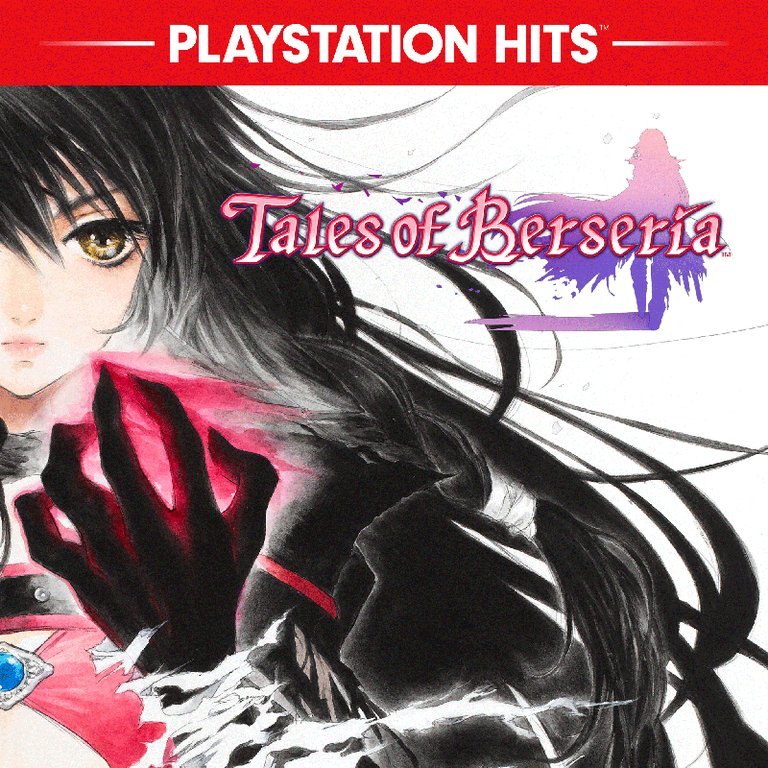
Tales of Berseria is a Japanese role-playing game set in a world overrun by daemons, where players follow Velvet Crowe, a woman consumed by vengeance after losing her family in a tragic ritual. Infected with a demonic arm, Velvet escapes imprisonment and embarks on a journey to uncover the truth behind the ritual and oppose the ruling Exorcists. Along the way, she gathers a diverse group of companions, each with their own troubled pasts, as they resist the authoritarian order. The game features real-time combat with the Linear Motion Battle System, allowing players to chain attacks and exploit enemy weaknesses while managing a party of up to four characters. Exploration, character progression, and strategic battles are key elements of the gameplay.
Gameplay Videos
Where to Buy Tales of Berseria
PC
Tales of Berseria Free Download
Tales of Berseria Cracks & Fixes
Tales of Berseria Patches & Updates
Tales of Berseria Mods
Tales of Berseria Guides & Walkthroughs
Tales of Berseria Reviews & Reception
metacritic.com (79/100): Faster, smoother, and bursting at the seams with content, Berseria delivers a much needed kick to the series.
opencritic.com (80/100): Tales of Berseria is a surprisingly strong showing for this long-running series. Its tragic story of broken people fighting on the wrong side of history makes it utterly compelling, and its well-tuned combat more than makes up for its lack of interesting environments.
steambase.io (91/100): Tales of Berseria has earned a Player Score of 91 / 100. This score is calculated from 18,748 total reviews which give it a rating of Very Positive.
Tales of Berseria Cheats & Codes
PC (Cheat Engine Tables)
Use Cheat Engine to activate the following cheats by checking boxes or setting values from 0 to 1.
| Code | Effect |
|---|---|
| Unlimited Health | Grants infinite health to the player. |
| Unlimited Gald | Grants infinite in-game currency (Gald). |
| Unlimited Souls | Grants infinite Souls gauge. |
| Unlimited Items | Grants infinite items in inventory. |
| 400-hit Combo | Allows for a 400-hit combo. |
| Infinite SG/BG | Grants infinite Soul Gauge and Battle Gauge. |
| Running Multiplier | Increases running speed. |
| Fast Mastery | Accelerates skill mastery. |
| Result Multiplier | Multiplies EXP and Gald gained after battles. |
| No-Cost Attachments | Allows attachments without cost. |
| Quick Escape | Enables quick escape from battles. |
| Always Geoboard Kill Buff | Always grants Geoboard kill buff. |
| Drop Modifier | Modifies item drop rates. |
| Difficulty Modifier | Allows changing difficulty settings. |
| Instant Cast Malak Artes | Instantly casts Malak Artes. |
| Set Max Damage [V=999999] | Sets maximum damage to 999,999. |
| Set Combo [V=9999] | Sets combo to 9,999. |
| Set Current Combo [V=999] | Sets current combo to 999. |
| Exp Gain Multiplier [V=10] | Multiplies EXP gain by 10. |
| Set Grade [Default: 2.00] | Sets battle grade to 2.00. |
| Instant Kill & God Mode | Instantly kills enemies and grants invincibility. |
| Instant Expedition | Completes expeditions instantly. |
| Max Expedition Level | Sets expedition level to maximum. |
PC (WeMod)
Use WeMod to toggle the following cheats in-game.
| Code | Effect |
|---|---|
| Unlimited Health | Grants infinite health. |
| Unlimited Mana | Grants infinite mana. |
| Unlimited Gald | Grants infinite Gald. |
| Unlimited Items | Grants infinite items. |
| Mega Exp | Grants massive EXP gain. |
| 100X Combo | Allows for a 100X combo. |
| Save Anywhere | Allows saving anywhere in the game. |
| One-Hit Kills | Kills enemies in one hit. |
PC (PLITCH)
Use PLITCH to activate the following cheats.
| Code | Effect |
|---|---|
| +500 Gald | Adds 500 Gald. |
| Infinite BG | Grants infinite Battle Gauge. |
| Godmode | Grants invincibility. |
| Infinite Souls | Grants infinite Souls. |
| +10 Katz spheres | Adds 10 Katz spheres. |
| +100 Tales coins | Adds 100 Tales coins. |
| Infinite items | Grants infinite items. |
| Fast expeditions | Completes expeditions faster. |
PC (Cheat Happens)
Use the Cheat Happens trainer to activate the following cheats.
| Code | Effect |
|---|---|
| Infinite Health | Grants infinite health. |
| Infinite Souls | Grants infinite Souls. |
| Unlimited Battle Gauge | Grants unlimited Battle Gauge. |
| One Hit Kills | Kills enemies in one hit. |
| Super Speed | Increases movement speed. |
| Change Gald | Allows modifying Gald amount. |
| Change Level | Allows modifying character level. |
| Change EXP (Player) | Allows modifying player EXP. |
| Change EXP (Selected Item) | Allows modifying EXP for selected item. |
| Change EXP (Selected Art) | Allows modifying EXP for selected art. |
| Change Katz Sphere | Allows modifying Katz Sphere count. |
| Unlimited Items | Grants unlimited items. |
| Unlimited Of Discard Item | Grants unlimited discard items. |
| Get All Items | Unlocks all items. |
| Save Anywhere | Allows saving anywhere. |
| Super Combo | Allows for a super combo. |
| Grade Multiplier | Multiplies battle grade. |
| Edit: Gald | Allows editing Gald. |
| Edit: Level | Allows editing character level. |
| Edit: EXP (Selected Character) | Allows editing EXP for selected character. |
| Edit: EXP (Selected Item) | Allows editing EXP for selected item. |
| Edit: EXP (Selected Art) | Allows editing EXP for selected art. |
| Edit: Max Health | Allows editing max health. |
| Edit: ATK | Allows editing attack power. |
| Edit: DEF | Allows editing defense. |
| Edit: A ATK | Allows editing arte attack power. |
| Edit: A DEF | Allows editing arte defense. |
| Edit: Focus | Allows editing focus. |
| Edit: Rarity | Allows editing rarity. |
| Edit: First Stat Value | Allows editing first stat value. |
| Edit: Second Stat Value | Allows editing second stat value. |
Tales of Berseria: A Masterclass in Narrative Depth and Mechanical Refinement
Introduction: A Dark Phoenix Rises
In the pantheon of Japanese role-playing games, few franchises have maintained the consistent quality and innovation of the Tales series. Tales of Berseria, released in 2016 by Bandai Namco Studios, stands as a bold reinvention—a phoenix rising from the ashes of its predecessor, Tales of Zestiria. With its unflinching exploration of vengeance, morality, and the human condition, Berseria is not just a prequel but a thematic and mechanical evolution that redefines what a Tales game can be. This review will dissect Berseria’s narrative ambition, combat sophistication, and artistic craftsmanship, arguing that it is one of the most compelling entries in the series and a landmark title in modern JRPGs.
Development History & Context: Forging a New Path
The Studio and the Vision
Bandai Namco Studios, under the direction of Yoshimasa Tanaka and producer Yasuhiro Fukaya, embarked on Berseria’s development in late 2014, immediately following Zestiria’s completion. The team was acutely aware of Zestiria’s mixed reception—criticized for its underwhelming protagonist, linear storytelling, and technical limitations. Berseria was conceived as a corrective, a game that would address these shortcomings while pushing the series into darker, more mature territory.
A significant shift in leadership marked this development cycle. Hideo Baba, the long-time producer of the Tales series, stepped back into a supervisory role, allowing Fukaya to steer the project. This change in guard signaled a willingness to take risks, particularly in narrative tone and character design. The decision to feature a sole female protagonist, Velvet Crowe, was both a response to fan demand and a creative gamble. As Fukaya noted in interviews, the team sought to challenge the series’ traditional hero archetypes, opting for a morally ambiguous, vengeance-driven anti-heroine.
Technological Constraints and Artistic Ambition
Berseria was developed primarily for the PlayStation 3 before being upgraded to the PlayStation 4, a decision that imposed technical limitations. The game’s engine, while refined, was not built from the ground up for eighth-generation hardware, resulting in visuals that, while stylish, often felt constrained by the PS3’s capabilities. Textures occasionally appeared muddy, and environmental detail lacked the polish of contemporaries like Final Fantasy XV or Persona 5. However, the art direction, led by Mutsumi Inomata and Kōsuke Fujishima, compensated for these limitations with a striking anime aesthetic, vibrant character designs, and expressive animations.
The game’s soundtrack, composed by Motoi Sakuraba, is a standout achievement. Sakuraba’s work has long been a cornerstone of the Tales series, and Berseria’s score is no exception. The opening theme, “Burn” by FLOW, sets the tone with its fiery intensity, while the in-game tracks oscillate between haunting melodies and adrenaline-pumping battle themes. The music dynamically adapts to combat scenarios, heightening the emotional and tactical stakes.
The Gaming Landscape of 2016-2017
Berseria arrived at a pivotal moment for JRPGs. The genre was experiencing a renaissance, with titles like Persona 5, Final Fantasy XV, and NieR: Automata pushing boundaries in storytelling and presentation. Berseria distinguished itself by embracing a darker, more adult narrative while retaining the series’ signature real-time combat and character-driven skits. Its release on multiple platforms—PS3, PS4, and PC—ensured broad accessibility, though the PS3 version remained exclusive to Japan due to the console’s waning popularity in Western markets.
Narrative & Thematic Deep Dive: The Anatomy of Revenge
Plot Overview: A Journey Through Fire and Blood
Tales of Berseria unfolds in the Holy Midgand Empire, a world plagued by the Daemonblight, a curse that transforms humans into monstrous daemons. The story begins with Velvet Crowe, a young woman whose life is shattered when her brother, Laphicet, is sacrificed during a ritual known as the Advent. Consumed by grief and rage, Velvet is infected with the Daemonblight, granting her a demonic left arm and transforming her into a Therion—a daemon with the power to consume others.
Velvet’s escape from Titania, the island prison where she is held, sets the stage for her quest for vengeance against Artorius Collbrande, her brother-in-law and the architect of the Advent. Along the way, she gathers a motley crew of outcasts, each with their own agendas:
– Rokurou Rangetsu, a rogue exorcist with a debt to repay.
– Magilou, a snarky, enigmatic witch with a hidden past.
– Eizen, a malak (spirit) who commands a pirate crew.
– Eleanor Hume, an exorcist who questions the Abbey’s methods.
– Laphicet, a malak who bears a striking resemblance to Velvet’s deceased brother.
The narrative is structured as a revenge tragedy, with Velvet’s single-minded pursuit of Artorius driving the plot forward. However, the game subverts expectations by gradually revealing the moral complexity of her quest. Artorius, far from being a one-dimensional villain, is a Well-Intentioned Extremist who seeks to eradicate human emotion to eliminate the Daemonblight. His philosophy of “reason over emotion” clashes with Velvet’s fiery, emotional nature, creating a thematic tension that permeates the story.
Character Analysis: Shades of Gray
Velvet Crowe is one of the most compelling protagonists in the Tales series. Unlike traditional JRPG heroes, she is not driven by a desire to save the world but by a personal, all-consuming vendetta. Her character arc is a study in the corrosive nature of revenge, as she grapples with the consequences of her actions and the toll they take on her humanity. Velvet’s relationship with her brother, Laphicet, is central to her motivation, and the game’s emotional climax hinges on the revelation that Laphicet willingly sacrificed himself—a twist that forces Velvet to confront the futility of her quest.
The supporting cast is equally nuanced:
– Rokurou serves as Velvet’s foil, a man bound by honor and duty who gradually comes to terms with his own past failures.
– Magilou’s flippant demeanor masks a deep-seated trauma, and her interactions with the party provide much-needed levity amid the darkness.
– Eizen’s stoic exterior hides a tragic backstory tied to the malakhim’s oppression, and his role as a mentor to Velvet adds depth to their dynamic.
– Eleanor’s journey from a loyal exorcist to a disillusioned rebel is one of the game’s most compelling subplots, culminating in her decision to become a Shepherd—a leader who guides humanity.
– Laphicet’s innocence and curiosity serve as a counterpoint to Velvet’s cynicism, and his true identity as the reincarnation of her nephew adds a layer of poignant irony to the narrative.
Themes: Emotion vs. Reason
At its core, Berseria is an exploration of the conflict between emotion and reason. Velvet embodies the former, her actions driven by passion, anger, and love, while Artorius represents the latter, advocating for a world stripped of emotional turmoil. The game does not present a clear-cut moral victory for either side; instead, it argues that both extremes are flawed. Velvet’s unchecked emotions lead to destruction and suffering, while Artorius’s cold rationality results in the dehumanization of those he seeks to save.
The theme of sacrifice is equally prominent. Velvet’s journey is littered with personal losses, and the game forces players to confront the cost of vengeance. The final act, in which Velvet seals herself away with Innominat (the godlike being responsible for the Daemonblight), is a bittersweet resolution that underscores the narrative’s central message: some burdens are too great for any one person to bear.
Dialogue and Localization
The game’s dialogue is sharp, emotionally resonant, and often darkly humorous. The localization, handled by Bandai Namco’s in-house team, captures the nuances of the original Japanese script while adapting it for Western audiences. The skits—short, optional conversations between characters—are a highlight, offering insights into the party’s dynamics and providing much-needed comic relief. However, some critics noted that the localization occasionally faltered, with certain lines feeling stiff or unnatural.
Gameplay Mechanics & Systems: The Art of Combat and Progression
The Liberation Linear Motion Battle System (L-LMBS)
Berseria’s combat system, the Liberation Linear Motion Battle System (L-LMBS), is a refined iteration of the series’ signature real-time battle mechanics. The system emphasizes fluid, combo-driven gameplay, with players controlling one of four party members in a dynamic, arena-based environment.
Key features of the L-LMBS include:
– Soul Gauge: A resource management system that governs the number of actions a character can perform. Each character has up to five Souls, which are consumed when using Artes (special attacks). Souls regenerate over time but can also be stolen from enemies, adding a strategic layer to combat.
– Break Soul: A limit-break mechanic that grants characters unique abilities when activated. Velvet’s Break Soul, for instance, transforms her arm into a bestial weapon, increasing her damage output and granting her access to Break Artes—powerful finishing moves.
– Switch Blast: A tactical maneuver that allows players to swap characters mid-combo, extending attack chains and maintaining pressure on enemies. This system encourages party synergy and rewards players for mastering character-specific abilities.
The combat is fast-paced and visually spectacular, with a strong emphasis on chaining attacks and exploiting enemy weaknesses. The game’s difficulty curve is well-balanced, offering a challenge to veterans while remaining accessible to newcomers. However, some critics noted that the combat could become repetitive in later stages, particularly during the game’s numerous boss encounters.
Character Progression and Customization
Berseria offers a deep progression system that allows players to tailor their party to their preferred playstyle. Characters gain experience points (EXP) and Gald (currency) through combat, which can be used to purchase new equipment and abilities. The game’s equipment system is particularly robust, with weapons and armor offering unique skills that can be learned and transferred between items.
Key progression mechanics include:
– Artes and Skills: Characters learn new Artes by equipping specific weapons and armor. These abilities can be customized and assigned to different control inputs, allowing for a high degree of personalization.
– Titles: A system that grants passive bonuses based on achievements and milestones. Titles can enhance stats, increase item drop rates, or unlock new abilities.
– Cooking: A returning feature from previous Tales games, cooking allows players to prepare meals that grant temporary buffs, such as increased EXP gain or reduced enemy aggression.
The game’s progression systems are well-integrated, offering meaningful choices without overwhelming players. However, the sheer volume of systems—particularly the equipment and title mechanics—can feel daunting to newcomers.
Exploration and Side Content
Berseria’s world is divided into distinct regions, each with its own dungeons, towns, and overworld areas. Exploration is linear but engaging, with hidden treasures, optional bosses, and side quests providing additional content. The game’s dungeons are well-designed, featuring puzzles and environmental hazards that test the player’s combat and problem-solving skills.
Notable side activities include:
– Katz Boxes: Collectible chests that contain rare items, equipment, and costumes.
– Ship Expeditions: A mini-game that allows players to send their party on voyages to gather resources and unlock new areas.
– Geoboard: A fast-travel system that also serves as a combat tool, allowing Velvet to traverse the overworld quickly and defeat weaker enemies instantly.
While the side content is enjoyable, it is not as expansive as in some other JRPGs. The game’s linear structure and lack of a true open world may disappoint players seeking a more exploratory experience.
World-Building, Art & Sound: Crafting a Living Nightmare
Setting and Atmosphere
Berseria’s world is a dark, oppressive realm where the Daemonblight looms over every corner. The Holy Midgand Empire is a theocratic dystopia, ruled by the Abbey and its Exorcists, who enforce their will through fear and propaganda. The game’s environments reflect this bleakness, with crumbling ruins, haunted forests, and desolate islands serving as the backdrop for Velvet’s journey.
The world-building is meticulous, with lore scattered throughout the game via books, NPC dialogue, and environmental storytelling. The connection to Tales of Zestiria is subtly woven into the narrative, with references to future events and characters adding depth to the prequel’s setting.
Visual Direction
Despite its technical limitations, Berseria’s art direction is a triumph. The character designs, helmed by Mutsumi Inomata and Kōsuke Fujishima, are striking and expressive, with Velvet’s demonic arm and the party’s diverse outfits standing out as highlights. The game’s anime cutscenes, produced by ufotable, are breathtaking, featuring fluid animation and dynamic camera work that rival the best in the industry.
The environmental design is equally impressive, with each region boasting a distinct visual identity. From the eerie glow of the Daemonblight-infested forests to the grandeur of the Abbey’s cathedrals, the game’s world feels alive and immersive. However, the PS3’s hardware limitations are evident in some areas, particularly in the texture quality and draw distance.
Sound Design and Music
Motoi Sakuraba’s soundtrack is a masterclass in atmospheric composition. The game’s music ranges from hauntingly beautiful to pulse-pounding, with tracks like “The Way of the Embodied Dragon” and “Velvet’s Theme” standing out as particular highlights. The voice acting, featuring performances from Rina Satou (Velvet) and Cristina Vee (English Velvet), is equally strong, with each character’s emotional beats delivered with conviction.
The sound design is immersive, with environmental effects—such as the howling of daemons or the clanging of swords—adding to the game’s tense atmosphere. The localization’s decision to retain the Japanese vocals for the opening theme, “Burn”, was a bold choice that paid off, preserving the song’s emotional impact.
Reception & Legacy: A Critical Triumph
Critical Reception
Tales of Berseria was met with widespread acclaim upon release, earning an aggregate score of 80/100 on Metacritic for both the PS4 and PC versions. Critics praised the game’s narrative depth, character development, and refined combat system. Famitsu awarded it a 35/40, commending its story and gameplay while noting its technical limitations. IGN’s Meghan Sullivan lauded Velvet as one of the series’ most compelling protagonists, highlighting the game’s emotional storytelling and diverse cast.
However, some reviewers criticized the game’s linear structure, repetitive dungeon design, and occasional pacing issues. The localization also drew mixed reactions, with some critics feeling that certain dialogue choices lacked polish.
Commercial Performance and Legacy
Berseria performed well commercially, particularly in Japan, where it debuted at the top of the sales charts. Its Western release was similarly successful, with the game finding a dedicated audience among JRPG enthusiasts. The announcement of Tales of Berseria Remastered for PS5, Xbox Series X/S, Nintendo Switch, and PC in 2026 underscores the game’s enduring popularity and significance within the series.
Berseria’s influence extends beyond its commercial success. It revitalized the Tales franchise, proving that the series could evolve while retaining its core identity. Its darker tone and complex characters have inspired subsequent entries, including Tales of Arise, which builds on Berseria’s narrative and mechanical foundations.
Conclusion: A Definitive Masterpiece
Tales of Berseria is a triumph of storytelling, gameplay innovation, and artistic craftsmanship. It is a game that defies convention, offering a narrative that is as emotionally raw as it is thematically rich. Velvet Crowe’s journey is a masterclass in character-driven storytelling, and the game’s combat and progression systems are among the most refined in the Tales series.
While its technical limitations and occasional pacing issues prevent it from achieving perfection, Berseria stands as a landmark title—a game that redefines what a JRPG can be. It is a testament to the power of emotion, the cost of vengeance, and the enduring appeal of the Tales franchise.
Final Verdict: 9.5/10 – A Modern Classic
Tales of Berseria is not just a great Tales game; it is one of the finest JRPGs of its generation. Its legacy is secure, and its place in video game history is assured. For fans of the genre, it is an essential experience—a journey through fire and blood that lingers long after the credits roll.