
- Release Year: 2014
- Platforms: Windows
- Publisher: astragon Software GmbH
- Developer: Playcademy
- Genre: Puzzle
- Perspective: 1st-person
- Game Mode: Single-player
- Gameplay: Hidden object, Mini-games
- Setting: Aquatic, Fantasy, Underwater
- Average Score: 79/100
Description
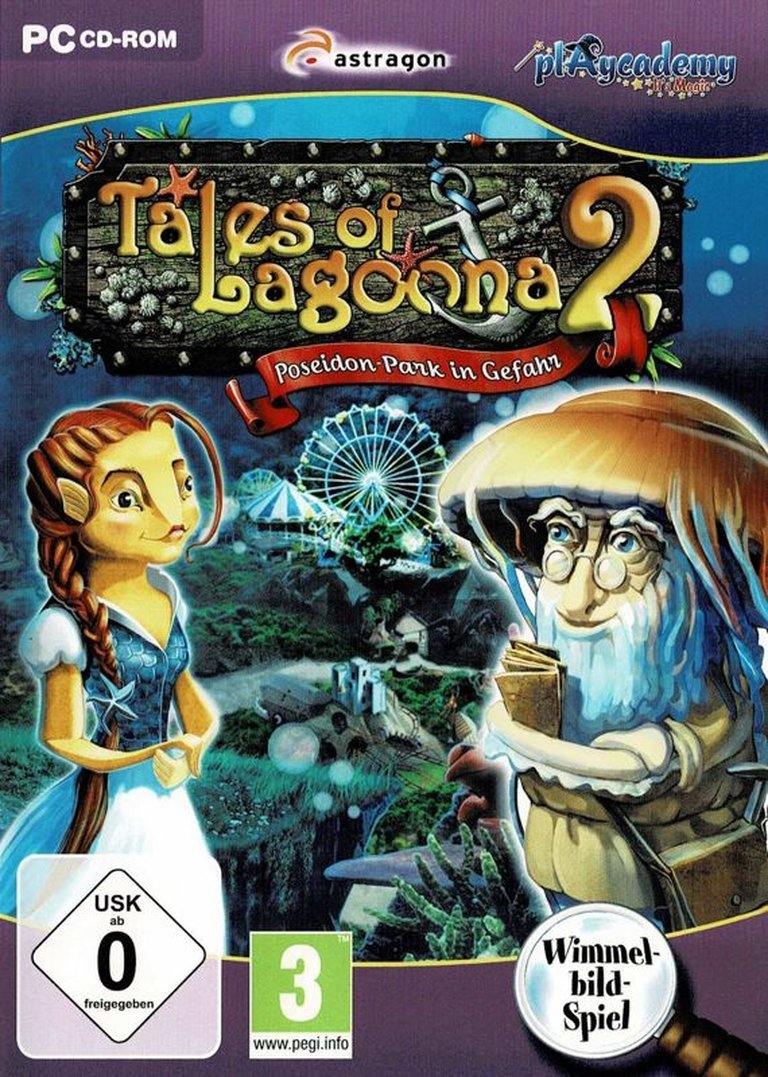
Tales of Lagoona 2: Peril at Poseidon Park is a hidden object puzzle adventure set in a fantastical underwater amusement park inhabited by mermaids and sea creatures, where players investigate peril threatening the location by searching intricate scenes using lists, silhouettes, riddles, and picture completions, while collecting gems for mini-games, scraps to unlock areas, quest items to renovate attractions, and food for golden sea ponies.
Gameplay Videos
Where to Buy Tales of Lagoona 2: Peril at Poseidon Park
PC
Tales of Lagoona 2: Peril at Poseidon Park Reviews & Reception
gametop.com (75/100): A delightful continuation of the series, offering an engaging, lighthearted experience.
mobygames.com (80/100): A hidden object game on steroids – highly impressive and addictive.
Tales of Lagoona 2: Peril at Poseidon Park: Review
Introduction
Imagine plunging into a vibrant underwater realm where an aging amusement park teeters on the brink of closure, and you’re the hero armed not with a harpoon, but with keen eyes for hidden treasures and a knack for puzzling out riddles. Tales of Lagoona 2: Peril at Poseidon Park (2013-2014), the sequel to the whimsical hidden object adventure Tales of Lagoona: Orphans of the Ocean, captures this enchanting premise in the peak of the casual gaming boom. As a cornerstone of the early 2010s hidden object genre explosion on platforms like Big Fish Games and Steam, it builds on its predecessor’s charm while expanding into resource management and park restoration. This review argues that Tales of Lagoona 2 stands as an underrated masterpiece of casual design—addictively layered, family-friendly, and brimming with content—deserving a revisit in an era dominated by high-stakes blockbusters, for its pure, unadulterated joy in discovery and restoration.
Development History & Context
Developed by the boutique studio Playcademy (with publishing support from astragon Software GmbH, Big Fish Games, GC Games, and others like North Tree and Suricate Software across regional releases), Tales of Lagoona 2 emerged from the vibrant casual gaming ecosystem of the early 2010s. Playcademy, a small team specializing in point-and-click puzzles and hidden object titles, crafted this sequel amid a golden age for browser and downloadable games on sites like Shockwave, GameHouse, and WildTangent. Released variably between May 2013 (Steam) and April 2014 (European CD-ROM via astragon), it targeted Windows PCs with modest specs: 1GHz processor, 1GB RAM, and DirectX 9—reflecting the era’s shift toward accessible, HD-visual casual fare for aging hardware.
The gaming landscape was transformed by Big Fish Games’ dominance in hidden object adventures (HOGs), where titles like Mystery Case Files and Dream Chronicles popularized “seek-and-solve” loops for casual audiences, especially women and families seeking low-pressure escapism. Technological constraints favored fixed-screen, 2D art over 3D complexity, enabling lush, hand-painted underwater scenes without taxing systems. Playcademy’s vision, as gleaned from ad blurbs and series continuity, was to blend HOG staples with light simulation elements—inspired by resource management hits like FarmVille but submerged in a mermaid fantasy. This hybrid responded to player feedback from the first game, introducing quests, upgrades, and pet care to combat HOG fatigue. PEGI 3-rated and family-oriented, it navigated a market saturated with free-to-play portals, positioning itself as a premium download (often bundled in series collections for $20), embodying the era’s “endless casual content” ethos amid rising mobile competition.
Narrative & Thematic Deep Dive
At its heart, Tales of Lagoona 2 weaves a simple yet heartfelt tale of legacy and revival in the fantastical undersea world of Coral Bay. Protagonist Leona, a plucky mermaid (implied from series lore and fantasy creature tags), faces the dire shutdown of Poseidon Park—her grandparents’ cherished amusement park—decreed by the antagonistic Mayor Peabody until repairs are complete. Players step in as Leona’s ally, joining a “quirky cast of characters” from Lagoona’s townsfolk to undertake quests, unravel sea secrets, and restore the park to glory. The narrative unfolds non-linearly through exploration, with progression gated by collected resources rather than rigid chapters, fostering a sandbox feel.
Key characters shine through voiced dialogue (a rarity in budget HOGs): Leona’s desperate optimism drives the emotional core, while townsfolk dole out personalized quests—like fetching items for eccentric merfolk—infusing personality via light comedy and whimsy. Themes of community restoration dominate: every upgrade symbolizes communal effort, echoing real-world heritage preservation amid urbanization (Mayor Peabody as bureaucratic villain). Subtle motifs of environmental stewardship emerge in caring for golden sea ponies (a “game thing” per reviewer piltdown_man), feeding them harvested food to unlock bonuses, blending nurture sim with fantasy. Family legacy underscores Leona’s plight, humanizing (or mer-izing) the stakes.
Dialogue is concise yet flavorful—riddles like “What stops a ship drifting away?” (answer: anchor) tie into puzzles, adding thematic cohesion. While critics note the storyline’s predictability (simple good-vs-bureaucracy arc), its brevity suits casual play, prioritizing empowerment over twists. Deeper analysis reveals influences from aquatic fantasies like The Little Mermaid meets RollerCoaster Tycoon, with 60+ achievements narrating player triumphs, from “park savior” to completionist feats. Flaws? Minimal character arcs limit emotional depth, but the plot’s motivational glue—unlocking park areas via scraps of paper puzzles—keeps engagement high, making restoration feel personal.
Gameplay Mechanics & Systems
Tales of Lagoona 2 elevates the HOG formula into a “hidden object game on steroids,” per MobyGames reviewer piltdown_man, fusing search puzzles with resource management in a compulsive loop. Core gameplay is point-and-select in 1st-person fixed/flip-screen scenes across Poseidon Park’s expanding locations (unlocked progressively, with half available after six hours).
Hidden Object Scenes: Innovatively hybrid, each teems with layered challenges—lists, silhouettes, pictorial assemblies (e.g., piece together an anchor image), and riddles in one scene. Beyond standards, scour for gems (unlock mini-games), scraps of paper (complete pictures to open areas), quest items (sell at market for coins), and food (feed sea ponies for bonuses). This multi-collectible system prevents monotony, with bonus goals and hints balancing accessibility.
Progression & Management: Coins fund 150+ upgrades (restoring rides, decorations), blending tycoon-lite with HOG. Sea pony care adds quirky sim: collect food to nurture them, yielding rewards. Over 160 puzzles span mini-games (decent variety, gem-unlocked), riddles, and quests from townsfolk—timed or relaxed modes cater to skill levels.
UI & Systems: Clean, intuitive interface tracks inventory, stats, achievements (60 total), and extras like 26 wallpapers, screensaver, playable tracks. Achievements incentivize replay (e.g., bonus goals per scene). Flaws include repetition for veterans (per GameTop review) and limited challenge, but the “just five more minutes” addiction—unlocking half the park in six hours—stems from tight loops. No combat; pure puzzle harmony.
| Mechanic | Innovation | Impact |
|---|---|---|
| Multi-Type HOGs | Lists + Silhouettes + Pics + Riddles | Depth without frustration |
| Collectibles | Gems/Scraps/Quests/Food | Fuels progression layers |
| Upgrades/Quests | 150+ options, townsfolk tasks | Sense of ownership |
| Extras | Trophies, stats, music player | Replay value |
World-Building, Art & Sound
Poseidon Park pulses as a “gorgeous HD” underwater paradise: vibrant, colorful scenes brim with detail—coral reefs, shipwrecks, amusement rides blending nautical whimsy (e.g., sea pony stables, riddle-laden anchors). Fixed perspectives enhance immersion, flipping to reveal cluttered wonderlands packed for eagle-eyed searches. Atmosphere evokes relaxed escapism, with fantasy groups (mermaids, aquatic settings, amusement parks) creating a cohesive, boat-themed undersea theme park.
Art direction shines in hand-crafted vibrancy—bright blues, playful sea life—bringing Lagoona alive without photorealism, suiting casual appeal. Sound design complements: cheerful, light music (playable tracks included) fosters zen; voice acting adds quirky charm to characters; bubbly SFX punctuate finds. Together, they craft a “family-friendly” oasis, per sources, where visuals motivate endless searching, and audio loops reinforce addiction without fatigue.
Reception & Legacy
Launch reception was niche but glowing: MobyGames (4/5 from one review, unranked overall), Steam (5 positive user reviews, no aggregate score), GameTop (7.5/10, 4.2/5 votes), Shockwave (3.5/5). Players raved about content depth (“six hours vanished!”), variety, and value (often free downloads or $3 bundles), with piltdown_man calling it “addictive” and feature-packed. Critics noted pros (visuals, hybrid gameplay) but cons (simple story, repetition for pros). No Metacritic score; commercial success via casual portals (135K+ downloads on GameTop), bundled in Lagoona Empire series (with Tales 1 and 3: Frauds, Forgeries and Fishsticks).
Legacy endures in casual HOG evolution: influenced resource hybrids like later Big Fish titles (Chronicles of Albian), pioneering multi-collectible scenes amid F2P shifts. Obscure today (added to MobyGames 2024), it exemplifies 2010s “endless content” downloads, preserving family gaming amid AAA dominance. Influence: tags like “city builder” prefigure cozy sims (Stardew Valley echoes?); series completion cements Playcademy’s niche.
Conclusion
Tales of Lagoona 2: Peril at Poseidon Park masterfully distills casual gaming’s essence—layered HOG innovation, restorative progression, and whimsical world-building—into an addictive, feel-good package. Playcademy overcame era constraints to deliver 160+ puzzles, 150 upgrades, and sea pony charm, earning universal player praise despite modest scope. Flaws like repetition pale against its “steroids” content and family appeal. In video game history, it claims a vital spot as a hidden gem of the Big Fish era: essential for HOG fans, 8.5/10—a timeless dive into underwater delight, warranting remasters for modern cozy gamers. Dive in; Poseidon Park awaits revival.