
- Release Year: 2007
- Platforms: Windows
- Publisher: Bandai America, Inc.
- Developer: Bandai Digital Entertainment Co., Ltd.
- Genre: Action, Puzzle
- Perspective: 3rd-person (Other), Side view
- Game Mode: Single-player
- Gameplay: Arcade, Helicopter, Mini-games, Music, rhythm
- Setting: Fantasy
- Average Score: 100/100
Description
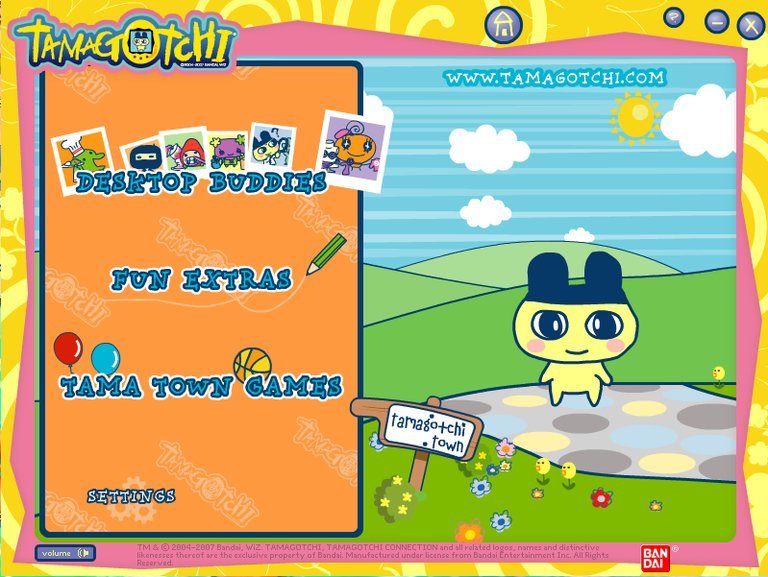
Tamagotchi PC Pack is a 2007 Windows desktop application bundled with select Tamagotchis and a tree-shaped microphone, where players care for the citizens of the fantasy world Tamatown through voice-controlled interactions. It features three mini-games—Helpy-Copter for delivering items via helicopter, Food Court Frenzy for sorting falling food orders, and Log Roll Tournament for rhythm-based log balancing—alongside customizable wallpapers, icons, screensavers, coloring pages, and jigsaw puzzles.
Gameplay Videos
Tamagotchi PC Pack Reviews & Reception
kidzworld.com : This pack is fantastic!
Tamagotchi PC Pack: Review
Introduction
Imagine a world where your desktop transforms into a bustling Tamatown, alive with pixelated critters beeping for help, and your voice alone can pilot a helicopter to their rescue—welcome to the whimsical chaos of Tamagotchi PC Pack, a 2007 Windows bundle that dared to port the addictive virtual pet phenomenon from keychain eggs to your PC screen. Born from Bandai’s blockbuster Tamagotchi franchise, which had already sold tens of millions of units since 1996 and reshaped toy culture with its relentless demand for care, this pack arrived amid the mid-2000s Connection era revival. Bundled with an exclusive Tamagotchi Connection V4.5 device, a tree-shaped microphone, figurines of icons like Mametchi and Kuchipatchi, and a mousepad, it promised unprecedented interactivity. My thesis: Tamagotchi PC Pack is a bold, nostalgic experiment in voice-driven pet simulation that captures the franchise’s nurturing charm but stumbles under early 2000s tech limitations, cementing its status as a quirky footnote in gaming history rather than a timeless classic.
Development History & Context
Bandai Digital Entertainment Co., Ltd., under publisher Bandai America, Inc., developed Tamagotchi PC Pack as a promotional tie-in for the Tamagotchi Connection V4.5, released in mid-2007 shortly after the V4’s launch. This era marked Tamagotchi’s global resurgence via the Connection series (starting 2004), which introduced infrared linking, marriages, and online TamaTown integration, selling over 20 million units by 2006. The PC Pack, priced at $34.99 USD (and later in Australia), targeted fans craving deeper immersion, transforming PCs into “Tama-wonderlands” with voice commands—a novel gimmick echoing the franchise’s evolution from Aki Maita’s and Akihiro Yokoi’s 1996 egg-watch concept.
Technological constraints defined the project: Windows XP/Vista compatibility required a 1.2 GHz processor, 512 MB RAM, and 100 MB space, modest for 2007 but finicky with voice recognition. The tree-shaped mic doubled as a V4.5 cradle, enabling hybrid play, but early speech tech (pre-Siri, 2010) struggled with accents, background noise, or music—issues Kidzworld’s 2008 review noted as “not perfect” for simple commands. The gaming landscape was shifting: casual PC titles like The Sims (2000) popularized life sims, while voice control experiments (e.g., Lifeline prototypes) were nascent. Tamagotchi’s fad history—banned in schools for beeps, spawning Digimon rivals—positioned this as a savvy extension, blending toy merch with edutainment amid Nintendo DS hits like Tamagotchi Connection: Corner Shop (2005, 1M+ Japan sales). Bandai’s vision: Extend Tamagotchi’s “tamagotchi effect” (emotional pet bonds) to desktops, fostering constant care in a post-broadband world.
Narrative & Thematic Deep Dive
Tamagotchi PC Pack eschews traditional plotting for emergent storytelling rooted in Tamagotchi lore: You’re the benevolent overseer of Tamatown, a fantasy realm on Tamagotchi Planet inhabited by quirky citizens like the gluttonous Kuchipatchi (with his “da-tchi” tic) and inventive Mametchi (IQ 250 mascot). No scripted plot exists; instead, “narrative” unfolds via desktop interactions—your voice awakens sleeping Tamagotchi, fetches email, or triggers dances, mimicking real pet ownership’s unpredictability. Mini-games deepen this: In Helpy-Copter, you query needy residents (“What do you need?”) via mic, hunt items (e.g., inside houses by “opening” doors), and deliver aid, embodying themes of community care and problem-solving.
Characters shine through anime/manga-inspired designs: Kuchipatchi stars in Log Roll Tournament, balancing on logs amid visual sabotage, his carefree laziness contrasting your rhythmic precision. Food Court Frenzy evokes Tamatown’s food-obsessed culture (Kuchipatchi’s appetite legacy), sorting factory-falling grub into orders (“Order up!”). Dialogue is sparse but iconic—voice prompts like “Hey, buddy!” or item requests foster role-play, echoing franchise themes of growth (hatch-to-adult cycles), family (inherited skills from V4.5), and responsibility (neglect leads to failure, not death here). Underlying motifs draw from Tamagotchi’s roots: Nurturing aliens deposited on Earth (per lore), blending cuteness with mortality’s shadow, now digitized for aspirational play. It’s less epic tale than interactive fable, critiquing modern distraction (your PC as needy pet) while celebrating kawaii bonds.
Gameplay Mechanics & Systems
Core loops revolve around desktop pet sim and three voice/keyboard mini-games, blending arcade action, puzzles, and rhythm. Boot the CD-ROM for Tamatown overlay: Mic commands care for roaming citizens (e.g., “Help me!” prompts quests), with extras like customizable wallpapers, icons, screensavers, printable coloring books, and jigsaws for low-stakes creativity.
-
Helpy-Copter: Vehicular highlight—pilot a chopper in side-view Tamatown (3rd-person/other perspective). Spot citizens, voice-ask needs, fetch items (mic pickup, door/window opens), deliver for points. Innovative voice integration shines but flaws emerge: Recognition falters on noise, forcing keyboard fallback. Chaotic fun in cluttered town.
-
Food Court Frenzy: Arrow-key catcher/sorter—snag falling food, slot into plates, discard extras, yell “Order up!” Rhythm-puzzle hybrid rewards pattern-matching; UI crisp but unforgiving (full plate blocks grabs).
-
Log Roll Tournament: Rhythm core—time arrow presses to balance Kuchipatchi on log vs. opponent. Visual hazards distract; fill special meter for counters. No score damage from foes emphasizes endurance.
Progression ties to Tamagotchi V4.5 hybrid: Skills (Funny, Gorgeous, Spiritual) carry over, unlocking jobs/games. UI is intuitive—direct control, anime sprites—but dated: No pause, finicky mic training (email fetch/dances). Innovations: Voice as primary input pre-Kinect (2010). Flaws: Repetitive loops, mic unreliability (Kidzworld: “good for simple stuff”), short playtime. Accessibility via keyboard saves it, but lacks depth vs. DS Corner Shop sims.
World-Building, Art & Sound
Tamatown pulses with franchise fantasy: Egg-hatched critters in a vibrant, side-view village of houses, factories, and skies—anime/manga art evokes heta-uma pixel roots, evolved to colorful PC sprites. Atmosphere: Playful urgency—beeps demand attention, mirroring handheld beeps that sparked 90s mania. Visuals: Charming 2D (helicopter flights, log rolls), customizable desktops immerse (e.g., Kuchipatchi waddles idly). Sound: Bouncy chiptunes, voice cues (“Order up!”), mic feedback loops create intimacy; bundled mic’s tree design adds tactile whimsy. Elements synergize: Voice breaks fourth wall (your real voice aids fantasy town), fostering “connection” legacy—respite from combat games, per Strong Museum inductee Tamagotchi (2025 Hall of Fame).
Reception & Legacy
Launch reception glowed modestly: MobyGames 100% critic (Kidzworld 5/5: “ton of fun for fans,” mic caveats), player 5/5 (sparse). Commercially: Bundled promo sold via Tamagotchi retailers, tying V4.5 surge (Ura characters, skills inheritance). Forums (TamaTalk) mixed—mic praise (“works fine”), gripes (“boring after 5 mins,” “ripoff vs. solo V4.5”). Evolved rep: Nostalgic curio in 91M+ Tamagotchi sales saga; influenced voice pets (e.g., later apps), desktop companions. Minimal industry ripple—preceded My Tamagotchi Forever (2018)—but exemplifies 2000s transmedia (toys-to-PC). Legacy: Bridges handheld-to-digital, prefiguring AR pets (Pix camera, 2021); collector’s gem amid revivals (Uni Wi-Fi, Paradise zoom).
Conclusion
Tamagotchi PC Pack distills Tamagotchi’s addictive nurture-sim into a voice-activated PC playground, its mini-games and desktop whimsy evoking Tamatown’s heart amid tech hurdles. Strengths—innovative mic, franchise fidelity—outweigh flaws (recognition woes, repetition), making it a delightful relic. In video game history, it earns a solid 8/10: Essential for Tamagotchi historians, a charming bundle for fans, but no Hall of Famer like its handheld ancestor. Dust off your XP rig—Tamatown awaits revival.