
- Release Year: 2007
- Platforms: Windows
- Publisher: City Interactive S.A.
- Developer: Crazy House
- Genre: Action, Simulation, Strategy, Tactics
- Perspective: 1st-person, 3rd-person (Other)
- Game Mode: Single-player
- Gameplay: Day, Destructible objects, night cycles, Realistic terrain, Vehicular combat, Weather effects
- Setting: World War II
- Average Score: 67/100
Description
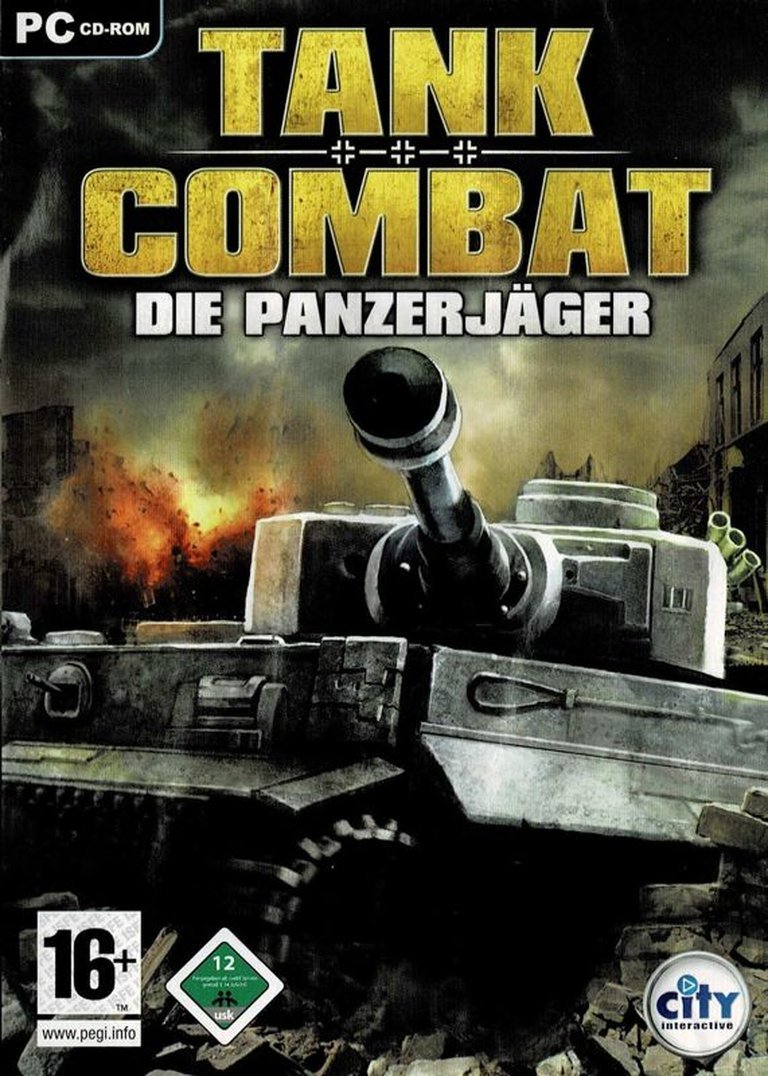
In Tank Combat: Die Panzerjäger, players assume the role of a tank commander during World War II, engaging in three campaigns against AI opponents. The game offers historically accurate tanks including the Russian T34, German Tiger, and American Stuart, featuring realistic terrain and weather conditions, dynamic day/night battles, and an interactive environment with over 50 destructible objects.
Tank Combat: Die Panzerjäger Cracks & Fixes
Tank Combat: Die Panzerjäger: Review
Introduction
In the pantheon of World War II simulations, few vehicles command as much reverence as the tank—a symbol of industrial might and armored fury. Tank Combat: Die Panzerjäger, released in 2007 by Polish publisher City Interactive and developed by Ukrainian studio Crazy House, sought to immerse players in this legendary era. Promising a blend of historical authenticity and arcade accessibility, it positioned itself as a bridge between hardcore simulations like Panzer Elite and the burgeoning wave of online tank games. Yet, despite its ambitious scope—featuring three distinct campaigns, meticulously recreated tanks, and destructible battlefields—Die Panzerjäger ultimately resides in the shadow of giants, remembered more for its technical quirks than its strategic depth. This review dissects its development, mechanics, thematic underpinnings, and legacy to uncover whether it deserves resurrection or remains a relic of gaming’s mid-2000s landscape.
Development History & Context
Conceived by Crazy House, a Ukrainian developer with a focus on budget-friendly titles, Tank Combat: Die Panzerjäger emerged during a transitional period for WWII games. By 2007, the genre was saturated with hyper-realistic sims (IL-2 Sturmovik) and the nascent World of Tanks (2010), which would later redefine online tank warfare. City Interactive, known for titles like Sniper: Art of Victory, aimed to carve a niche with an accessible, single-player experience. The developers’ vision—encapsulated by the subtitle Die Panzerjäger (“The Tank Hunter”)—emphasized dynamic, reactive combat over meticulous simulation. Technologically, the game was constrained by DirectX 9-era limitations, with low-poly models and basic physics engines. Its modest system requirements—a Pentium 4 1.6 GHz CPU, 512MB RAM, and 128MB GPU—reflected its target audience: casual players seeking visceral thrills without demanding hardware. This context explains its blend of realism (historical tanks, weather effects) and arcade simplicity (direct controls, forgiving damage models), a compromise that would define its reception.
Narrative & Thematic Deep Dive
Die Panzerjäger eschews traditional storytelling in favor of episodic, campaign-driven vignettes. The narrative unfolds through three parallel perspectives: Allied (American M3 Stuart in North Africa), German (Tiger I defending the “Vaterland”), and Soviet (T-34 during the Siege of Leningrad). Each campaign comprises 10-15 missions, framed by historical locales like the deserts of El Alamein and the frozen ruins of Leningrad. Yet, these are battlegrounds, not stories; absent are named characters, cutscenes, or dialogue. Instead, the narrative is environmental—conveyed through crumbling buildings, tank carcasses, and fleeting radio commands. Thematically, the game glorifies the “tank commander” archetype, reducing war to a series of tactical duels. This abstraction sanitizes the brutality of WWII, focusing on mechanical prowess over human cost. Missions like “Hold the Bridge” or “Break the Siegfried Line” emphasize strategic objectives (flanking, area control), but the lack of a unifying plot reduces the experience to a disconnected series of skirmishes. The title’s German-language suffix (Panzerjäger) hints at a focus on anti-tank warfare, yet the gameplay rarely delves into the psychological toll of hunting or being hunted, leaving its themes underexplored.
Gameplay Mechanics & Systems
Die Panzerjäger’s core loop is deceptively simple: pilot a legendary WWII tank, engage enemies, and complete objectives. Its accessibility stems from direct, keyboard-and-mouse controls: WASD for movement, mouse for turret aiming, and dedicated keys for machine guns and main cannon. Players choose from three authentically modeled vehicles: the agile American Stuart, the fearsome German Tiger, and the versatile Soviet T-34. Each handles distinctly, influencing tactics—Stuarts rely on speed, Tigers on armor, T-34s on numerical superiority. Combat is arcade-style: health regenerates slowly, and ammo is plentiful, favoring aggressive play over patient strategy.
Key systems include:
– Destructible Environments: Over 50 object models (trees, fences, buildings) can be rammed or destroyed, adding dynamism. A well-placed shot might topple a wall to ambush an enemy or clear a path.
– Dynamic Conditions: Day/night cycles and weather (fog, rain, snow) impact visibility and movement. Rain slickens terrain, while night battles introduce tactical depth, though AI remains oblivious to lighting conditions.
– Campaign Structure: Missions involve defeating enemy waves, capturing points, or defending objectives. Progression is linear, with no branching paths or upgrades. Players unlock new tanks by finishing campaigns, but no persistent progression exists.
– AI and UI: Enemies are predictable, often charging headfirst. The minimalist HUD displays health, ammo, and a minimap, with resolution and FOV editable via gameconfig.xml. However, the absence of a tactical map or squad commands limits strategic depth.
The arcade approach lowers entry barriers but sacrifices complexity. Unlike Panzer Elite, ammunition types, armor angling, or crew management are absent. This makes Die Panzerjäger a “beer-and-pretzels” tank sim—fun for short bursts, but shallow compared to contemporaries.
World-Building, Art & Sound
Die Panzerjäger’s strength lies in its atmospheric fidelity, despite technical limitations. The three theaters are rendered with commendable attention to terrain: North Africa’s dusty dunes, Leningrad’s snow-swept rubble, and European forests. Textures are basic, but environmental storytelling shines—abandoned artillery, burned-out tank husks, and shelled villages evoke the war’s devastation. Destructible objects amplify this; collapsing walls and exploding barrels create chaos, though physics are rudimentary.
The tanks themselves are star attractions. The Tiger’s imposing silhouette, the T-34’s sloped armor, and the Stuart’s compact form are recreated with historical accuracy. Cinematic camera angles (notably during kills) add drama, though these feel tacked-on. Sound design is functional: the Tiger’s deafening engine roar, the T-34’s clatter, and satisfying shell impacts immerse players. Yet, audio lacks nuance—no distinct tank voices, ambient gunfire, or dynamic weather effects. Music is absent, replaced by repetitive gunfire and engine noise. This minimalist approach heightens tension but leaves the world feeling sterile.
Reception & Legacy
Upon release, Die Panzerjäger garnered muted attention. Critics noted its accessibility and destructible environments but criticized its simplistic AI and technical flaws. GameStar praised the historical tanks but lamented the lack of polish. Player reviews were polarized: MyAbandonware users lauded its chaotic fun (4.86/5), while Reddit threads cited launch issues (e.g., blank screens on modern OSes). It struggled commercially against titans like Call of Duty 4 and World of Warcraft.
Its legacy is niche but persistent. As a relic of mid-2000s budget gaming, it’s studied for its influence on environmental interactivity in later titles like World of Tanks. The game’s focus on single-player campaigns and destructible terrain prefigured trends, but its technical debt—requiring community fixes via gameconfig.xml edits—doomed it to obscurity. Today, it’s a cult favorite among WWII enthusiasts, preserved by abandonware sites. Historically, it represents a midpoint between simulations and arcade shooters, a bridge rendered obsolete by the rise of free-to-play multiplayer.
Conclusion
Tank Combat: Die Panzerjäger is a time capsule of ambition constrained by its era. It excels as a visceral, if superficial, tank combat experience, offering chaotic fun through its destructible worlds and historical arsenals. Yet, its lack of narrative depth, repetitive AI, and technical shortcomings prevent it from ascending beyond a curiosity. For historians, it’s a window into the mid-2000s gaming landscape—where accessibility often trumped realism. For players, it remains a flawed but charming relic, best enjoyed with community patches. While it never achieved the legacy of Panzer Front or Blitzkrieg, Die Panzerjäger endures as a testament to the allure of armored warfare—even when executed imperfectly. Final Verdict: A niche WWII romp with moments of brilliance, ultimately overshadowed by its own limitations.