
- Release Year: 2012
- Platforms: Macintosh, Windows
- Publisher: Upfront Promotions Ltd.
- Developer: Adcom Production AG
- Genre: Driving, Racing
- Perspective: 3rd-person
- Game Mode: Single-player
- Gameplay: Arcade
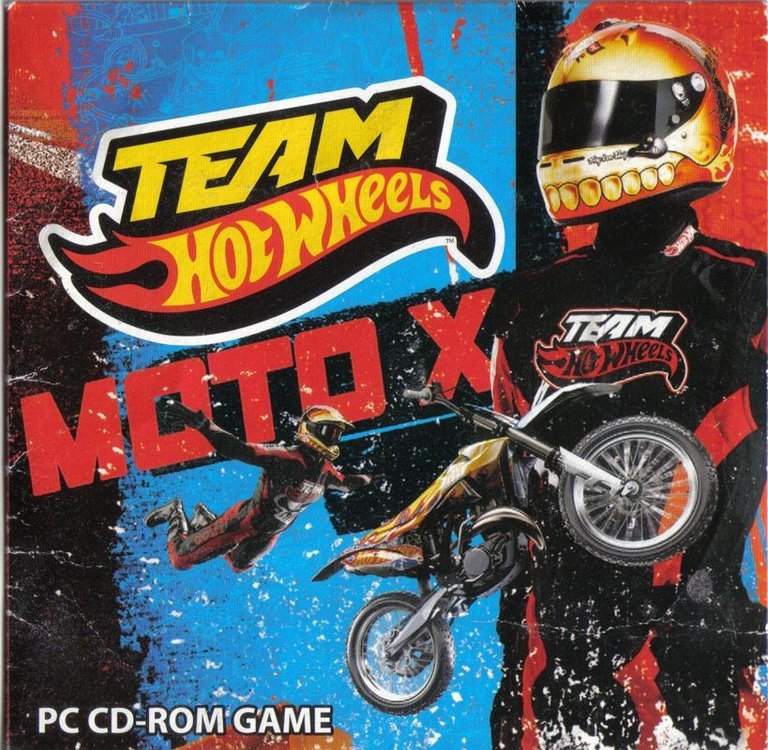
Description
Team Hot Wheels: Moto X is an arcade racing game where players compete to score points by collecting pick-ups, smashing obstacles, and winning races to unlock official Team Hot Wheels vehicles and custom paint schemes. The game features a single track, two camera views, and the ability to customize the driver and car colors, with the ultimate goal of earning 100,000 points to join the Hot Wheels Team. Players race against ghost records of their best times and can use speed boosters to gain an edge in this fast-paced, licensed racing experience.
Team Hot Wheels: Moto X Free Download
Team Hot Wheels: Moto X – A Forgotten Relic of Arcade Racing
Introduction: The Ghost of a Bygone Era
In the vast, neon-lit pantheon of racing games, Team Hot Wheels: Moto X (2012) exists as a spectral footnote—a game so fleeting that it barely left a tire mark on the industry. Developed by the obscure Swiss studio Adcom Production AG and published by Upfront Promotions Ltd., this arcade racer was one of three Team Hot Wheels titles released in rapid succession, each attempting to capitalize on the enduring appeal of Mattel’s iconic toy brand. Yet, unlike its more ambitious predecessors—such as Hot Wheels: Velocity X (2002)—Moto X was a stripped-down, almost skeletal experience, a game that seemed to exist more as a digital trinket than a fully realized racing simulation.
This review seeks to exhume Team Hot Wheels: Moto X from the dustbin of gaming history, examining its development, its mechanical simplicity, and its place within the broader Hot Wheels multimedia empire. Was it a cynical cash grab, a rushed budget title, or an earnest (if flawed) attempt to bring the thrill of toy car racing to a digital audience? And why, despite its obscurity, does it warrant any discussion at all?
Development History & Context: The Hot Wheels Digital Rush
The Studio Behind the Wheel
Adcom Production AG, the developer of Moto X, was a Swiss studio with a portfolio that leaned heavily toward licensed children’s games and budget-friendly PC titles. Their work often involved adapting popular toy brands into interactive experiences, though few of their projects achieved lasting recognition. Team Hot Wheels: Moto X was part of a trio of games released in 2012—alongside Team Hot Wheels: Baja and Team Hot Wheels: Drift—each targeting a different subgenre of racing. This rapid-fire release strategy suggests a business model prioritizing quantity over depth, likely aimed at maximizing the Hot Wheels license’s marketability.
The Gaming Landscape of 2012
By 2012, the racing genre was dominated by high-budget franchises like Need for Speed, Forza Motorsport, and Gran Turismo, while arcade racers such as Burnout Paradise and Split/Second had already redefined what players expected from fast-paced, destruction-heavy gameplay. Meanwhile, the Hot Wheels brand itself was no stranger to video games, with titles like Hot Wheels: Velocity X (2002) and Hot Wheels: Beat That! (2007) offering more ambitious track designs and multiplayer features.
Moto X, however, arrived in an era where even mid-tier racing games were expected to deliver polished visuals, varied tracks, and some form of progression. Instead, it offered a single track, minimal customization, and a scoring system that felt more like a mobile game than a premium PC experience. Its existence raises questions: Was this a rushed project to meet a licensing deadline? A testbed for future Hot Wheels games? Or simply a low-effort product designed to squeeze revenue from a beloved IP?
Technological Constraints & Design Philosophy
Given its 2012 release, Moto X was not pushing any technical boundaries. The game ran on what appears to be a proprietary engine, rendering its sole track in basic 3D with minimal environmental detail. The two camera views (likely a behind-the-bike and a fixed chase cam) were functional but uninspired. The absence of online multiplayer, split-screen, or even AI opponents (players raced against “ghosts” of best times) further underscored its barebones nature.
This design philosophy suggests a game built for a very specific audience: young children or casual players who might be enticed by the Hot Wheels brand but not demanding in terms of gameplay depth. The focus on unlocking vehicle paint schemes and achieving a high score aligns with the collectible nature of the toy line, reinforcing the idea that Moto X was less a game and more a digital extension of the Hot Wheels play experience.
Narrative & Thematic Deep Dive: The Illusion of Story
The Absence of Plot
Team Hot Wheels: Moto X is, for all intents and purposes, a plotless experience. There are no characters, no cutscenes, no overarching narrative—just a lone rider on a track, chasing points. The closest thing to a “story” is the meta-goal of becoming a member of the Hot Wheels Team by scoring 100,000 points, a mechanic that feels more like a gamified achievement system than a true narrative hook.
This lack of storytelling is not inherently a flaw—many arcade racers thrive on pure gameplay—but in an era where even Mario Kart had charming character interactions, Moto X’s silence is deafening. The game’s thematic core is entirely tied to the Hot Wheels brand: speed, customization, and the thrill of competition. Yet, without any world-building or personality, it fails to evoke the same sense of wonder that physical Hot Wheels tracks inspire in children.
The Ghosts of Competition
One of the game’s most peculiar design choices is its reliance on racing against “ghosts” of best times rather than live opponents. This decision strips away any sense of rivalry or dynamic challenge, reducing the experience to a time trial with occasional pick-ups. The ghosts are not even tied to real players—they are likely pre-programmed lap times, further emphasizing the game’s isolation.
This mechanic, while functional, reinforces the idea that Moto X was designed as a solitary, almost meditative experience. There is no trash-talking AI, no rubber-banding difficulty, just the player and the track. For some, this might be a refreshing change from the chaos of modern racers; for others, it makes the game feel hollow.
Gameplay Mechanics & Systems: The Bare Minimum
Core Gameplay Loop
At its heart, Team Hot Wheels: Moto X is a score-chasing arcade racer. Players earn points by:
– Collecting pick-ups (likely scattered across the track).
– Smashing obstacles (a nod to the destructive fun of Hot Wheels crashes).
– Winning races (though “winning” is relative, given the ghost opponents).
The inclusion of a speed booster adds a brief burst of acceleration, a staple of arcade racers, but its implementation is unremarkable. The game’s single track is a major limitation—most racing games, even budget ones, offer at least a handful of environments to keep players engaged. Here, repetition sets in quickly.
Progression & Unlocks
The primary incentive to keep playing is unlocking official Team Hot Wheels vehicles and paint schemes. This ties directly into the toy brand’s collectible nature, appealing to completionists and young fans. However, the lack of meaningful mechanical differences between vehicles (if there are any) means that unlocks are purely cosmetic.
The 100,000-point threshold to join the Hot Wheels Team serves as the game’s ultimate goal, but without any narrative payoff or additional content, it feels arbitrary. There is no grand finale, no secret track, no new gameplay mode—just the satisfaction of seeing a congratulatory message.
Controls & UI
Given its simplicity, Moto X supports only keyboard and mouse, with no controller compatibility listed. The controls are likely straightforward:
– Accelerate
– Brake/Reverse
– Steer
– Activate Speed Booster
The UI is equally minimalist, with a focus on displaying the player’s score, lap time, and current position relative to the ghost opponents. There is no map, no damage indicator, no complex HUD—just the essentials.
Flaws & Missed Opportunities
The most glaring issue with Moto X is its lack of content. A single track, even with two camera angles, cannot sustain interest for long. The absence of:
– Multiplayer (local or online)
– Additional tracks or environments
– Vehicle upgrades or mechanical differences
– A dynamic difficulty system
…makes the game feel like an unfinished prototype. Even for a budget title, these omissions are striking.
World-Building, Art & Sound: A Hollow Shell
Visual Design: The Hot Wheels Aesthetic
The game’s art direction is unmistakably Hot Wheels—bright colors, exaggerated vehicle designs, and a track that resembles the plastic orange tracks of the toy line. However, the execution is underwhelming. The single track lacks variety in scenery, and the vehicles, while colorful, lack the detail and personality of their physical counterparts.
The two camera views (likely a standard third-person chase cam and a fixed overhead or side view) do little to enhance the experience. There are no weather effects, no day/night cycles, no dynamic lighting—just a static, sunlit track.
Sound Design: The Silence of the Engine
Audio in Moto X is functional but forgettable. The engine sounds are generic, the crash effects are perfunctory, and the music (if any exists beyond a simple loop) is unlikely to linger in the player’s memory. There is no voice acting, no commentary, no dynamic soundtrack that shifts with the player’s performance.
This minimalist approach to sound design further reinforces the game’s identity as a barebones experience. It does not offend, but it also does not excite.
Reception & Legacy: The Game That Wasn’t
Critical & Commercial Reception
Team Hot Wheels: Moto X received no professional reviews on major gaming sites, and user reviews are equally scarce. This radio silence speaks volumes—it suggests that the game was either:
1. Too obscure to warrant attention, lost in the deluge of 2012’s higher-profile releases.
2. Considered too minor to review, a budget title unworthy of critical analysis.
3. A commercial non-entity, failing to make any significant impact on sales charts.
The lack of a MobyGames score (listed as “n/a”) and the absence of Metacritic reviews further cement its status as a forgotten relic.
Legacy: A Footnote in the Hot Wheels Saga
Within the Hot Wheels gaming lineage, Moto X is a blip. It did not influence future titles, nor did it leave a lasting impression on players. Its siblings—Team Hot Wheels: Baja and Team Hot Wheels: Drift—are equally obscure, suggesting that the entire 2012 trilogy was a failed experiment.
The Hot Wheels brand would later find greater success with Hot Wheels Unleashed (2021), a game that embraced the toy line’s chaotic, track-building spirit. In contrast, Moto X feels like a half-hearted attempt to cash in on the IP without understanding what made Hot Wheels fun in the first place.
Conclusion: A Game Without a Soul
Team Hot Wheels: Moto X is not a bad game in the traditional sense—it is functional, it delivers on its basic premise, and it likely provided a few minutes of entertainment for its target audience. However, it is also a game without ambition, without depth, and without a reason to exist beyond its license.
In the grand tapestry of racing games, it is a thread so thin as to be nearly invisible. It does not innovate, it does not challenge, and it does not inspire. It is, at best, a digital curiosity—a relic of an era when licensed games could be churned out with minimal effort and still find an audience.
Final Verdict: 2/10 – A Hollow Shell of a Racer
Team Hot Wheels: Moto X is not worth seeking out unless you are a completionist collector of Hot Wheels media or a historian of obscure racing games. It lacks the charm of its toy counterparts, the depth of its contemporaries, and the polish of even mid-tier arcade racers. It is, in every sense, a game that was made to be forgotten—and, for the most part, it has been.
Yet, in its forgettability lies a certain fascination. It is a time capsule of a moment when the gaming industry was flooded with licensed cash-ins, when not every game needed to be a blockbuster, and when some titles could simply exist as quiet, unremarkable footnotes. For that alone, it deserves this postmortem—not as a celebration, but as a cautionary tale of what happens when a beloved brand is stripped of its magic.