
- Release Year: 1995
- Platforms: Amiga, DOS, Macintosh, Windows
- Publisher: CD Projekt Sp. z o.o., Metropolis Software House, Union Logic Software Publishing, Inc.
- Developer: Metropolis Software House
- Genre: Adventure
- Perspective: Side view
- Game Mode: Single-player
- Gameplay: Graphic adventure, Point and select
- Setting: Contemporary, Europe
- Average Score: 80/100
Description
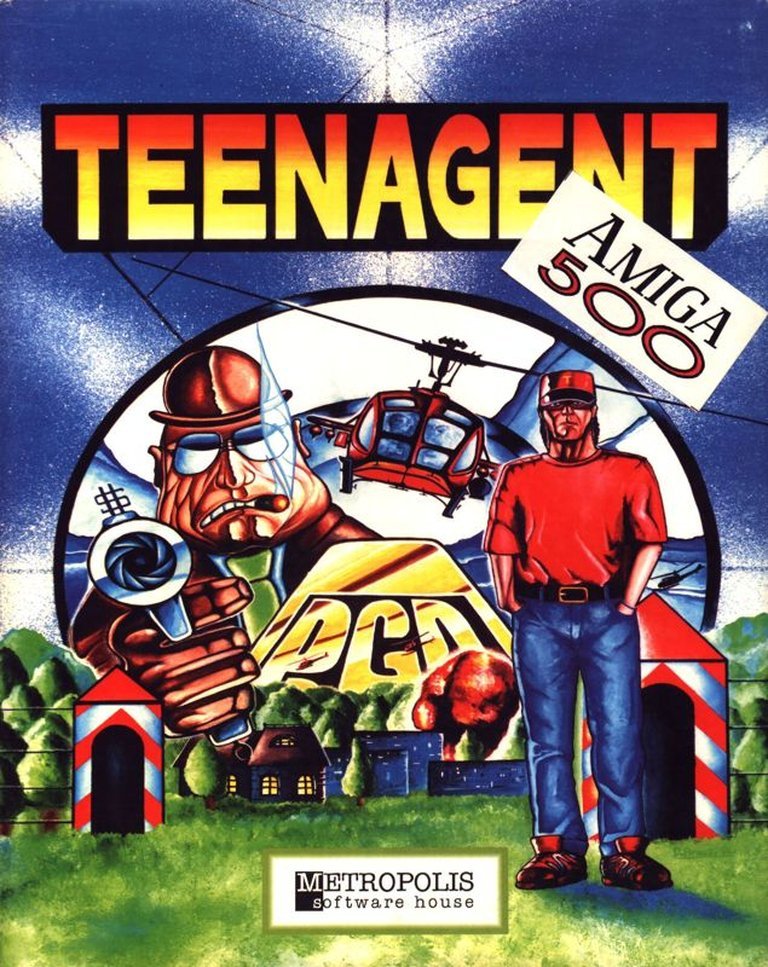
Teen Agent is a humorous point-and-click adventure game where you play as Mark Hopper, an ordinary teenager recruited by the RGB intelligence agency to solve the mystery of disappearing gold from the Mega Bank. After being selected by a fortune teller, Mark must first complete three trials at the RGB training camp before embarking on his mission. The game features a clean, intuitive interface with mouse-driven interactions, colorful graphics, and witty dialogue, blending comedy, detective work, and espionage in a contemporary European setting.
Gameplay Videos
Where to Buy Teen Agent
PC
Teen Agent Guides & Walkthroughs
Teen Agent Reviews & Reception
mobygames.com (81/100): Teenagent is a humorous point-and-click adventure, originally available as shareware, but the DOS version was later re-released as freeware.
census.gamesense.co (79.6/100): The CD version was the first game to be released on CD-ROM in Poland.
mobygames.com (81/100): Teenagent is a humorous third-person adventure game in which you play a teenager investigating the strange disappearance of gold bullion.
Teen Agent: A Humorous Spy Adventure That Defined Polish Gaming
Introduction
In the mid-1990s, the adventure game genre was dominated by Western studios like LucasArts and Sierra, but a small Polish developer, Metropolis Software House, dared to challenge the status quo with Teen Agent. Released in 1995, this point-and-click adventure game not only showcased the potential of Polish game development but also delivered a charming, humorous, and surprisingly polished experience that still resonates with fans today. Teen Agent is a testament to the creativity and ambition of its developers, who crafted a game that could stand shoulder-to-shoulder with the best of its era.
Development History & Context
The Rise of Metropolis Software House
Metropolis Software House was founded in the early 1990s, a time when Poland’s gaming industry was still in its infancy. The studio’s first major success came with Tajemnica Statuetki (The Secret of the Statuette), a game that garnered critical acclaim and established Metropolis as a serious player in the adventure game genre. Building on this success, the team set their sights higher with Teen Agent, aiming to create a game that could compete internationally.
Technological Constraints and Innovations
Developed for DOS and Amiga, Teen Agent was constrained by the hardware limitations of the time. The game utilized VGA graphics, which, while blocky by today’s standards, were vibrant and detailed for the era. The developers employed a clean, intuitive interface that minimized screen clutter, a departure from the verb-based systems of many contemporary adventure games. This design choice not only made the game more accessible but also allowed for a more immersive experience.
The Gaming Landscape of 1995
The mid-1990s were a golden age for adventure games, with titles like Monkey Island, King’s Quest, and Space Quest dominating the market. Teen Agent entered this competitive landscape with a unique blend of humor, spy-themed storytelling, and Polish cultural touches. Its release as shareware—with the first third of the game available for free—helped it gain traction, particularly in Eastern Europe, where it became a cult classic.
Narrative & Thematic Deep Dive
Plot Overview
Teen Agent follows the story of Mark Hopper, an ordinary teenager who is recruited by the RGB intelligence agency to solve the mystery of disappearing gold bullion from the Mega Bank. The game is divided into three distinct sections:
- The Three Tasks: Mark must prove his worth by completing three trials at the RGB training camp, which involve humiliating his instructor in increasingly absurd ways.
- The Village: Mark explores a quaint village, gathering clues and items to infiltrate the mansion of the game’s antagonist.
- The Mansion: The climax of the game, where Mark uncovers the villain’s plot and puts an end to the gold thefts.
Characters and Dialogue
Mark Hopper is a refreshing protagonist—wholesome, good-natured, and devoid of the edgy cynicism that plagued many teenage characters in games of the era. His interactions with other characters, particularly his love interest Anne and his bumbling instructor, are filled with wit and charm. The game’s dialogue is sharp, often breaking the fourth wall with meta-humor that acknowledges the absurdity of adventure game tropes.
Themes and Humor
Teen Agent is, at its core, a comedy. The game revels in its own silliness, from the ridiculous training camp trials to the over-the-top spy antics. Yet, beneath the humor lies a clever satire of spy fiction and adventure game conventions. The game’s Polish roots also shine through in its cultural references and setting, offering a unique perspective rarely seen in Western adventure games.
Gameplay Mechanics & Systems
Core Gameplay Loop
Teen Agent is a classic point-and-click adventure, but its interface is streamlined and intuitive. The left mouse button is used for examination and movement, while the right mouse button handles interactions. This simplicity makes the game accessible without sacrificing depth. The inventory system is particularly well-designed, with items often featuring amusing animations when picked up.
Puzzle Design
The puzzles in Teen Agent are a mixed bag. Some are clever and logical, rewarding players for their observational skills and creativity. Others, however, suffer from the classic adventure game pitfalls of pixel hunting and illogical solutions. Despite these flaws, the puzzles are generally fair, and the game’s humor often softens the frustration of getting stuck.
Combat and Progression
Unlike many adventure games of the time, Teen Agent does not feature traditional combat. Instead, progression is driven by puzzle-solving and exploration. The game’s three-act structure provides a clear sense of progression, with each section introducing new challenges and environments.
World-Building, Art & Sound
Setting and Atmosphere
Teen Agent is set in a contemporary European village, a departure from the fantasy and sci-fi settings of many adventure games. The game’s environments are richly detailed, with vibrant colors and a cartoonish aesthetic that enhances its comedic tone. The training camp, village, and mansion each have distinct personalities, contributing to the game’s immersive world.
Visual Direction
The game’s graphics are a highlight, with detailed sprites and backgrounds that hold up surprisingly well today. The character animations are fluid and expressive, adding to the game’s charm. The decision to avoid cluttering the screen with UI elements was a bold one, and it pays off by allowing players to fully appreciate the game’s visual design.
Sound Design and Music
The soundtrack, composed by Radek Szamrej (aka RST), is a standout feature of Teen Agent. The jaunty MIDI tunes perfectly complement the game’s lighthearted tone, and the sound effects are crisp and well-integrated. The CD-ROM version of the game features Polish voice acting, a rarity for the time, which adds an extra layer of immersion for Polish-speaking players.
Reception & Legacy
Critical and Commercial Reception
Teen Agent was met with widespread acclaim upon its release. Critics praised its humor, accessibility, and polished presentation. The game won a Silver Award from PC Format and was lauded for its innovative interface and charming storytelling. While it was not a massive commercial success outside of Poland, it developed a dedicated fanbase that continues to celebrate the game today.
Evolution of Reputation
Initially released as shareware, Teen Agent gained a second life when it was re-released as freeware and later added to GOG.com’s catalog. Its inclusion as the 100th game on GOG.com was a significant milestone, introducing the game to a new generation of players. Today, Teen Agent is remembered as a pioneering title in Polish gaming history and a beloved cult classic.
Influence on Subsequent Games
Teen Agent demonstrated that Polish developers could create games that rivaled the best of Western studios. Its success paved the way for future Metropolis titles, including Galador: The Prince and the Coward and Blaster!. The game’s influence can also be seen in later adventure games that embraced humor and streamlined interfaces, such as The Secret of Monkey Island and Discworld.
Conclusion
Teen Agent is a game that punches far above its weight. Despite its modest origins and technological constraints, it delivers a hilarious, engaging, and surprisingly polished adventure that stands the test of time. Its blend of humor, clever puzzle design, and charming presentation makes it a standout title in the adventure game genre. While it may not have achieved the same level of fame as its Western counterparts, Teen Agent remains a beloved classic and a testament to the creativity and ambition of its developers. For fans of adventure games, it is an essential experience—one that continues to delight and inspire nearly three decades after its release.