
- Release Year: 2002
- Platforms: Acorn 32-bit, Windows
- Publisher: Comport Interactive, R-Comp Interactive
- Developer: Artex Software
- Genre: Strategy, Tactics
- Perspective: Diagonal-down
- Game Mode: Single-player
- Gameplay: characters control, Multiple units, Point and select, Real-time strategy (RTS)
- Setting: Futuristic, Post-apocalyptic, Sci-fi
- Average Score: 100/100
Description
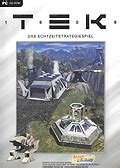
TEK 1608 is a real-time strategy game set in a post-apocalyptic future where two rival corporations battle for control of SHOQ, a vital survival medicine. Players engage in tactical combat and resource management across a sci-fi landscape, utilizing isometric and free-camera perspectives to command units in a fight for dominance on a ravaged Earth.
Gameplay Videos
TEK 1608 Reviews & Reception
acorn-gaming.org.uk : Tek turns out to be rather good!
mobygames.com (100/100): A real-time strategy game set in the future where two corporations fight for control over a medicine called SHOQ, which is essential for survival on a post-apocalyptic Earth.
TEK 1608: A Post-Apocalyptic RTS Masterpiece for a Dying Platform
Introduction
In the annals of real-time strategy (RTS) gaming, TEK 1608 stands as a fascinating anomaly—a game that emerged from the twilight of the Acorn 32-bit era, a platform already fading into obscurity by the early 2000s. Developed by Artex Software and released in 2002 for the Acorn RISC OS before making its way to Windows in 2003, TEK 1608 is a post-apocalyptic RTS that pits two megacorporations against each other in a brutal struggle for control of SHOQ, a life-sustaining drug in a world ravaged by nuclear war. While it may not have the name recognition of Command & Conquer or StarCraft, TEK 1608 is a game of remarkable ambition, a swan song for a platform that was already on life support, and a testament to the creativity of a small but dedicated development team.
This review will delve deep into TEK 1608, examining its development history, narrative and thematic depth, gameplay mechanics, world-building, and its lasting legacy. We will explore why, despite its technical limitations and niche appeal, TEK 1608 remains a cult classic among RTS enthusiasts and a poignant reminder of what might have been for the Acorn platform.
Development History & Context
The Studio and the Platform
Artex Software, the developer behind TEK 1608, was a German studio with a long history of creating games for the Acorn Archimedes and RISC OS platforms. By the early 2000s, the Acorn platform was a shadow of its former self. The once-promising RISC OS, which had powered the Acorn Archimedes in the late 1980s and early 1990s, was struggling to compete with the rising dominance of Windows and the burgeoning popularity of Linux. The hardware, while technically impressive for its time, lacked the graphical acceleration and processing power of contemporary PCs, making it increasingly difficult for developers to create games that could compete with the likes of Age of Empires II or StarCraft.
Despite these challenges, Artex Software embarked on an ambitious project: TEK 1608. Development began in the late 1990s and spanned over four years, a remarkably long gestation period for a game of its scope. The team at Artex was acutely aware that TEK 1608 might be one of the last commercial games ever released for the RISC OS platform. This knowledge added a layer of pressure but also a sense of purpose—TEK 1608 was not just a game; it was a final statement, a last hurrah for a platform that had once been a pioneer in home computing.
Technological Constraints and Innovations
The Acorn 32-bit platform presented significant technical challenges. The hardware was not designed with modern gaming in mind, and the lack of widespread graphical acceleration meant that Artex had to optimize TEK 1608 to run on machines with as little as 16 MB of RAM and no dedicated GPU. The game was designed to run on screen resolutions ranging from 640×480 to 1024×768, though the latter required 2 MB of VRAM, a luxury not all RISC OS users possessed.
To overcome these limitations, Artex employed a diagonal-down isometric perspective with a free-roaming camera, a choice that allowed for a large, scrolling battlefield while keeping the graphical demands manageable. The game’s visuals were rendered in high resolution for the time, but the lack of hardware acceleration meant that performance could be sluggish on older machines. The StrongARM processor, introduced in the late 1990s, was the recommended hardware for TEK 1608, but even then, the game pushed the limits of what the platform could handle.
The Gaming Landscape of the Early 2000s
When TEK 1608 was released in 2002, the RTS genre was dominated by titans like StarCraft: Brood War, Age of Empires II: The Age of Kings, and Command & Conquer: Red Alert 2. These games set the standard for what an RTS could and should be, with polished graphics, deep gameplay mechanics, and robust multiplayer support. In this context, TEK 1608 was an underdog—a game developed for a niche platform with a fraction of the resources of its competitors.
Yet, TEK 1608 was not merely a pale imitation of its more famous contemporaries. It carved out its own identity with a unique post-apocalyptic setting, a focus on corporate warfare rather than traditional military conflict, and a gameplay loop that emphasized exploration and tactical maneuvering over brute-force expansion. The game’s release on Windows in 2003 was an attempt to reach a broader audience, but by then, the RTS market was already shifting toward more visually impressive and mechanically complex titles like Warcraft III: Reign of Chaos and The Lord of the Rings: The Battle for Middle-earth.
Narrative & Thematic Deep Dive
Plot and Setting
TEK 1608 is set in a post-apocalyptic future where Earth has been devastated by nuclear war. The remnants of humanity are dependent on SHOQ, a life-sustaining drug that mitigates the effects of radiation and environmental toxins. Control of SHOQ is in the hands of two megacorporations, and the game’s narrative revolves around the brutal conflict between these factions as they vie for dominance in a world where survival is contingent on corporate loyalty.
The game’s title, TEK 1608, refers to the player’s squad designation within one of these corporations. The narrative is delivered through mission briefings and in-game dialogue, which, while not particularly deep or complex, effectively sets the stage for the game’s themes of corporate exploitation, survival, and the dehumanizing effects of war. The story is linear, with each mission building on the last, but the lack of branching narratives or moral choices keeps the focus squarely on the gameplay.
Characters and Dialogue
The characters in TEK 1608 are largely archetypal—corporate soldiers, scientists, and commanders who serve as mission briefers and occasional in-game allies. The dialogue is functional rather than memorable, with voice acting that, while competent, lacks the polish of contemporary RTS games. The game’s writing is serviceable, but it is clear that the narrative was not the primary focus of the development team. Instead, the story serves as a backdrop for the gameplay, providing context for the player’s actions without detracting from the core experience.
Themes: Corporate Warfare and Survival
The most compelling aspect of TEK 1608’s narrative is its exploration of corporate warfare in a post-apocalyptic setting. Unlike traditional RTS games, which often frame conflict in terms of national or ideological struggles, TEK 1608 presents a world where corporations have replaced governments as the dominant power structures. The struggle for control of SHOQ is not just a battle for resources but a fight for the very survival of humanity, albeit one that is mediated through the cold, calculating logic of corporate interests.
This theme is reinforced by the game’s setting, which is a bleak, desolate landscape dotted with the ruins of a once-great civilization. The environments—ranging from grasslands with Aztec pyramids to arid deserts—hint at a world that has been irrevocably altered by war and environmental collapse. The presence of these ancient structures serves as a reminder of humanity’s past, a past that has been all but erased by the cataclysmic events that led to the current state of affairs.
The game’s themes are not explored in great depth, but they are present enough to give TEK 1608 a distinct identity. The focus on corporate warfare rather than traditional military conflict is a refreshing change of pace, and the post-apocalyptic setting provides a grim but compelling backdrop for the gameplay.
Gameplay Mechanics & Systems
Core Gameplay Loop
At its heart, TEK 1608 is a classic RTS game, with a core gameplay loop that will be familiar to fans of the genre. Players must gather resources, build and upgrade structures, produce units, and engage in combat to achieve mission objectives. The game features 12 distinct missions, each with its own set of goals, ranging from destroying enemy bases to capturing strategic locations.
The game’s resource system is relatively straightforward. Players collect credits, which are used to build structures and produce units. Unlike some RTS games, which feature multiple resource types (e.g., gold, wood, food), TEK 1608 simplifies this to a single currency, streamlining the economy and allowing players to focus on strategy rather than resource micromanagement.
Combat and Unit Control
Combat in TEK 1608 is real-time and tactical, with a strong emphasis on unit positioning and maneuvering. The game features a variety of units, including infantry, vehicles, and drones, each with its own strengths and weaknesses. The fog of war mechanic plays a significant role in combat, as units can only see within their radar range, forcing players to carefully scout the map and avoid ambushes.
One of the game’s most innovative features is the ability to draw patrol routes and assign units to follow them. This allows for more strategic control over unit movement, as players can set up defensive perimeters or scout routes without having to manually direct each unit. The game also features a grouping system, where units can be organized into squads that respond to the commands of a leader, adding a layer of tactical depth to the combat.
However, the unit AI is not without its flaws. Units can sometimes behave unpredictably, getting stuck on terrain or failing to navigate around obstacles. The pathfinding system, while functional, is not as polished as in contemporary RTS games, and units can occasionally take inefficient routes or become trapped in loops. These issues are minor but can be frustrating in the heat of battle.
Character Progression and Customization
TEK 1608 features a unique unit customization system, where players can configure blueprints for their vehicles and troops. This allows for a degree of specialization, as players can tailor their units to specific mission requirements. For example, a player might choose to emphasize speed and scouting for a reconnaissance mission or prioritize armor and firepower for a direct assault.
However, the game does not feature a persistent progression system. Units do not carry over from mission to mission, and there is no RPG-like statistic building. This means that each mission starts fresh, with players having to rebuild their forces from scratch. While this keeps the gameplay focused on strategy rather than grinding, it also limits the sense of long-term progression that is present in some other RTS games.
User Interface and Controls
The user interface in TEK 1608 is functional but somewhat clunky by modern standards. The game uses a point-and-click control scheme, with pop-up icon menus for issuing commands. While this system is intuitive once mastered, it can be confusing for new players, as help messages are only displayed after options have been selected rather than when the pointer hovers over a button.
The game also features a fixed control panel in the lower right-hand corner of the screen, which provides icons for drawing patrol routes, opening pop-up windows, and managing game settings. The radar map, located in the lower left-hand corner, provides a miniature view of the battlefield and highlights areas of conflict, allowing players to quickly jump to key locations.
One of the most frustrating aspects of the UI is the save system. While the game allows players to save at any time, the save function is notoriously unstable, with a tendency to crash the game. This issue was particularly problematic on the Acorn platform, where stability was already a concern. Patches were released to address these issues, but they were not entirely successful, and some players reported losing progress due to crashes.
Multiplayer and Modding
TEK 1608 was released without multiplayer support, a significant omission given the popularity of competitive RTS gameplay at the time. Artex Software had promised internet play as a future update, contingent on the game’s commercial success, but this feature never materialized. The lack of multiplayer support limited the game’s appeal, particularly on the Windows platform, where competitive gaming was already a major draw.
The game also lacked a map editor at launch, though one was promised as part of a future update. This omission further restricted the game’s longevity, as player-created content has long been a key factor in the success of RTS games. Without the ability to create custom maps or scenarios, TEK 1608 was limited to its 12 pre-designed missions, which, while varied, could not compete with the endless replayability of games like StarCraft or Warcraft III.
World-Building, Art & Sound
Setting and Atmosphere
TEK 1608’s post-apocalyptic setting is one of its strongest assets. The game’s environments are diverse, ranging from lush grasslands with ancient ruins to barren deserts and industrial wastelands. The presence of Aztec pyramids and other ancient structures adds a layer of mystery to the world, hinting at a lost civilization that predates the corporate wars.
The game’s atmosphere is bleak and oppressive, reflecting the harsh realities of a world ravaged by nuclear war. The fog of war mechanic enhances this atmosphere, as the player is constantly reminded of the unknown dangers lurking beyond the radar range of their units. The game’s visual design, while not as polished as contemporary RTS games, effectively conveys the desolation and desperation of the setting.
Visual Direction
The visuals in TEK 1608 are a mixed bag. On the one hand, the game’s isometric perspective and high-resolution graphics were impressive for the Acorn platform, and the attention to detail in the unit and structure designs is commendable. On the other hand, the lack of hardware acceleration meant that the game’s visuals could appear dated even by 2002 standards, particularly when compared to the more visually impressive RTS games of the era.
The game’s fog of war mechanic, while functional, is implemented in a somewhat clunky manner. The “blocky” fog of war, as described in the Acorn Gaming review, detracts from the overall appearance of the game, making the environments feel less immersive. The animation of units is also somewhat stiff, with movements that do not always sync perfectly with the actions being performed.
Sound Design
The sound design in TEK 1608 is minimal but effective. The game features sampled speech for unit confirmations and mission briefings, which adds a layer of immersion to the gameplay. The soundtrack, while not particularly memorable, provides a suitable backdrop for the game’s post-apocalyptic setting, with a mix of ambient tracks and more intense battle themes.
One of the most notable aspects of the sound design is the lack of music during gameplay. Unlike many RTS games, which feature dynamic soundtracks that change based on the player’s actions, TEK 1608 relies primarily on ambient sound effects and occasional voice lines. This choice gives the game a more realistic and immersive feel, but it also means that the audio experience is less engaging than in some other RTS games.
Reception & Legacy
Critical Reception
TEK 1608 received a perfect score of 100% from Acorn Gaming, which praised the game as “one of the better attempts at a real-time strategy game” and “one of the best games ever released for the platform.” The review highlighted the game’s strong gameplay mechanics, diverse missions, and impressive visuals for the Acorn platform, while also noting its technical limitations and stability issues.
On the Windows platform, the game’s reception was more muted. While it was recognized as a competent RTS, it was overshadowed by more polished and visually impressive titles. The lack of multiplayer support and the game’s technical issues further limited its appeal, and it failed to make a significant impact in the broader gaming market.
Commercial Performance
TEK 1608’s commercial performance was modest at best. The game’s release on the Acorn platform was a niche affair, with sales limited to the small but dedicated RISC OS community. The Windows release in 2003 fared slightly better, but the game struggled to compete with the likes of Warcraft III and Command & Conquer: Generals, which dominated the RTS market at the time.
The game’s lack of multiplayer support and the absence of a map editor further hindered its commercial prospects. Without these features, TEK 1608 was unable to cultivate the kind of community that has sustained other RTS games for decades. The game’s legacy is thus one of a cult classic—a title that is remembered fondly by those who played it but that never achieved mainstream success.
Influence and Legacy
Despite its limited commercial success, TEK 1608 has had a lasting impact on the RTS genre, particularly in the realm of post-apocalyptic and corporate warfare themes. The game’s focus on corporate conflict rather than traditional military warfare was ahead of its time, and its influence can be seen in later titles like Syndicate (2012) and Satellite Reign, which explore similar themes of corporate espionage and cybernetic warfare.
The game’s emphasis on exploration and tactical maneuvering also set it apart from its contemporaries. While most RTS games of the era focused on base-building and resource management, TEK 1608 placed a greater emphasis on scouting, patrol routes, and unit positioning. This approach to gameplay has been echoed in later RTS games, particularly those that emphasize stealth and reconnaissance.
TEK 1608 also holds a special place in the history of the Acorn platform. As one of the last commercial games released for RISC OS, it represents the end of an era—a final attempt to push the platform’s capabilities to their limits. The game’s development and release were a labor of love for Artex Software, and its legacy is a testament to the creativity and dedication of the developers who worked on it.
Conclusion
TEK 1608 is a game that defies easy categorization. It is neither a masterpiece nor a failure but rather a fascinating artifact of a bygone era—a game that emerged from the twilight of the Acorn platform and managed to carve out its own identity in a genre dominated by titans. Its post-apocalyptic setting, corporate warfare themes, and emphasis on exploration and tactical maneuvering set it apart from its contemporaries, and its legacy continues to influence the RTS genre to this day.
For fans of classic RTS games, TEK 1608 is a hidden gem—a title that rewards patience and strategic thinking. Its technical limitations and stability issues are undeniable, but they are outweighed by the game’s ambition, creativity, and sheer fun factor. For those who played it on the Acorn platform, it remains a nostalgic reminder of a time when RISC OS was still a viable gaming platform, and for those who discovered it on Windows, it is a testament to the enduring appeal of well-designed strategy gameplay.
In the grand tapestry of video game history, TEK 1608 may not be a household name, but it is a game that deserves to be remembered. It is a swan song for a dying platform, a bold experiment in post-apocalyptic RTS gameplay, and a reminder that even in the face of insurmountable odds, creativity and passion can produce something truly special.
Final Verdict: 8/10 – A cult classic that punches above its weight, TEK 1608 is a must-play for RTS enthusiasts and a poignant reminder of the Acorn platform’s untapped potential.