
- Release Year: 2005
- Platforms: Windows
- Publisher: Frogster Interactive Pictures AG, Telltale, Inc.
- Developer: Telltale, Inc.
- Genre: Card, Poker, Strategy, Tactics, Tile game
- Perspective: 1st-person
- Game Mode: Single-player
- Gameplay: Cards, Tiles
- Average Score: 59/100
Description
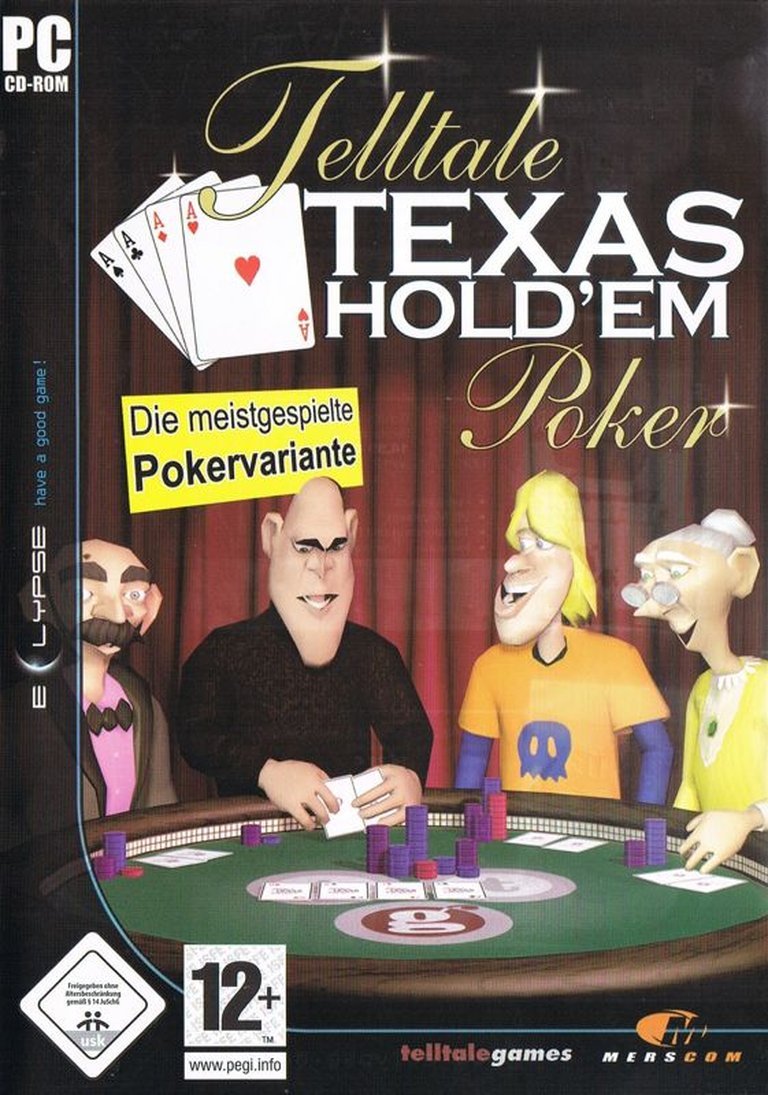
Telltale Texas Hold’em is a casual poker game from Telltale, creators of the Sam & Max series, focusing exclusively on Texas Hold’em poker mechanics. Players compete against four distinct AI characters—each with unique personalities and visual designs reminiscent of Telltale’s signature style—who dynamically react to gameplay through facial expressions, situational commentary, and humorous interjections. The game emphasizes lighthearted fun over hardcore simulation, featuring scripted AI responses to moves like ‘All In,’ comedic non-game-related banter between characters, and a colorful, accessible approach to the card game.
Gameplay Videos
Where to Buy Telltale Texas Hold’em
Telltale Texas Hold’em Guides & Walkthroughs
Telltale Texas Hold’em Reviews & Reception
gamepressure.com (67/100): A humorous and light-weight approach to poker with cleverly scripted AI.
mobygames.com (53/100): A casual poker game with humorous banter and light-weight approach.
steambase.io (67/100): Mixed reviews with a player score of 67/100.
choicestgames.com (50/100): A very basic, dated, single-player PC version of poker.
Telltale Texas Hold’em: Review
Telltale Texas Hold’em, released in 2005, stands as a unique and often overlooked entry in the Telltale Games catalog. As the studio’s inaugural title, it served as a testing ground for their digital distribution model and the Telltale Tool engine. Despite its humble origins, the game offers a fascinating glimpse into the early days of Telltale Games and their innovative approach to storytelling and gameplay. This review will delve into the development history, narrative themes, gameplay mechanics, and the enduring legacy of Telltale Texas Hold’em.
Development History & Context
The Studio and Its Vision
Telltale Games was founded in July 2004 by former LucasArts developers Kevin Bruner, Dan Connors, and Troy Molander. The studio aimed to revive the adventure game genre, which had seen a decline following LucasArts’ departure from the market. Telltale’s vision was to create episodic adventure games that focused on narrative-driven experiences, leveraging digital distribution to reach a broader audience.
Technological Constraints and Innovations
Telltale Texas Hold’em was developed as a testbed for the Telltale Tool, the studio’s proprietary game engine. The game was designed to examine the benefits of digital distribution and to ensure that all major bugs were ironed out before the release of their first adventure game, Bone: Out from Boneville. The Telltale Tool would go on to be used in every game developed by the studio, undergoing continuous improvements over the years.
Gaming Landscape
The gaming landscape in 2005 was dominated by console titles and high-budget PC games. Adventure games, once a staple of the PC gaming scene, had fallen out of favor. Telltale Games saw an opportunity to fill this void with their episodic, narrative-focused approach. Telltale Texas Hold’em, while not an adventure game, served as a stepping stone towards this goal, demonstrating the studio’s ability to create engaging and humorous content.
Narrative & Thematic Deep Dive
Plot and Characters
Telltale Texas Hold’em is set in a fictional poker tournament held in Las Vegas, Nevada. The player competes against four unique characters: Harry Weinhead, Boris Krinkle, Theodore Dudebrough, and Grandma Shakey. Each character has a distinct personality and appearance, reminiscent of the quirky cast seen in Telltale’s later adventure games.
Harry Weinhead is portrayed as a wily businessman and student of the game, always ready with a clever remark. Boris Krinkle, voiced by Carter Coleman, bears a striking resemblance to Leonard Steakcharmer from Sam & Max Save the World, adding a layer of familiarity for fans of Telltale’s other works. Theodore Dudebrough is the laid-back slacker, while Grandma Shakey is the eccentric coot who is more dangerous than she appears.
Dialogue and Humor
The game is filled with humorous banter and witty dialogue, providing comic relief throughout the gameplay. The characters comment on everything, from the player’s actions to the unfolding events at the poker table. This light-hearted approach to the subject matter sets Telltale Texas Hold’em apart from more serious poker simulations.
Themes
While the primary theme of the game is entertainment, it also touches on the psychological aspects of poker. The game explores the dynamics of bluffing, reading opponents, and the thrill of high-stakes gambling. The characters’ interactions and reactions to the player’s moves add depth to the gameplay, making it more than just a simple card game.
Gameplay Mechanics & Systems
Core Gameplay Loop
The core gameplay of Telltale Texas Hold’em revolves around the rules of Texas Hold’em poker. The player must compete against the four AI-controlled characters, using a combination of strategy, bluffing, and reading their opponents’ tells. The game features a tutorial that explains the rules and mechanics, making it accessible to both novice and experienced players.
AI and Character Interactions
The AI in Telltale Texas Hold’em is cleverly scripted to react appropriately to every game situation. The characters change their responses and reactions based on the player’s actions, adding a dynamic element to the gameplay. For example, an “All In” move will inevitably cause surprises on the characters’ faces, enhancing the immersive experience.
User Interface
The user interface is straightforward and intuitive, allowing players to focus on the gameplay. The game features a first-person perspective, giving the player a sense of being at the poker table. The UI elements, such as the chip count and betting options, are clearly displayed, making it easy to keep track of the game’s progress.
Innovations and Flaws
One of the innovative features of Telltale Texas Hold’em is its humorous and light-weight approach to the subject matter. The game takes pride in its cleverly scripted AI and engaging character interactions. However, it is not aimed towards serious poker game simulation, which may be a drawback for players looking for a more authentic experience.
World-Building, Art & Sound
Setting and Atmosphere
The game is set in a fictional poker tournament held in Las Vegas, Nevada. The atmosphere is lively and engaging, with the characters’ humorous banter and witty dialogue adding to the overall experience. The setting is not as detailed as in Telltale’s later adventure games, but it serves its purpose well, providing a backdrop for the gameplay.
Visual Direction
The visual direction of Telltale Texas Hold’em is simple and functional. The character models and animations are basic, reflecting the technological constraints of the era. The game’s art style is reminiscent of Telltale’s early adventure games, with a focus on clear and recognizable characters.
Sound Design
The sound design is effective, with voice acting that brings the characters to life. The characters’ voices are distinct and memorable, adding to the game’s charm. The audio quality is generally fine, although some players have noted that it can be a bit lo-fi at times.
Reception & Legacy
Critical and Commercial Reception
Telltale Texas Hold’em received mixed reviews upon its release. Critics praised the game’s humor and light-hearted approach to the subject matter but noted that it lacked the depth and complexity of more serious poker simulations. The game was named “indie game of the month” by PC Zone magazine in June 2005, highlighting its unique appeal.
Influence on Subsequent Games
Telltale Texas Hold’em served as the basis for Telltale’s other poker games, Poker Night at the Inventory and Poker Night 2. These games built upon the foundation laid by Telltale Texas Hold’em, incorporating licensed characters and improved visuals. The legacy of Telltale Texas Hold’em can also be seen in the studio’s approach to storytelling and character interactions, which became a hallmark of their later adventure games.
Conclusion
Telltale Texas Hold’em is a charming and humorous take on the classic card game of Texas Hold’em. While it may not be a serious poker simulation, it offers a unique and entertaining experience that showcases Telltale Games’ early creativity and innovation. The game’s legacy can be seen in the studio’s later works, which built upon the foundation laid by this inaugural title. For fans of Telltale Games and casual poker enthusiasts, Telltale Texas Hold’em is a worthwhile addition to their collection. Its place in video game history is secured as a pioneering effort in digital distribution and narrative-driven gameplay.