
- Release Year: 2013
- Platforms: Android, bada, BlackBerry, Blacknut, iPad, iPhone, Macintosh, Nintendo Switch, Ouya, PlayStation 3, PlayStation 4, PS Vita, Symbian, webOS, Windows Apps, Windows Phone, Windows, Xbox One
- Publisher: 10tons Ltd.
- Developer: 10tons Ltd.
- Genre: Action
- Perspective: Side view
- Game Mode: Single-player
- Gameplay: Arcade, Paddle, Platform, Pong, Sport, Tennis
- Average Score: 65/100
Description
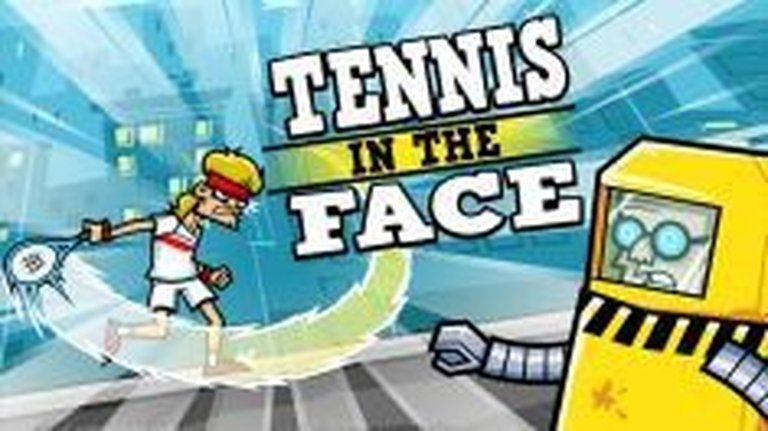
Tennis in the Face is an arcade-style action game where players use a tennis racket to launch balls at enemies like clowns and riot police in single-screen levels. Gameplay focuses on strategic bouncing off walls and interacting with environmental objects—such as breakable glass and explosive crates—to eliminate all targets while managing a limited number of balls. Progression occurs via a world map, where completing areas unlocks new zones with varied opponents and puzzles, similar to the developer’s Baseball Riot but with a tennis twist.
Gameplay Videos
Where to Buy Tennis in the Face
Tennis in the Face Guides & Walkthroughs
Tennis in the Face Reviews & Reception
opencritic.com (70/100): It is vibrant, fun, funny and chaotic.
opencritic.com (80/100): Tennis In The Face is a decent little game.
opencritic.com (60/100): it’s an average mobile port
opencritic.com (70/100): There are only a handful of enemies you’ll encounter throughout the game, and some more variety would have been nice.
opencritic.com (70/100): its simplicity serves as a solid palette cleanser
opencritic.com (60/100): a very simple, intuitive and hilarious game
opencritic.com (60/100): lacks heart and charm
metacritic.com (83/100): it’s still a lot more enjoyable than any number of other more complex games
metacritic.com (80/100): A good value for $5 on the PSN.
metacritic.com (70/100): Lively presentation belies comatose gameplay, but its simplicity serves as a solid palette cleanser
metacritic.com (70/100): it’s far better suited to its original home on handhelds
metacritic.com (65/100): A nice little experience in-between AAA games
metacritic.com (60/100): lacks heart and charm
metacritic.com (40/100): it’s fun but probably more of a tablet experience
pocketgamer.com : A delightfully silly physics-puzzler that’s slightly derivative but highly entertaining
Tennis in the Face: A Slapstick Saga of Rackets, Ragdolls, and Redemption
Introduction: The Ace in the Hole of Casual Gaming
In the bustling marketplace of mobile and indie physics puzzlers, few titles embrace their own absurdity with such unapologetic glee as Tennis in the Face. Released in 2013 by the Finnish studio 10tons, the game presents a premise so ludicrous it demands attention: a disgraced tennis champion, armed only with his lethal serve, wages a one-man war against an evil energy drink empire by, quite literally, tennis-balling its legion of addicts in the face. It is, on its surface, a perfect distillation of casual gameplay—simple to grasp, satisfying to master, and wrapped in a layer of anarchic cartoon comedy. Yet, beneath this veneer of silliness lies a meticulously crafted puzzle experience that leverages physics, environmental interactivity, and a brilliantly nonlinear progression system to stand apart from the countless Angry Birds contemporaries it inevitably evokes. This review will argue that Tennis in the Face is a masterclass in focused, genre-execution: a game that may not reinvent the physics-puzzler but perfects a specific, hilarious niche within it, thanks to its unwavering comedic vision, solid mechanical foundation, and smart, player-respecting design choices. Its legacy is that of a cult classic—a Sharapova backhand in a world of gentle forehands—celebrated for its charm and relentless, clockwork-paced fun.
Development History & Context: 10tons’ Serve from the Mobile Baseline
Tennis in the Face emerged from the creative workshop of 10tons Ltd., a Tampere, Finland-based studio founded in 2003 with a portfolio steeped in accessible, arcade-style games for mobile and PC platforms. Prior to 2013, 10tons had built a reputation with titles like the Sparkle series (a match-3 puzzle franchise) and the top-down shooter Crimsonland. Their development philosophy centered on “easy to pick-up” gameplay loops, a principle they explicitly stated for Tennis in the Face.
The game was conceived and built during the golden age of mobile gaming, a period dominated by physics-based puzzle phenomena like Angry Birds (2009) and its legion of clones. The technological constraints of the era—targeting iOS, Android, Symbian, and later consoles—dictated a 2D, single-screen design with laterally scrolling or static stages. This limitation became a strength, forcing a focus on puzzle density and precision within confined spaces. The team, credited as eight core members (led by CEO Tero Alatalo and Vice CEO Sampo Töyssy), utilized the robust Box2D physics engine and Lua scripting, tools common for mobile-to-desktop ports of the time. This technical stack allowed for consistent, predictable ball trajectories and satisfying ragdoll reactions across a dizzying array of platforms, from the original iOS release on January 24, 2013, to eventual ports on PlayStation 4, Xbox One, Nintendo Switch, and even streaming services like Blacknut over a decade later.
The gaming landscape of early 2013 was one of transition. The casual mobile market was saturated, but a gap existed for games with slightly more mechanical depth and a cohesive, witty personality. Tennis in the Face arrived not as a revolutionary pioneer, but as a supremely polished and characterful iteration of a proven formula. Its simultaneous multi-platform release strategy—hitting almost every conceivable mobile and console storefront within a few years—was a testament to 10tons’ agile, multiplatform development approach, a practice that would become their hallmark.
Narrative & Thematic Deep Dive: The Explodz Conspiracy and Pete’s Redemption
The narrative of Tennis in the Face is a satirical, almost Conradian tale of corporate conspiracy and personal atonement, delivered through a lens of pure cartoon excess. The protagonist, Pete Pagassi—a name that is itself a pun on tennis legends Pete Sampras and Andre Agassi—is introduced as a former world-beating tennis star whose career and life were derailed by addiction. The culprit is Explodz, a hyper-caffeinated, neon-green energy drink that acts as both a literal and metaphorical corrupting force, turning the city of Explodopolis (or Oddington, as some sources name it) into a hive of mindless, sugar-fueled maniacs.
The plot is elegantly simple: sober and rehabilitated, Pete channels his sole remaining skill—his “killer serve”—into a crusade against the Explodz corporation. His journey across the city’s eight districts is a literal march through the ranks of the addicted, from low-level clowns and hipsters to corporate executives and riot police, culminating in a final confrontation at the Explodz factory. The genius lies not in complexity but in thematic consistency. Every enemy type, from the “trendy males” in skinny jeans to the shield-bearing scientists, is a visual gag representing a slice of consumerist or corporate culture satirized. Explodz is the ultimate villain—a faceless, addictive product that creates its own army of compliant, violent consumers.
The dialogue and presentation are sparse but effective. The enemy animations—clowns pedaling frantically on unicycles, hipsters striking poses—and the environmental storytelling (Explodz vending machines, branded crates) build a world saturated with the drink’s poisonous influence. The final level, where Pete serves balls at portraits of the 10tons development team, is a brilliant meta-textual wink, breaking the fourth wall to reward players and cement the game’s identity as a love letter to slapstick comedy first and a grim tale of revenge second. The underlying theme is one of personal responsibility versus corporate manipulation: Pete, the former addict, fights the corporation that made him weak, using the very skill (tennis) that the corporation indirectly celebrated in its marketing. It’s a surprisingly sharp, if cartoonish, commentary on addiction and corporate malfeasance, all delivered with the subtlety of a tennis ball to the forehead.
Gameplay Mechanics & Systems: The Bounce of the Ball, the Logic of Chaos
At its core, Tennis in the Face is a 2D physics-based puzzle action-platformer with “Paddle / Pong” and “Sport” attributes. The gameplay loop is deceptively simple: Pete stands stationary (left or right-facing) on a single-screen stage. The player aims a trajectory line, adjusts power, and serves a tennis ball. The ball obeys realistic, predictable physics—it bounces off walls, solid objects, and sometimes enemies, losing momentum with each impact until it either exits the stage or hits a “destructible” surface that stops it cold.
The objective is to eliminate all enemies on screen with a limited supply of balls. This is where the genius of the puzzle design shines. Enemies are placed in configurations that almost never allow for a straight-shot kill. Players must:
* Ricochet shots off angled walls or platforms.
* Chain reactions by hitting explosive crates, glass panes, or vending machines that shower additional balls or cause environmental collapses.
* Exploit enemy physics: hit one foe into another (ragdoll collisions can be fatal), use shields against other enemies, or time shots to hit falling debris.
* Manage the ball’s bounce limit (varies by level/type) and avoid hazards like destructible glass or certain obstacles that vaporize the ball instantly.
Two projectile types add strategic layers:
1. Standard Tennis Balls: Fast, linear trajectory, perfect for precision ricochets.
2. Explodz Energy Drinks: Slower, high-arching trajectory (like a lob), and they explode on impact, dealing area-of-effect damage.
The scoring system is a masterstroke of incentive design. It’s not just about clearing the level; it’s about efficiency. The primary metric is the number of balls remaining after clearing a stage. Using fewer balls yields a higher “crown” rating (3 crowns for using the absolute minimum balls). Crucially, unused balls are converted to a huge point bonus, creating a powerful feedback loop that rewards creative, chain-reaction solutions over cautious, single-target takes. As one critic noted, “You will be rewarded for causing more damage with a single serve than with multiple serves.” This makes replaying levels for a perfect score an endlessly compelling pursuit.
Progression & Map Structure: The nonlinear world map is arguably the game’s most innovative feature. The city is divided into ~8 districts, each a grid of 15-20 “squares” (levels). Players can tackle any adjacent cleared level from the start. Clearing a certain number of levels in a district unlocks the next. This design radically reduces frustration; if stuck on a tough puzzle, you can skip it and return later, maintaining forward momentum. It respects the player’s time and intelligence, a rarity in linear puzzle games.
Flaws & Criticisms: The sometimes-cited “trial-and-error” nature is inherent to the genre. The inconsistent physics—where identical inputs might yield slightly different bounces due to microscopic environmental variations—is a noted weakness. As Pure Nintendo’s review stated, “identical moves at times leading to different results.” Some critics also lamented the lack of variety in mechanics beyond the core aiming (no power-ups, upgrades, or true boss fights) and found the visual and audio feedback (muted sound effects upon impact) less satisfying than it could be.
World-Building, Art & Sound: Explodopolis in Cartoon Disarray
The art direction is a vibrant, flat, and incredibly expressive 2D cartoon style. The hand-drawn character animations are the star: enemies have distinct, silly walk cycles and reactions. A clown pedaling a tiny unicycle, a hipster adjusting his glasses, a riot police officer stumbling ragdoll-style after being hit—each is a small moment of comedic storytelling. The backgrounds are comparatively simple, often monochromatic or with basic cityscapes, which makes the colorful, exaggerated foreground characters and interactive objects pop spectacularly. This clarity is functionally critical; you must instantly distinguish destructible crates from solid walls, vending machines from background decor.
The atmosphere is one of controlled chaos. The “ruined streets and offices of the city” are depicted with a cheerful disregard for realism—windows are broken, signs askew, but everything is bright and clean. This creates a dissonance that makes the violent act of ball-smashing feel harmless and funny. The setting of Explodopolis is a clever satire of a city under the thrall of sugary, aggressive marketing, where every citizen is a potential projectile target.
The sound design is functional and comedic. The soundtrack consists of “funky jams” and upbeat, looping tunes that match the game’s irreverent pace. Sound effects are a point of contention among critics. The “thwack” of the ball, the clatter of ragdolls, and the pop of Explodz drinks are present but often described as “muted” or “unsatisfying” compared to the visceral feedback of games like Peggle. However, the voice lines and character sounds—the grunts, groans, and exaggerated cries of the enemies—are universally praised for adding to the slapstick humor. The audio design prioritizes comedic effect over tactile impact, which aligns perfectly with the game’s tone.
Reception & Legacy: A Cult Classic’s Journey from Mobile to Consoles
Tennis in the Face met with generally favorable reviews upon its 2013 mobile debut, holding a 71% critic average on MobyGames (from 16 reviews) and a 77% on Metacritic for iOS. The praise consistently highlighted its charm, humor, and expertly judged level design. All About Symbian gave it a 90%, calling it “innovatively presented” and “hilariously good.” Multiplayer.it (85%) praised its “imprevedibilità” (unpredictability) that “smarcs it from boredom.” Even on later console ports, the sentiment remained largely positive, with scores ranging from 60% (Nintendo-Online.de, TrueAchievements) to 80% (Gamegravy on PS4/Vita). The Switch version (63% on OpenCritic) received the most mixed bag, with critics noting the inherent repetitiveness of the genre and occasional physics inconsistencies.
Commercial performance is harder to quantify, but its multi-year, multi-platform release schedule (spanning Symbian to Nintendo Switch by 2017) indicates steady, low-impact profitability for 10tons. It became a reliable catalog title, often sold for budget prices ($0.99-$4.99). Its MobyScore of 7.0 and collection by only 25 players on MobyGames suggest it’s a niche favorite rather than a mainstream smash.
Its legacy is twofold:
1. Within 10tons’ Catalog: It established the studio’s signature “slapstick physics-puzzler” template, directly followed by Baseball Riot (a near-identical game with baseballs) and informing later titles like Neon Chrome. It proved their ability to create a coherent, humorous world wrapped around a tight mechanical core.
2. In the Genre: It represents a peak example of the “Angry Birds” clone subgenre. While it didn’t innovate the single-screen destructible puzzle format, it executed it with a rare combination of consistent humor, nonlinear progression, and a scoring system that encouraged mastery. It’s often cited in “best physics puzzler” lists for specific platforms (e.g., #14,706 of 26.9K on MobyGames) and is remembered fondly by those who discovered it. Its influence is subtle—it likely informed other developers on the importance of a strong thematic wrapper and respectful player progression—but it is not a genre-defining title like its inspiration.
The divergence between critic (71%) and player reception (MobyGames player score: 2.2/5 from 1 rating; Steam: “Very Positive” from 120 reviews) is telling. Critics evaluated it as a polished, if derivative, package. Mainstream players may have found the premise too niche or the gameplay loop too repetitive for long-term engagement. Its true audience is the “curious indie fan” or the player seeking a “palette cleanser” between AAA titles, as Push Square noted.
Conclusion: An Ace, But Not a Grand Slam
Tennis in the Face is not a forgotten masterpiece, nor is it a flawed gem. It is, instead, a superlatively well-crafted genre piece that understands its constraints and maximized its strengths with wit and precision. Its unwavering commitment to its silly premise—from the protagonist’s name to the final meta-punchline—gives it a personality sorely lacking in many of its contemporaries. The nonlinear map is a brilliant design choice that respects the player’s intelligence. The scoring system ingeniously ties mechanical proficiency to numerical rewards.
Its weaknesses are the weaknesses of its genre: the inevitable repetition, the occasional reliance on luck, and a lack of deeper mechanics beyond the core aim-and-bounce loop. The sound design’s muted impact is a genuine missed opportunity for more visceral feedback.
In the pantheon of video game history, Tennis in the Face will not be listed alongside the foundational classics. It will not be studied for its technical breakthroughs or its narrative complexity. However, it deserves a hallowed place in the catalog of expertly delivered casual experiences. It is a testament to the idea that a game need not be vast or original to be deeply satisfying. It is a perfectly formed, tightly wound spring of comedic gameplay—a game that knows exactly what it is (a “slapstick comedy” with balls) and executes that vision with almost every frame, sound, and design decision in alignment. For a few dollars and a few hours, it delivers a concentrated dose of chaotic, physics-driven joy that is as reliably entertaining as a perfectly placed serve. It is, in the final analysis, a game that lives up to its name: it puts a grin on your face, and sometimes, that’s more than enough.
Final Verdict: 7.5/10 – A charming, focused, and hilarious physics-puzzler that may not break the mold but certainly polishes it to a brilliant shine. Highly recommended for fans of the genre seeking a dose of anarchic fun.