
- Release Year: 2011
- Platforms: PlayStation 3, Windows, Xbox 360
- Publisher: Atari, Inc.
- Developer: Eden Games S.A.S.
- Genre: Driving, Racing
- Perspective: 1st-person, Behind view
- Game Mode: MMO, Single-player
- Gameplay: Collection, Customization, Day, Discovery, night cycle, Open World, Racing, Weather System
- Setting: Ibiza, Oahu
- Average Score: 68/100
Description
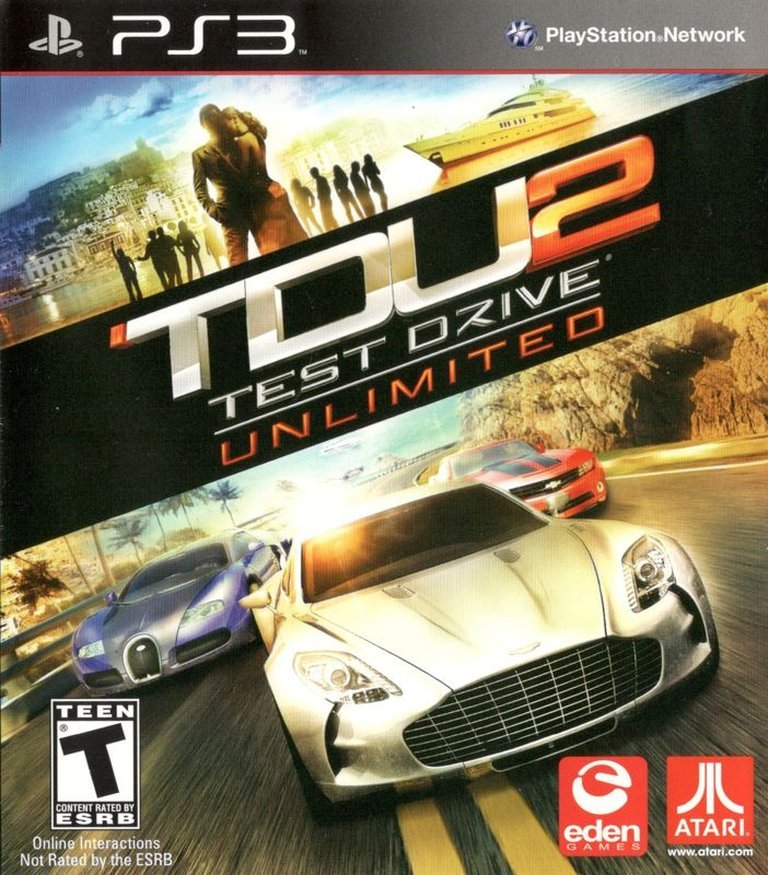
Test Drive Unlimited 2 is an open-world racing game set across the vibrant island of Ibiza and the returning Hawaiian island of Oahu. Players begin as a valet aspiring to enter the prestigious Solar Crown racing competition, earning licenses through driving challenges, races, and social interactions. The game blends exploration, vehicle customization, and competitive racing, featuring dynamic weather, a day/night cycle, AI police chases, and online multiplayer modes. Players can buy cars, homes, and upgrades while engaging in diverse missions—from adrenaline-fueled drives to cooperative challenges—all within a sprawling, immersive environment.
Gameplay Videos
Test Drive Unlimited 2 Free Download
Test Drive Unlimited 2 Cracks & Fixes
Test Drive Unlimited 2 Patches & Updates
Test Drive Unlimited 2 Mods
Test Drive Unlimited 2 Guides & Walkthroughs
Test Drive Unlimited 2 Reviews & Reception
ign.com : The open‑world driving experience is riddled with problems.
thetruthaboutcars.com : The game is fun but hampered by poor character design and repetitive gameplay.
gaminglives.com : It serves as an irritant and a distraction from the main point of the game.
Test Drive Unlimited 2: A Luxurious Open-World Experiment Lost in Transmission
Introduction
When Test Drive Unlimited 2 (TDU2) launched in 2011, it carried the weight of its groundbreaking predecessor—Test Drive Unlimited (2006)—while attempting to redefine open-world racing as a lifestyle simulator. Eden Games’ vision was ambitious: marry high-octane racing with a sprawling, social MMO-like experience set across the sun-drenched islands of Ibiza and Oahu. But beneath its glossy veneer of luxury cars and tropical escapism, TDU2 stumbled over its own ambitions. This review dissects how a game that promised “unlimited” possibility became a cautionary tale of unrealized potential, technical missteps, and a flawed but fascinating legacy in racing history.
Development History & Context
Studio & Vision
Developed by France’s Eden Games (known for V-Rally and Alone in the Dark) and published by Atari, TDU2 aimed to expand its predecessor’s open-world formula into a shared, persistent universe. Director Alain Jarniou envisioned a game where players didn’t just race—they lived a life of automotive opulence, buying homes, customizing wardrobes, and gambling in casinos.
Technological Constraints
Built on the same engine as the first TDU, the game struggled to balance its vast 3,000 km of roadways across two islands with 2011-era hardware limitations. The Havok physics engine enabled realistic car handling but faltered with environmental collisions (indestructible trees became a meme). Always-online multiplayer aspirations clashed with server instability at launch, crippling its social features for weeks.
Gaming Landscape
TDU2 arrived amid fierce competition: Need for Speed: Hot Pursuit (2010) nailed arcade thrills, while Forza Motorsport 4 (2011) set the simulation standard. Eden’s attempt to hybridize these approaches—blending simulation-esque driving with RPG progression—left it stranded in a genre no-man’s-land.
Narrative & Thematic Deep Dive
Plot & Characters
TDU2’s “Solar Crown” narrative casts players as a valet-turned-racer, reluctantly hired by the wealthy Tess Wintory to compete in a high-stakes tournament. The story is minimal, serving mostly as a vehicle for progression, with cardboard-cutout rivals like Miami Harris and the Wilde brothers. Dialogue oscillates between cringey (“Our rookie is winning the championship!”) and forgettable, lacking the campy charm of contemporaries like Need for Speed’s FMV theatrics.
Themes
At its core, TDU2 fetishizes materialism. The grind to collect cars, homes, and designer clothes mirrors real-world luxury culture, but the game never critiques this excess—it celebrates it uncritically. The inclusion of a Casino DLC (where players gamble in-game currency) doubled down on this tone-deaf opulence, alienating critics who derided it as a “Sims lite” distraction from racing.
Gameplay Mechanics & Systems
Core Loop
TDU2’s progression hinges on four XP categories:
– Discovery (exploring roads, photographing landmarks)
– Collection (buying cars, clothes, homes)
– Competition (races, time trials)
– Social (clubs, multiplayer).
This system encouraged diverse playstyles but often felt disjointed, as upgrading a mansion or playing blackjack offered little tangible reward beyond vanity.
Driving & Licensing
Vehicle handling split opinions: arcade fans found it sluggish compared to Need for Speed, while sim enthusiasts lamented its inconsistency (the Nissan 370Z’s gear ratios were notoriously broken). The licensing system—requiring players to pass grueling tests for each vehicle class—was criticized as a tedious gatekeeper.
FRIM & Police
The “Free Ride Instant Money” system rewarded stunts like drifts and near-misses, incentivizing reckless driving. Police chases, while novel, suffered from erratic AI; escaping a helicopter by off-roading felt more absurd than thrilling.
UI & Technical Flaws
The cockpit camera’s unadjustable head-bobbing and a clunky menu interface frustrated players. Post-launch patches fixed some issues, but the PC version’s SecuROM DRM (with a 4-activation limit) became a PR nightmare.
World-Building, Art & Sound
Ibiza & Oahu
Ibiza’s Mediterranean charm and Oahu’s nostalgic return from TDU1 were visual highlights, with dynamic weather and day-night cycles adding immersion. However, recycled assets on Oahu and “concrete” environmental collisions undercut the realism.
Art Direction
TDU2’s obsession with luxury shone in its hyper-detailed car models (Ferraris, Bugattis) and lavish home interiors. Yet, character models and animations—like plastic-faced NPCs and stiff avatar movements—felt dated even in 2011.
Sound Design
Engine roars were punchy, but the pared-back radio (two stations vs. TDU1’s four) and repetitive voice lines (“Psychological tension is rising!”) grated over time.
Reception & Legacy
Launch Reception
TDU2 earned mixed reviews (Metacritic: 72/100 on PC, 70/100 on PS3). Praise centered on its scope and ambition, while criticism targeted bugs, poor AI, and the Casino DLC’s microtransactions. Players lambasted its always-online requirement, which rendered the game unplayable during server outages.
Post-Launch & Modding
Eden Games’ 2013 closure left TDU2 abandoned, but modders resurrected it through projects like Project Paradise 2, restoring online play and adding cut content like unreleased cars.
Industry Influence
TDU2’s social experiments foreshadowed live-service trends in games like The Crew and Forza Horizon. Yet, its missteps—overambition, undercooked systems—served as a cautionary tale.
Conclusion
Test Drive Unlimited 2 is a paradox: a game bursting with ideas yet hobbled by its execution. Its sprawling open world and luxurious aesthetic remain unmatched, but technical flaws, half-baked social systems, and a lack of focus doomed it to cult status. For all its failures, TDU2’s boldness earns it a place in racing history—a flawed gem that dared to dream bigger than its engine could handle.
Final Verdict: A fascinating, flawed time capsule of early 2010s ambition—best enjoyed today through mods that patch its imperfections.