
- Release Year: 2024
- Platforms: PlayStation 5, Windows, Xbox Series
- Publisher: Nacon S.A.
- Developer: Kylotonn SARL
- Genre: Driving, Racing
- Perspective: 1st-person
- Game Mode: Online PVP
- Gameplay: Exploration, Faction System, Open World, Racing, Vehicle Customization
- Setting: Asia
- Average Score: 56/100
Description
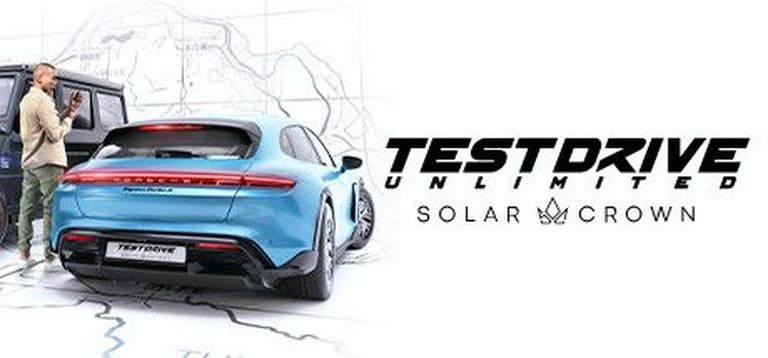
Test Drive Unlimited: Solar Crown is an open-world racing game set in a meticulously detailed recreation of Hong Kong Island, where players drive high-end vehicles, engage in street races, and choose between the rival Streets or Sharps factions, blending realistic driving mechanics with social interaction and extensive exploration.
Gameplay Videos
Test Drive Unlimited: Solar Crown Mods
Test Drive Unlimited: Solar Crown Guides & Walkthroughs
Test Drive Unlimited: Solar Crown Reviews & Reception
ign.com : every online-only requirement feels like a punishment for playing it by yourself.
metacritic.com (53/100): An open world massively multiplayer online racer with a decent handling model and an okay car list, that’s hampered by dated graphics, some baffling design choices, and a clutch of technical issues.
opencritic.com (55/100): Forced online requirements, inconsistent AI difficulty, a stale car list, and chore-like progression all undermine Test Drive Unlimited Solar Crown’s otherwise robust driving and eye-catching open world.
carthrottle.com (60/100): Ambitious, But Very Flawed
Test Drive Unlimited: Solar Crown: A Crown of Thorns Wrought in Ambition and Ashes
Introduction: The Ghost of a Genre-Defining Past
The return of Test Drive Unlimited after a 13-year dormancy was not merely a game launch; it was a cultural event for a specific generation of racing enthusiasts. The original 2006 TDU and its 2011 sequel didn’t just occupy a niche; they pioneered the modern open-world racing genre. They fused a persistent online social space with a 1:1 island, a lavish lifestyle simulation, and a profound sense of automotive freedom years before Forza Horizon or The Crew codified the formula. Therefore, Test Drive Unlimited: Solar Crown arrived in September 2024 burdened with impossible expectations: to resurrect a beloved legacy, to compete with genre titans, and to justify a development cycle mired in delays and cancellations. What KT Racing and publisher Nacon delivered was not a triumphant coronation, but a frustrating, flawed, and frankly baffling monument to ambition colliding with execution. This review argues that Solar Crown is a profound misfire—a game that understands the spirit of its predecessor but catastrophically misunderstands its soul, buried under a mountain of technical incompetence, design myopia, and a live-service skeleton that chokes the life from its single-player heart.
Development History & Context: A Saga of Delays and Diminished Hopes
The pedigree is crucial. The Test Drive series dates to 1987, but the “Unlimited” reboot, developed by Eden Studios, was the transformative force. After the dissolution of Eden and the unremarkable 2012 Ferrari Racing Legends, the IP lay fallow until 2016, when Nacon (then Bigben Interactive) acquired it. In 2018, Nacon acquired the French studio Kylotonn, known for the competent but workmanlike WRC series. Development on Solar Crown reportedly began in 2016, with full production starting in 2018 under the KT Racing banner.
From the outset, the project was overambitious. The promise was a 1:1 recreation of Hong Kong Island—a densely populated, vertical urban jungle with left-hand traffic, a series first. Initial teasers in 2020 set a sky-high bar. However, the development was characterized by repeated delays: from a nebulous post-2020 date to 2023, then to 2024. Critically, the planned PlayStation 4 and Xbox One versions were canceled in May 2022 to focus on PS5 and Xbox Series X/S, a decision that signaled both a recognition of next-gen complexity and a potential scaling-back of scope. The Nintendo Switch version, initially announced, vanished without explanation. This history of postponement and platform attrition did not inspire confidence; it suggested a project struggling to meet its own grandiose vision. The game that finally emerged felt less like a polished product and more like a foundation—a “Year 1” live-service title launched years too early, with a roadmap that included the return of Ibiza (from TDU2) in Season 2, a clear admission that the initial offering was incomplete.
Narrative & Thematic Deep Dive: The Hollow Core of “Social Status”
The Test Drive Unlimited series always framed its racing as a television spectacle, a high-stakes competition for the elite. Solar Crown doubles down on this with its central, bifurcated faction system: the Sharps, representing traditional luxury and sophistication, and the Streets, embodying provocative, underground rebellion. This dichotomy is the game’s primary narrative and thematic engine. In theory, it’s a compelling commentary on differing expressions of automotive wealth and status.
In practice, it is anemic to the point of parody. The “story” is a non-entity. There are no characters with arcs, no plot twists, no dramatic tension. You select a faction at the outset, which gates certain cosmetic items and a handful of unique events. The consequences are cosmetic and quantitative, not qualitative. The world’s inhabitants—dealership staff, mission givers—are personality-free archetypes with wooden dialogue that fails to establish even the most basic atmosphere of a “living city” or a cutthroat competition. The oft-touted “Solar Hotel” HQ is a beautiful but soulless hub, a loading screen dressed as a penthouse.
The theme that “social status is everything,” repeated in official descriptions, is implemented through a blunt reputation grind. It’s not about narrative prestige but a numerical bar filling up. The thematic depth of the original TDU—where your avatar’s lifestyle (clothing, housing, car collection) was intrinsically linked to your competitive standing—has been reduced to a解 game system. The rich, lived-in fantasy of being a jet-setting car enthusiast has been sterilized into a checklist. This narrative void makes the world of Hong Kong feel like a theme park with no show, a stage with no play. The “Solar Crown” competition itself is a meaningless title, a procedural goal with no emotional weight or story to propel the player forward.
Gameplay Mechanics & Systems: The Grind and The Gate
The core driving loop is where Solar Crown both shines and stumbles, often simultaneously.
The Handling Model: A Solid Foundation
Developed by KT Racing, the handling is the game’s undisputed strength. It occupies a thoughtful middle ground between arcade and simulation. Cars have a satisfying heft, with predictable weight transfer during cornering. Drifts are accessible via handbrake but require skill to control, avoiding the effortless “drift on rails” feel of some competitors. Audio feedback is excellent; engine notes change authentically with upgrades and camera angles (especially the distinct hiss of wet asphalt and exhaust pop in tunnels). The sense of speed, particularly in hypercars, is genuinely exhilarating. The 550km of roads (a claim from Steam) offer a tremendous variety: narrow, winding mountain passes, complex multi-level urban interchanges, and sweeping coastal highways. The course design is, as noted by critics, often cleaner and more intentional than the cluttered tracks of Forza Horizon.
The Progression System: A Grind by Design
Here, ambition curdles into frustration. Progression is level-based. You earn “Reputation” (XP) and “Credits” (cash) by completing races, driving on new roads, discovering landmarks, etc. This is sound in theory, encouraging exploration. The execution, however, is punitive and opaque.
* Car Acquisition & Economy: Hypercars cost tens of millions of credits. A typical race win might net 20-30k. The grind is immense and deliberately slow. Worse, you cannot sell cars. A poor purchase is a permanent, costly mistake, locking you into a grind for the next vehicle. This design choice feels archaic and disrespectful of player time.
* AI Difficulty & “The Wall”: This is the game’s most infamous flaw. AI difficulty is not manually selectable. It auto-scales with your progress. The jump from “Experienced” to “Expert” is catastrophic. IGN’s Luke Reilly documented how “Expert” AI opponents, in identical cars, could post laptimes faster than global human leaderboards—an obvious, game-breaking cheat. Players cannot opt out. The only “solution”? Intentionally lose races to trigger a difficulty drop. This is not a challenge; it is a broken system that mocks the player.
* Secondary Objectives & Payout Penalties: Many events have bonus objectives requiring a podium finish. Against cheating AI, this is often impossible. Compounding this, the game appears to implement a hidden cooldown: repeated failures slashed Reilly’s XP and credit payouts to “a pittance,” with no in-game communication. This “come-back-later” mechanic is antithetical to a premium $60 product.
* Ambiguous Tuning: Unlocked driving modes (e.g., “Dynamic” vs. “Sport”) have UI descriptions that directly contradict their actual stat effects, leaving players guessing at a fundamental mechanic.
TheAlways-Online Albatross
Solar Crown requires a persistent internet connection for everything, including solo play against AI. This is its fatal, indefensible design decision. The consequences are manifold:
1. No Pause: You cannot pause a race, ever. This is an absolute deal-breaker for parents, anyone with a real-world schedule, or even a player needing a brief break.
2. Mandatory Lobbies: Even to race alone, you must wait through lobby countdowns, “just in case” another player joins. If the lobby system is down (as it frequently was at launch), you are barred from many events.
3. Server Dependency: Server outages or maintenance lock you out entirely. Early access players reported being unable to play for days. Cloud save instability led to lost progress, unrewarded milestones, and “ghosts” in time trials.
4. The Lonely Multiplayer: The social promise is broken. The instance size is tiny (a “dozen players” max on a vast map). Finding others for spontaneous races or “Instant Challenges” is rare. The “MMO” aspect feels like a ghost town, making the always-online requirement feel like a punishment with no reward.
World-Building, Art & Sound: A Gorgeous, Lifeless Shell
Hong Kong Island is the game’s headline feature, a 1:1-scale marvel of urban planning. The sheer scale and verticality are impressive. The attention to architectural detail—from neon-drenched Kowloon streets to lush, winding country parks—creates moments of breathtaking digital tourism. The road infrastructure is a masterpiece of design, with complex multi-level interchanges and tunnels that rival real-world engineering.
However, this technical achievement is undermined by a catastrophic failure of atmosphere.
* Visual Inconsistency: The game oscillates between stunning night vistas (where neon reflections on rain-slicked roads truly sing) and shockingly bland, low-poly daytime environments. Pop-in is frequent. Textures, particularly on buildings and character models, are often dated and simplistic. On PS5, both “Quality” (chuggy) and “Performance” (1080p, unstable 60fps) modes are problematic. PC requirements are fierce (RTX 4070 recommended for 1440p).
* A World Without People: Hong Kong feels like a post-apocalyptic simulation. Pedestrians are exceedingly rare. Traffic is sparse and monotonous, recycling the same few player-owned car models. This destroys any sense of a “living city.”
* UI and AR Overload: The diegetic Augmented Reality interface—floating parking lane indicators, giant identical logos over locations—is an eyesore. It’s constant, ugly screen clutter that breaks immersion, the opposite of the sleek, integrated TDU1/TDU2 HUD.
* Dealership Sterility: Car showrooms are vast, empty, and identical white boxes, a stark disappointment compared to the lavish, personality-filled dealerships of the past games.
* Sound as Salvation: Amidst the visual letdowns, the sound design is a standout. Car audio is phenomenally detailed, with dynamic cabin sounds (window down, rain, tunnels) that create unparalleled immersion. The OST, however, is a forgettable mix of generic electronic tracks, lacking the iconic, curated vibe of earlier TDU radio stations.
Reception & Legacy: A Stumble Out of the Gates
Test Drive Unlimited: Solar Crown was met with universal resounding disappointment. Its Metacritic scores (PC: 52/100, PS5: 55/100, Xbox Series X: 55/100) and OpenCritic “6% recommend” rating are catastrophic for a major franchise revival. Critic consensus, as seen in the provided reviews, is brutally aligned:
* The Good: A robust, fun, and accessible driving model. A massive, well-designed map with excellent road variety. A solid foundation for car sound and feel.
* The Bad: Unforgivable always-online requirement with server issues and cloud save problems. Broken, unadjustable AI difficulty. Lifeless, visually inconsistent open world. Anemic, outdated car list (only ~100 at launch, with few recent models). Weak narrative and lifestyle elements. A repetitive, grindy progression that disrespects player time.
Its legacy is already being written as a cautionary tale. It launched into a genre now dominated by Forza Horizon 5 (feature-rich, offline-capable, constantly updated) and The Crew Motorfest (a spiritual successor from some of the original TDU team). In an era where Ubiquitous Live-Service is being re-evaluated after The Crew‘s shutdown debacle, Solar Crown‘s mandatory online play feels not just archaic, but hostile. It joins the ranks of launches like Cyberpunk 2077 and Redfall as a title that shipped in a state incompatible with its asking price and platform. Its only hope for redemption lies in the promised post-launch roadmap (new areas like Ibiza, the Casino, more cars), but the initial damage to player trust is severe. It proves that a great driving model and a big map are not enough; a racing game must also be a respectful one.
Conclusion: A Foundation With Cracks That May Yet Fissure
Test Drive Unlimited: Solar Crown is a paradox. It is simultaneously the most mechanically competent TDU in terms of driving, and the most spiritually bankrupt. KT Racing clearly understands how cars should feel, but they have no understanding of how a modern player wants to play. The game is built on a philosophy of friction—artificial difficulty spikes, resource scarcity, online gatekeeping—that feels punitive rather than rewarding. It mistakes the grind of a 2006 MMO for the satisfying progression of a contemporary racer.
The Hong Kong Island is a testament to what could have been: a landmark achievement in virtual tourism. But it is a museum exhibit with no visitors, a city with no citizens, a racetrack with no one to race. The “Solar Crown” competition is a hollow crown indeed, placed on the head of a game that fundamentally misunderstands the joy of its own legacy. The original Test Drive Unlimited made players feel like honored guests in a paradise of petrol and prestige. Solar Crown makes them feel like prisoners in a beautifully rendered, technically shoddy, and endlessly frustrating warden’s simulation.
Final Verdict: At launch, Test Drive Unlimited: Solar Crown is a failed revival. It is a 5.5/10 experience—a flawed, technically troubled, and often hostile game that squanders its foundational strengths and a storied legacy. It possesses the DNA of a classic but the heart of a beta. Its potential remains, trapped in the amber of its own disastrous launch decisions. Only a truly heroic, years-long effort ofUpdates—fixing the online model, rebalancing AI, populating the world, and delivering on its lifestyle promises—could possibly salvage its reputation. For now, it stands as a monument to how not to bring back a classic. Wait. Do not buy until the “Year 1” updates are complete and the game is on a steep sale. The crown awaits a worthy king; this is not it.