
- Release Year: 2000
- Platforms: Windows
- Publisher: Infogrames Europe SA, JoWooD Productions Software AG
- Developer: Innonics GmbH, Planet4
- Genre: Strategy, Tactics
- Perspective: Diagonal-down
- Game Mode: LAN, Online Co-op, Single-player
- Gameplay: Real-time strategy, RTS
- Setting: Futuristic, Sci-fi
- Average Score: 59/100
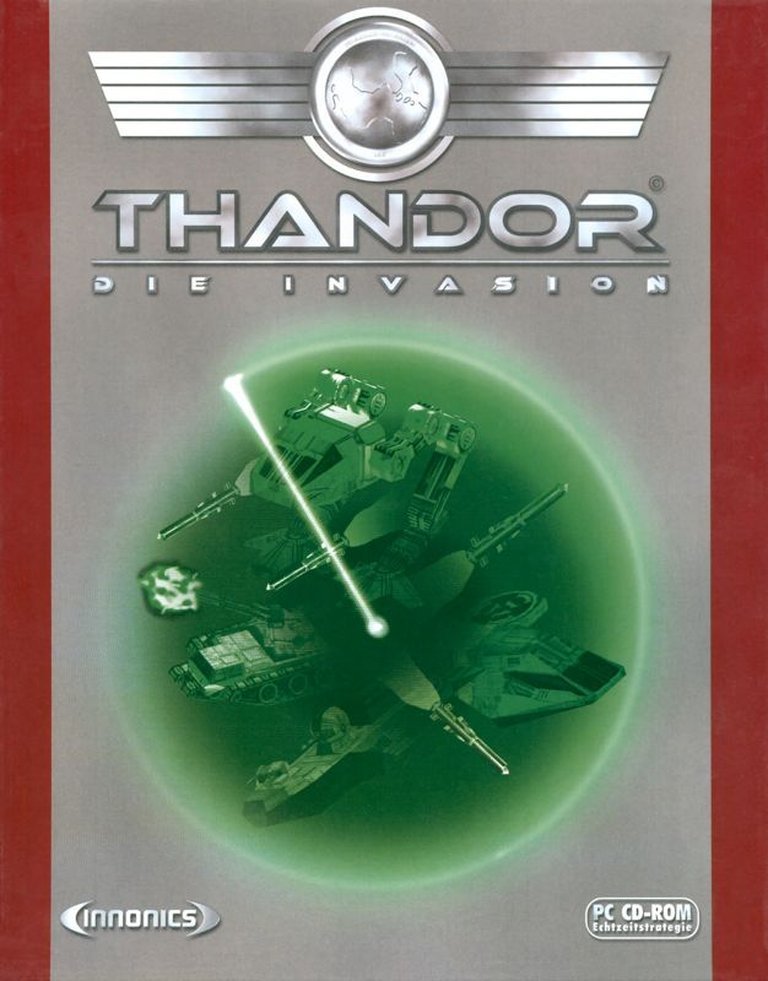
Description
Set in a sci-fi universe following the collapse of the Alliance of Averes, ‘Thandor: The Invasion’ is a real-time strategy game where players command factions battling for control over resources. Amidst political turmoil after the defeat of the Golraths, loyalists strive to rebuild the Alliance through tactical warfare, base-building, and unit management. The game features 3D environments, multiplayer options, and dynamic battles across futuristic landscapes.
Gameplay Videos
Thandor: The Invasion Cracks & Fixes
Thandor: The Invasion Reviews & Reception
gamepressure.com (74/100): A classic RTS with realistic 3D graphics and a destructive terrain where we have to defeat the Gloraths with all types of land, air and sea craft.
metacritic.com (53/100): Not even worthy of the bargain bin, Thandor: The Invasion is better left on the shelf.
en.wikipedia.org (53/100): It was met with negative reception. The graphics was measured as good, but resource-consuming. Many complaints caused by units behavioral model.
ign.com (48/100): It tries to deliver but this RTS adventure falls short in many ways.
mobygames.com (69/100): Thandor is a 3D RTS game where you build units and battle other factions for control of resources (to build more units).
Thandor: The Invasion Cheats & Codes
PC
Press [Enter], type Oh grosser Thomas, erlöse mich!, and press [Enter] again to enable cheat mode. Then, enter one of the following codes.
| Code | Effect |
|---|---|
| [Shift] + [Alt] + V | Full map |
| [Shift] + [Alt] + Z | Fast building |
| [Shift] + [Alt] + E | 1000 energy |
| [Shift] + [Alt] + X | 1000 Xenit |
Thandor: The Invasion: Review
In the annals of real-time strategy (RTS) games, few titles have managed to capture the essence of sci-fi warfare quite like Thandor: The Invasion. Released in 2000, this game was a bold attempt by Innonics and Planet4 to carve out a niche in a genre dominated by giants like Command & Conquer and StarCraft. Despite its ambitious goals and impressive visuals, Thandor: The Invasion remains a largely overlooked gem, overshadowed by its contemporaries. This review aims to delve deep into the game’s development history, narrative, gameplay mechanics, world-building, and its enduring legacy.
Introduction
Thandor: The Invasion is a 3D real-time strategy game set in a futuristic sci-fi universe. Developed by Innonics and published by JoWooD Productions, the game was released on December 1, 2000. The premise revolves around the re-establishment of the destroyed Alliance of Averes, using a variety of weapon systems on the ground, in the air, and at sea. Players must unite the forces of the alliance to drive back the Golraths, the eternal enemy, and restore order to the galaxy.
The game’s legacy is one of missed opportunities and unfulfilled potential. Despite its innovative mechanics and stunning visuals, Thandor: The Invasion failed to make a significant impact on the RTS genre. This review will explore the reasons behind its failure and assess its place in the history of video games.
Development History & Context
The Studio
Innonics GmbH, the primary developer of Thandor: The Invasion, was a relatively unknown studio at the time of the game’s release. Founded in Germany, Innonics had a small but dedicated team of developers who were passionate about creating a unique RTS experience. The studio’s vision was to blend cutting-edge 3D graphics with deep strategic gameplay, setting Thandor apart from its competitors.
The Creators’ Vision
The creators of Thandor: The Invasion envisioned a game that would push the boundaries of the RTS genre. They aimed to create a visually stunning and strategically complex game that would appeal to both casual and hardcore gamers. The game’s development began in 1996 as a 2D RTS, but by fall 1997, the team realized that the market was saturated with similar titles. In response, they decided to re-design the game from scratch with a 3D engine, hoping to stand out in a crowded field.
Technological Constraints
The early 2000s were a time of rapid technological advancement in the gaming industry. The transition from 2D to 3D graphics was in full swing, and developers were experimenting with new ways to leverage the power of modern hardware. Thandor: The Invasion was one of the first RTS games to fully embrace 3D graphics, but this came at a cost. The game’s resource-intensive visuals made it difficult to run on the hardware of the time, leading to performance issues and a less-than-optimal gaming experience for many players.
The Gaming Landscape
The RTS genre was in its heyday in the late 1990s and early 2000s. Games like StarCraft, Command & Conquer: Red Alert, and Age of Empires were dominating the market, setting high standards for gameplay mechanics, visuals, and storytelling. In this competitive landscape, Thandor: The Invasion struggled to find its footing. Despite its innovative features, the game failed to capture the imagination of gamers, who were already spoiled by the likes of StarCraft and Command & Conquer.
Narrative & Thematic Deep Dive
Plot
The story of Thandor: The Invasion is set in a distant future where the Alliance of Averes has been defeated by the Golraths. The alliance, once a united front against the Golraths, has collapsed, and its members have turned against each other. The game follows a group of faithful Alliance soldiers who are determined to restore the alliance and drive back the Golraths.
The plot is relatively straightforward, focusing more on the strategic gameplay than on intricate storytelling. The game’s narrative serves as a backdrop for the player’s actions, providing a context for the battles and alliances that unfold throughout the campaign.
Characters
Thandor: The Invasion features a cast of characters that are typical of the sci-fi genre. The Alliance soldiers are depicted as brave and determined, while the Golraths are portrayed as ruthless and cunning. The game’s characters are not particularly well-developed, serving more as archetypes than as fully realized individuals. This lack of depth in character development is one of the game’s weaknesses, as it fails to engage players on an emotional level.
Dialogue
The dialogue in Thandor: The Invasion is serviceable but unremarkable. The game’s voice acting is competent, but the script lacks the wit and charm that characterize some of the best RTS games. The dialogue serves primarily to convey information and advance the plot, rather than to create memorable moments or characters.
Themes
The game’s primary themes revolve around unity, sacrifice, and the struggle against overwhelming odds. The Alliance soldiers are depicted as fighting for a noble cause, even in the face of adversity. The game’s themes are universal and timeless, resonating with players who appreciate stories of heroism and perseverance.
Gameplay Mechanics & Systems
Core Gameplay Loops
Thandor: The Invasion follows the standard RTS formula, with players tasked with gathering resources, building structures, and training units to defeat their enemies. The game’s core gameplay loop is familiar to fans of the genre, but it includes several unique twists that set it apart from its competitors.
One of the game’s standout features is its modular unit design. Players can customize their units by equipping them with different weapons and abilities, allowing for a high degree of tactical flexibility. This system adds depth to the gameplay, encouraging players to experiment with different unit combinations and strategies.
Combat
Combat in Thandor: The Invasion is fast-paced and engaging, with a variety of units and weapons at the player’s disposal. The game’s 3D graphics allow for dynamic and visually impressive battles, with units moving fluidly across the battlefield. The combat system is well-balanced, with each unit having its strengths and weaknesses, encouraging players to think strategically about their unit compositions and tactics.
Character Progression
The game’s character progression system is relatively simple, with players earning experience points and leveling up their units as they defeat enemies. This system provides a sense of progression and reward, but it lacks the depth and complexity of some other RTS games. The character progression system is more of an afterthought than a core mechanic, serving primarily to pad out the gameplay.
UI
The user interface in Thandor: The Invasion is functional but uninspired. The game’s menus and HUD are easy to navigate, but they lack the polish and elegance of some other RTS games. The UI is serviceable, but it fails to stand out or impress, blending into the background of the gameplay experience.
Innovative or Flawed Systems
One of the game’s most innovative features is its cooperative multiplayer mode. Players can team up with friends to tackle the game’s missions, adding a social dimension to the gameplay. This mode is a highlight of the game, encouraging players to work together and strategize as a team.
However, the game is not without its flaws. The AI is notoriously difficult, often overwhelming players with its relentless attacks and superior tactics. This can make the game frustrating for new players, who may struggle to keep up with the AI’s onslaught. Additionally, the game’s performance issues can detract from the overall experience, with lag and stuttering common on lower-end hardware.
World-Building, Art & Sound
Setting
The game’s setting is a futuristic sci-fi universe, filled with alien landscapes and advanced technology. The world of Thandor: The Invasion is vast and diverse, with a variety of environments to explore, from lush forests to barren deserts. The game’s setting is one of its strongest assets, providing a rich and immersive backdrop for the gameplay.
Atmosphere
The game’s atmosphere is dark and foreboding, reflecting the desperate struggle of the Alliance soldiers against the Golraths. The game’s visuals and sound design work together to create a sense of tension and urgency, drawing players into the game’s world and making them feel like they are part of the action.
Visual Direction
The game’s visual direction is impressive, with detailed 3D models and textures that bring the game’s world to life. The game’s graphics are a testament to the developers’ ambition, pushing the boundaries of what was possible in the early 2000s. However, the game’s visuals are also its Achilles’ heel, with performance issues and resource-intensive requirements that can detract from the overall experience.
Sound Design
The sound design in Thandor: The Invasion is top-notch, with a powerful and immersive soundtrack that complements the game’s visuals. The game’s sound effects are realistic and impactful, adding to the sense of immersion and making the battles feel more intense. The voice acting is competent, but the script lacks the depth and complexity that characterize some of the best RTS games.
Reception & Legacy
Critical and Commercial Reception
Thandor: The Invasion received mixed reviews upon its release, with critics praising its visuals and sound design but criticizing its gameplay mechanics and performance issues. The game’s average critic score was 69%, indicating a lukewarm reception from the gaming press. Players were similarly divided, with an average score of 3.3 out of 5 based on 5 ratings.
The game’s commercial performance was also underwhelming, failing to make a significant impact on the market. Despite its innovative features and impressive visuals, Thandor: The Invasion was overshadowed by its competitors and failed to capture the imagination of gamers.
Influence on Subsequent Games and the Industry
Despite its lackluster reception, Thandor: The Invasion has had a lasting influence on the RTS genre. The game’s modular unit design and cooperative multiplayer mode were innovative features that have since been adopted by other games in the genre. The game’s visuals and sound design also set a high standard for future RTS games, pushing the boundaries of what was possible in the early 2000s.
The game’s legacy is one of unfulfilled potential, a testament to the challenges of breaking into a crowded and competitive market. Thandor: The Invasion may not have achieved the success it deserved, but it remains a fascinating and influential title in the history of RTS games.
Conclusion
Thandor: The Invasion is a game of missed opportunities and unfulfilled potential. Despite its innovative features and impressive visuals, the game failed to make a significant impact on the RTS genre. The game’s legacy is one of unfulfilled potential, a testament to the challenges of breaking into a crowded and competitive market.
In conclusion, Thandor: The Invasion is a game that deserves to be remembered and appreciated for its contributions to the RTS genre. Its innovative mechanics, stunning visuals, and immersive sound design make it a standout title in the history of video games. Despite its flaws, the game remains a testament to the ambition and creativity of its developers, and a reminder of the challenges and rewards of game development.