
- Release Year: 2012
- Platforms: Windows, Xbox 360
- Publisher: GZ Storm
- Developer: GZ Storm
- Genre: Adventure
- Perspective: 1st-person
- Game Mode: Single-player
- Gameplay: Exploration
- Setting: Horror
- Average Score: 86/100
Description
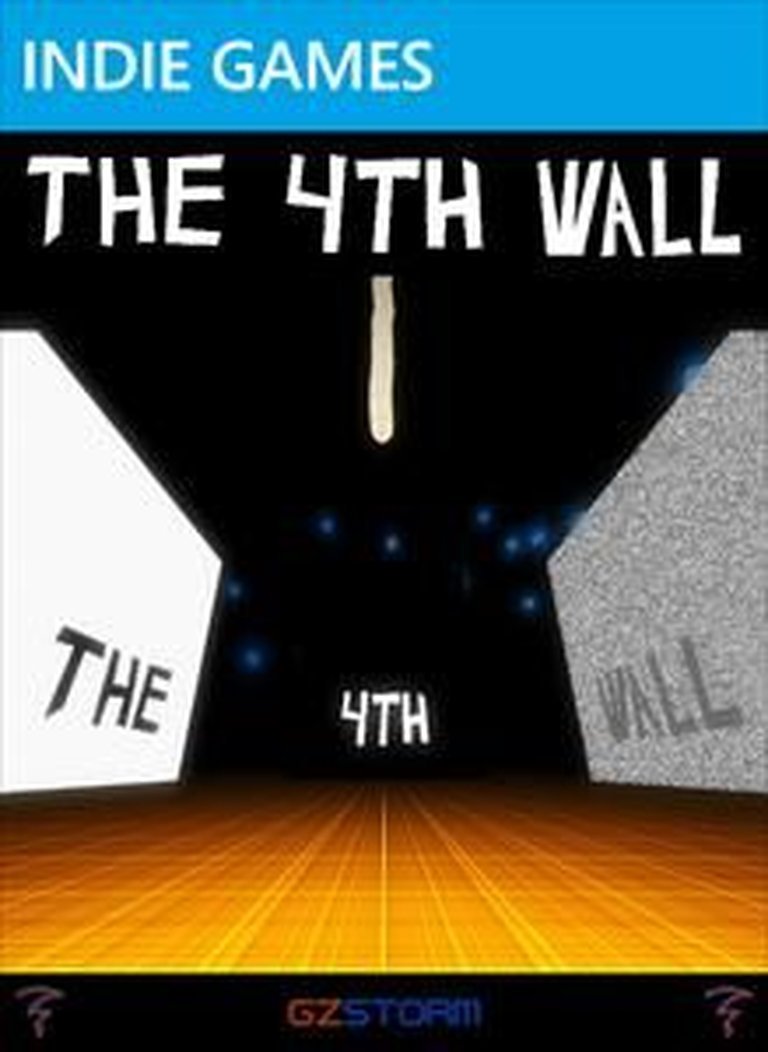
The 4th Wall is a first-person horror adventure game set in confined, small to medium-sized areas where players walk around searching for triggers to advance to the next scene, encountering chilling events such as stumbling through darkness while observed by floating eyeballs.
Gameplay Videos
Where to Buy The 4th Wall
PC
The 4th Wall Free Download
PC
The 4th Wall: Review
Introduction
Imagine a game where the very act of exploration shatters the illusion of safety, turning every shadow into a watchful eye and every corner into a potential revelation of cosmic dread. Released in 2012 amid the dawn of indie horror’s golden age, The 4th Wall by solo developer Jesse Ceranowicz under GZ Storm stands as a haunting artifact of minimalist terror. In an era dominated by sprawling blockbusters like Skyrim and the rise of accessible digital distribution via Xbox Live Arcade, this unassuming first-person adventure dared to strip horror to its bones: confined spaces, inevitable encounters, and an unrelenting sense of being observed. Its legacy lies not in commercial triumph but in pioneering the “walking simulator” subgenre with overt psychological dread, influencing later titles like P.T. and Layers of Fear by emphasizing absence over excess. Thesis: The 4th Wall is a seminal, if overlooked, masterclass in atmospheric horror, proving that technological limitations can birth profound unease, cementing its place as a foundational indie experiment in meta-fear and voyeuristic paranoia.
Development History & Context
GZ Storm, a one-person studio helmed by Jesse Ceranowicz (credited simply as “Game” on MobyGames), birthed The 4th Wall in 2012 against the backdrop of Xbox 360’s Indie Games channel—a democratizing force for creators unbound by AAA budgets. Ceranowicz’s vision was audaciously simple: eschew complex mechanics for pure experiential horror, leveraging the era’s constraints like limited processing power and download-only distribution (no physical media). Technological hurdles of the time—low-poly models, basic lighting, and confined level designs—weren’t flaws but features, forcing players into claustrophobic intimacy with terror.
The gaming landscape circa 2012 was bifurcated: multiplayer juggernauts (Call of Duty: Black Ops II) and narrative-driven indies (Journey, Fez) dominated, but horror was resurging post-Dead Space and Amnesia. The 4th Wall slotted into Xbox Live Arcade’s digital ecosystem (also Windows), arriving August 9 alongside free-to-play experiments. With just 13 credits—including freesound.org SFX from users like FreqMan and klankbeeld, plus a special thanks to YouTuber G.N. (azuritereaction)—it embodied bootstrapped indie ethos. Ceranowicz’s gzstorm.com roots suggest a personal passion project, unmarred by publisher meddling, amid a scene hungry for bite-sized scares amid economic recession-fueled microtransaction booms.
Narrative & Thematic Deep Dive
The 4th Wall‘s plot is less a linear tale than an escalating descent into perceptual unraveling, unfolding across small-to-medium confined areas where players stumble through triggers to advance. No overt protagonists or dialogue exist; the “narrative” emerges via environmental storytelling and horror vignettes—like navigating pitch-black voids pursued by disembodied eyeballs, evoking eternal surveillance. This meta-title nods to shattering immersion: players feel watched, mirroring the game’s eyeballs, blurring game/reality boundaries in a pre-Doki Doki Literature Club vein.
Characters are absent as fleshed entities; the player-proxy embodies anonymous vulnerability, heightening isolation. “Events” serve as spectral antagonists—lurking presences that defy interaction, amplifying helplessness. Dialogue? None, save implied whispers in darkness, forcing introspection.
Themes delve into voyeurism and existential paranoia. Confined spaces symbolize psychological prisons, eyeballs a panopticon of judgment (echoing Foucault amid 2012’s NSA leaks). Breaking the “4th wall” manifests subtly: progression feels scripted, inescapable, questioning player agency. Horror narrative roots (MobyGames tag) draw from Lovecraftian cosmicism—unknowable observers in voids—interwoven with postmodern self-awareness. Exhaustive analysis reveals layered dread: small areas (visible end-to-end) mock exploration’s futility; medium ones (1-minute traverses) build anticipatory tension. Culminating in unrelenting observation, it indicts gaming’s spectator culture, predating I’m on Observation Duty.
Gameplay Mechanics & Systems
Core loop is deceptively primitive: traverse confined zones, locate invisible triggers for scene transitions, endure horror events. No combat, inventory, or branching paths—pure spatial puzzle via trial-and-error navigation. Areas scale from tiny (opposite-end visibility) to medium (~1-minute walks), enforcing repetition and frustration as virtues, heightening vulnerability.
Combat? Nonexistent; evasion is illusory, as events (e.g., dark stumbling amid eyes) trigger inevitably. Progression is linear, gated by discovery, with no RPG elements—character “growth” is perceptual acclimation to dread. UI is minimalist: first-person view sans HUD, immersion-maximizing but disorienting in darkness (no flashlight/minimap).
Innovations shine in restraint: horror via anticipation, not jumpscares; confined designs amplify agoraphobia’s inverse (claustrophobia). Flaws? Repetitive triggers feel arbitrary, lacking feedback; Xbox controller lacks nuance for precise navigation. Yet systems synergize flawlessly—technological limits birth tension, predating Everybody’s Gone to the Rapture‘s walks. Controls (WASD/mouse or controller) are standard, but absence of aids (e.g., sprint) enforces dread’s crawl.
World-Building, Art & Sound
Settings are abstract voids—small rooms to minute-traversable expanses—evoking liminal spaces (backrooms precursor). Atmosphere thrives on emptiness: dim lighting casts eternal shadows, eyeballs manifest as glowing orbs, symbolizing intrusion. No overworld; seamless scene-loads maintain immersion.
Visual direction is lo-fi brilliance: low-res textures, basic shaders suit 2012 hardware, enhancing unreality. Horror visuals (eyeballs in dark) pierce minimalism, with confined geometry inducing vertigo. Dynamic events (stumbles) use particle effects sparingly, prioritizing silhouette dread.
Sound design, sourced from Freesound.org (klankbeeld’s ambiences, FreqMan’s effects), is masterful minimalism: distant whispers, echoing footsteps, eyeball “gaze” hums build paranoia. No score; silence amplifies heartbeats/environmental creaks. Collectively, elements forge oppressive voyeurism—art’s sparseness spotlights observation, sound’s voids invite hallucination, elevating experience to sublime unease.
Reception & Legacy
Launch reception was muted: no critic reviews on MobyGames (unrated), commercially obscure (collected by 1 player). Xbox Indie Games’ oversaturation buried it amid 2012’s deluge (Minecraft clones, platformers). Forums yielded scant discourse; Ceranowicz’s solo status limited marketing.
Reputation evolved via archival rediscovery: post-2016 MobyGames entry sparked niche interest among horror historians. Influences abound—minimalism prefigures Firewatch, meta-observation echoes Control. Industry impact: validated walking horrors, aiding Gone Home (2013), Xbox’s indie ecosystem. Today, a cult footnote, emulated in free itch.io clones, underscoring indie’s power sans polish.
Conclusion
The 4th Wall distills horror to essence: confined dread, watchful voids, inescapable progression. Ceranowicz’s solo triumph over 2012 constraints birthed a blueprint for atmospheric indies, flaws (repetition, opacity) notwithstanding. Definitive verdict: Essential historical relic—8/10 for pioneers, niche for masses—securing modest eternity in gaming’s shadowy annals as voyeurism’s vanguard. Rediscover it; feel the eyes.