
- Release Year: 2014
- Platforms: Linux, Macintosh, Windows
- Publisher: Hyper Hippo Productions Ltd.
- Developer: Hyper Hippo Productions Ltd.
- Genre: Puzzle
- Perspective: 1st-person
- Gameplay: Fixed, Flip-screen, Turn-based
Description
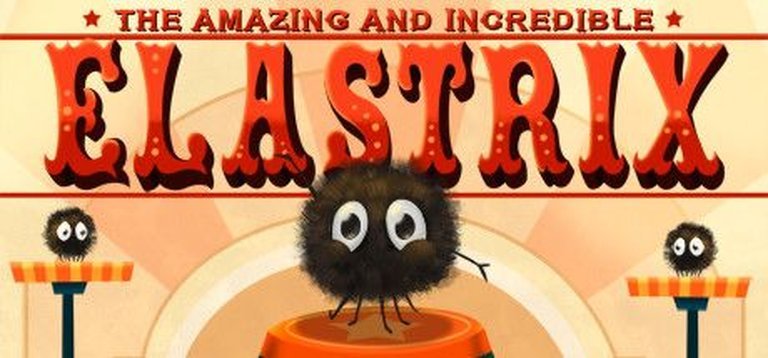
The Amazing and Incredible Elastrix is a turn-based puzzle game that challenges players to stretch elastics onto pegs and bounce Trix creatures to hit targets, with simple rules that evolve into complex scenarios involving challenge gems, zany elastics, moving obstacles, and anti-gravity. Aiming for the ‘Perfect Shot,’ this brain-stretching experience combines first-person, fixed-screen visuals with addictive gameplay that can easily keep players engaged for hours.
The Amazing and Incredible Elastrix Guides & Walkthroughs
The Amazing and Incredible Elastrix: A Microscopic Masterpiece of Puzzle Design
Introduction: The Charm of the Obscure
In the vast, overcrowded ecosystem of digital storefronts, countless games flicker into existence and fade into obscurity, their existence a mere blip on the radar of gaming history. The Amazing and Incredible Elastrix is one such title—a game that, by all commercial metrics, exists in the far periphery of collective consciousness. Yet, to dismiss it as forgettable fluff is to miss a profound and quietly elegant experiment in puzzle game formalism. Released in 2014 by the tiny, enigmatic Hyper Hippo Productions, this game eschews narrative grandeur, graphical spectacle, and genre fusion in favor of a single, exquisitely refined mechanical core. Its thesis is radical in its simplicity: what if a puzzle game’s entire identity were distilled into the physics of a stretched rubber band and the arc of a bouncing creature? This review will argue that Elastrix, despite its minimal footprint, represents a notable—if niche—case study in design purity, leveraging the accessible power of the Unity engine to create a compelling, if brief, cerebral experience. It is a game that understands its own scope and executes it with a confidence that belies its modest budget and near-invisible marketing footprint.
Development History & Context: The Hyper Hippo Experiment
The story of Elastrix is, in many ways, the story of its developer, Hyper Hippo Productions Ltd. (also referenced as Hyper Hippo Games). Information on the studio is scarce, painting the picture of a quintessential micro-indie operation: a handful of creators operating with minimal overhead, likely from a home office in Canada. Their portfolio, as glimpsed through MobyGames and ModDB, is sparse and eclectic—featuring titles like Incredible Express (2010) and Incredible Crisis (a name that seems to echo Elastrix‘s own titling convention) alongside whimsical browser games like The Incredible Fartalot. This suggests a team drawn to accessible, often comedic or absurdist concepts, prioritizing gameplay hooks over cinematic ambition.
Elastrix was released on December 18, 2014, for Windows, with Linux and macOS versions following shortly after. This places it in a fascinating transitional period for indie games. The “Indiepocalypse” rhetoric was beginning to swirl, with hundreds of games flooding Steam daily following the advent of Steam Greenlight (which Hyper Hippo would have navigated). It was also a peak era for the Unity engine’s democratization of development, allowing small teams to deploy polished 3D/2.5D physics simulations across multiple platforms with relative ease. Elastrix is a pure product of this moment: its “Fixed / flip-screen” perspective and 1st-person view are classic Unity asset-store aesthetics, its physics-based core a testament to the engine’s built-in capabilities. The game’s system requirements—512MB RAM, DirectX 9.0, a mere 60MB of storage—speak to its modest technical ambitions and its targeting of a “Casual” and “Family” audience on PC, a platform increasingly hosting both AAA behemoths and these microscopic, browser-like experiences.
The game’s promotional blurb, “Bounce your way to victory!… Oh yes, it’s that kind of game,” reveals a conscious marketing posture: one of self-aware, addictive immediacy. The developers knew they weren’t crafting an epic; they were offering a cerebral snack. The post-launch community discussion on Steam, initiated by the developer themselves, hints at a small but engaged team genuinely interested in player feedback. Their musings on a “Trixball” Plinko-like mode and a “Four Elements” level pack with thematic hazards (fire, water, etc.) suggest a creative well that was unfortunately never fully tapped, likely due to the realities of low sales and small team resources.
Narrative & Thematic Deep Dive: The Circus of Pure Mechanics
To discuss the “narrative” of Elastrix is to discuss the narrative of its mechanics, for a traditional plot is absent. There is no protagonist backstory, no villainous antagonist, no unfolding drama. Instead, the game presents a diegetic premise so thin it is almost transparent: the player is guiding “little Trix creatures” (the game’s sole entities) to become “the greatest circus attraction the world has ever seen.” This is not a story but a scenario, a thematic veneer justifying a physics playground. The “targets” are the literal and figurative goals of this circus act.
Within this vacuum, profound thematic undercurrents emerge from the gameplay itself:
* The Elegance of Cause and Effect: The game is a pure manifestation of Newtonian physics made playful. Each elastic stretched between pegs is a hypothesis; each bouncing Trix is an experiment. The narrative is written in parabolic arcs and collision events. The “quest for the Perfect Shot” mentioned in the blurb transforms the player from a mere puzzle-solver into an auteur of motion, seeking a single, elegant solution that satisfies multiple conditions (hitting the target, collecting gems).
* Mastery Through Constraint: The circus theme subtly reinforces a classic performance motif: mastery is demonstrated within a constrained, defined space—the ring, the stage, the puzzle board. The player’s skill is showcased not through flashy combos, but through precise, controlled application of a limited toolset (the elastics).
* The Illusion of Simplicity: The central irony, and deep theme, is the gap between the “simple rules” and the “brain-stretching” complexity. The narrative journey is the player’s own cognitive journey from overconfidence (“I’ll just put a band here”) to humbled experimentation (“Why is it bouncing that way?”) to eventual, hard-won understanding. The game tells the story of its own difficulty curve.
* Absurdist Whimsy as Aesthetic: References to “zany kinds of elastics” and the creatures’ name, “Trix,” infuse the sterile physics simulation with a layer of cartoonish absurdity. This aligns with Hyper Hippo’s other titles and makes the abstract puzzle feel like a quirky carnival game. The tone is never serious, always inviting a playful, experimental mindset.
Gameplay Mechanics & Systems: The Architecture of a Bounce
Elastrix‘s genius is not in adding layers but in extracting maximum depth from a single, brilliant core interaction. The systems are a masterclass in lean design.
Core Gameplay Loop: The loop is immediate and taut.
1. Assessment: Survey the static (or moving) puzzle board. Identify the start position of the Trix, the location of the target, and the positions of pegs.
2. Planning & Execution: In a first-person “fixed / flip-screen” view (likely meaning the board is seen from a consistent, slightly angled perspective), the player clicks on a starting peg and drags to a destination peg to “stretch an elastic.” This creates a linear band, defined by its anchor points.
3. Simulation: Upon releasing the mouse (or confirming the placement), the Trix is launched. It travels in a straight line until it strikes the first elastic, at which point physics take over: it bounces off at an angle determined by the band’s tension and the point of impact. The Trix may then strike another elastic, more pegs, or obstacles, in a chain reaction culminating in either hitting the target (success), falling off the board (failure), or hitting an obstacle (failure/hindrance).
4. Iteration: The player observes the outcome, recalibrates their mental model of the board’s physics, and tries again. The “turn-based” pacing, as listed on MobyGames, is not in the traditional RPG sense but refers to this discrete, step-by-step trial-and-error process: one shot, one outcome, one opportunity to analyze.
Supporting Systems & Innovations:
* Challenge Gems & The “Perfect Shot”: This is the key to the game’s longevity and depth. Most levels place one or more gems in tricky locations. The true challenge is not merely to hit the target, but to collect all gems in a single shot—the “Perfect Shot.” This transforms a simple A-to-B puzzle into a multi-objective optimization problem, demanding extreme precision and creative use of the board’s geometry.
* Elastic Variants & “Zany” Mechanics: The blurb teases “new zany kinds of elastics.” While the source material doesn’t specify, guide references (like “Gravity chapter”) and developer plans (“anti-gravity”) confirm systematic evolution. Levels introduce moving obstacles that patrol the board, requiring timing. The “anti-gravity” and “Four Elements” concepts mentioned by the developer point to environmental modifiers that change the Trix’s bounce behavior or introduce hazards (e.g., fire destroying the Trix, ice blocks to shatter). This creates a curriculum of mechanics, teaching the player new physical rules level by level.
* Multiple Solutions: A hallmark of great puzzle design. The game doesn’t enforce a single path. A skilled player might find a direct, risky shot or a safer, multi-bounce route. This encourages replayability and player-authored solutions, a point praised in user philosophy.
* UI & Feedback: Given the minimal description, the UI is presumably sparse and functional: a clear board view, peg highlights on hover, and immediate, satisfying feedback upon the Trix’s bounce and collision. The lack of cluttered menus or stats screens serves the game’s meditative, focused ethos.
Flaws: The constraints are also its limitations. The fixed perspective can sometimes obscure depth or peg alignment, a common issue in 2.5D puzzle games. The turn-based, “try-try-again” loop, while intellectually pure, can frustrate players seeking more real-time dynamics. The small level count (30-60, sources vary) and the apparent truncation of planned content (Trixball mode, element packs) leave the experience feeling like a fantastic prototype that never received its full sequel.
World-Building, Art & Sound: The Atmosphere of the Arena
The game’s “world” is the puzzle board itself. The circus theme is an atmospheric suggestion rather than a fully realized setting. From the limited evidence (the “circus attraction” goal, the whimsical “Trix” name), we can infer a visual style that is:
- Abstract & Colorful: The ModDB tags “Abstract” and “Family” are telling. The board is likely a clean, brightly colored plane with clearly distinguishable pegs, obstacles, and targets. The Trix are probably simple, cute geometric shapes or blob-like creatures with expressive animations (jumping, spinning on impact). There is no attempt at realism; the art serves readability first, whimsy second.
- Functional Visual Design: The “Fixed / flip-screen” perspective is a deliberate design choice. It fixes the player’s viewpoint, ensuring that the 2D plane of interaction is always clear. It eliminates camera control as a variable, focusing all cognitive load on the physics puzzle itself. This is a world seen as a chessboard is seen—from above, unchanging, where every element has a fixed, knowable position (until it moves, as per level design).
- Sound Design: The source material is silent on audio, which is telling. In a game this focused on physics and timing, sound is likely functional and supportive: a twang for elastic stretching, a boing or thwap for impacts, a cheerful chime for collecting a gem, a triumphant fanfare for completing a level. It would be unobtrusive, providing audio feedback that complements the visual feedback without ever demanding attention. The tone would match the “family” and “circus” aesthetic—upbeat, perhaps slightly卡通ish.
Together, these elements create not a “world” in the RPG sense, but a psychic arena. The player’s entire immersion is in the spatial and physical logic of the board. The minimalist aesthetic is a virtue, preventing any distraction from the central act of problem-solving.
Reception & Legacy: The Quiet Triumph of the Niche
By any mainstream measure, Elastrix was a whisper. It has no critic reviews aggregated on Metacritic (the API shows null scores). Its MobyGames entry lists it as “Collected By” only 2 players—a staggering statistic that underscores its obscurity. Yet, within its tiny user base on Steam, it has achieved a remarkable 88% positive rating from 26 reviews.
This reception tells a clear story: those who sought it out and played it largely got it. They understood and appreciated its design purity. Steam community guides exist for achievements and perfect walkthroughs, indicating a dedicated subset of players who engaged deeply with its “Perfect Shot” challenge. The developer’s own forum posts show an attentive, small-scale post-launch support cycle, discussing controller ideas and future content plans that never materialized, likely due to the commercial realities of such a niche product.
Its legacy is therefore one of cult significance and design study. It does not appear to have directly influenced major titles. However, it sits comfortably in the lineage of physics-based puzzle games:
* The Incredible Machine (1992): The classic series of building Rube Goldberg machines shares Elastrix‘s love of cause-and-effect chains, though Elastrix is far more focused and constrained.
* Contemporary Indie Puzzle Scene (2014): Released the same year as the minimalist giant Threes! and during the heyday of games like The Bridge and Antichamber, Elastrix represents a strand of puzzle design that prioritizes a single, perfectly-executed mechanical idea over complex systems or narrative integration. It is a cousin to games like World of Goo (physics) and Blek (stroke-based physics), but with a board-game-like, turn-based deliberation.
Its true legacy may be as a preserved artifact of indie purity—a game made with no visible compromise, for an audience of perhaps a few hundred, that nevertheless stands as a perfectly functional and enjoyable experience. It demonstrates that a compelling game can be built on a mechanic as specific as “bouncing a ball off a stretched line,” provided that mechanic is explored with intelligence and care.
Conclusion: A Perfect Shot in the Dark
The Amazing and Incredible Elastrix is not a lost masterpiece that shook the foundations of the industry. It did not sell millions, spawn sequels, or win awards. Its life was a quiet one, played by a handful of curious puzzle aficionados who stumbled upon its Steam page. And yet, within its narrow confines, it achieves something admirable: a flawless execution of a single, elegant idea. It is a game of pure, distilled puzzlecraft, where the only narrative is the arc of a Trix through space, and the only emotion is the crisp satisfaction of a perfect, gem-collecting bounce.
In the grand canon, it is a footnote. But as a testament to the power of constraint, the accessibility of the Unity engine, and the enduring appeal of physics-based cognition, it is a footnote worth preserving. It asks nothing of the player except to think, to experiment, and to marvel at the simple beauty of a well-thrown rubber band. For that, it earns its “Amazing and Incredible” moniker not through scale, but through the absolute integrity of its design. It is, in the end, that kind of game.