
- Release Year: 2012
- Platforms: Linux, Macintosh, Windows
- Genre: Action, Compilation
- Perspective: Diagonal-down
- Game Mode: Single-player
- Gameplay: Roguelike, Shooter
- Average Score: 89/100
Description
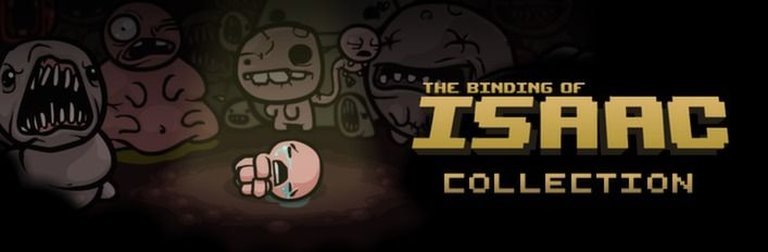
The Binding of Isaac Collection compiles the original 2011 roguelike action-adventure game and its expansion, Wrath of the Lamb, into one package. Inspired by the Biblical story, it follows Isaac as he flees into his monster-filled basement after his mother receives a divine command to sacrifice him. Players control Isaac or unlockable characters through procedurally generated dungeons, engaging in real-time combat, collecting power-ups, and battling bosses to survive.
The Binding of Isaac Collection Mods
The Binding of Isaac Collection Guides & Walkthroughs
The Binding of Isaac Collection Reviews & Reception
metacritic.com (84/100): The Binding of Isaac is a loony action/adventure game with a Kawai Gore atmosphere, random challenges and a varied gameplay. Thanks to the talent of the developers, the formula works perfectly well and draws you back in easily to slaughter some more, or see the poor Isaac being bludgeoned violently.
The Binding of Isaac Collection: Review
Introduction
In the annals of video game history, few titles embody the spirit of experimental, risk-taking indie development quite like The Binding of Isaac Collection. Born from a week-long game jam and fueled by creator Edmund McMillen’s complex relationship with religion, this roguelike dungeon crawler transcends its humble Flash origins to become a landmark achievement in procedural generation, thematic depth, and addictive gameplay. More than a decade after its initial release, the collection—compiling the base game and its groundbreaking Wrath of the Lamb expansion—remains a testament to the power of constraint, creativity, and catharsis. This review dissects how a pixelated tale of a naked boy fleeing his fanatical mother birthed a genre-defining phenomenon, blending punishing mechanics with haunting symbolism to create an experience that is as intellectually resonant as it is viscerally thrilling.
Development History & Context
The Binding of Isaac emerged from a unique convergence of creative freedom and technological limitation. Following the critical and commercial success of Super Meat Boy (2010), McMillen and co-developer Florian Himsl—Team Meat’s technical backbone—saw an opportunity to pursue a passion project without financial pressure. McMillen, inspired by Shigeru Miyamoto’s dungeon design in The Legend of Zelda and the procedural generation in games like Spelunky, proposed a roguelike hybrid during a week-long game jam while his partner Tommy Refenes was on vacation. The result was a functional prototype built in Adobe Flash’s ActionScript 2, a tool chosen for its accessibility and Valve’s laissez-faire approach to Steam distribution.
The 2011 gaming landscape was ripe for such an experiment. The indie boom, fueled by digital storefronts like Steam, was challenging AAA dominance, while roguelikes were gaining traction among hardcore players. McMillen’s vision was twofold: fuse Zelda’s dungeon-crawl structure with his own conflicted religious upbringing. As a child torn between Catholicism and born-again Christianity in his family, he channeled the duality of faith—its capacity for both inspiration and oppression—into the game’s narrative. The Flash engine, however, proved a double-edged sword. It enabled rapid prototyping and free post-launch updates but imposed crippling constraints: performance issues, lack of controller support, and an inability to scale beyond Wrath of the Lamb’s expansion without compromising stability. These limitations would later necessitate a complete remake, Rebirth (2014), but for the original Collection, they birthed a scrappy, innovative gem.
Nintendo’s infamous rejection of a planned 3DS port—citing “questionable religious content”—further contextualized the game’s boldness. The controversy, sparked by Germany’s 16+ rating for blasphemy, underscored Isaac’s subversive edge. Yet McMillen leveraged the ordeal as a rallying cry for creative freedom, praising Steam’s openness and turning the publicity into a sales catalyst. The Collection thus stands as a relic of a more anarchic indie era, where passion projects could flourish without corporate oversight.
Narrative & Thematic Deep Dive
At its core, The Binding of Isaac reimagines the biblical Akedah (Binding of Isaac) as a harrowing metaphor for childhood trauma and religious extremism. The game’s plot unfolds in grim vignettes: Isaac’s mother, spurred by a divine voice, strips him of toys, drawings, and clothing before attempting to sacrifice him with a butcher’s knife. Isaac’s escape into a monster-filled basement becomes the literalization of his psyche—a chaotic underworld populated by his fears, repressions, and twisted fantasies.
The narrative’s power lies in its ambiguity and symbolism. Isaac’s journey through procedurally generated floors (Cellar, Caves, Depths, Womb) mirrors a descent into psychological hell. Bosses like Mom, Satan, and The Isaac represent manifestations of maternal guilt, demonic temptation, and self-destructive impulses. McMillen intentionally withholds clarity, offering 13 cryptic endings across the Collection that reward exploration but resist definitive interpretation. The final three endings, in particular, suggest Isaac’s death in a toy chest—a fate hinted at by the game’s lore and later confirmed in Repentance. This bleak conclusion frames the entire game as a dying boy’s fever dream, where the basement is a purgatorial space for reconciling life’s injustices.
Themes permeate every layer. Religion is explored not as doctrine but as a tool of control: the mother’s devotion curdles into fanaticism, while Isaac’s tears—his only weapon—become a warped sacrament. Items like The Bible, Holy Mantle, and Number of the Beast satirize hypocrisy and dogma. Meanwhile, the game’s grotesque imagery (gaping wombs, fecal bosses, decaying angels) serves as a catharsis for McMillen’s childhood shame. As one fan theory posits, the basement is Isaac’s imagination—a realm where trauma is externalized and battled. The dialogue, sparse yet potent (Isaac’s crying thoughts on early floors), reinforces the isolation and desperation of a child abandoned by both faith and family.
Gameplay Mechanics & Systems
The Binding of Isaac’s genius lies in its synthesis of genres. It merges the real-time combat of twin-stick shooters (e.g., Smash TV) with the permadeath and randomness of roguelikes, all filtered through a Zelda-like dungeon framework. Players control Isaac or one of six unlockable characters (e.g., Magdalene, Judas), each with distinct stats (health, damage, speed), through eight procedurally generated basement floors.
Combat revolves around “tears” fired as projectiles, supplemented by bombs and collectible power-ups. The Wrath of the Lamb expansion introduces Trinkets—passive items with quirky effects—and “alternate” floors like Cathedral and Sheol, which replace standard levels with harder enemies and new bosses (e.g., The Fallen). Items are the game’s lifeblood, with over 200 in the Collection offering near-infinite synergy possibilities. Passive items like Technology 2 (firing tears backward) or active ones like Greed’s Gullet (converting coins into health) create emergent moments of brilliance. A run’s success hinges on these discoveries, turning each playthrough into a high-stakes lottery of power.
Progression balances accessibility and depth. The game unlocks characters, items, and secrets upon completing specific goals, encouraging repeated attempts. Yet difficulty is unforgiving; a single mistake can end a run, especially when the randomizer grants underpowered items. This tension—between the joy of discovery and the agony of failure—is the Collection’s addictive core. The UI, though limited by Flash, efficiently displays health (heart containers), currency, and active item charges. Despite occasional bugs (e.g., slowdown from complex item interactions), the systems coalesce into a perfectly looped experience where every death fuels the next attempt.
World-Building, Art & Sound
The basement’s labyrinthine world is a character in itself. Procedurally generated rooms—culled from a library of 200 layouts—create unique layouts each run, with themes like Libraries (books as platforms) or Vaults (treasure-laden challenges). The Wrath of the Lamb expansion adds Crawlspace and Dark Room floors, expanding the world’s melancholic atmosphere. Boss rooms and treasure chambers punctuate the descent, while secrets like Devil Deals (pacts with Satan for items) or Angel Rooms (rewards for piety) reward exploration.
McMillen’s art style is instantly recognizable: a grotesque, cartoonish aesthetic blending childhood innocence with body horror. Isaac’s sprite—a sobbing, nude boy—contrasts with enemies like the multi-eyed Guppy or the phallic Hornet, evoking both sympathy and revulsion. The environments shift from mundane basements to fleshy Wombs, symbolizing Isaac’s psychological unraveling. Color palettes grow increasingly drab and oppressive as players descend, mirroring the narrative’s bleakness.
Danny Baranowsky’s soundtrack amplifies this unease. Tracks like Oh Crap and Boss Theme 1 fuse choral arrangements with distorted synths, creating a dichotomy of sacred and profane. Baranowsky’s music adapts to rooms—upbeat jingles for shops, ominous drones for boss fights—ensuring auditory fatigue never sets in. The sound design, from Isaac’s guttural cries to enemy squelches, reinforces the tactile, visceral combat. Together, art and sound transform the basement into a liminal space where trauma becomes tangible.
Reception & Legacy
The Binding of Isaac defied McMillen’s modest expectations of a few hundred sales. By November 2012, it had sold over a million copies, buoyed by Let’s Play videos and word-of-mouth. Critics lauded its replayability and design, with Eurogamer calling it “the most accessible exploration of the roguelike idea” and GameSpot praising its focus. Metacritic’s 84/100 reflected near-universal acclaim, though some, like IGN, noted its off-putting crudeness. The Wrath of the Lamb expansion (2012) was hailed as “mega,” adding 70% more content and solidifying the Collection’s value.
Commercially, the Collection became a phenomenon. By 2014, sales surpassed 3 million, and Rebirth’s 2014 remake—addressing Flash’s limitations—pushed the franchise past 5 million units. Culturally, it catalyzed the “roguelite” boom, inspiring titles like FTL: Faster Than Light and Don’t Starve. Its influence extended beyond games: the card game Four Souls (2018) and McMillen’s prequel, The Legend of Bum-bo (2019), expanded the universe. The community’s modding scene, particularly Antibirth (2016), which added alternate paths, was so impactful it was absorbed into Repentance (2021).
Nintendo’s initial ban of the 3DS port remains a cautionary tale of industry conservatism, but the Collection’s legacy endures. It proved that deeply personal, thematically bold games could resonate commercially, paving the way for indie darlings like Hades and Cult of the Lamb. For players, it offered more than entertainment—it provided a space to confront trauma, one tear-soaked run at a time.
Conclusion
The Binding of Isaac Collection is a masterpiece of constrained creativity. What began as a week-long experiment in Flash evolved into a sprawling, haunting saga that redefined roguelike design. Its genius lies in the alchemy of its parts: McMillen’s unflinching exploration of faith and trauma, Himsl’s technical ingenuity, Baranowsky’s evocative score, and a gameplay loop that turns despair into empowerment. The Collection’s flaws—technical limitations, unapologetic difficulty—are overshadowed by its emotional and artistic integrity.
In the pantheon of indie games, The Binding of Isaac stands alongside Braid and Limbo as a title that marries innovative mechanics with profound storytelling. It is not merely a game but a mirror reflecting our own struggles with faith, family, and survival. For those willing to descend into its basement, the rewards are boundless: a testament to resilience, a critique of extremism, and the eternal promise of one more run. In a gaming landscape often criticized for homogeny, the Collection remains a defiantly unique, unforgettable journey.