
- Release Year: 2011
- Platforms: Windows
- Publisher: Crimson Cow GmbH
- Genre: Compilation
- Average Score: 87/100
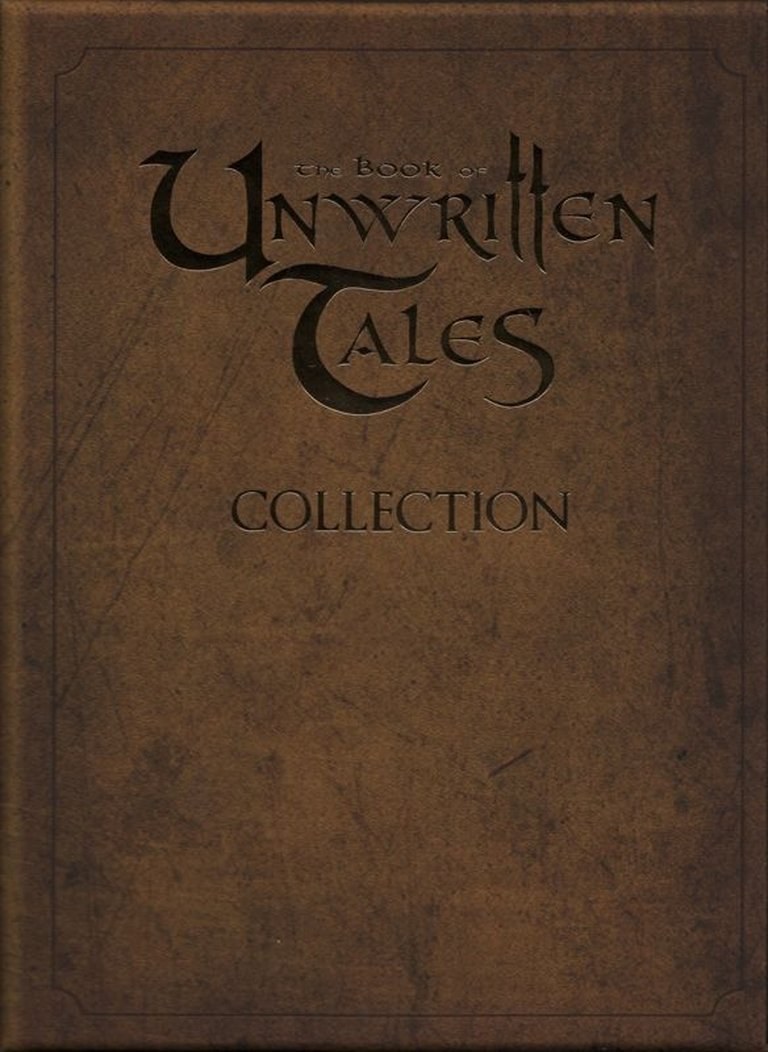
Description
The Book of Unwritten Tales Collection is a special edition compilation that bundles the first two games in King Art Games’ beloved point-and-click adventure series, set in a whimsical fantasy world. Players control multiple characters across over 60 locations, solving puzzles and cooperating to navigate a humorous, heartwarming storyline filled with quirky non-player characters and classic fantasy elements, all enhanced by physical extras like an artbook and soundtrack in a leather-look slipcase.
The Book of Unwritten Tales Collection Reviews & Reception
metacritic.com (82/100): It’s smart, funny, well-crafted and has tons of heart.
ign.com : Unwritten Tales may not revolutionize the genre, but it’s a truly great adventure.
store.steampowered.com (93/100): The Book of Unwritten Tales is a top notch adventure game that any fan of the genre will appreciate.
The Book of Unwritten Tales Collection: Review
Introduction: The Unlikely Hero of a Genre’s Renaissance
In the late 2000s, the point-and-click adventure genre, once dominated by titans like LucasArts and Sierra, lay in a state of quiet dormancy. The golden age hadAuthorized, and while a few indie titles kept the flame alive, a truly substantial, polished, and funny adventure that could stand shoulder-to-shoulder with the classics seemed a distant dream. Into this void stepped a small German studio, King Art Games, with The Book of Unwritten Tales. What began as a domestic German success in 2009, after a painstaking English localization, exploded internationally in 2011-2012 as a critically beloved, cult phenomenon. The Book of Unwritten Tales Collection, bundling the original 2009 masterpiece with its 2011 prequel The Critter Chronicles, represents not just a convenient package, but the consolidation of a franchise that single-handedly proved the genre could thrive with modern production values, sharp writing, and a heartfelt, irreverent love for its own traditions. This review will argue that The Book of Unwritten Tales is a landmark title: a genre-reviving work whose exceptional character writing, inventive puzzle design, and masterful parody of fantasy tropes cement its status as an essential, if occasionally imperfect, classic in the adventure game canon.
Development History & Context: From Browser Games to Breakout Hits
King Art Games, founded in 2000 in Bremen, Germany by Jan Theysen and Marc König, began not as an adventure specialist but as a multimedia agency transitioning into browser games and smaller projects. Their experience included work on Simon the Sorcerer 4 and The Black Mirror 2, but The Book of Unwritten Tales was their first major, self-driven foray into the genre. Development began around 2006, culminating in a German release in April 2009 via publisher HMH Interactive. The studio operated on a modest, indie scale, with the core team expanding to around 30 members by the mid-2010s. They utilized the open-source OGRE (Object-Oriented Graphics Rendering Engine) to create their signature “2.5D” visuals: hand-painted, pre-rendered 2D backgrounds populated by fully 3D character models. A custom adventure game engine was built in 2008 specifically for the project’s ambitious scope.
The technological constraints of the era (targeting Windows XP/Vista, DirectX 9) shaped a stylized, non-photorealistic aesthetic that emphasized charm and clarity over raw graphical fidelity. The game’s 6GB footprint was substantial for its time, dedicated to high-resolution backgrounds, detailed character rigs, and a full orchestral soundtrack. A crucial, often underestimated challenge was localization. The original German script, dense with European humor and specific references, required a delicate translation for international audiences. The English version, published by The Adventure Company (NA/EU) and later THQ Nordic, featured a full re-recording of voice acting and script adjustments to preserve the joke density without losing cultural resonance—a process that contributed to the game’s delayed Western launch until 2011.
The gaming landscape of 2009-2011 was post-Telltale boom but pre-Telltale formula fatigue. Adventure games were niche. The Book of Unwritten Tales arrived as a “traditional” point-and-click with a modern sheen, directly competing with titles like Machinarium and the early Telltale seasons. Its success demonstrated there was still a hungry audience for lengthy, story-driven, humor-focused adventures, paving the way for its own sequels and influencing a small wave of European adventure productions.
Narrative & Thematic Deep Dive: A Masterclass in Meta-Humor and Heart
Set in the war-torn fantasy realm of Aventasia, the narrative of The Book of Unwritten Tales is both a loving homage to and a sharp deconstruction of high fantasy and RPG tropes. The central conflict is the protracted war between the Alliance (humans, elves, dwarves, gnomes) and the Army of the Shadows (orcs, trolls, goblins) led by the witch Mortroga, “Mother.” The catalyst is the discovery of the Artefact of Divine Fate (the eponymous “MacGuffin”) by the elderly gremlin archaeologist Mortimer MacGuffin, a wish-granting relic capable of deciding the war’s outcome.
The story is a masterclass in ensemble character writing and narrative subversion. The four protagonists are deliberate archetypes meticulously crafted to exceed their stereotypes:
* Wilbur Weathervane: The timid, geeky gnome kitchen hand. His journey from anxious novice to resourceful hero anchors the game’s emotional core. His Welsh-accented voice acting (in the English version) is frequently singled out for its charm and humor.
* Ivodora “Ivo” Eleanora Clarissa: The strong-willed, pragmatic wood elf princess. She defies the “elven aloofness” trope, providing grounded exasperation and fierce loyalty. Some critiques note her occasional “whininess,” but her arc revolves around rejecting royal passivity.
* Nathaniel “Nate” Bonnet: The boastful, roguish human sky pirate. He embodies the “charming rogue” but is consistently undercut by pratfalls and the dry wit of his companion, serving as a parody of swashbuckling heroes.
* Critter: Nate’s mysterious, shape-shifting, sarcastic furry companion. Critter is the game’s secret weapon—a walking source of deadpan humor, unexpected abilities, and gradual backstory revelation (expanded upon in The Critter Chronicles).
The plot is a series of escalating, interconnected vignettes rather than a strictly linear march. The quartet’s paths converge and diverge, forcing cooperation through the game’s core mechanic: character switching. Some puzzles require items to be passed between characters, or simultaneous actions in different locations. This isn’t just a gameplay gimmick; it reinforces the theme of unlikely alliance and racial cooperation central to the Alliance’s struggle. The narrative is packed with self-aware narration (often from a wry, omniscient storyteller), fourth-wall breaks, and a relentless stream of pop-culture parody—from blunt The Lord of the Rings “One Ring” references and Indiana Jones booby traps, to subtle nods to World of Warcraft, Star Wars, and adventure game history itself (like a “scarecrow” resembling Indiana Jones, or a “World of Businesscraft” MMORPG parody).
Supporting characters are equally memorable: a vegetarian dragon, a good-natured zombie postal worker, a two-headed ogre with maritalissues, a depressed Grim Reaper, and a shamanic minotaur fond of “pot and shrooms.” The humor operates on two levels: broad, visual gags and satire for all ages, and layered, referential wit for genre-savvy players. Thematically, the game explores the absurdity of epic conflict, the nature of heroism (Wilbur’s “heroic” moments often involve accidental successes), and the deconstruction of destiny—the “Book of Unwritten Tales” itself