
- Release Year: 2008
- Platforms: Windows
- Publisher: Merscom LLC
- Developer: MDNA Games
- Genre: Adventure
- Perspective: First-person
- Game Mode: Single-player
- Gameplay: Graphic adventure, Puzzle elements
- Setting: Europe
- Average Score: 70/100
Description
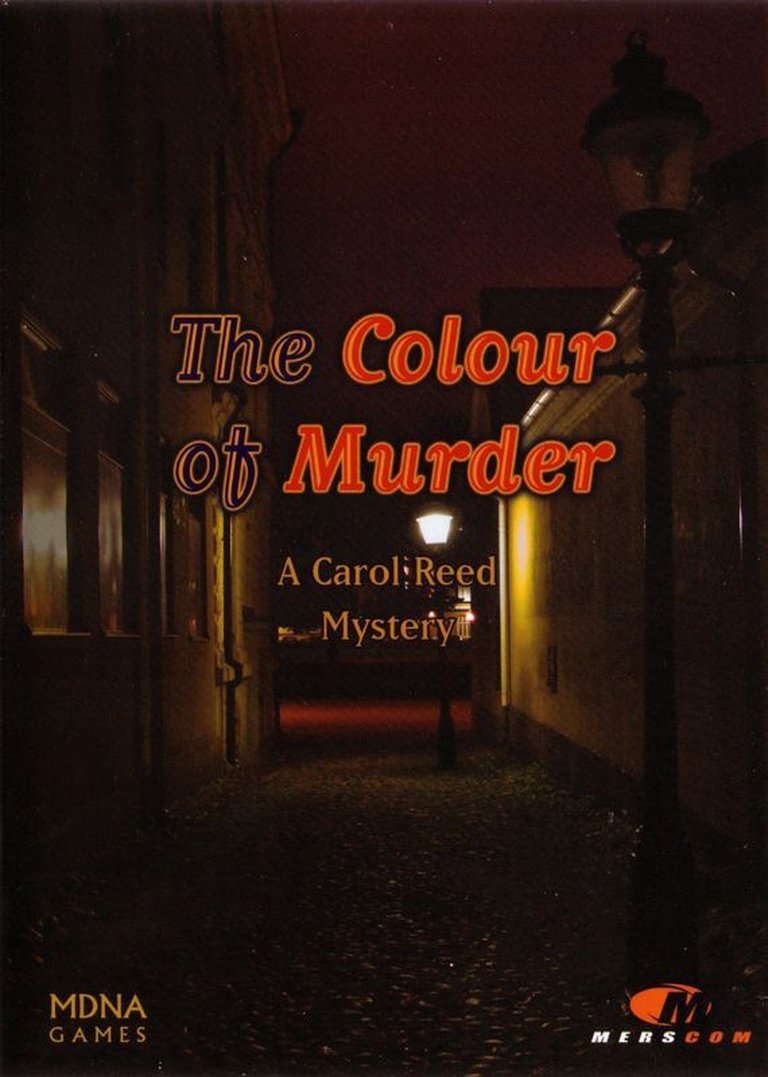
In ‘The Colour of Murder,’ the fifth installment in the Carol Reed Mysteries series, detective Carol Reed anticipates a peaceful Midsummer’s Eve in Sweden, focusing on her hobbies like her dollhouse and allotment, but her plans are disrupted when her neighbor enlists her help to find his missing son, who may be entangled in a recent murder. Set in the picturesque landscapes of Europe, this first-person point-and-click adventure combines graphic puzzles, inventory challenges, and a new hint system, featuring stunning still photographs with a watercolor filter that highlight the serene yet suspenseful Swedish setting, alongside English dialogue and subtitles.
Gameplay Videos
Guides & Walkthroughs
Reviews & Reception
justadventure.com : In a nutshell, the people that have enjoyed the previous Carol Reed adventures will love this one too.
adventuregamers.com (70/100): The fifth Carol Reed mystery is a short but intriguing mystery that should appeal to series veterans and newcomers alike.
The Colour of Murder: Review
Introduction
In the quiet, mist-shrouded streets of Norrköping, Sweden, where history whispers through cobblestone alleys and abandoned industrial relics, a simple missing persons case unravels into a tapestry of royal intrigue, hidden identities, and cryptic color codes. The Colour of Murder, the fifth installment in MDNA Games’ enduring Carol Reed Mysteries series, drops players into this atmospheric web of deception just days before Midsummer’s Eve. As detective Carol Reed, an English expatriate navigating the enigmatic Swedish landscape, you become entangled in a mystery that bridges a century of scandal—from the near-collapse of the Swedish monarchy in the 1950s to a modern-day murder in a shadowy alley. This 2008 point-and-click adventure stands as a testament to indie perseverance, blending cozy sleuthing with subtle chills, much like a Nancy Drew novel reimagined in the vein of classic graphic adventures like The Secret of Monkey Island but stripped of whimsy for a more grounded, introspective tone. My thesis: While The Colour of Murder shines as the series’ most polished entry to date, elevating its narrative depth and puzzle logic through collaborative indie ingenuity, its brevity and dated technical choices prevent it from transcending the niche appeal of low-budget adventures, cementing its place as a charming but unremarkable footnote in the genre’s history.
Development History & Context
MDNA Games, the husband-and-wife indie studio founded by Mikael Nyqvist and his wife Eleen in 2003, had already carved a modest niche in the adventure game scene with the first four Carol Reed titles by the time The Colour of Murder arrived in October 2008 (with a full release on November 12 via publisher Merscom LLC). Operating out of Norrköping itself—the very setting of the game—the Nyqvists embodied the DIY ethos of early 2000s indie development, self-publishing initial entries like Remedy (2004) and Hope Springs Eternal (2005) on minimal budgets. Mikael handled photography, scripting, and overall design, while Eleen contributed to production and beta testing, creating a deeply personal series rooted in their local environment. This entry marked a pivotal evolution: for the first time, they recruited veteran adventure designer Len Green as creative consultant, whose influence is evident in the puzzles’ logical coherence—a stark improvement over the occasionally arbitrary challenges in predecessors like Time Stand Still (2006).
Technologically, the game leverages the free Wintermute engine, a lightweight tool favored by indies for its ease in handling static scenes and point-and-click interfaces. Released during the tail end of the adventure genre’s post-Broken Sword drought, when big studios chased MMOs and shooters (think World of Warcraft‘s dominance or the rise of Grand Theft Auto IV), The Colour of Murder faced an uphill battle in a market favoring spectacle over subtlety. The 2008 landscape was unforgiving for point-and-clicks: high-profile failures like Runaway: A Twist of Fate highlighted the genre’s struggles with accessibility, while indies like Wadjet Eye’s The Blackwell Legacy were just emerging on platforms like Steam. Constraints were palpable—MDNA’s team was tiny (24 credits total, including voice actors like Sara Louise Williams as Carol), relying on still photography over full-motion video to keep costs low. The watercolor filter on backgrounds, a signature from earlier games, was dialed back here, responding to fan feedback about over-stylization obscuring details. Vision-wise, the Nyqvists aimed for “tourist detective work,” emphasizing exploration of Sweden’s cultural underbelly over violence, aligning with their goal of family-friendly mysteries. This context underscores the game’s triumph as a labor of love, but also its limitations: no multilingual support beyond English subtitles, and a download-only model that limited visibility in an era before digital distribution exploded.
Narrative & Thematic Deep Dive
At its core, The Colour of Murder weaves a detective yarn that’s equal parts procedural sleuthing and historical meditation, unfolding over three tense days leading to Midsummer’s Eve. The plot kicks off innocuously: Carol, voiced with wry British poise by Sara Louise Williams, plans a relaxing holiday tinkering with her dollhouse and allotment garden. Her neighbor Willy (Willy Säfström) interrupts, fretting over his mildly handicapped son Adrian’s (Gareth Williams) disappearance, suspecting ties to a fresh murder in Three Princes’ Alley. What begins as a favor spirals into a labyrinthine conspiracy: Adrian’s involvement with the Zodel Moral Mission (a quirky cult-like group), a paintball club, and a theater workshop uncovers Harald Lund (revealed as Harald Haijby, descendant of the scandalous Kurt Haijby, whose 1950s blackmail attempt nearly toppled the Swedish throne). Clues lead through derelict docks, lavender brooks, and limestone quarries, culminating in a revelation involving hidden royal artifacts, color-coded messages, and a blackmail plot echoing Haijby’s real-life infamy.
Characters drive the narrative’s intimacy, with dialogue delivered in English (subtitled for clarity) that feels authentic yet slightly stilted—befitting non-native speakers. Carol is the steadfast anchor: pragmatic, observant, and endearingly touristy, her voiceovers (e.g., musing on Norrköping’s industrial ruins) inject humor and humanity. Supporting cast shines through quirky portrayals: Stina (Petra Lundgren), the chatty storekeeper who doubles as a quest-giver; Iris (Monica Lundgren), the enigmatic widow harboring secrets; and the janitor at the National Tax Board (Bigge), whose flower-collecting side quest adds whimsy. Dialog trees are exhaustive but non-branching, fostering organic conversations that reveal backstories—like Adrian’s vulnerability or Harald’s name change—without contrived exposition dumps.
Thematically, the game explores identity and legacy against Sweden’s understated grandeur. Colors symbolize deception: red “blood paint” from paintballs masks true crimson crimes, green water reveals hidden messages on limestone (a nod to chemical pH puzzles), and a 3×3 color matrix evokes royal scandals buried in history. Themes of isolation permeate—Norrköping’s empty workshops and foggy marinas mirror Carol’s expatriate loneliness—while the non-violent resolution critiques blackmail’s long shadow, tying personal frailties to national skeletons. Echoes of Agatha Christie’s Murder on the Orient Express appear in the puzzle-box revelations, but the story’s restraint (no gore, just implication) underscores MDNA’s vision: mysteries as intellectual puzzles, not thrill rides. Flaws emerge in pacing—some red herrings (e.g., the petroglyphs) feel tangential—and the epilogue’s “hilarious” final line (per reviewers) undercuts tension with bathos. Yet, the narrative’s Swedish specificity, from Midsummer traditions to Haijby’s biography, elevates it beyond generic whodunits, rewarding history buffs with a tale that’s as much cultural tour as crime solver.
Gameplay Mechanics & Systems
The Colour of Murder adheres faithfully to the point-and-click formula, eschewing combat or timers for deliberate, mouse-driven exploration in a first-person perspective. Core loops revolve around non-linear investigation: gather inventory items (e.g., fish hooks, litmus paper, bent screw hooks), combine them logically (e.g., string + hook for fishing an earring), and apply them to environmental puzzles. Progression is gated by dialogue and location unlocks—new map spots appear after key interactions, like phoning a delivery man or decoding a briefcase (combination 127, Adrian’s favorite number). The hint system, a series innovation by Jan Kavan, is exemplary: Carol’s notebook offers contextual nudges (“Perhaps oil would help that stuck zip”) without spoilers, adapting to non-linearity by suggesting next steps without dictating paths. UI is intuitive—right-click inventory for close-ups, auto-save frequent, over 100 save slots—but saving lags (30-40 seconds), a Wintermute quirk that frustrates mid-exploration.
Puzzles emphasize inventory synergy over stand-alones, blending logic with light chemistry: dip flowers in “blood paint” for a red bloom to bribe the janitor, mix red/green water for pH testing, or rotate symbols on a theater box using mirror-inverted clues from a photo. Innovations include feedback for new areas (e.g., map pings) and a tutorial for newcomers, covering hotspots and navigation—rare in adventures, making it accessible like a modern Nancy Drew. One quick-time exit (fleeing Iris’ apartment) is forgiving, with instant retries. Flaws abound: the slideshow format (fixed/flip-screen) feels dated, with clunky transitions in larger areas like the Industrial Park requiring directional commands (e.g., “forward x5, right x2”). Some glitches persist—opening objects sans tools, per reviews—and puzzles vary in challenge: the vise-bending hook is clever, but flower-hunting feels fetch-quest padding. No character progression beyond inventory, keeping loops tight (5-6 hours total), but repetition in revisiting locations (e.g., Harald’s apartment five times) tests patience. Overall, mechanics reward curiosity over frustration, ideal for relaxed play, though lacking the ambition of contemporaries like Machinarium.
World-Building, Art & Sound
Norrköping comes alive as a character in its own right, a faded industrial jewel blending 14th-century roots with 20th-century grit. World-building immerses through hyper-local details: the Calibri Marina’s bobbing yachts hide nautical clues, the Lavender Brook’s tunnels evoke forgotten military secrets, and the Hedwig Church (where the Nyqvists wed) hosts poignant artifact hunts. Atmosphere builds via desolation—derelict paintball halls, echoing quarries—contrasting Midsummer’s festive undercurrent, fostering a sense of unearthed history. Locations unlock progressively, encouraging “tourist” browsing: petroglyph exhibits tie into color themes, while the Theatre Workshop’s cluttered chaos mirrors the plot’s tangles.
Visually, Mikael’s photography is the star, capturing Sweden’s muted palettes—foggy docks in grays, vibrant wildflowers in pinks and blues—with minimal watercolor filtering to preserve realism. Characters pop without filters, their live-action cut-ins (e.g., Iris’ tense confrontation) adding intimacy amid static scenes. Wintermute’s fixed views frame compositions poetically, like alleyway murder sites shrouded in twilight, but the flip-screen navigation disrupts flow, shortchanging panoramic beauty. Art direction evokes a watercolor sketchbook, enhancing mystery without overwhelming detail.
Sound design amplifies isolation: a moody, minimalist score (echoing Phantasmagoria‘s foreboding tones) swells with piano loneliness in explorations, punctuated by subtle effects—dripping water in caves, rustling leaves at allotments. Voice acting is solid for an indie effort: Williams’ Carol delivers dry wit (“This fridge is too high, or I’m too short”), while accents (Swedish-inflected English) ground the setting, though occasional awkward phrasing (“I’ve completely forgotten about it”) slips through. Subtitles are crisp, ensuring clarity, and ambient noises (e.g., hammer clangs, fuse switches) integrate seamlessly, never drowning dialogue. Collectively, these elements craft a contemplative experience, where sound and visuals lure players into Sweden’s soul, though tech limits prevent full immersion.
Reception & Legacy
Upon release, The Colour of Murder garnered a respectable but polarized reception, averaging 67% from critics (MobyGames) and 4.1/5 from players. Just Adventure awarded a perfect 100%, lauding its “meat-and-potatoes” storytelling and logical puzzles as a corrective to bloated contemporaries like Sentinel: Descendants in Time, calling it the series’ best. GameBoomers (91%) praised its value as a “labor of love” bargain, longer than pricier rivals, while GameZebo (70%) and Adventure Gamers (70%) appreciated the slow-burn suspense but docked points for brevity (under 5 hours) and slideshow tech that “shortchanges beautiful environments.” Harsher takes from Adventure Classic Gaming (40%) deemed it “bland” despite the title’s color motif, and Adventurespiele (30%) criticized repetitive music, long walks, and untapped story potential. Commercially, as a $20 download, it sold modestly to series fans, boosting MDNA’s profile without chart-topping—indie adventures rarely did in 2008’s shooter-saturated market.
Over time, its reputation has warmed among niche communities, evolving from “solid sequel” to “underrated gem” on forums like GameBoomers (walkthroughs proliferated) and ScummVM (added for preservation). Legacy lies in sustaining the Carol Reed series—now 15+ entries strong, influencing indies like The Cat Lady in blending real-world locales with mysteries. It popularized Wintermute for budget titles, inspiring games like Shades of Black, and highlighted female-led, non-violent adventures amid Tomb Raider reboots. Industry-wide, it exemplified indie’s resilience, paving for Steam’s adventure revival (e.g., The Walking Dead). Yet, its influence remains subtle—no seismic shifts, but a quiet nod to accessible, story-first design in a genre craving revival.
Conclusion
The Colour of Murder encapsulates the Carol Reed series at its zenith: a taut, thematically rich mystery elevated by indie heart, where Norrköping’s shadows hide royal ghosts and color puzzles unlock human truths. Mikael and Eleen’s vision, refined by Green’s consultation, delivers logical gameplay and evocative artistry that captivates cozy detectives, though its short length, technical clunkiness, and occasional filler temper the magic. In video game history, it occupies a worthy niche as a bridge between classic point-and-clicks and modern indies—flawed, but fondly remembered for proving small teams could craft compelling worlds without blockbuster budgets. Verdict: A solid 7.5/10, essential for adventure purists, a gentle entry for newcomers, but unlikely to convert the uninitiated. If you’re weary of bombast, let Carol’s colors guide you—it’s a refreshing detour worth the evening.