
- Release Year: 1998
- Platforms: Macintosh, Windows
- Publisher: Disney Interactive, Inc.
- Genre: Puzzle
- Game Mode: Single-player
- Gameplay: Game show, Multiple Choice, quiz, trivia
- Average Score: 80/100
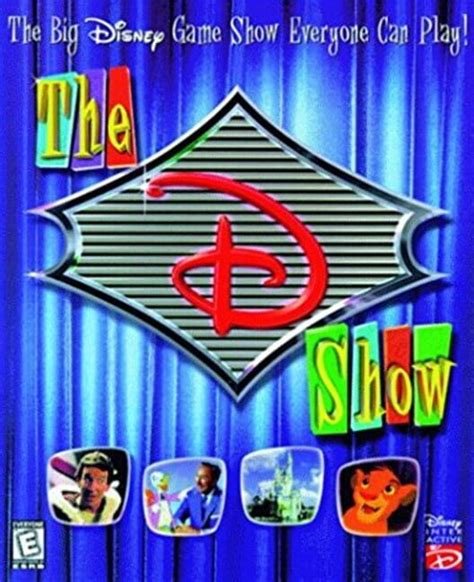
Description
The D Show is a 1998 interactive trivia game developed by Disney Interactive, where up to three teams compete by answering questions about Disney movies, TV shows, and characters. The game features six categories with multiple-choice questions, two bonus rounds per show, and a final speed round called the D Fibulator. Players earn or lose D Bucks based on correct or incorrect answers, with video and sound clips enhancing the experience. Designed for family fun, it includes over 540 questions, 150 film clips, and multiplayer support, making it a nostalgic and engaging challenge for Disney fans.
Gameplay Videos
The D Show Free Download
The D Show Cracks & Fixes
The D Show Guides & Walkthroughs
The D Show Reviews & Reception
en.wikipedia.org (80/100): A refreshing way to spend quality time.
collectionchamber.blogspot.com : One of the most blatant knockoffs I’ve ever seen.
The D Show: A Nostalgic Deep Dive into Disney’s Forgotten Trivia Gem
Introduction: The Golden Age of Multimedia Trivia
In the late 1990s, the PC gaming landscape was a vibrant tapestry of experimentation, where developers eagerly pushed the boundaries of multimedia to create immersive, interactive experiences. Amidst this creative frenzy, The D Show emerged in 1998 as a shining example of Disney Interactive’s ambition to blend education, entertainment, and family-friendly competition. A love letter to Disney’s vast universe, this trivia game show hybrid sought to capitalize on the era’s fascination with CD-ROM-based multimedia, offering players a chance to test their knowledge of everything from The Little Mermaid to Disneyland’s hidden secrets.
At its core, The D Show is a digital board game masquerading as a television quiz show, complete with a charismatic host, a catchy theme song, and a structure that mirrors the high-energy pacing of Jeopardy! or Who Wants to Be a Millionaire?. Yet, beneath its polished veneer lies a game that is both a product of its time and a curious artifact of Disney’s early forays into interactive gaming. While it may not have achieved the cultural ubiquity of its contemporaries, The D Show remains a fascinating case study in how licensed properties can thrive—or falter—when adapted into the digital realm.
This review will dissect The D Show from every angle: its development history, its gameplay mechanics, its narrative and thematic underpinnings, and its lasting legacy. By the end, we’ll determine whether this game is a forgotten classic or a well-intentioned relic of the late ’90s multimedia boom.
Development History & Context: Disney’s Multimedia Gambit
The Rise of Disney Interactive
The mid-to-late 1990s marked a period of aggressive expansion for Disney Interactive, the company’s newly minted division dedicated to video games and interactive media. Fresh off the success of Disney’s Aladdin (1993) and The Lion King (1994), Disney was eager to diversify its portfolio beyond traditional platformers. The company saw an opportunity in the burgeoning CD-ROM market, where games like Myst (1993) and The 7th Guest (1993) had demonstrated the potential of multimedia storytelling.
The D Show was part of this strategic pivot. Developed in-house by Disney Interactive, the game was designed to leverage the company’s vast library of intellectual property while appealing to families looking for shared gaming experiences. It was showcased at E3 1998, where its flashy presentation and promise of “30 interactive game shows” garnered attention in an era where trivia games were becoming a staple of PC gaming.
Technological Constraints and Innovations
Released for Windows and Macintosh, The D Show was a technical marvel for its time, albeit one constrained by the limitations of late-’90s hardware. The game shipped on two CD-ROMs, a necessity given its extensive use of video clips, audio samples, and high-resolution images. These assets were compressed to fit within the storage constraints of the era, resulting in grainy QuickTime videos and chunky pixelated graphics that, while impressive in 1998, now serve as a nostalgic reminder of the technological growing pains of the CD-ROM era.
The game’s multiplayer functionality was another standout feature. Supporting up to three players, The D Show encouraged family and friends to gather around a single PC, a design choice that reflected the social gaming trends of the time. The controls were simple—players used keyboard keys (Q, B, P) as buzzers and number keys to select answers—making it accessible to younger audiences while still offering enough depth to engage older players.
The Gaming Landscape of 1998
To understand The D Show’s place in history, it’s essential to contextualize the gaming environment of 1998. This was the year that saw the release of legendary titles like Half-Life, The Legend of Zelda: Ocarina of Time, and Baldur’s Gate. Amidst these groundbreaking experiences, The D Show occupied a niche but important space: the family-friendly, multimedia-driven trivia game.
Its closest competitor was Jellyvision’s You Don’t Know Jack (1995), a game that had revolutionized the trivia genre with its irreverent humor and fast-paced gameplay. The D Show was often criticized as a Disney-fied knockoff of You Don’t Know Jack, a comparison that, while not entirely unfair, overlooks the game’s unique charm. Where YDKJ thrived on sarcasm and pop culture references, The D Show leaned into wholesome Disney nostalgia, making it a safer (if less edgy) alternative for younger audiences.
Narrative & Thematic Deep Dive: The Magic of Disney Trivia
Structure and Presentation
The D Show is framed as a television game show, complete with a virtual studio audience, a peppy hostess (voiced by Susan Cash), and a theme song that, once heard, is impossible to forget. The game’s structure is divided into three main segments:
- Two Rounds of Trivia: Each round consists of three categories, with players selecting questions of varying difficulty (and D Buck values).
- Bonus Rounds: After each round, players compete in visual or puzzle-based challenges that test their knowledge of Disney characters, settings, and lore.
- The D Fibulator: The grand finale, a 60-second true-or-false blitz where players must answer as many Disney-related statements as possible.
This structure mirrors the pacing of a real game show, with the hostess guiding players through each segment with exaggerated enthusiasm. The writing is lighthearted and family-friendly, though it occasionally dips into cheesy humor that feels distinctly of its era.
Themes: Celebrating Disney’s Legacy
At its heart, The D Show is a celebration of Disney’s cultural footprint. The game’s questions span:
- Animated Classics: From Snow White and the Seven Dwarfs (1937) to The Lion King (1994).
- Live-Action Films: Including Mary Poppins (1964) and The Parent Trap (1961).
- Television Shows: Such as DuckTales, Gummi Bears, and The Mickey Mouse Club.
- Theme Parks: Trivia about Disneyland, Walt Disney World, and international parks.
- Corporate History: Questions about Walt Disney himself, the company’s founding, and its evolution.
The game’s thematic depth is impressive, though it’s worth noting that the questions skew heavily toward Disney’s pre-2000 output. This makes The D Show a time capsule of late-20th-century Disney fandom, offering a snapshot of what the company considered its most iconic properties at the time.
Character and Host Dynamics
The hostess, while not a fully fleshed-out character, serves as the game’s energetic emcee. Her over-the-top delivery—complete with exaggerated reactions to correct and incorrect answers—adds a layer of personality that keeps the experience engaging. The game also features voice clips from Disney characters, further immersing players in the world.
One of the game’s most enduring quirks is its occasional lapses in Disney canon. For example, the game refers to the Beast from Beauty and the Beast as “Prince Adam”, a name that was never officially confirmed in the film but has since become widely accepted in fan circles. This detail, while minor, highlights the game’s role in shaping Disney lore in unexpected ways.
Gameplay Mechanics & Systems: Trivia with a Twist
Core Gameplay Loop
The D Show’s gameplay is simple but effective. Players (or teams) take turns selecting questions from a grid of categories, each with three questions of increasing difficulty. The D Buck values (the game’s currency) scale with difficulty, rewarding players for tackling harder questions.
- Buzzer System: Players must press their assigned key (Q, B, or P) to “buzz in” and answer. The first to buzz gets to answer, but an incorrect response allows other players to steal the question.
- Multiple Choice: All questions are four-option multiple-choice, with the hostess reading the question and options aloud.
- Video and Audio Clips: Many questions are accompanied by short video clips or sound bites from Disney films and shows, adding context and immersion.
Bonus Rounds: Breaking the Monotony
To prevent the game from becoming a static trivia slog, The D Show includes six types of bonus rounds, each designed to test different skills:
- Before and After: Players must match a character’s original sketch with their final animated appearance.
- Casting Call: A series of characters from a single film or show are revealed one by one; players must identify the source material.
- Cel-O-Vision: Players must match character cels with their correct backgrounds.
- Character Mix-Ups: A slot-machine-style puzzle where players assemble a character from spinning parts.
- Fast Focus: A distorted image of a character slowly comes into focus; players must identify it as quickly as possible.
- Picture Perfect: A slider puzzle where players must rearrange tiles to form a complete image.
These rounds add variety and ensure that the game appeals to different types of players—those who excel at visual recognition, those who thrive under time pressure, and those who prefer pure trivia.
The D Fibulator: A Frenetic Finale
The D Fibulator is the game’s climactic speed round, a 60-second true-or-false marathon where players must answer as many Disney-related statements as possible. The hostess’s increasingly frantic delivery ramps up the tension, making this the most exciting (and chaotic) part of the game.
- Risk vs. Reward: Correct answers add D Bucks, while incorrect ones deduct them, creating a high-stakes environment where a single mistake can cost a player the lead.
- Multiplayer Madness: In multiplayer, the D Fibulator becomes a free-for-all, with players racing to buzz in first and claim the points.
UI and Accessibility
The game’s user interface is a product of its time, featuring bright colors, chunky fonts, and a layout optimized for 640×480 resolutions. While it lacks the polish of modern games, it’s functional and intuitive, with clear instructions and minimal learning curve.
One notable flaw is the question repetition. As noted by The Collection Chamber, the game’s question pool appears semi-fixed, meaning that repeat playthroughs can feel familiar sooner than expected. This limits the game’s long-term replayability, though it’s less of an issue for casual players.
World-Building, Art & Sound: A Multimedia Extravaganza
Visual Design: A Love Letter to Disney
The D Show’s art direction is a collage of Disney’s greatest hits. The game’s menus, backgrounds, and question screens are adorned with still images, concept art, and video clips from Disney’s vast library. The visual presentation is busy but charming, with a game show aesthetic that feels like a cross between Wheel of Fortune and a Saturday morning cartoon.
- Video Clips: The game includes over 150 video clips, ranging from iconic scenes (e.g., The Lion King’s “Circle of Life”) to deep cuts (e.g., Gummi Bears episodes). These clips are compressed and low-resolution by modern standards, but they add immense value to the trivia experience.
- Character Cameos: The game frequently features Disney characters in its UI, from Mickey Mouse bouncing along to the theme song to Goofy making silly faces during bonus rounds.
Sound Design: The Power of Nostalgia
The game’s audio design is equally nostalgic, with a catchy theme song that players will either love or loathe. The song, which plays during the opening credits and closing sequence, is upbeat and repetitive, designed to stick in the player’s head long after the game is over.
- Voice Acting: The hostess’s over-the-top delivery is a highlight, with Susan Cash bringing energy and enthusiasm to every line. The game also features voice clips from Disney films, adding authenticity to the trivia questions.
- Sound Effects: The game uses classic game show sound effects—dingers for correct answers, buzzers for incorrect ones—to reinforce its television-inspired aesthetic.
Atmosphere: A Virtual Game Show
The D Show succeeds in creating the illusion of a real game show, complete with virtual applause, dramatic pauses, and a sense of urgency. The hostess’s interactions—whether cheering for a correct answer or groaning at a mistake—make the experience feel dynamic and engaging.
However, the game’s technical limitations occasionally break the immersion. The grainy video quality and pixelated images serve as a reminder of the era’s constraints, though they also add to the game’s charm for those who grew up with late-’90s multimedia.
Reception & Legacy: A Cult Classic in the Making?
Critical Reception: Praise for Family Fun
Upon its release, The D Show received generally positive reviews from critics, who praised its family-friendly appeal and high production values.
- The Des Moines Register (4/5): Called it “a refreshing way to spend quality time” and noted that “children and adults are winners here.”
- Marshfield News-Herald (3.5/5): Highlighted the 150 video clips and catchy theme song, declaring it “far from a Mickey Mouse game.”
- MacHome Journal: Praised its appeal to Disney fans, though noted that general trivia enthusiasts might find it limiting.
- Games Domain: Called it “something that the whole family can play”, emphasizing its broad accessibility.
Critics universally praised the game’s multiplayer functionality, visual presentation, and educational value, though some noted that its Disney-centric focus might alienate non-fans.
Commercial Performance and Longevity
While The D Show was not a blockbuster hit, it found a niche audience among Disney enthusiasts and families. Its two-CD format and multimedia-heavy design made it a premium product for its time, though it was eventually overshadowed by more ambitious titles in Disney’s library.
Today, The D Show is largely forgotten, though it has gained a cult following among retro gaming enthusiasts and Disney historians. Websites like The Collection Chamber and Internet Archive have preserved the game, allowing new generations to experience its quirky charm.
Influence and Legacy
The D Show’s influence can be seen in later Disney trivia games, such as Disney Think Fast (2008) and Disney Magic Kingdoms’ trivia events. Its D Fibulator round also prefigured the rapid-fire trivia mechanics seen in modern games like Jackbox’s Fibbage.
More broadly, The D Show represents a fascinating moment in gaming history—a time when CD-ROM multimedia was king, and developers were experimenting with how to blend television, film, and interactive gaming. While it may not have redefined the trivia genre, it remains a beloved artifact of its era.
Conclusion: A Flawed but Charming Relic
The D Show is not a perfect game. Its question repetition, dated visuals, and Disney-centric focus limit its appeal to a specific audience. Yet, for those who grew up with Disney or have a soft spot for late-’90s multimedia, it remains a delightful time capsule.
Final Verdict: 7.5/10 – A Nostalgic Triumph with Minor Flaws
- Strengths:
- Engaging multiplayer gameplay that encourages family bonding.
- Impressive breadth of Disney trivia, spanning films, TV, and theme parks.
- Charming presentation, with a memorable theme song and energetic host.
- Varied bonus rounds that keep the gameplay fresh.
- Weaknesses:
- Question repetition limits long-term replayability.
- Dated visuals and compression artifacts may deter modern players.
- Niche appeal—only Disney fans will get the most out of it.
Legacy: The D Show is not a masterpiece, but it is a fascinating relic of a bygone era in gaming. It stands as a testament to Disney’s ambition in the late ’90s and a reminder of the power of multimedia storytelling. For those willing to embrace its quirks, it offers a unique and nostalgic gaming experience that hasn’t quite been replicated since.
Final Thought: If you’re a Disney fan with a soft spot for retro gaming, The D Show is well worth revisiting. Just be prepared to hum its theme song for days afterward.