
- Release Year: 2011
- Platforms: PlayStation 3, Windows, Xbox 360
- Publisher: Bethesda Softworks LLC
- Developer: Bethesda Game Studios
- Genre: Compilation, Special edition
- Perspective: First-person / Third-person
- Game Mode: Single-player
- Setting: Fantasy, Medieval
Description
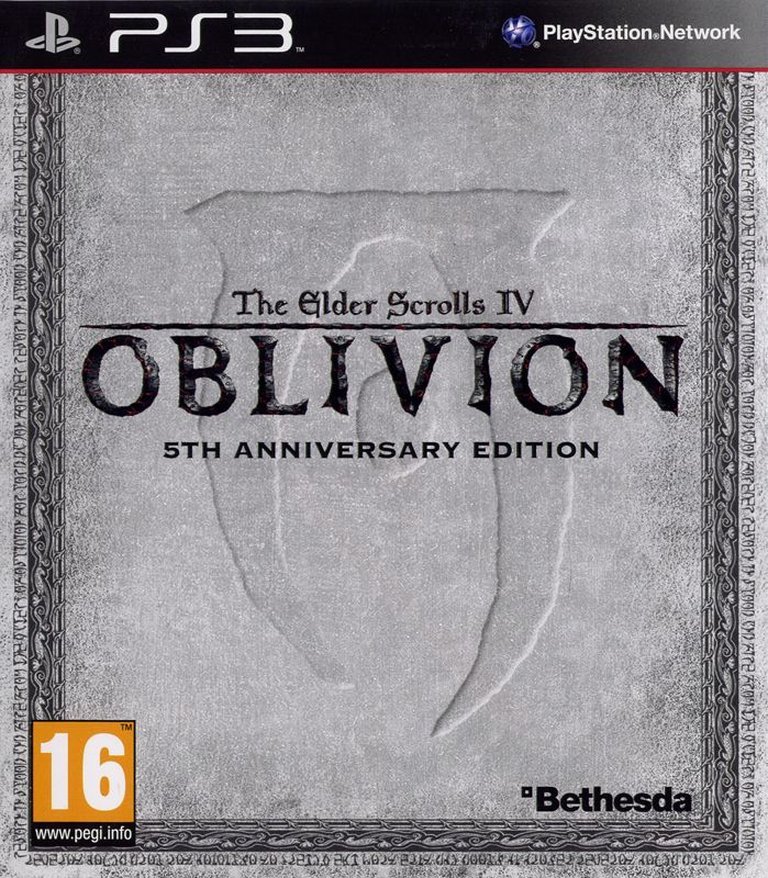
Set in the province of Cyrodiil, the heartland of the Empire of Tamriel, The Elder Scrolls IV: Oblivion begins with the assassination of Emperor Uriel Septim VII. The player, as the Hero of Kvatch, must embark on a quest to find the Emperor’s lost and illegitimate son to close gates to the realm of Oblivion and save the land. This 5th Anniversary Edition bundles the base game with the expansions Knights of the Nine and Shivering Isles, along with physical collector’s items like a steelbook, a documentary, and a map.
The Elder Scrolls IV: Oblivion – 5th Anniversary Edition Free Download
The Elder Scrolls IV: Oblivion – 5th Anniversary Edition Mods
The Elder Scrolls IV: Oblivion – 5th Anniversary Edition Guides & Walkthroughs
The Elder Scrolls IV: Oblivion – 5th Anniversary Edition: Review
Introduction
In the pantheon of role-playing games, few titles have cast as long a shadow as The Elder Scrolls IV: Oblivion. Its 2006 debut redefined open-world design, blending cinematic storytelling with unprecedented freedom, and earned a place among gaming’s most celebrated achievements. By 2011, as Bethesda prepared to unveil Skyrim, the studio commemorated Oblivion’s fifth anniversary with a definitive repackage: the 5th Anniversary Edition. This collection is not merely a nostalgia trip but a meticulously curated artifact, bundling the base game, both major expansions (Knights of the Nine and Shivering Isles), and exclusive physical bonuses into a single steelbook case. This review examines how this edition crystallizes the legacy of a landmark RPG—assessing its narrative depth, mechanical innovations, artistic vision, and enduring impact while evaluating whether it remains a worthwhile experience for newcomers and veterans alike. The thesis is clear: this package is both a celebration of Oblivion’s cultural significance and a testament to its foundational role in modern RPG design, offering unparalleled value and historical context.
Development History & Context
Oblivion’s genesis began immediately after the 2002 release of Morrowind, with Bethesda Game Studios aiming to deliver a more accessible yet technologically ambitious RPG. Under lead designer Ken Rolston, the team prioritized “tighter pacing, greater plot focus, and believable characters” than its predecessor, eschewing Morrowind‘s alien aesthetic for a lush, European-inspired Cyrodiil. Technologically, the game pushed the boundaries of its era, leveraging the Gamebryo engine with Havok physics for dynamic interactions and HDR lighting to create vivid, sun-drenched landscapes. Procedural generation tools accelerated terrain creation, enabling the design of a vast 16-square-mile world with unprecedented draw distances. The most revolutionary addition was the Radiant AI system,赋予 non-player characters (NPCs) autonomous schedules, needs, and decision-making—though this ambition occasionally resulted in behaviors like NPCs stealing food to satiate hunger.
The gaming landscape of 2006 was dominated by the Xbox 360 launch, positioning Oblivion as a flagship “next-gen” title. Its E3 2005 debut—dubbed “the first next-gen game” by critics—garnered awards for its visuals and scope, but development faced hurdles. Delays pushed the release from November 2005 to March 2006, while the inclusion of fully voiced NPCs (a first for the series, featuring talents like Patrick Stewart as Uriel Septim) sparked debate. Lead designer Rolston later noted that full voice acting constrained dialogue flexibility but catered to player expectations. By 2011, when the 5th Anniversary Edition emerged, Oblivion had already shipped over 3.5 million copies and earned widespread acclaim, making this repackage both a commercial strategy and an homage to a transformative era in RPGs.
Narrative & Thematic Deep Dive
Oblivion’s narrative operates on dual tracks: a grand, world-threatening crisis and intimate character-driven arcs. The plot begins with the assassination of Emperor Uriel Septim VII (voiced by Patrick Stewart), thrusting the player—imprisoned in the Imperial City sewers—into the role of the Hero of Kvatch. With the gates of Oblivion breaching Tamriel and Daedric armies ravaging Cyrodiil, the quest to find Uriel’s illegitimate son, Martin Septim (Sean Bean), becomes a race to restore the Dragonfires and halt the invasion. This主线 is a classic hero’s journey, but its power lies in subverting expectations. The player is not a preordained savior but a pawn of fate, with Martin’s self-sacrifice merging with the divine Akatosh to seal Oblivion gates—leaving Tamriel’s future ambiguously open-ended.
Supporting this framework are rich thematic explorations. The Mythic Dawn cult, led by the charismatic Mankar Camoran (Terence Stamp), embodies destructive fanaticism, contrasting with the player’s emergent heroism. Themes of sacrifice permeate, from Uriel’s trust to Martin’s apotheosis, while the expansion Shivering Isles delves into madness and duality under Sheogorath. Dialogue, though occasionally repetitive due to limited voice actors, delivers memorable lines: “It is not the armor that makes the knight, but the man inside.” The narrative’s strength lies in its integration of lore—ancient prophecies, divine pacts, and political intrigue—making Cyrodiil’s collapse feel both personal and apocalyptic. Even side quests, like the Knights of the Nine crusade, reinforce themes of redemption and faith, ensuring the world feels lived-in and consequential.
Gameplay Mechanics & Systems
Oblivion’s gameplay is defined by freedom and consequence, built on a robust character progression system. Players select a race, birthsign, and class, then shape their avatar through 21 skills divided into combat, magic, and stealth. Leveling occurs when major skills improve by 10 points, allowing attribute boosts—a system praised for flexibility but criticized for exploitable “min-maxing.” Combat is real-time, blending melee, archery, and destructible spells, though its simplicity compared to later RPGs like Dark Souls feels dated. The Radiant AI system promised dynamic NPCs, but results were mixed: merchants might eat or sleep, but their actions often lacked depth.
Two mechanics define the experience: level scaling and fast travel. Enemies scale with the player’s level, ensuring consistent challenge but unintentionally encouraging grinding to avoid overpowered foes. Fast-travel to discovered locations streamlines exploration but risks diluting the world’s verticality. The inventory UI, while functional, was criticized for its clutter, and lockpicking/pickpocketing mini-games relied on reflexes rather than skill. Expansions added layers: Knights of the Nine introduced artifact-based quests, while Shivering Isles overhauled the level system with Sheogorath’s realm reflecting the player’s actions. Despite flaws—like repetitive voiceovers and occasional bugs—Oblivion’s systems created a sandbox where emergent stories flourished, from accidental thefts to heroic dungeon crawls.
World-Building, Art & Sound
Cyrodiil, the heart of the Tamrielic Empire, is a masterclass in environmental storytelling. Unlike Morrowind‘s alien vistas, Oblivion’s world is a vibrant temperate paradise, rolling hills crowned with castles, dense forests, and bustling cities. Art direction prioritized realism, drawing from European landscapes and medieval architecture, with the Imperial City—a concentric marvel of districts and spires—serving as the jewel. Procedural terrain generation enabled diverse ecosystems, from the gold-laden sands of N