
- Release Year: 2021
- Platforms: Macintosh, PlayStation 4, PlayStation 5, Windows
- Publisher: Bethesda Softworks LLC
- Developer: ZeniMax Online Studios, LLC
- Genre: Compilation
- Perspective: Third-person
- Game Mode: MMO, Online Co-op, Online PVP
- Gameplay: Companions system, Crafting, Moral choices, Oblivion Portals, Open World
- Setting: Fantasy
- Average Score: 74/100
Description
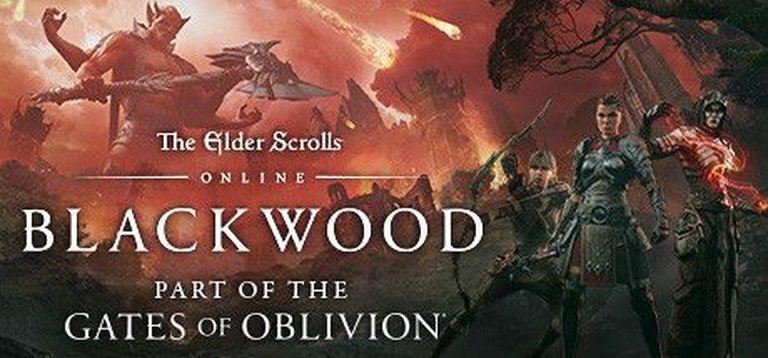
The Elder Scrolls Online: Blackwood is an expansion for the massively multiplayer online role-playing game (MMORPG) set in the Elder Scrolls universe. It introduces the dark and mysterious region of Blackwood, where players uncover political intrigue, explore ancient ruins, and confront the daemonic forces of Mehrunes Dagon through Oblivion Portals. The expansion features a new Companions system, allowing players to recruit and customize AI allies, alongside a gripping narrative filled with murder, conspiracy, and supernatural threats.
Gameplay Videos
The Elder Scrolls Online: Blackwood Cracks & Fixes
The Elder Scrolls Online: Blackwood Mods
The Elder Scrolls Online: Blackwood Guides & Walkthroughs
The Elder Scrolls Online: Blackwood Reviews & Reception
opencritic.com (77/100): The Elder Scrolls Online: Blackwood provides plenty of enjoyable content, but it may not be enough to breathe new life into the MMO.
ign.com : Returning to the marshes and swamps surrounding the idyllic city of Leyawiin feels like a portal to a completely different time period of The Elder Scrolls lore.
metacritic.com (75/100): Once again, fans of The Elder Scrolls 4: Oblivion can celebrate. They can look forward to rediscovering many well-known characters and locations like the Black Forest.
blastawaythegamereview.com : The Elder Scrolls Online: Blackwood expansion offers some of the largest challenges the ongoing experience that The Elder Scrolls Online has to offer with bringing some of the best elements from Oblivion to the famed MMO.
cgmagonline.com (70/100): Blackwood felt like the same old ‘run here, accept quest, run there talk to someone, run back’ that you see throughout every MMORPG.
The Elder Scrolls Online: Blackwood – A Comprehensive Retrospective
Introduction: The Legacy of Blackwood
The Elder Scrolls Online: Blackwood (2021) stands as a pivotal chapter in ZeniMax Online Studios’ ever-expanding MMORPG, serving as both a prequel to The Elder Scrolls IV: Oblivion and a bold evolution of ESO’s formula. Released on June 1, 2021, Blackwood is the fifth major chapter in ESO’s lifecycle, tasked with the monumental challenge of revitalizing a game nearing its seventh year while paying homage to one of the franchise’s most beloved entries. At its core, Blackwood is a study in nostalgia, innovation, and the delicate balance between catering to veterans and welcoming newcomers.
This review dissects Blackwood’s place in ESO’s history, its narrative and thematic depth, its mechanical refinements, and its lasting impact on the MMORPG landscape. Through an exhaustive analysis of its development, gameplay, world-building, and reception, we aim to answer a critical question: Does Blackwood succeed as a standalone expansion, or does it merely tread water in the shadow of Oblivion?
Development History & Context: The Making of a Chapter
The Studio and Vision
ZeniMax Online Studios, under the leadership of Game Director Matt Firor and Creative Director Richard Lambert, approached Blackwood with a dual mandate: expand the lore of Tamriel while modernizing ESO’s accessibility. The studio’s vision was clear—Blackwood would serve as the linchpin of the Gates of Oblivion year-long saga, a narrative arc exploring the rise of Mehrunes Dagon, the Daedric Prince of Destruction, 800 years before the events of Oblivion.
The development team faced several constraints:
1. Technological Limitations: ESO’s engine, while robust, was showing its age. The team had to optimize performance for next-gen consoles (PS5 and Xbox Series X|S) while ensuring parity with older hardware.
2. Narrative Continuity: Blackwood had to respect Oblivion’s lore while carving its own identity. This required meticulous collaboration with Bethesda’s lorekeepers, including Leamon Tuttle Jr., ESO’s Loremaster.
3. Player Fatigue: With ESO’s player base divided between hardcore raiders, lore enthusiasts, and casual explorers, ZeniMax needed to deliver content that appealed to all factions.
The Gaming Landscape in 2021
Blackwood launched into a competitive MMORPG market. World of Warcraft was in the midst of its Shadowlands expansion, Final Fantasy XIV was riding high on Endwalker hype, and newer titles like New World and Lost Ark were looming on the horizon. ESO’s challenge was to differentiate itself—not through sheer scale, but through depth of storytelling, player agency, and nostalgia.
The decision to introduce Companions—AI-controlled allies—was a direct response to player feedback. Many ESO players enjoyed solo content but craved the social dynamics of party play. The Companions system was ZeniMax’s attempt to bridge this gap, though it came with technical hurdles, particularly in balancing AI behavior and rapport mechanics.
Narrative & Thematic Deep Dive: The Rise of Mehrunes Dagon
Plot Overview
Blackwood’s main questline unfolds in the eponymous region, a swampy, politically fractured land nestled between Cyrodiil and Black Marsh. The story begins with a murder mystery in Leyawiin, the imperial city familiar to Oblivion veterans. Players quickly uncover a conspiracy involving the Longhouse Emperors, a dynasty that once ruled Tamriel, and their pact with Mehrunes Dagon.
The narrative is divided into two acts:
1. The Conspiracy in Leyawiin: Players investigate the assassination of Imperial officials, uncovering the Order of the Waking Flame, a cult dedicated to summoning Dagon. The writing here is sharp, with Bill Slavicsek (Lead Writer) infusing the dialogue with dry humor and political intrigue. The standout character is Elevi Sharp-Arrow, a Wood Elf scholar whose wit and enthusiasm carry the early chapters.
2. The Deadlands and Dagon’s Ambition: The second act escalates into full-blown Daedric invasion, culminating in a confrontation with Dagon’s lieutenants. The Deadlands, a fiery Oblivion realm, is a visual and thematic triumph, though the final boss fight feels anticlimactic compared to Oblivion’s epic scale.
Themes: Power, Corruption, and Legacy
Blackwood grapples with three central themes:
1. The Cost of Ambition: The Longhouse Emperors’ deal with Dagon mirrors real-world political corruption, where power is traded for short-term gain. The game’s villains are not mustache-twirling caricatures but flawed leaders who believe their ends justify the means.
2. The Weight of History: Blackwood is a prequel, and it leans heavily into foreshadowing. Players familiar with Oblivion will recognize Easter eggs, such as the Adoring Fan (here, a minor NPC) and references to the Mythic Dawn. This creates a sense of inevitability—Dagon’s rise is predetermined, and the player’s role is to delay, not prevent, the catastrophe.
3. The Illusion of Choice: Unlike single-player Elder Scrolls games, ESO’s quests are linear. Blackwood attempts to mitigate this with Companion rapport systems and branching dialogue, but the illusion is thin. Your choices affect how Mirri or Bastian react to you, but the overarching story remains rigid.
Characters and Dialogue
The writing in Blackwood is a mixed bag. The main quest shines, particularly in its humor and lore drops, but side quests often fall into MMORPG tropes:
– Mirri Elendis (Assassin Companion): A snarky, insect-hating Dark Elf with a tragic backstory. Her rapport system is the most developed, with unique reactions to player actions (e.g., she despises bugs but enjoys looting).
– Bastian Hallix (Sorcerer Companion): A more generic “noble scholar” archetype, though his voice acting (by Yuri Lowenthal) elevates the material.
– Lyranth the Foolkiller: A returning Oblivion character, whose sarcastic quips are a highlight. Her presence is fan service, but it’s executed well.
Critique: The dialogue suffers from compression issues—voice lines sound muffled, likely due to storage optimization. Some NPCs also exhibit uncanny valley animations, particularly during emotional scenes.
Gameplay Mechanics & Systems: Evolution or Stagnation?
Core Gameplay Loop
Blackwood adheres to ESO’s established formula:
– Quest Structure: 7 main quests, 6 delves, 2 public dungeons, 6 world bosses, and 18 skyshards. The layout is identical to previous chapters (Greymoor, Elsweyr), which leads to fatigue for veterans.
– Combat: The combat remains tab-targeting with action-oriented dodges, a hybrid system that divides players. It’s accessible but lacks the depth of FFXIV’s job system or WoW’s class fantasy.
– Progression: Leveling is streamlined, with Champion Points offering horizontal progression. The new Companions system adds a layer of meta-progression, but it’s optional.
Companions System: A Double-Edged Sword
The Companions are Blackwood’s marquee feature, allowing players to recruit Mirri or Bastian as permanent allies. Key mechanics:
– Rapport System: Companions gain or lose favor based on player actions (e.g., Mirri dislikes bugs, Bastian appreciates scholarly behavior). This affects their availability and combat effectiveness.
– Gear and Skills: Companions have their own gear slots, skill trees, and leveling, mirroring the player’s progression. They can be specced as tanks, healers, or DPS.
– Limitations:
– Companions are banned from dungeons, trials, and PvP, limiting their utility.
– Their AI is basic, often getting stuck or dying in trivial fights.
– Only one Companion can be active at a time, and they compete with merchant/banking assistants for the same slot.
Verdict: The Companions system is innovative for an MMO but feels underdeveloped. It’s a step toward solo-friendly design, but it doesn’t replace human interaction.
Oblivion Portals: Public Events Done Right
The Oblivion Portals are Blackwood’s answer to dynamic world events. These instanced, scalable challenges spawn randomly across the zone, tasking players with:
1. Closing the Portal: Fight through waves of Daedra to reach the portal’s core.
2. Boss Fights: Each portal culminates in a unique boss (e.g., Havocrel’s Tower).
3. Rewards: Players earn Mythic item leads, gear sets, and collectibles.
Strengths:
– Accessible to all levels (scaling tech ensures solo players and groups can participate).
– Varied designs: Each portal has distinct layouts and mechanics.
– Lore integration: The portals tie into the Gates of Oblivion narrative.
Weaknesses:
– Repetitive: After 10+ runs, the novelty wears off.
– Farming issues: High-level players camp portals, leaving low-level players with empty instances.
Rockgrove Trial: Endgame Content
The Rockgrove Trial is a 12-player raid set in an Argonian village overrun by Dagon’s cult. It features:
– Three bosses with complex mechanics (e.g., Sul-Xan’s Torment requires precise positioning).
– Four new gear sets (e.g., Bahsei’s Mania for spell damage).
– Hardmode: A brutal challenge for veteran guilds.
Critique: The trial is well-designed but inaccessible to casual players. ESO’s lack of a built-in group finder means most players will never see it.
Quality-of-Life Improvements
Blackwood introduced several QoL changes:
– New Player Tutorial: Players can now choose their starting zone (e.g., Blackwood, Morrowind, or Coldharbour).
– Seals of Endeavor: A free currency earned via dailies, usable to purchase Crown Store cosmetics.
– Performance Updates: Reduced load times and improved next-gen console support.
World-Building, Art & Sound: A Love Letter to Oblivion
Setting: The Blackwood Region
Blackwood’s zone is a mix of imperial grandeur and swampy decay, divided into three biomes:
1. Leyawiin and the Imperial Heartland: A nostalgic callback to Oblivion, featuring Germanic architecture, lush forests, and the iconic White Stallion Inn.
2. The Bogs of Gideon: A murky, Argonian-influenced swamp with xanmeers (floating temples) and Ayleid ruins.
3. The Deadlands: A fiery, apocalyptic Oblivion realm with towering spires and rivers of lava.
Strengths:
– Verticality: The zone encourages exploration with hidden caves, sunken ruins, and elevated forts.
– Easter Eggs: References to Oblivion abound, from the Adoring Admirer to Mehrunes’ Razor.
Weaknesses:
– Empty Spaces: The zone feels sparse compared to Summerset or Elsweyr.
– Quest Marker Issues: Some objectives are poorly marked, leading to frustration.
Visual Design: A Mixed Bag
- Character Models: Outdated animations and compressed textures hurt immersion.
- Environmental Art: Stunning in places (e.g., Leyawiin’s chapel, Deadlands’ skyline) but repetitive in others (e.g., generic swamp assets).
- Lighting: The Deadlands’ fiery glow is a standout, but some interiors suffer from overly dark lighting.
Sound Design and Music
- Score: The Oblivion-themed soundtrack (composed by Brad Derrick) is epic and atmospheric, blending choir chants with orchestral swells.
- Voice Acting: Inconsistent. Some performances (e.g., Lyranth, Mirri) shine, while others feel phoned-in.
- Ambient Sounds: The swamp’s croaking frogs and Deadlands’ demonic whispers enhance immersion.
Reception & Legacy: A Chapter of Contrasts
Critical Reception
Blackwood received generally favorable reviews, with a Metascore of 75 and a MobyGames score of 7.5. Critics praised its:
– Nostalgia and lore (IGN, GameStar).
– Companions system (PlayStation Universe, GamingTrend).
– Oblivion Portals (Way Too Many Games).
However, criticisms centered on:
– Repetitive quest design (Checkpoint Gaming, Jeuxvideo.com).
– Underwhelming story payoff (CGMagazine).
– Lack of PvP content (Checkpoint Gaming).
Player Reception: The user score on Metacritic (4.7/10) reveals a divided player base. Veterans appreciated the lore and Companions, while newcomers found the zone underwhelming.
Legacy and Influence
Blackwood’s impact on ESO and the MMORPG genre includes:
1. Companions as a New Standard: Future ESO chapters (High Isle, Necrom) expanded the system, adding more Companions and deeper customization.
2. Nostalgia as a Selling Point: Blackwood proved that legacy content (e.g., Oblivion callbacks) could drive engagement.
3. Solo-Friendly MMOs: The Companions system influenced other MMOs (e.g., FFXIV’s Trust System, WoW’s NPC allies).
Flaws That Persist:
– ESO’s quest marker issues and repetitive zone design remain unresolved.
– The lack of meaningful player choice continues to frustrate RP enthusiasts.
Conclusion: A Chapter Worth Reading, But Not Rereading
The Elder Scrolls Online: Blackwood is a competent, if unremarkable, expansion that excels in lore, nostalgia, and quality-of-life improvements but stumbles in innovation and endgame depth. Its Companions system is a bold experiment that partially succeeds, while its Oblivion Portals offer fleeting excitement. The Deadlands’ visuals and Mehrunes Dagon’s storyline are highlights, but the predictable quest structure and underwhelming climax prevent Blackwood from reaching the heights of Morrowind or Summerset.
Final Verdict:
– For Lore Enthusiasts: 8/10 – A must-play for Oblivion fans.
– For Solo Players: 7/10 – Companions add value, but the system needs refinement.
– For Raid Guilds: 6/10 – Rockgrove is fun but inaccessible.
– For New Players: 7/10 – A solid entry point, but not the best ESO has to offer.
Blackwood is not a masterpiece, but it’s a necessary chapter in ESO’s evolution—a bridge between the past and future of Tamriel. Its greatest sin is playing it safe, but in an era where MMOs are struggling to retain players, safety might be its salvation.
Score: 7.5/10 – “Good, but not great.”