
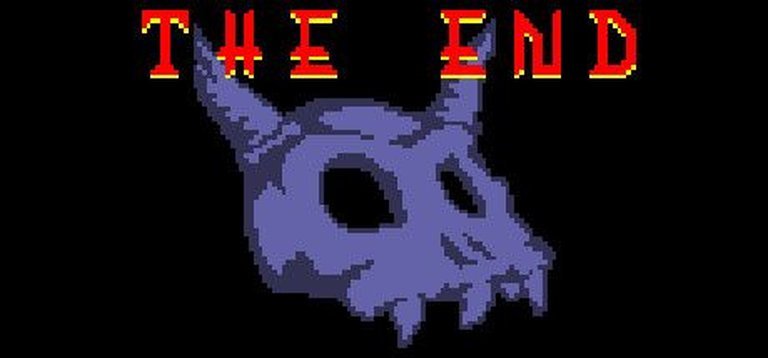
Description
The End o,,,o is an action-adventure game following a zombie’s perilous journey home. Players navigate side-view fantasy environments, using Fireballs to defeat enemies and bosses while contending with a deliberately low 3 FPS framerate that makes timing critical for precise jumps and attacks, where any hit or pitfall means instant failure.
Where to Buy The End o,,,o
PC
The End o,,,o Guides & Walkthroughs
The End o,,,o: Review
Introduction: A Ghost in the Machine of Gaming History
In the vast, digitized archives of gaming history, certain titles exist as spectral presences—known by a handful of hardcore collectors, documented in a single database entry, but otherwise lost to the void of obscurity. The End o,,,o is one such title. Released in September 2015 by the enigmatic solo developer “xrrawva,” this Windows-exclusive action-adventure game represents a fascinating anomaly: a work that eschews mainstream appeal with almost defiant austerity, its core mechanic a deliberate, crippling limitation—a framerate capped at a glacial three frames per second. This review seeks to excavate the meaning and merit of this obscure artifact. My thesis is that The End o,,,o is not a failed game by conventional metrics, but a deliberate, rigorously disciplined experiment in player experience, transforming the basic acts of jumping and shooting into a meditative, punishing ritual. Its legacy is not one of influence, but of stark, conceptual purity.
Development History & Context: The Auteur in the Attic
The provided source material offers a profound silence on the history of The End o,,,o. The MobyGames entry confirms only the most skeletal facts: a single developer, “xrrawva,” self-published the game on Steam on September 27, 2015. There are no credits, no listed team, no development stories, no post-launch patches. The game exists in a vacuum, a solitary project dropped into the digital ecosystem of 2015 with no fanfare, no marketing, and no visible community beyond the 15 players who have it in their MobyGames collection.
This absence of context is, in itself, the context. The game was born in the mid-2010s, an era of increasingly polished, live-service AAA titles and the vibrant, accessible indie scene on platforms like Steam. Against this backdrop, The End o,,,o’s 3 FPS cap is not a technical limitation of the era (by 2015, 60 FPS was a standard target), but a conscious, auteurist choice. It suggests a creator working completely outside commercial pressure or trend, pursuing a singular, abrasive vision. The title itself—”The End o,,,o”—with its apparent typographical glitch or intentional fragmentation, hints at a theme of breakdown, decay, and imperfection. We are left to infer that xrrawva was a lone developer operating with the aesthetic of outsider art, creating a game that is less a product for a market and more a statement placed onto it.
Narrative & Thematic Deep Dive: The Zombie’s Pilgrimage
From the lone sentence of its official description—”The End o,,,o is an action-adventure game following a zombie who is trying to go home.”—the narrative emerges as starkly minimalist and existentially bleak. The protagonist is a zombie, a traditional avatar of mindless decay and hunger, yet here it is imbued with a singular, almost human purpose: “trying to go home.” This is a profound inversion of the zombie mythos.
Plot & Characters: There is no dialogue, no character names, no backstory provided in-game. The “home” is not described; it is a goal drawn from an innate, perhaps fading, memory. The environments act as the storytelling devices. The player traverses “different environments”—implied to be a mix of platforming stages and combat arenas—that likely represent a corrupted, hostile world. The enemies are presumably other monsters or survivors, but the source gives them no identity beyond being obstacles. The true antagonist is the game’s own mechanical cruelty: the 3 FPS cap, which turns every jump, every projectile, every moment of navigation into a tense calculation.
Themes: The game is a parable of futility and perseverance. The zombie’s quest is inherently tragic; as a reanimated corpse, the concept of “home” is a cognitive ghost, a remnant of a life it can never truly return to. The path to this illusory home is paved with the necessity of violence (“defeating enemies”) using a scarce resource: fireballs picked up throughout the levels. This creates a cycle of consumption and destruction to achieve a peaceful goal, mirroring the zombie condition itself. The core theme, reinforced by the title’s broken syntax, is the end of things—the end of life, the end of hope, the end of smooth experience. The journey is the end, a process of decaying movement toward a final, quiet oblivion (a “game over” state). The game mechanically enforces this: the stuttering framerate makes the world feel broken, glitching, at its end.
Gameplay Mechanics & Systems: The Ritual of Three
This is the sole and defining axis of The End o,,,o‘s design. Every other system orbits this central, gravitational imposition.
Core Loop & Framerate Cap: The 3 FPS cap is not a bug but the foundational rule. It means the game updates only three times per second. In a platformer, this transforms jumping from a reflexive action into a terrifying act of prediction. The player must learn the exact timing of the world’s discrete, jittery steps. A jump must be initiated at a specific moment in this staccato rhythm, requiring a deep, memorized internalization of the level’s “heartbeat.” Similarly, firing a fireball requires anticipating the three-frame cycle of an enemy’s movement pattern. This is turn-based execution in a real-time shell. Success is not about speed or reaction, but about synchronization with a broken metronome.
Combat & Progression: Combat is binary and unforgiving. Fireballs are the only weapon, picked up as consumables. There is no health regeneration, no armor, no complex combos. An enemy hit or a single fall into a pit results in an immediate “game over.” There is no character progression in the RPG sense; the only “progression” is the player’s growing, painful mastery of the 3 FPS cadence and the memorization of level layouts. The boss fights, as described, are simply the ultimate test of this mastery—pattern recognition and execution under the extreme pressure of the framerate.
UI & Innovation: The UI is presumed to be minimal, a raw HUD showing fireball count or score. The innovation is purely philosophical: the deliberate crippling of interactivity as a game. It asks, “What remains of a platformer when the platform is a strobe light?” The answer is a game of immense tension and focus, where the primary opponent is the player’s own ingrained expectation of fluid motion. The flaw is its sheer, unyielding brutality, which will deter all but the most masochistically curious or analytically minded players.
World-Building, Art & Sound: The Aesthetic of Glitch-Punk
With no screenshots in the provided sources beyond a placeholder, the visual and auditory identity must be inferred from its context and genre markers, but its conceptual aesthetic is clear.
Visual Direction & Setting: Likely utilizing simple, retro or minimalist pixel art or low-poly 3D (common for solo devs in 2015), the “fixed / flip-screen” perspective suggests a series of single-screen or scrolling arena challenges, like an ultra-hard arcade title. The “fantasy” and “horror” tags point to a grim, possibly surreal landscape—rotting castles, graveyards, or abstract, pulsing voidscapes, rendered with a rough, unpolished edge that complements the jittery framerate. The world feels broken, like the code it runs on.
Sound Design: The sound would be essential to counteract the visual stutter, providing a uninterrupted rhythmic guide. Expect a droning, minimalist soundtrack—perhaps a single, looping ambient track or a harsh noise score—that provides a steady 60+ BPM pulse for the player to lock onto, making the 3 FPS visual jolts feel like a glitch in the matrix rather than a loss of audio sync. Sound effects for jumps and attacks would need to be crisp and immediate to compensate for the visual delay.
Atmosphere Contribution: The combination of a glitchy, low-framerate visual with a steady, oppressive audio track would create a deeply unsettling, anachronistic horror. It feels like a malfunctioning arcade cabinet from a hell dimension, where the machinery itself is the primary source of dread. The aesthetic is one of digital decay.
Reception & Legacy: The Silence of the Void
Critical & Commercial Reception: There is no record of professional critic reviews for The End o,,,o on MobyGames. The player review section is empty. Its commercial performance is invisible; it is listed as “$0.00 new on Steam,” suggesting it may have been a free release or so low-priced as to be negligible. It was collected by only 15 players in the MobyGames database. This is the reception of a ghost: a complete absence of discourse.
Evolution of Reputation & Influence: The game has no detectable reputation to evolve. It has not been the subject of retrospectives, “hidden gem” lists, or scholarly analysis. Its influence on the industry is zero. It exists in a state of perfect, un-polluted obscurity. However, its conceptual purity makes it a touchstone for the “punitive game” subgenre—games like Cat Mario, Kaizo Mario, or Getting Over It with Bennett Foddy that use brutal difficulty as a core philosophical statement. The End o,,,o is arguably more extreme than these, using a systemic, technical constraint rather than just cruel level design. Its legacy is that of a curio, a game that demonstrates the elasticity of “gameplay” by removing one of its most fundamental pillars (smooth time) and seeing what结构 remains. It is a direct descendant of the “demoscene” ethos of technical constraint breeding creativity.
Conclusion: A Monument to Mechanical Austerity
The End o,,,o is not a game to be recommended. Its 3 FPS cap is an act of profound hostility toward the player’s ingrained sensory expectations, making it fundamentally unpleasant by any standard of player comfort. It is a game likely to be abandoned within minutes by 99.9% of those who attempt it.
Yet, in its uncompromising austerity, it achieves a kind of brutal, conceptual brilliance. It is a pure, unadulterated expression of a single design idea. It asks the question: “What is a game?” and answers with a stripped-down ritual of input and consequence, divorced from the lavish presentation and responsive feel we demand. It is a digital via dolorosa, a path of suffering leading to a “home” that may not exist.
Its place in video game history is not that of a classic or an influencer, but as a radical artifact. It stands as a testament to the fact that within the boundless sandbox of game design, someone chose to build a prison for motion itself. It is a game for no one, made by someone, and in that solitude, it is utterly, fascinatingly authentic. To play The End o,,,o is not to be entertained, but to witness a bizarre, glitch-ridden monument to one developer’s vision of an end—the end of smoothness, the end of ease, the end of the world as we know it. For that, it warrants a singular, respectful acknowledgment: ★☆☆☆☆ (1/5) – A deliberately alienating and historically significant curiosity, not a successful entertainment product.
Final Verdict: A fascinating but fundamentally broken experiment in constrained game design, valued only as an extreme conceptual statement. It has no audience, no legacy, and no purpose beyond the proof of its own harsh premise. It is, in the truest sense, The End.