
- Release Year: 2001
- Platforms: Windows
- Publisher: Empire Interactive Europe Ltd.
- Developer: Clickteam SARL
- Genre: Action
- Perspective: Side view
- Game Mode: Single-player
- Gameplay: Platform
- Setting: Isometric
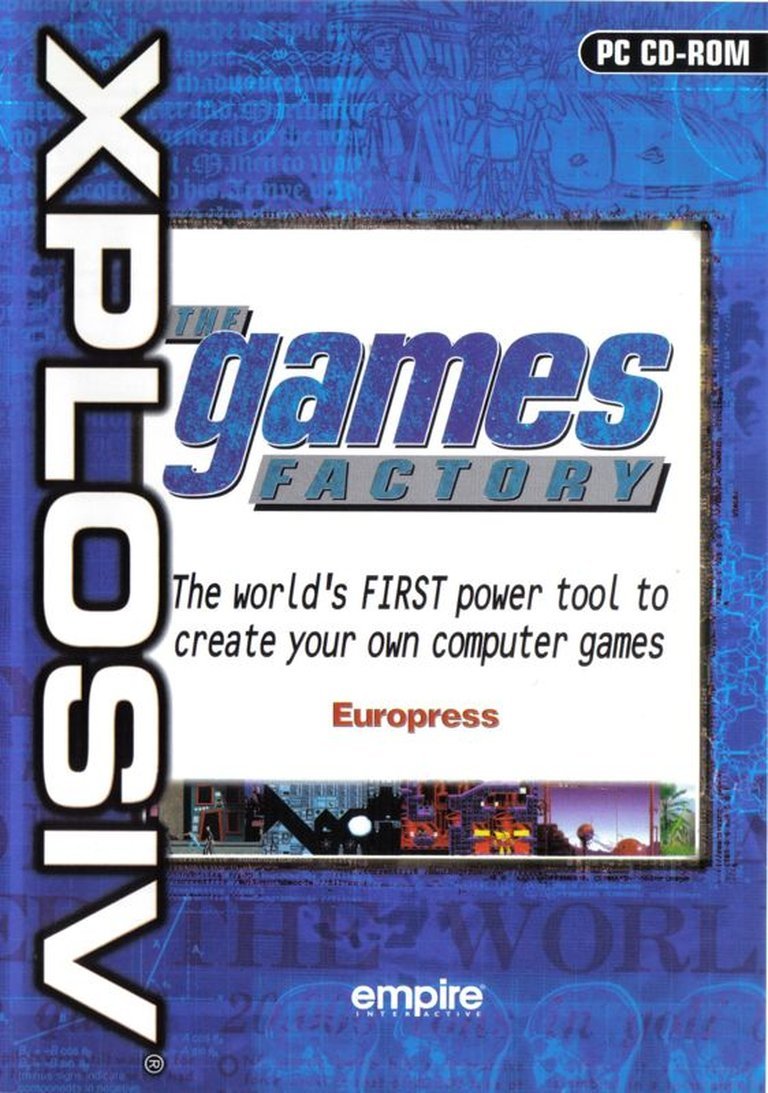
Description
The Games Factory is a game creation software released in 2001 for Windows, designed to empower users to develop their own games. It comes with three example games—Zeb, Lobotomy, and Magician’s Lair—that demonstrate the software’s capabilities. These games span various genres, including side-scrolling shooters, platformers, and isometric action games. The software allows users to create and distribute their games but restricts commercial sales.
The Games Factory Mods
The Games Factory: An Archeological Review of a Game Creation Pioneer
Introduction
In the pantheon of video game history, The Games Factory (2001) occupies a quiet but pivotal role. Developed by Clickteam, this Windows-based game creation software epitomized the democratization of game development in the early 2000s, empowering hobbyists to craft their own interactive experiences without coding expertise. While overshadowed by modern engines like Unity or RPG Maker, The Games Factory laid foundational stones for user-generated content, blending accessibility with creative possibility—a thesis underscored by its three built-in games and drag-and-drop logic. This review dissects its legacy, mechanics, and cultural footprint.
Development History & Context
The Clickteam Vision
Founded by François Lionet and Yves Lamoureux, Clickteam emerged from the ashes of the 1990s PC gaming boom. Their earlier tool, Klik & Play (1994), had already simplified game creation with visual scripting, but The Games Factory refined this vision. Aimed at non-programmers, it stripped away technical barriers, offering a canvas for aspiring developers to experiment.
Technological Constraints
Released in 2001, the software navigated the limitations of its era:
- Hardware: Designed for Windows PCs with CD-ROM drives, it leveraged the era’s shift toward multimedia but struggled with 3D rendering, favoring 2D sprites and isometric views.
- Distribution: Games could be freely shared but not sold commercially—a restriction that deterred professional use but fostered a grassroots community.
The 2001 Landscape
At the time of release, the gaming world was bifurcated. AAA studios like Square Enix (Final Fantasy X) dominated consoles, while PC modding communities flourished. The Games Factory carved a niche between these poles, offering a sandbox for bedroom coders.
Narrative & Thematic Deep Dive
The Sample Games
The Games Factory included three demonstrative titles, each showcasing different genres and mechanics:
- Zeb: A side-scrolling platformer featuring rudimentary shoot-’em-up action. Its narrative was minimal—protagonist vs. enemies—but it emphasized kinetic gameplay.
- Lobotomy: A Donkey Kong-esque climb-and-avoid game. The theme revolved around escaping a chaotic lab, marrying slapstick humor with tense platforming.
- Magician’s Lair: An isometric protector game where players fend off imps threatening sheep. Its whimsical aesthetic masked strategic depth.
Underlying Themes
As a creation tool, The Games Factory’s core theme was empowerment. It prioritized imaginative experimentation over polished storytelling, reflecting the DIY ethos of early internet communities.
Gameplay Mechanics & Systems
Core Loop
The software operated on a drag-and-drop event system:
- Objects & Events: Users placed sprites (called “objects”) and defined interactions via conditional statements (e.g., “If player presses LEFT, move character”).
- Extensibility: Philippe Paquet and Yves Lamoureux’s “Extension Objects” allowed advanced users to inject custom functionality, bridging the gap between novices and experts.
UI & Accessibility
The interface was utilitarian but intuitive, with a grid-based workspace and object palette. While lacking modern features like real-time debugging, its simplicity lowered the learning curve.
Flaws
- Limited Depth: Complex mechanics (e.g., physics, AI) were cumbersome to implement.
- No Commercial Licensing: The inability to monetize creations stifled broader adoption.
World-Building, Art & Sound
Visual Design
The bundled games relied on pixel art and pre-rendered sprites:
- Zeb: Crisp, cartoonish visuals reminiscent of 16-bit platformers.
- Magician’s Lair: Charming isometric dioramas, evoking Populous’s god-game aesthetic.
Sound & Music
Mel Croucher and Darren Ithell’s contributions were functional but unremarkable—chip-tune tracks and punchy SFX that complemented gameplay without overshadowing it.
Atmosphere
The software’s minimalist art tools encouraged users to focus on gameplay over aesthetics, resulting in a “digital playground” vibe.
Reception & Legacy
Initial Impact
While no critic reviews are archived on MobyGames, the Reddit thread highlights debates over its “World’s First” claim—a marketing gambit contested by HTML/Java tools. Yet its influence was undeniable:
- Community Legacy: Inspired a generation of creators who later migrated to GameMaker or Construct.
- Industry Ripple: Clickteam’s later Fusion engine powered indie hits like Five Nights at Freddy’s, proving the long-tail value of its philosophy.
Modern Reappraisal
Today, The Games Factory is a relic—a stepping stone toward today’s no-code revolution. Its limitations (e.g., no 3D support) are glaring, but its ethos of accessibility remains prescient.
Conclusion
The Games Factory was neither the first nor the most powerful game creation tool, but it was a democratizing force in an era of rising technical barriers. By privileging simplicity over sophistication, it granted countless amateurs their first taste of game design—a legacy that outweighs its technical constraints. In video game history, it stands as a quiet pioneer, bridging the gap between Klik & Play’s idealism and modern engines’ ubiquity. For historians and hobbyists alike, it’s a testament to the power of creative tools, however humble.
Final Verdict: A flawed but foundational artifact in the evolution of user-generated gaming.