
- Release Year: 2003
- Platforms: Windows
- Publisher: Aspyr Media, Inc., JoWooD Productions Software AG, THQ Nordic Inc.
- Developer: JoWooD Productions Software AG
- Genre: Compilation
- Perspective: Third-person
- Game Mode: Single-player
- Average Score: 90/100
Description
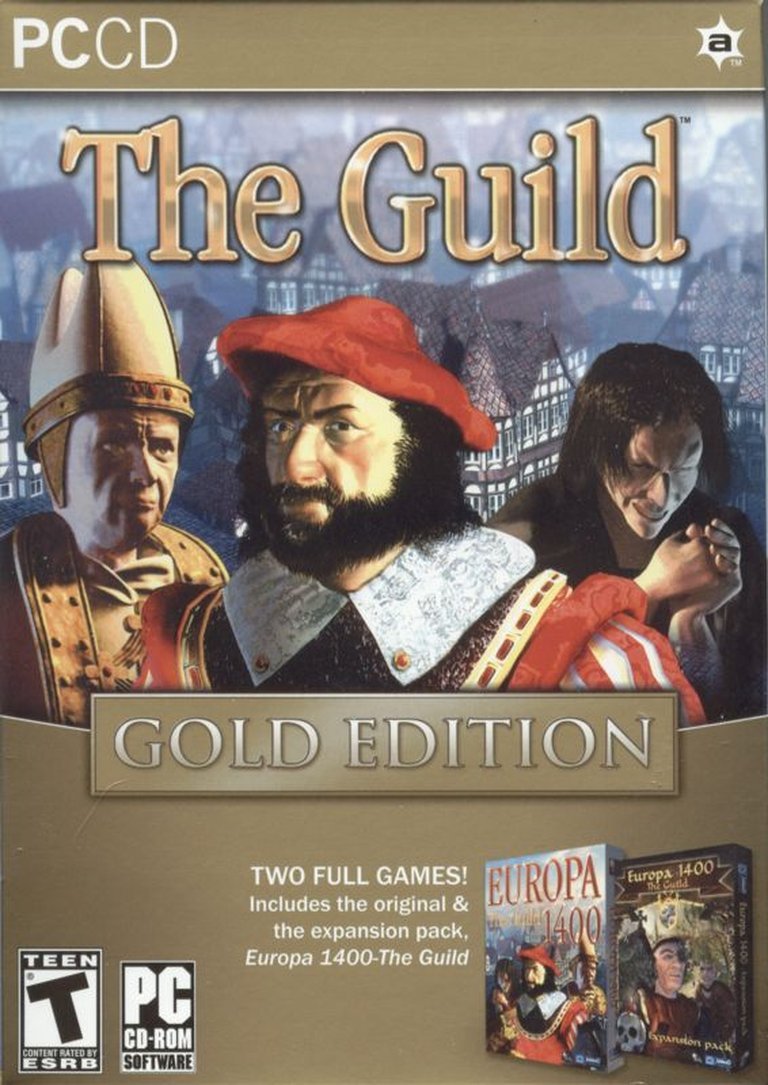
The Guild: Gold Edition is a comprehensive compilation set in medieval Europe, combining elements of life simulation, real-time strategy, and role-playing. Players manage a family dynasty, starting from humble beginnings, and navigate through various professions to achieve power and wealth. The game includes the base game ‘Europa 1400: The Guild’ and the expansion pack ‘Die Gilde: Gaukler, Gruften & Geschütze’, offering an immersive experience in historic European cities.
Gameplay Videos
Where to Buy The Guild: Gold Edition
The Guild: Gold Edition Cracks & Fixes
The Guild: Gold Edition Patches & Updates
The Guild: Gold Edition Guides & Walkthroughs
The Guild: Gold Edition Reviews & Reception
metacritic.com (90/100): The Gold Edition of The Guild also includes its expansion pack and provides the same amazing gameplay as just the basic game alone. The life / economic simulation offers hours of excitement and various surprises.
steamcommunity.com : The Guild Gold Edition offers a uniquely layered approach to strategy gaming, blending personal role-playing, business management, political intrigue, and long-term family progression into a sprawling sandbox.
The Guild: Gold Edition: A Medieval Dynasty Simulator Ahead of Its Time
Introduction
In an era dominated by real-time strategy and city builders, The Guild: Gold Edition (2003) dared to fuse economic simulation, political intrigue, and generational legacy-building into a singular, ambitious vision. This compilation—bundling Europa 1400: The Guild (2002) and its expansion Die Gilde: Gaukler, Gruften & Geschütze—offered a sprawling sandbox where players shaped not just businesses, but dynasties. While its clunky interface and steep learning curve alienated some, its depth and emergent storytelling cemented its cult status. Two decades later, The Guild remains a fascinating artifact: a German-developed gem that foreshadowed the rise of hybrid genre games like Crusader Kings and Mount & Blade.
Development History & Context
Developed by 4HEAD Studios (later Spellbound Entertainment) and published by JoWooD Productions, The Guild emerged from a niche gaming landscape hungry for complexity. Led by Lars Martensen and Tobias Severin, the team of roughly 10 members aimed to simulate medieval life with unprecedented granularity. The project began in 1997, but technological constraints of the early 2000s—particularly limited 3D rendering capabilities and hardware limitations—forced creative compromises. The result was a game that prioritized systemic depth over graphical polish, using a hybrid 2D/3D engine to render bustling European cities.
At release, The Guild faced stiff competition from titles like The Sims and Stronghold, yet carved its niche by combining nonlinear gameplay with strategic dynasty-building. Its Gold Edition (2003) refined the experience, integrating expansion content like the rogue-focused “Jesters, Crypts & Cannons” update, which expanded criminal careers and military mechanics.
Narrative & Thematic Deep Dive
The Guild: Gold Edition lacks a traditional plot, instead generating stories through systemic interactions. Players begin as a 13-year-old inheriting their family’s profession—blacksmith, thief, preacher, or merchant—and navigate a web of alliances, rivalries, and political schemes. The core themes revolve around power, legacy, and moral ambiguity.
- Characters: NPCs are not scripted personalities but dynamic actors with their own ambitions. Rivals might sabotage your trade routes, sue you in court, or assassinate your heirs.
- Dialogue: Minimalist but impactful, reflecting medieval social hierarchies (e.g., groveling before a mayor to avoid taxes).
- Themes: The game critiques feudalism’s brutality, letting players bribe, blackmail, or murder their way to dominance. Your dynasty’s survival often demands ethical compromise, mirroring Machiavelli’s The Prince.
The expansion deepened these themes, introducing jesters (for espionage) and crypts (for smuggling), underscoring the era’s cutthroat opportunism.
Gameplay Mechanics & Systems
The Guild is a multi-layered simulation blending:
-
Economic Management:
- Run workshops, hire workers, and manipulate supply chains.
- Adapt to dynamic markets—overproduce bread, and prices crash.
-
Political Climbing:
- Campaign for mayor, pass laws favoring your trade, or frame opponents for treason.
-
Dynasty Building:
- Marry strategically, train heirs, and inherit traits (e.g., a blacksmith’s son starts with +2 Strength). Death is a milestone, not an endpoint.
-
Criminal Underworld:
- The expansion added burglary, piracy, and underground networks, rewarding players who embraced chaos.
Flaws:
– UI Complexity: Cluttered menus and poor tooltips frustrated newcomers.
– Balance Issues: Late-game politics could trivialize economic challenges.
– Multiplayer Instability: Fans later patched netcode to stabilize 8-player matches.
World-Building, Art & Sound
Set in historically grounded cities like Cologne and Hanover, The Guild’s world feels authentically medieval, albeit visually dated.
- Visuals: The 3D engine, functional for 2002, struggles by modern standards. Zoomed-out cityscapes charm with smoke-belching workshops, but character models are rudimentary.
- Sound Design: Composers Gerhard Ottmer and Christoph Isermann crafted a lute-heavy soundtrack that evokes taverns and trade routes. Crushing wheat or clanging anvils provide satisfying auditory feedback.
- Atmosphere: Plagues, fires, and peasant revolts create a lived-in tension, though limited voice acting (mostly grunts and barks) lessens immersion.
Reception & Legacy
Upon release, Europa 1400: The Guild earned “generally favorable” reviews (Metascore: 82), praised for its ambition but critiqued for its opacity. GameSpot lauded its “addictive depth,” while IGN called it “maddening yet fascinating.” The Gold Edition smoothed rough edges, securing a 74% positive Steam rating today.
Legacy:
– Inspired successors like The Guild 2 (2006) and indie hybrids like Medieval Dynasty.
– Demonstrated the appeal of systemic storytelling years before Crusader Kings II.
– Remains a cult favorite, with mods like Gustav the Guard (adding NPC sentries) extending its lifespan.
Conclusion
The Guild: Gold Edition is a flawed masterpiece—a game that sacrifices accessibility for depth, offering a medieval tapestry where every decision resonates across generations. Its janky interface and Euro-jank quirks haven’t aged gracefully, yet its vision of dynastical empire-building remains unmatched. For historians, it’s a testament to early 2000s experimental design; for players, it’s a demanding but rewarding time capsule. In the pantheon of life sims, The Guild stands as a rough-cut diamond: unpolished, unforgettable, and irrefutably influential.
Final Verdict: 7/10 – A niche titan whose ambition outweighs its execution, but whose legacy endures.