
- Release Year: 2011
- Platforms: Windows, Xbox 360
- Publisher: Coltran Studios
- Developer: Coltran Studios
- Genre: Action
- Perspective: Top-down
- Game Mode: Co-op, Online PVP, Single-player
- Gameplay: Automatic scrolling, Boss battles, Combat, Dungeon crawl, Horde mode, Twin-stick shooter, Upgrades
- Setting: Dungeon, Fantasy
- Average Score: 70/100
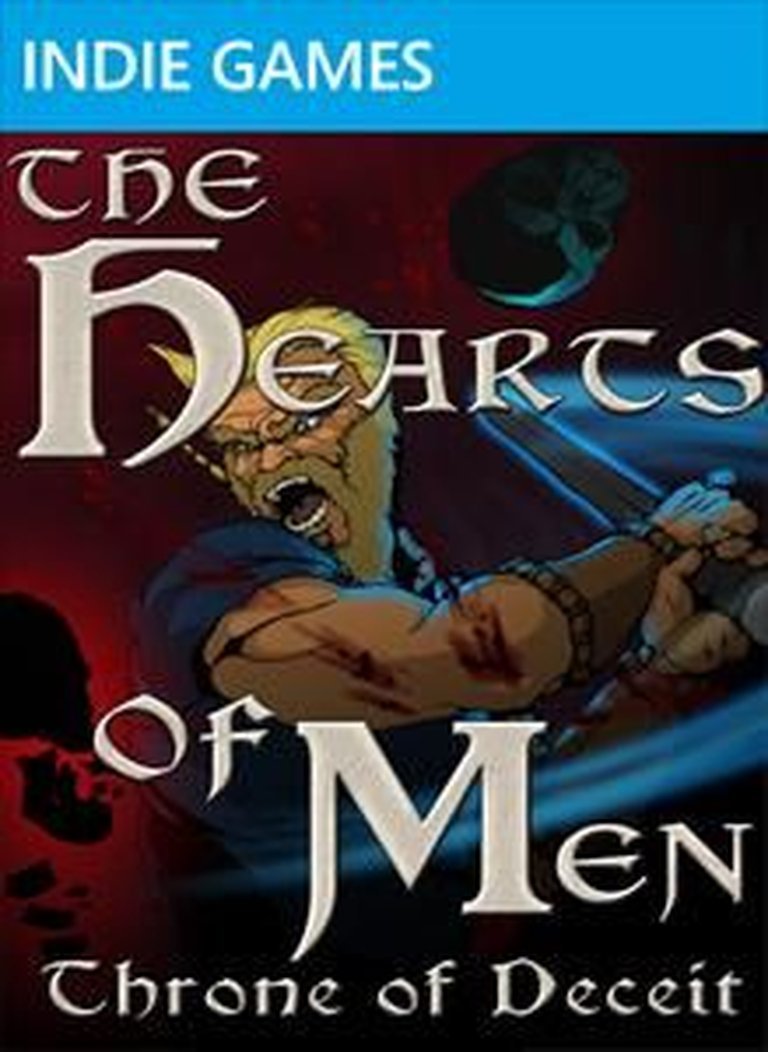
Description
The Hearts of Men: Throne of Deceit is a top-down action game that revives the classic Gauntlet formula, featuring four heroes—a warlock, viking, elf, and warrior—each driven by personal motivations like revenge, as they navigate maze-like dungeons. Players use twin-stick shooter controls to battle hordes of enemies, destroy monster generators to stop reinforcements, collect keys, and manage health with respawns, supporting solo or local co-op play alongside an arcade mode for endless combat, all presented through comic book-style storytelling.
Gameplay Videos
The Hearts of Men: Throne of Deceit Reviews & Reception
n4g.com (70/100): When attempting to mimic a game that defined the console hack and slash genre, certain standards must be met. Unfortunately, The Hearts of Men doesn’t meet every criteria that made Gauntlet and its sequels so popular. That being said, it provides a cheap way to feel some of that co-op excitement again.
The Hearts of Men: Throne of Deceit: A Gauntlet Homage Lost in the Dungeon
Introduction: The Echo of a Legend
In the crowded hallways of video game history, certain titles serve not as pillars, but as poignant footnotes—games whose ambitions were grand, whose inspirations noble, yet whose execution left them stranded in the shadow of the very classics they sought to emulate. The Hearts of Men: Throne of Deceit (2011) is precisely such a footnote. Emerging from the vibrant, chaotic, and unforgiving ecosystem of the Xbox Live Indie Games (XBLIG) marketplace and the PC digital scene, it arrived with a clear mission: to resurrect the electrifying co-operative dungeon-crawling frenzy of Gauntlet Legends for a new generation armed with twin-stick controllers. Developed by the one-man (or small-team) studio Coltran Studios, it promised an updated formula with modern controls, upgrade systems, and a comic book narrative. However, a deluge of contemporary reviews reveals a tragic disconnect between vision and reality, a game that repeatedly chose punitive design over player engagement. This review will argue that Throne of Deceit is a fascinating case study in the pitfalls of indie homage-making, where a fundamental misunderstanding of its source material’s magic, compounded by questionable design priorities and technological constraints, resulted in a title remembered more for its frustrating missteps than its fleeting moments of fun. Its legacy is不是 one of influence, but of caution.
Development History & Context: Ambition in the XBLIG Trenches
To understand Hearts of Men, one must first understand its birthplace. Late 2011 was a peculiar time for independent game development. The Xbox 360’s XBLIG service was a digital wild west—a low-barrier-to-entry marketplace flooded with games made using Microsoft’s XNA framework. It was a democratizing force, allowing anyone with a PC and an idea to publish, but it was also a race to the bottom, where visibility was scarce, and quality control non-existent. Against this backdrop, Coltran Studios, led by Jason Zielinski and Simon Jäger, sought to create a “premium” experience within an “indie” price point (80 Microsoft Points, or $1).
Their vision was directly inherited from the golden age of arcade and console co-op. The Gauntlet series, particularly Gauntlet Legends (1998) on the Dreamcast and N64, was the titan of the genre: a top-down, four-player, monster-mashing romp through labyrinthine dungeons, defined by its simple controls, frantic pace, and iconic “Your wizard needs food, badly!” humor. Coltran’s stated goal, as per promotional material and the game’s own description, was to modernize this formula. The primary leap was the control scheme: replacing Gauntlet‘s directional movement and independent attack button with a twin-stick shooter configuration (left stick moves, right stick aims), a perfect fit for contemporary gamepads and a genre staple in its own right.
The technological constraints were those of XNA and the era’s mainstream indie tools: limited online functionality, reliance on simple 2D sprites in a 3D space, and the pressure to deliver a full-featured product on a shoestring budget. The credits list only six developers, with the rest of the 29-person credit list comprising “Special Thanks.” This small core team had to handle design, programming, art, and sound. The inclusion of prolific royalty-free composer Kevin MacLeod (whose tracks like “Serpentine Trek” and “Heavy Interlude” are listed) and voice actress Kira Buckland (known for her extensive work in anime games and indie titles) indicates an attempt to punch above their weight in audio presentation, a common strategy for XBLIG developers to add perceived value. The game’s dual release—Windows in November 2011, followed by Xbox 360 in March 2012—was standard for the era, aiming to capture both the PC indie audience and the console marketplace.
Narrative & Thematic Deep Dive: A Comic Book Premise Undeveloped
Where Hearts of Men attempts to distinguish itself most audaciously is in its narrative framing. Eschewing the bare-bones mythological premise of Gauntlet, it promises a story of personal motive and political intrigue, delivered through a 28-page digital comic book. The four playable archetypes—a Warlock, a Viking, an Elf, and a Warrior—each have a stated motivation: the Viking, for instance, seeks revenge for his murdered family. This is a significant thematic upgrade on paper, moving from generic “save the kingdom” to character-driven stakes.
However, the execution is where this element collapses. The comic pages, as noted by reviewer “NinjaByNight” from D-Pad Not Included, are “well done” and “far exceeds what the game proper actually showcases.” This is damning praise. The narrative exists in a silo; it is a prelude and occasional reward, but it has zero mechanical or environmental integration. The game’s levels—generic forests, castles, and dungeons—betray no evidence of the personal stories they are supposed to represent. The Viking’s revenge is not reflected in unique enemy types, environmental storytelling, or dialogue variations. The “Throne of Deceit” in the title suggests a coup or betrayal, but the gameplay is simply “visit a dungeon and kill everything inside,” as the MobyGames description succinctly states. The comic is a nice bonus, a piece of art that hints at a richer world, but its themes of revenge, loyalty, and deceit are completely abandoned the moment the player presses “Start.” It is a narrative appendix, not an incorporated soul, making the “The Hearts of Men” title feel increasingly ironic as the game progresses. The story is not experienced; it is read once and forgotten.
Gameplay Mechanics & Systems: The Gauntlet Formula, Distorted
The core gameplay loop is immediately recognizable to any Gauntlet veteran: top-down perspective, maze-like levels, hordes of constantly respawning enemies emanating from generators, keys to find, doors to unlock, and a health bar that depletes with every hit. Coltran’s central innovation is the twin-stick control scheme. In theory, this is a brilliant modernization. It allows for 360-degree aiming, faster reaction times, and a more fluid, arcade-shooter feel than Gauntlet‘s mechanic. For players comfortable with the genre, this can feel empowering and fresh.
Yet, this core is surrounded by a web of flawed or infuriating systems:
-
Progression & Upgrades: Between levels, coins collected from enemies are spent in a shop to upgrade weapons, armor, and magic. The concept is sound. The implementation is widely criticized. As Indie Gamer Chick states, upgrades are often “useless,” citing the example of a full health refill on meat, of which there is “usually only one per stage.” This creates a progression feel that is both unrewarding and misleading—players grind for coins that may not meaningfully improve their survivability against the brutal difficulty.
-
Health &生存: Health is restored by collecting hearts (from enemies) and meat (level-specific pickups). This classic mechanic is the sole lifeline. The problem is the relentless, indiscriminate damage output of enemies, combined with the scarcity of healing items. The game quickly shifts from a test of skill to a test of attrition and luck.
-
The Dickhead Design Philosophy: This is the central, unanimous critique from players. Indie Gamer Chick‘s now-infamous rant crystallizes it, but it’s echoed in every substantive review. The difficulty is not “challenging” in a fair, learning-way sense; it is frequently “unfair” and “punishing.”
- Enemy Spawners & Unkillable Archers: Enemies often spawn from invulnerable generators that must be destroyed. This is standard. However, placing archers on high, inaccessible platforms who fire with perfect accuracy, forcing the player to use scarce bombs, is not challenge—it is a “dick move.”
- Auto-Scrolling Sections: The inclusion of automatic-scrolling segments is baffling in a Gauntlet-style game. As the review states, these sections demand constant forward movement and punish dead ends with instant death, all while visibility is often limited and floor textures are indistinguishable from walls. This transforms a game of tactical dungeon exploration into a game of memorization and blind luck.
- Boss Design: The third boss is specifically called out as looking “just like any other normal enemy,” a clear sign of rushed development and a lack of iconic, memorable antagonists that defined Gauntlet‘s boss fights.
-
Lives & Respawn: Losing all lives ends the game. Respawning at the point of death (losing a life) is standard, but in the context of instant-death scrolling sections and overwhelming enemy swarms, it turns failure into a brutal, progress-erasing penalty.
-
Multiplayer – The Fatal Flaw: This is the game’s most damning and baffling failure. The campaign is designed for local co-op, but has NO online co-op. Instead, the online component is limited to competitive deathmatch and territory control modes on barren maps. As the D-Pad Not Included review perfectly asks: “What kind of question is that? You would have to be a fucking moron to answer with anything else [than co-op].” The developers’ own comment on that review admits it: “this is what we based the whole premise of the game on… in time, our ignorance of the limitations set on xblig outweighed our enthusiasm for cramming levels with characters and playing co op.” This is not just a missed feature; it is a fundamental betrayal of the Gauntlet fantasy. The entire point of such games is shared, chaotic, screen-side camaraderie. Denying that experience online in 2012, when even early Left 4 Dead had solved the problem, was a catastrophic misreading of the market and the genre’s soul.
World-Building, Art & Sound: A Tale of Two Aesthetics
The game’s aesthetic presentation is schizophrenic, split between two vastly different quality tiers.
The Environments & Sprites: The in-game graphics are functional, generic, and low-budget. Dungeon tilesets are simple, enemy sprites are basic (often just color-swapped ghosts or skeletons), and the top-down perspective can make navigation confusing, especially in auto-scroll sections where environmental clues are non-existent. The technical execution is competent for XBLIG but lacks any distinctive style or atmospheric punch. The “maze-like dungeon” feels like a Procedural-Generation-Lite, with repetitive assets and no sense of place.
The Comic Book Art: This is the game’s undisputed, shining achievement. The 28-page comic, illustrated in a clean, dynamic, modern comic style, is presented with professional panel layouts and expressive character art. It provides the backstory and motivations that the game itself ignores. Its inclusion is a testament to the team’s artistic ambition and a frequent point of praise in reviews. It creates a stark contrast: players are treated to a promising narrative preamble in gorgeous comic form, only to be dropped into a bland, hostile dungeon where that narrative means nothing. It is the game’s greatest asset and its most painful tease.
Sound Design: The soundtrack, largely composed by Kevin MacLeod, is appropriately epic and driving, utilizing orchestral and fantasy motifs that suit the action. It is professional and effective, if somewhat generic. The sound effects for weapons and enemies are standard but clear. Kira Buckland’s voice work is presumably for the comic narration or in-game cues, but it is not a highlighted feature, suggesting it may be sparse. The audio, like the comic, is a professional layer applied to a shaky foundation.
Reception & Legacy: A Flash of Notoriety, Not Fame
The Hearts of Men: Throne of Deceit was not a commercial sensation nor a critical darling. Its Metacritic page for Xbox 360 shows no critic reviews and, historically, no user score—a sign of its obscurity. Its reception lives in the wilds of niche blogs and XBLIG forums, where it earned a reputation as a “mixed” title with significant, deal-breaking flaws.
The contemporary reception was defined by a clear consensus, as seen in the reviews sourced here:
* Indie Gamer Chick (5/10): A scathing, visceral takedown that became the game’s most famous critique, lambasting its “dickhead” design, useless features, and catastrophic lack of online co-op.
* D-Pad Not Included (60°/7.0): More measured but equally critical, highlighting the barren multiplayer, lack of variety, and the fact that “the one thing we actually wanted… was not allowed.” It called the comic art the “one redeeming quality.”
* Clearance Bin Review: Summed it up as “The Hearts of Men: Throne of Meh,” citing “flawed game mechanics, useless features, a lack of creativity and rage inducing difficulty spikes.”
Its commercial performance on XBLIG and PC was likely modest at best, quickly buried by the marketplace’s relentless churn. It has no notable sequels or spiritual successors from Coltran Studios (their next project, per the developer comment, sought to address these pitfalls).
Its legacy is therefore not one of influence on the industry—it is too obscure and flawed for that. Instead, its legacy is as a cautionary tale for indie developers:
1. Understand Your Genre’s Core Tenets: For a co-op dungeon crawler, online co-op is not a “nice-to-have”; it is the cornerstone. Omitting it is fatal.
2. Challenge vs. Punishment: Difficulty must feel earned. Systems that rely on player ignorance, instant-death traps with no telegraphing, and scarce resources create frustration, not respect.
3. Pacing is Key: The “Gauntlet fatigue” mentioned by reviewers—that the original games often overstayed their welcome—is a real phenomenon. A short, polished experience is better than a long, repetitive one.
4. Integrate, Don’t Append: A beautiful comic is worthless if the game doesn’t reflect its story. Every narrative element should serve the gameplay.
In the grand tapestry of gaming, Throne of Deceit is a minor, frayed thread. It represents a well-intentioned but deeply flawed attempt to revive a classic, hampered by a small team’s resource limitations and, more critically, a fundamental misalignment with what made that classic beloved. It is remembered today primarily through the lens of these reviews, as a case where “the developers had their heads firmly shoved up their own anal cavities,” to borrow the colorful phrasing of Indie Gamer Chick. It is a game for historians and completionists, a curiosity that demonstrates the fine line between homage and hollow imitation.
Conclusion: The Final Assessment
The Hearts of Men: Throne of Deceit is a game of profound contradictions. It features a genuinely good twin-stick control adaptation of the Gauntlet formula, supported by a professional soundtrack and a stunning comic book narrative that promises more than it delivers. Yet, it is systematically undermined by punitive, often unfair design decisions that prioritize developer-oriented challenge over player-oriented fun. Its complete absence of online co-op in an era where it was becoming standard is not a minor oversight but a cardinal sin that hollows out its core appeal. The auto-scrolling sections are an inexplicable genre-misfit that inject frustration where excitement should be.
Its place in video game history is that of a memorable failure. It does not belong in the canon of great Gauntlet successors, a title that arguably does not exist. Instead, it belongs in the curriculum of game design studies as an example of how not to modernize a classic. It is a testament to the fact that a strong core mechanic and artistic ambition are not enough; a game must be built on a foundation of respect for the player’s time, intelligence, and desire for shared experience. Throne of Deceit fails that test repeatedly. For $1 on XBLIG, it might have been a curious, flawed experiment. As it stands, it is a frustrating monument to wasted potential, a throne of deceit built on the hollow promise of a cooperative fantasy that was never truly delivered. Its final, definitive verdict is that it is not recommended—not as a bad game, but as a lesson in what happens when the heart of a game is lost to its own design.