
- Release Year: 2019
- Platforms: Nintendo Switch, PlayStation 4, Windows, Xbox One, Xbox Series
- Publisher: Soft Source Pte Ltd, Untold Tales S.A., VRESKI AB
- Developer: VRESKI AB
- Genre: Action
- Perspective: Top-down
- Game Mode: Single-player
- Gameplay: Shooter, Time manipulation
- Setting: Asia, City – Hong Kong
- Average Score: 75/100
Description
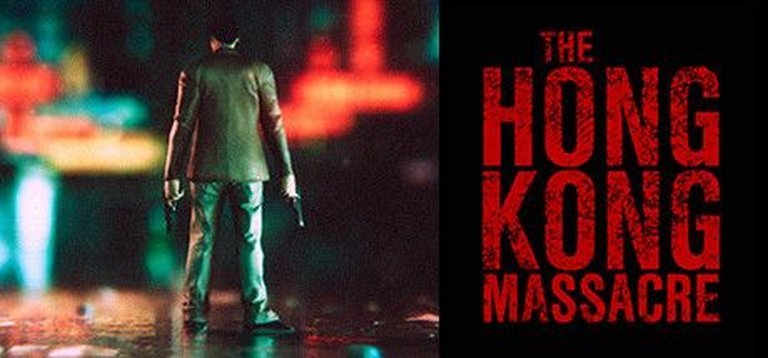
The Hong Kong Massacre is a fast-paced, top-down shooter set in the neon-lit streets of Hong Kong, blending intense action with time manipulation mechanics. Players take on the role of a lone gunman navigating through waves of enemies, utilizing slow-motion and strategic combat to survive in a gritty, stylized urban environment inspired by classic action films.
Gameplay Videos
Where to Buy The Hong Kong Massacre
The Hong Kong Massacre Free Download
The Hong Kong Massacre Patches & Updates
The Hong Kong Massacre Mods
The Hong Kong Massacre Guides & Walkthroughs
The Hong Kong Massacre Reviews & Reception
metacritic.com (85/100): A triumphant return to form for the series.
opencritic.com (85/100): The Hong Kong Massacre is a game that will leave you with vivid memories. The awesome stunts you pulled off, the impossible feats you were able to achieve, and the crazy killing sprees will all stick in your mind.
destructoid.com (60/100): The Hong Kong Massacre is an action movie fan’s dream played out in stylish slow-motion.
steambase.io (73/100): The Hong Kong Massacre has earned a Player Score of 73 / 100.
The Hong Kong Massacre: A Stylish, Flawed Love Letter to John Woo and Retro Shooters
Introduction: A Bullet Ballet of Revenge and Repetition
The Hong Kong Massacre (2019) is a game that wears its influences on its bloodstained sleeves. Developed by the two-person Swedish studio VRESKI, this top-down shooter is a passionate homage to the hyper-stylized gunfights of John Woo’s Heroic Bloodshed cinema, the neon-drenched brutality of Hotline Miami, and the bullet-time theatrics of Max Payne. It’s a game that promises—and often delivers—moments of exhilarating, slow-motion carnage, where the player embodies the archetypal “Cowboy Cop” on a Roaring Rampage of Revenge. Yet, beneath its slick veneer of diving through windows, dual-wielding pistols, and explosive set pieces, The Hong Kong Massacre struggles with repetitive design, janky mechanics, and a lack of depth that prevents it from ascending to the pantheon of its inspirations.
This review will dissect The Hong Kong Massacre in exhaustive detail, examining its development, narrative, gameplay, aesthetics, reception, and legacy. We’ll explore how it captures the essence of 1990s Hong Kong action cinema while also highlighting the cracks in its foundation. Most importantly, we’ll assess whether it stands as a worthy tribute to its influences or merely a fleeting, if entertaining, imitation.
Development History & Context: A Two-Person Passion Project
The Birth of VRESKI and a Dream of Cinematic Gunplay
VRESKI, founded in Malmö, Sweden, in 2016, is the brainchild of two developers who sought to channel their love for Hong Kong action films into a video game. The Hong Kong Massacre was not just their debut project—it was their raison d’être. Development began as early as 2014, with the team prototyping a 2D shooter before transitioning to a 3D pipeline using the Unity engine. This shift was crucial, as it allowed for the destructible environments and dynamic camera angles that would become central to the game’s cinematic aspirations.
The studio’s modest size—just two core developers—meant that The Hong Kong Massacre was a labor of love, with external collaborators handling music (composed by Mike Else, aka Professor Kliq) and additional art assets. The game’s official announcement at Paris Games Week in 2017 generated buzz among fans of retro shooters, particularly those hungry for a fresh take on the Hotline Miami formula. By the time of its release in January 2019 (Windows and PS4), followed by a Nintendo Switch port in 2020 and Xbox versions in 2024, The Hong Kong Massacre had positioned itself as a niche but ambitious indie title.
The Gaming Landscape: A Crowded Field of Retro Shooters
The Hong Kong Massacre arrived in a gaming ecosystem already saturated with top-down shooters. Hotline Miami (2012) had redefined the genre with its brutal difficulty, synthwave aesthetic, and surreal narrative, while Nuclear Throne (2015) and Enter the Gungeon (2016) had expanded on its mechanics with roguelike elements. Meanwhile, Max Payne (2001) and Stranglehold (2007) had long since established the appeal of slow-motion gunplay in a 3D space.
What set The Hong Kong Massacre apart was its unwavering commitment to emulating the specific visual and thematic language of John Woo’s films—Hard Boiled (1992), The Killer (1989), and A Better Tomorrow (1986). These films are defined by their operatic violence, themes of brotherhood and betrayal, and choreographed shootouts that prioritize style over realism. VRESKI’s challenge was to translate this cinematic sensibility into a top-down shooter, a perspective that inherently limits the dramatic framing of Woo’s signature tracking shots and close-ups.
Technological Constraints and Design Philosophy
The Unity engine, while accessible for indie developers, imposed certain limitations. The game’s 3D environments are rendered from a fixed top-down perspective, which occasionally leads to visual clutter and awkward hit detection. The physics system, while serviceable, lacks the polish of bigger-budget shooters, leading to moments where bodies clip through walls or bullets fail to register.
Despite these constraints, VRESKI’s design philosophy was clear: The Hong Kong Massacre would prioritize feeling like a John Woo movie over mechanical perfection. This meant emphasizing:
– Slow-motion dives that evoke the balletic gunfights of Hard Boiled.
– One-hit kills for both the player and enemies, heightening tension.
– Destructible environments that shatter under gunfire, creating a sense of chaos.
– A minimalist narrative that serves as a framework for the action, much like Woo’s films.
The result is a game that often feels like a lost VHS tape of a 1990s Hong Kong action flick—gritty, stylish, and unapologetically violent—but one that occasionally stumbles over its own ambition.
Narrative & Thematic Deep Dive: Revenge, Brotherhood, and the Myth of the Lone Gunman
Plot Summary: A Simple Story of Vengeance
The Hong Kong Massacre’s narrative is deliberately sparse, serving as little more than a vehicle for its action. The game opens with the protagonist—a former Hong Kong police detective—being interrogated after a bloody rampage through the city’s criminal underworld. Through a series of flashbacks, we learn that his partner, Chan Dung-Yu, was murdered by the Two Headed Dragon Triad, prompting his descent into vigilantism.
The story unfolds across five chapters, each culminating in a boss fight against one of the Triad’s leaders:
1. Waise Chow (The Rat)
2. Chang Wong (The Tiger)
3. Kenneth Suk-Wah (The Dog)
4. Leung Cheh (The Serpent)
5. Anthony “The Boss” Tsang (The Dragon)
The narrative structure is framed as a confession, with the protagonist recounting his deeds to an unseen interrogator. This How We Got Here approach is reminiscent of Max Payne’s noir storytelling, though The Hong Kong Massacre lacks the former’s introspection and dark humor. Instead, it leans into the stoic, almost mythic archetype of the “Heroic Mime”—a silent protagonist whose emotions are conveyed through action rather than dialogue.
Themes: Brotherhood, Betrayal, and the Cost of Revenge
While the plot is thin, The Hong Kong Massacre engages with several themes central to Hong Kong action cinema:
-
Brotherhood and Loyalty
- The protagonist’s relationship with his partner, Chan, is framed as a bond of Sworn Brothers, a concept deeply rooted in Chinese culture and Triad lore. Their friendship is established in a single, poignant flashback set on the beaches of Sai Kung, where they pledge loyalty alongside a third brother: the Bartender, who meets a tragic fate in the game’s climax.
- The Triad itself is structured around brotherhood, with its leaders adopting animal monikers (Rat, Tiger, Dragon) that evoke both hierarchy and myth.
-
Revenge and Its Consequences
- The protagonist’s quest is a classic Roaring Rampage of Revenge, but the game subtly questions its morality. The police, rather than aiding him, arrest him, framing his actions as criminal rather than heroic. The city itself becomes a battleground, with civilians caught in the crossfire (though they are notably absent from the gameplay).
- The game’s title—The Hong Kong Massacre—is a media-coined term for the protagonist’s rampage, underscoring how his personal vendetta spirals into widespread destruction.
-
The Myth of the Lone Gunman
- The protagonist is a Cowboy Cop, operating outside the law to deliver justice. This archetype is central to Woo’s films, where characters like Chow Yun-fat’s Inspector “Tequila” Yuen in Hard Boiled embody the idea of the lone hero against an corrupt system.
- However, The Hong Kong Massacre subverts this myth by depicting the protagonist’s isolation. Unlike Woo’s heroes, who often have allies or mentors, this protagonist is utterly alone, even abandoned by his former colleagues.
-
Heroic Bloodshed and Stylized Violence
- The game’s violence is not realistic but operatic, emphasizing spectacle over brutality. Enemies die in exaggerated sprays of blood, and the slow-motion mechanics turn gunfights into choreographed dances.
- This aligns with the Heroic Bloodshed genre, where violence is aestheticized, often serving as a metaphor for emotional turmoil. The protagonist’s bullets are not just weapons but expressions of his grief and rage.
Characters: Archetypes Over Depth
The characters in The Hong Kong Massacre are deliberately archetypal, drawing from the stock figures of Hong Kong cinema:
- The Protagonist: The silent, stoic avenger. His lack of dialogue reinforces his mythic status—he is less a man than a force of nature.
- Chan Dung-Yu: The fallen brother, whose death catalyzes the plot. His presence is felt only in flashbacks, making him a symbol rather than a fully realized character.
- The Bartender: The third brother, whose death at the hands of the final boss adds emotional weight to the climax. His role as a neutral observer (a bartender is often a confidant in noir stories) underscores the protagonist’s isolation.
- The Triad Bosses: Each boss represents a different facet of criminality, from the cunning Rat to the brutal Dragon. Their designs and fight styles are distinct, but their personalities are minimal.
The game’s dialogue is sparse, with most exposition delivered through text during loading screens or brief cutscenes. This minimalism works in service of the game’s cinematic aspirations—like a Woo film, it prioritizes visual storytelling over verbose exposition.
Setting: Hong Kong in the Shadow of the Handover
The game is set in 1992, five years before the Handover of Hong Kong from British rule to China. This historical context is more than mere backdrop—it reflects the anxiety and uncertainty of a city in transition. The Triad’s power is a symptom of this instability, thriving in the gaps left by a weakening colonial government.
The environments—dilapidated buildings, neon-lit alleys, and abandoned restaurants—evoke the gritty, film-noir aesthetic of 1990s Hong Kong cinema. The city is a character in its own right, a labyrinth of crime and corruption where the protagonist’s rampage feels both personal and symbolic.
Gameplay Mechanics & Systems: The Art of the Gunfight
Core Gameplay Loop: Kill or Be Killed
The Hong Kong Massacre is, at its heart, a twin-stick shooter with a brutal difficulty curve. The core loop is simple:
1. Enter a level (each representing a flashback).
2. Choose a weapon (pistol, rifle, SMG, or shotgun).
3. Kill all enemies before they kill you.
4. Repeat until the boss is dead.
The game’s defining mechanic is its one-hit-kill system: both the player and most enemies die from a single bullet. This design choice forces players to approach each encounter with caution, turning every room into a high-stakes puzzle. The tension is palpable—one mistake means restarting the level from scratch.
Movement and Combat: The Dance of Death
To survive, players must master three key mechanics:
-
Dodge/Roll
- A context-sensitive maneuver that renders the player briefly invincible. This can be a slide, a leap, or a roll, depending on the situation.
- Essential for avoiding bullets, especially in tight corridors where enemies can pin you down.
-
Slow-Motion (Bullet Time)
- Activated by holding a button, this ability slows down time, allowing for precise aiming and dramatic dodges.
- The slow-mo meter depletes with use but refills partially with each kill, encouraging aggressive play.
- An achievement exists for completing levels without using slow-mo, which significantly increases the difficulty.
-
Weapon Swapping
- Ammo is scarce, and weapons have limited magazines. Players must constantly pick up guns from fallen enemies, adding a layer of resource management.
- Each weapon has distinct strengths:
- Pistols: Fast and accurate, ideal for headshots.
- Rifle: High capacity (up to 100 bullets when fully upgraded), best for mid-range combat.
- SMG: Rapid fire, good for crowd control.
- Shotgun: Devastating at close range but slow to reload.
The combination of these mechanics creates a gameplay style that is both methodical and kinetic. Players must plan their approach to each room, using slow-mo to scout enemy positions and dodge rolls to reposition. The best moments in The Hong Kong Massacre feel like a perfectly choreographed action scene, where every shot and every dive is deliberate.
Level Design: A Double-Edged Sword
The game’s 35 levels are handcrafted arenas, each designed to test the player’s mastery of its mechanics. However, the level design is a mixed bag:
-
Strengths:
- Verticality: Many levels incorporate multiple floors, rooftops, and windows, allowing for creative flanking maneuvers.
- Destructible Environments: Walls, tables, and windows can be shattered, adding dynamism to firefights.
- Varied Locations: From kitchens to police stations, each setting has a distinct visual identity.
-
Weaknesses:
- Repetition: The game reuses assets and layouts frequently. By the fifth rooftop level, the déjà vu is palpable.
- Lack of Enemy Variety: For most of the game, enemies are identical goons who behave predictably. The late-game introduction of armored enemies (who require two shots) is a welcome change, but it comes too late.
- Boss Fights: The boss encounters are the game’s weakest element. Each fight plays out similarly—chase the boss across a rooftop while shooting at him—with little mechanical depth. The final boss, in particular, is anticlimactic.
Progression and Upgrades: A Shallow System
Players earn stars by completing levels and optional challenges (e.g., beating a level under par time, achieving perfect accuracy, or avoiding slow-mo). These stars unlock weapon upgrades, such as:
– Increased magazine size.
– Faster reload speed.
– Unlimited ammo (for pistols only).
However, the upgrade system is severely unbalanced. The pistol’s unlimited ammo upgrade renders other weapons obsolete, as it allows for infinite firing without the need to scavenge. This undermines the game’s resource-management tension and encourages a single, dominant playstyle.
The challenges themselves are also repetitive, with the same three objectives recycled across every level. A missed opportunity exists here—level-specific challenges (e.g., “Kill all enemies with headshots” or “Use only the shotgun”) could have added variety and replayability.
Difficulty and Accessibility: A Game of Trial and Error
The Hong Kong Massacre is hard, but not always in a fair way. The one-hit-kill mechanic means that death is frequent, and levels often require memorization. The game’s difficulty stems from:
– Enemy Placement: Enemies often ambush the player from off-screen, leading to cheap deaths.
– Hit Detection: The top-down perspective can make it difficult to judge bullet trajectories, especially with the shotgun.
– Lack of Checkpoints: Dying means restarting the entire level, which can be frustrating in longer stages.
A post-launch patch added difficulty options (Easy, Medium, Hard), but the default experience remains punishing. The game’s appeal is largely to masochistic players who enjoy the thrill of overcoming seemingly insurmountable odds—much like Hotline Miami or Dark Souls.
World-Building, Art & Sound: A Neon-Soaked Nightmare
Visual Design: The Aesthetic of Chaos
The Hong Kong Massacre’s art direction is its strongest asset. The game’s visuals are a love letter to 1990s Hong Kong action cinema, with:
– Neon-Lit Environments: The city is awash in vibrant blues, reds, and purples, evoking the neon noir of films like Fallen Angels (1995).
– Destructible Set Pieces: Every gunfight leaves the environment in ruins—tables splinter, windows shatter, and walls crumble under bullet fire.
– Gritty Textures: The game’s 3D models are simple but effective, with a focus on atmospheric detail (e.g., flickering lights, rain-slicked streets).
The top-down perspective, while limiting, allows for a cinematic framing of the action. Slow-motion dives are particularly striking, with the camera lingering on the protagonist as he soars through the air, guns blazing.
Sound Design: The Rhythm of Violence
The game’s soundtrack, composed by Mike Else (Professor Kliq), is a standout feature. It blends:
– Synthwave: Evoking the retro-futurism of Hotline Miami.
– Techno: Fast-paced beats that sync with the gunplay.
– Traditional Chinese Instruments: Subtle touches that ground the game in its Hong Kong setting.
The sound design enhances the gameplay in crucial ways:
– Gunfire is punchy and visceral, with each weapon having a distinct audio profile.
– Slow-Motion is accompanied by a deep, resonant bass that makes time feel like it’s stretching.
– Ambient Noise: The hum of neon signs, distant sirens, and rain create an immersive atmosphere.
Atmosphere: A City on the Edge
The Hong Kong Massacre excels at creating a sense of place. The city feels alive, even if it’s populated only by enemies. The game’s setting—1992 Hong Kong—is a character in its own right, a liminal space caught between colonial rule and an uncertain future. The Triad’s influence is everywhere, from the graffiti on the walls to the corpses littering the streets.
The game’s tone is bleak but stylish, a balance that mirrors Woo’s films. Violence is not glorified but aestheticized, presented as a tragic necessity in a world where justice is elusive.
Reception & Legacy: A Cult Classic in the Making?
Critical Reception: Praise for Style, Criticism for Substance
The Hong Kong Massacre received mixed but generally positive reviews, with critics praising its stylish action and cinematic flair while criticizing its repetitive design and lack of depth.
-
Positive Aspects:
- Gunplay: The slow-motion mechanics and one-hit-kill tension were widely praised. IGN called it “an intense and spectacular shoot-’em-up with a stylish slow-motion hook.”
- Aesthetics: The visuals and soundtrack were highlighted as standout features. PlayStation Universe noted that the game “perfectly executes on a vision.”
- Homage to John Woo: Critics appreciated the game’s faithful recreation of Hong Kong action tropes. Destructoid called it “a Hotline Miami clone with John Woo flair.”
-
Negative Aspects:
- Repetition: The lack of enemy variety and recycled level designs were common complaints. PC Games (Germany) criticized the “monotonous” gameplay.
- Boss Fights: The anticlimactic boss encounters were widely panned. Push Square called them “lazy and uninspired.”
- Technical Issues: Some reviewers noted janky hit detection and occasional bugs. Saving Content described the game as “a little buggy and lacking polish.”
Metacritic Scores:
– PC: 68/100 (Mixed)
– PS4: 71/100 (Mixed)
– Switch: 56/100 (Mixed)
Player Reception:
– Steam: “Mostly Positive” (73% approval from ~1,854 reviews).
– Consensus: Fans of Hotline Miami and John Woo films enjoyed the game’s style, but many found it too repetitive and frustratingly difficult.
Commercial Performance: A Niche Success
The Hong Kong Massacre was not a commercial blockbuster, but it found a dedicated audience among fans of retro shooters. SteamSpy estimates sales between 100,000 and 200,000 copies on PC, a respectable figure for an indie title. The game’s ports to Switch and Xbox expanded its reach, though sales data for those platforms is unavailable.
Legacy: Inspiring John Wick and Beyond
Despite its mixed reception, The Hong Kong Massacre has left a lasting impact on action media. Most notably, director Chad Stahelski cited the game as a direct inspiration for a key sequence in John Wick: Chapter 4 (2023). The film’s climactic shootout, featuring a top-down camera angle and slow-motion gunplay, was explicitly modeled after The Hong Kong Massacre’s mechanics.
This cross-media influence underscores the game’s significance as a bridge between video games and cinema. It proves that indie titles can shape blockbuster action, even if they don’t achieve mainstream success.
Influence on Subsequent Games
While The Hong Kong Massacre hasn’t spawned direct imitators, its blend of top-down shooting and cinematic slow-mo has influenced other indie shooters, such as:
– My Friend Pedro (2019): A side-scrolling shooter with similar bullet-time mechanics.
– Neon White (2022): A speedrunning FPS that emphasizes stylish movement and gunplay.
The game’s legacy is one of stylistic innovation rather than mechanical revolution. It may not have redefined the twin-stick shooter, but it perfected a specific aesthetic—one that continues to resonate with fans of hyper-stylized action.
Conclusion: A Flawed Masterpiece of Style Over Substance
The Hong Kong Massacre is a game of contradictions. It is brilliant in its execution of slow-motion gunfights and lacking in its level variety. It is beautiful in its neon-soaked visuals and janky in its hit detection. It is thrilling in its moments of triumph and frustrating in its cheap deaths.
Yet, for all its flaws, The Hong Kong Massacre achieves something rare: it feels like a John Woo movie. The game’s best moments—diving through a window in slow-mo, dual-wielding pistols as bullets whiz past, clearing a room with a single, perfectly aimed shotgun blast—are transcendent. They capture the essence of Heroic Bloodshed cinema, where violence is not just destruction but art.
Final Verdict: 7.5/10 – A Stylish, Flawed Tribute
The Hong Kong Massacre is not a great game, but it is a memorable one. It is a love letter to a bygone era of action cinema, a game that prioritizes style over substance and spectacle over polish. For fans of Hotline Miami, Max Payne, or John Woo’s films, it is a must-play, if only for its fleeting moments of brilliance.
However, its repetitive design, shallow progression, and technical rough edges prevent it from reaching the heights of its inspirations. It is a game that could have been a classic but settles for being a cult favorite.
Recommendation:
– Play it if: You love Hotline Miami, John Woo films, or punishingly difficult shooters.
– Skip it if: You prefer deep narratives, varied gameplay, or forgiving difficulty curves.
In the end, The Hong Kong Massacre is like a perfectly choreographed gunfight—dazzling in the moment, but over too soon, leaving you wanting just a little more.
Additional Notes: The Game’s Place in History
The Hong Kong Massacre occupies a unique niche in gaming history. It is:
– One of the few games to directly emulate John Woo’s cinematic style.
– A rare indie title to influence a major Hollywood film (John Wick: Chapter 4).
– A testament to the power of small teams, proving that two developers can create a game with big ambitions.
While it may not be remembered as a masterpiece, it will be remembered as a bold, stylish experiment—one that dared to chase the dream of cinematic gunplay in a medium often dominated by realism.
For that alone, it deserves its place in the annals of gaming history.