
- Release Year: 2013
- Platforms: Android, iPad, iPhone, Linux, Macintosh, Nintendo Switch, PlayStation 4, Windows, Xbox One
- Publisher: Headup Games GmbH & Co. KG
- Developer: Studio Fizbin GmbH
- Genre: Adventure
- Perspective: 3rd-person
- Game Mode: Single-player
- Gameplay: Point and click, Puzzle elements
- Setting: Fantasy
- Average Score: 86/100
Description
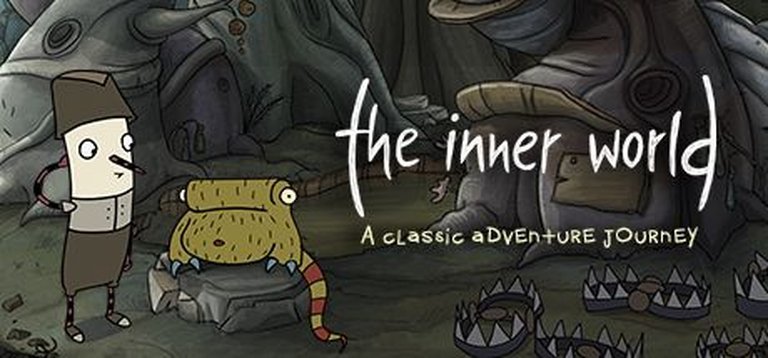
The Inner World is a humorous point-and-click adventure game set in Asposia, a whimsical hollow world inside a universe of soil. When the three wind fountains that supply air to the land begin to fail, unleashing dangerous wind creatures, the naive young musician Robert is thrust into an unexpected quest to save his home. Alongside the enigmatic thief Laura, Robert embarks on a journey filled with quirky characters, inventive puzzles, and a charming comic-style aesthetic, blending traditional adventure gameplay with a touch-optimized interface and a helpful hint system.
Gameplay Videos
Where to Buy The Inner World
The Inner World Guides & Walkthroughs
The Inner World Reviews & Reception
metacritic.com (80/100): A solid adventure in a wonderfully creative game world which will not disappoint.
gamevalio.com (89/100): The game delivers on its promise and the price is fair for what you get.
bigredbarrel.com : The Inner World is a game that oozes charm from the outset, with traditional point-and-click adventuring at its core.
steambase.io (89/100): The Inner World has earned a Player Score of 89 / 100.
The Inner World: A Hollow Triumph of Whimsy and Wit
Introduction
In the annals of point-and-click adventure games, few titles have managed to capture the essence of classic storytelling while infusing it with modern charm as effectively as The Inner World. Released in 2013 by Studio Fizbin, this game is a testament to the enduring appeal of the genre, blending humor, intricate puzzles, and a uniquely imaginative world. This review delves deep into the game’s development, narrative, gameplay mechanics, and its lasting impact on the adventure game landscape.
Development History & Context
Studio Fizbin, a German developer, embarked on The Inner World as their debut project, aiming to revive the point-and-click adventure genre. The game was developed with a focus on hand-drawn 2D art, reminiscent of classic LucasArts titles, and was designed to be accessible yet challenging. The development team, led by Sebastian Mittag and Anika Soisson, drew inspiration from European folklore and whimsical storytelling, creating a world that is both bizarre and endearing.
The game’s release in 2013 was a strategic move, capitalizing on the resurgence of indie games and the nostalgia for classic adventure titles. The technological constraints of the era, such as limited processing power and memory, influenced the game’s design, leading to a focus on intricate puzzles and rich narrative rather than graphical fidelity.
Narrative & Thematic Deep Dive
The Inner World is set in Asposia, a hollow world sustained by three wind fountains. The protagonist, Robert, is a naive musician with a flute-like nose, who embarks on a journey to restore the failing wind fountains and uncover the truth behind the malevolent Conroy. The narrative is rich with humor and wit, exploring themes of isolation, deception, and redemption.
The game’s dialogue is a standout feature, with sharp wit and comedic timing that enhance the overall experience. The characters, including the rebellious thief Laura and the venomous Gorfs, are well-developed and contribute to the game’s charm. The story’s brevity, however, leaves some threads underdeveloped, and the abrupt ending yearns for the sequel’s expansion.
Gameplay Mechanics & Systems
The Inner World adheres faithfully to point-and-click traditions, with a focus on exploration, inventory management, and logical puzzles. The game’s core mechanics involve combining items to solve puzzles, with a hint system that provides progressive clues without spoiling the experience. The flute-nose mechanic, unique to Robert, adds a rhythmic variety to the puzzles, allowing players to influence NPCs and physics.
The game’s UI is intuitive, with a non-intrusive inventory bar and right-click examinations that ensure focus remains on the hand-drawn scenes. Character switching between Robert and Laura introduces light co-op dynamics, fostering teamwork without micromanagement. However, the game’s load times and lack of mid-game difficulty scaling may underwhelm veterans.
World-Building, Art & Sound
Asposia’s world-building is a triumph of implied vastness within confined spaces, with a hollow globe where wind fountains dictate life amid petrified ruins and teeming underbellies. The game’s art direction is breathtaking, with hand-drawn 2D backgrounds that burst with vibrant palettes and fluid animations. The soundtrack, included as MP3s in the Collector’s Edition, swells with epic motifs for wind motifs and jaunty flutes for humor, rivaling the “most epic since Asposia’s origin.”
The voice acting is superlative, with Robert’s naive timbre and Laura’s sarcastic lilt immersing players in the world. Subtle effects, like whispering winds or crunching stone, reinforce the hollow’s acoustics, though minor glitches occasionally pierce the spell. Collectively, these elements forge an atmosphere of cozy intrigue, where art and sound don’t just decorate but propel the themes of harmony and discovery.
Reception & Legacy
Upon launch, The Inner World garnered solid critical acclaim, averaging 85% on MobyGames from sparse but enthusiastic reviews. Commercially, it found a niche among adventure fans via Steam and DVD sales, bolstered by Headup’s marketing of its physical perks. Over time, its reputation has solidified as a cult favorite, influencing the point-and-click revival.
The game’s legacy includes boosting German adventure development, with Studio Fizbin’s model—small teams yielding big heart—echoing in modern titles like Unavowed (2018). Today, it endures as a benchmark for concise, joyful storytelling, its legacy a reminder that hollow worlds can house profound depths, influencing how indies balance nostalgia with innovation.
Conclusion
The Inner World masterfully revives the point-and-click genre through its enchanting narrative of wind and wonder, clever flute-nose puzzles, and a hand-drawn Asposia brimming with quirky life. Despite its flaws, such as abrupt endings or load hiccups, the game’s charms far outweigh its shortcomings. As a historian, I place it firmly in video game canon: a 2013 milestone for indie adventures, bridging LucasArts legacies with modern whimsy, and a must-play for anyone valuing story over spectacle. Verdict: Essential—9/10, a hollow triumph that blows fresh air into gaming history.