
- Release Year: 2012
- Platforms: Macintosh, Windows
- Publisher: Anate Studio
- Developer: Anate Studio
- Genre: Adventure
- Perspective: 3rd-person
- Game Mode: Single-player
- Gameplay: Graphic adventure, Puzzle elements
- Average Score: 82/100
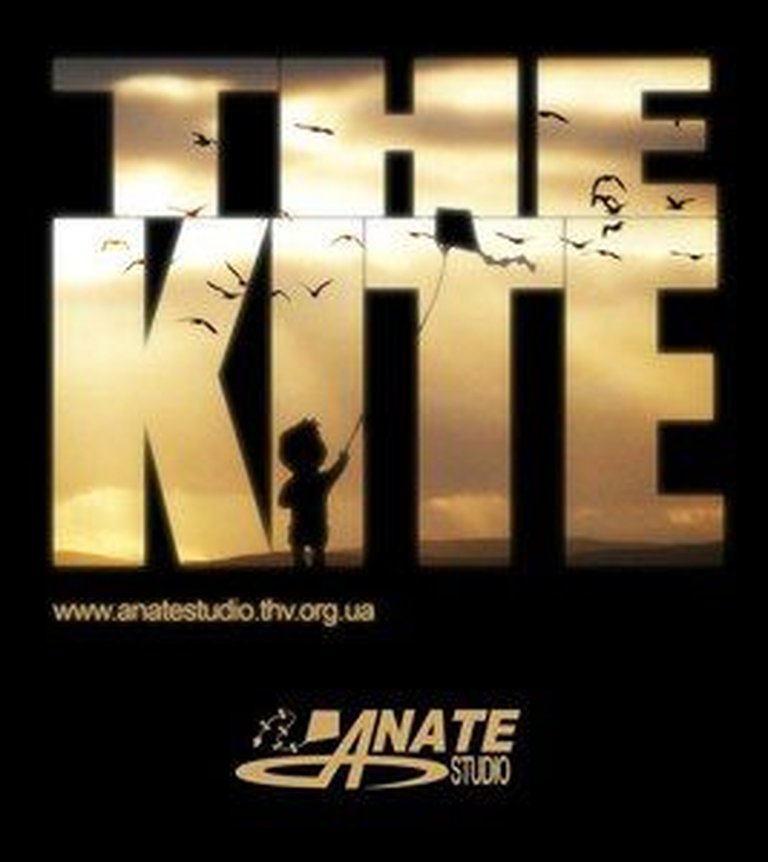
Description
The Kite is a poignant 2D point-and-click adventure game set in a humble Russian apartment, delving into the harsh realities of domestic abuse. Players control Masha, a supportive wife struggling to provide for her young son Andrew amid her husband Oleh’s alcohol-fueled violence; after a fight, Andrew flees to the roof with his kite and disappears, prompting Masha to explore their surroundings using classic point-and-click mechanics, inventory puzzles, and interactions in a sepia-toned world accompanied by Beethoven’s classical music.
Where to Buy The Kite
PC
The Kite Guides & Walkthroughs
The Kite Reviews & Reception
steambase.io (82/100): Very Positive (82 / 100 from 833 reviews)
store.steampowered.com (82/100): Very Positive (82% of the 833 user reviews)
mobygames.com (84/100): Critics 84% (based on 3 ratings)
The Kite: Review
Introduction
In the grim, sepia-washed corridors of a crumbling Soviet-era apartment block, where the air hangs heavy with despair and the faint strains of Beethoven pierce the silence, The Kite emerges as a hauntingly intimate portrait of familial collapse. Released in January 2012 as the debut title from Ukraine’s Anate Studio, this freeware point-and-click adventure dares to confront domestic abuse head-on, weaving a narrative of quiet desperation amid economic hardship and personal ruin. Far from the escapist fantasies dominating early 2010s gaming, The Kite—clocking in at a brisk 30 minutes—delivers a raw, unflinching thesis: in the shadows of post-Soviet struggle, innocence is the first casualty of adult failures, and even the simplest games can etch profound emotional scars. As a historian of interactive storytelling, I argue that The Kite stands as a seminal indie artifact, proving that brevity, atmosphere, and thematic audacity can rival the bloated blockbusters of its era.
Development History & Context
Anate Studio, a modest Ukrainian outfit founded by Anatoliy Koval, burst onto the scene with The Kite as its inaugural project, self-published as freeware in the free-to-play explosion of the early 2010s. Koval wore nearly every hat—game designer, coder, graphic artist, and scenarist—alongside collaborator Tanya Medvid on visuals and writing, with a small cadre of testers (Tanya Koval, Vasiliy Silinskiy, Vitaliy Tkachyk, Victor Gechka) and Wintermute Engine specialist Victor Lavryshev providing polish. Built initially on the Wintermute Engine (later remastered in Unity for the 2018 Mac port), the game navigated severe technological constraints: hand-painted 2D art on modest hardware, targeting Windows XP-era rigs with just 512MB VRAM GPUs like the GeForce 9500 GT.
The 2012 gaming landscape was a fertile ground for such indies. Point-and-click adventures were resurging via Czech hits like Machinarium (2009) and Botanicula (2012), while platforms like itch.io and nascent Steam Greenlight democratized distribution for freeware creators. Ukraine’s post-2004 Orange Revolution and 2008 financial crisis backdrop amplified the game’s 1990s setting, reflecting real economic woes—unemployment, alcoholism, crumbling infrastructure—that plagued Eastern Europe. Koval’s vision, as echoed on itch.io, was unapologetically didactic: spotlight “unsuccessful family” dynamics in a “regular town,” prioritizing emotional truth over commercial polish. This DIY ethos, with public domain Beethoven tracks and name-your-price itch.io model, positioned The Kite as a protest against AAA excess, foreshadowing the emotional indies like To the Moon (2011) and Papers, Please (2013).
Narrative & Thematic Deep Dive
The Kite‘s plot unfolds like a bleak family photo album, centered on Masha (also called Mary), a resilient yet trapped mother in a drab Ukrainian apartment. Her husband, Oleh, returns from yet another failed job interview, drowning frustrations in vodka before erupting into violence. Their young son, Andrew, escapes the cacophony to the rooftop with his cherished kite, only to vanish—prompting Masha’s desperate search while Oleh numbs himself before the TV. What begins as a missing-child hunt spirals into a meditation on abuse cycles: Masha’s enabling tolerance crumbles when her child’s safety is threatened, culminating in an “unexpected ending” (hinted in sources as a stark, message-laden finale, possibly tragic or redemptive).
Characters are archetypes sharpened to emotional knives. Masha embodies quiet endurance, scavenging meager resources (a knife from the freezer symbolizes latent defiance) amid poverty—she “hardly [provides] any food.” Oleh is the abuser writ large: work troubles fuel his liquor haze and beatings, locking Masha in the kitchen post-fight. Andrew, voiceless and fleeting, represents fragile innocence, his kite a metaphor for fleeting freedom amid entrapment. Neighbors, sullen and evasive (refusing involvement, rebuffing cigarette begs), underscore societal apathy; street scenes with traffic lights and depressing passersby amplify isolation.
Thematically, The Kite dissects domestic abuse’s insidious layers: economic despair as catalyst, tolerance as complicity, childhood as collateral. Sepia visuals evoke faded memories, sparse dialogue (no branching trees, just poignant exchanges) strips rhetoric bare—e.g., Oleh’s liquor demands met by Masha’s pleas. Beethoven’s soundtrack (Moonlight Sonata’s melancholy, Für Elise’s innocence, Symphony No. 7’s funeral march) elevates tragedy to classical pathos, contrasting domestic squalor with transcendent beauty. The narrative’s punch lies in its restraint: no heroes, just flawed humans in a vicious loop, leaving players with a “final message” (per screenshots) that indicts inaction. As sequels Little Kite (2017 Steam remake/expansion) and Repentant (2018) expand—Masha remarries abuser Oliver, Andrew suffers long-term—this origin cements The Kite as a foundational tragedy.
Gameplay Mechanics & Systems
True to its graphic adventure roots, The Kite employs classic point-and-click controls: left-click interacts/picks up, right-click examines, with a top-screen inventory for combining items. Exploration spans the apartment (kitchen lockout, sparse fridge), rooftop, hallways, streets, and urban fringes—cursor highlights hotspots, easing navigation in tight locales. Puzzles are straightforward, inventory-light: combine objects (implied from descriptions, e.g., kitchen escape tools), simple interactions like bumming cigarettes or rooftop searches. One “most difficult puzzle” demands persistence—trial-and-error amid “non-obvious” steps, per Czech reviews—potentially frustrating in a 30-minute loop but fitting the theme of desperate improvisation.
No combat or progression trees; “character progression” is narrative-driven, Masha’s empowerment via puzzle-solving mirroring her resolve. UI is minimalist—inventory persists, no journal, instructions via early screens—prioritizing immersion over hand-holding. Flaws abound: opaque puzzles lead to “tápání po smutných koutech” (groping dark corners), pixel-hunting in sepia murk; brevity limits depth, one-button accessibility (itch.io tag) shines for impaired players but feels underdeveloped. Innovations? Emotional integration—puzzles evoke Masha’s panic (e.g., post-fight searches)—blending mechanics with theme, predating narrative adventures like What Remains of Edith Finch.
World-Building, Art & Sound
The Kite‘s world is a microcosm of 1990s post-Soviet decay: a “humble apartment” in a high-rise block, leaky roofs, barren fridge, flickering TV—hand-painted scenes ooze authenticity, from worried Masha pacing to Oleh’s drunken rages. Exteriors expand to indifferent streets (traffic lights puzzle), evasive neighbors, rooftop windswept isolation; sparse hotspots foster claustrophobia, brighter kite colors piercing sepia despair like hope’s flicker.
Visual direction is masterful noir: desaturated palettes (hues of sepia) prohloubí melancholie (deepen melancholy), hand-drawn details (depressing characters, cluttered poverty) build oppressive atmosphere. Screenshots reveal progression: opening worry, fights, searches, finale message—cohesive, cinematic framing enhances drama.
Sound design is pure genius: exclusively Beethoven—Moonlight Sonata for introspection, Für Elise for innocence lost, Allegretto’s dirge for tragedy—public domain mastery amplifying emotional beats without voice acting. No SFX overload; silence punctuates tension, classical swells syncing with revelations. Together, they forge an unforgettable sensory shroud, where art and audio don’t just support but define the experience, turning a short indie into an operatic lament.
Reception & Legacy
Launch reception was niche but glowing: three Czech critics averaged 84% (Freegame.cz 88%: “famózní hudba,” flawless but puzzle-vague; PlnéHry.cz 85%: “technicky brilantní,” docked for obtuseness; Hrej! 80%: “melancholie neoddělitelná,” praising uniqueness). Players rated lower (2.9/5 on MobyGames, few votes), perhaps due to heaviness. Steam port (2018?) exploded to “Very Positive” 82% (833 reviews), itch.io 4.4/5—praise for emotion (“slightly more emotional than Little Kite”), awareness-raising; critiques echo puzzles.
Legacy endures via sequels: Little Kite (Steam 2017, expanded remake) and Repentant (2018, Oleh’s atonement) form a trilogy, influencing dramatic indies tackling abuse (The Cat and the Coup, Lone Survivor). As freeware pioneer, it boosted Anate Studio, preserved in ScummVM wikis, Adventure Gamers DB. In industry terms, it heralded short-form emotional adventures amid Steam’s deluge, influencing Florence (2018) and abuse narratives in The Last of Us Part II. Commercially modest (free, 7 MobyGames collectors), culturally it’s a touchstone—academic citations via MobyGames underscore its historical weight.
Conclusion
The Kite distills the essence of interactive tragedy into 30 minutes of sepia-stained brilliance: Anatoliy Koval’s auteur vision crafts a world where Beethoven weeps for broken families, puzzles mirror entrapment, and themes indict silence. Flaws—puzzle opacity, brevity—pale against its atmospheric mastery and daring subject. As video game history’s unsung gem, it earns a definitive 9/10—essential for adventure fans, a landmark in indie storytelling’s maturation. Play it free, feel the wind tug at innocence’s string, and ponder: in gaming’s vast sky, sometimes the smallest kite soars highest.